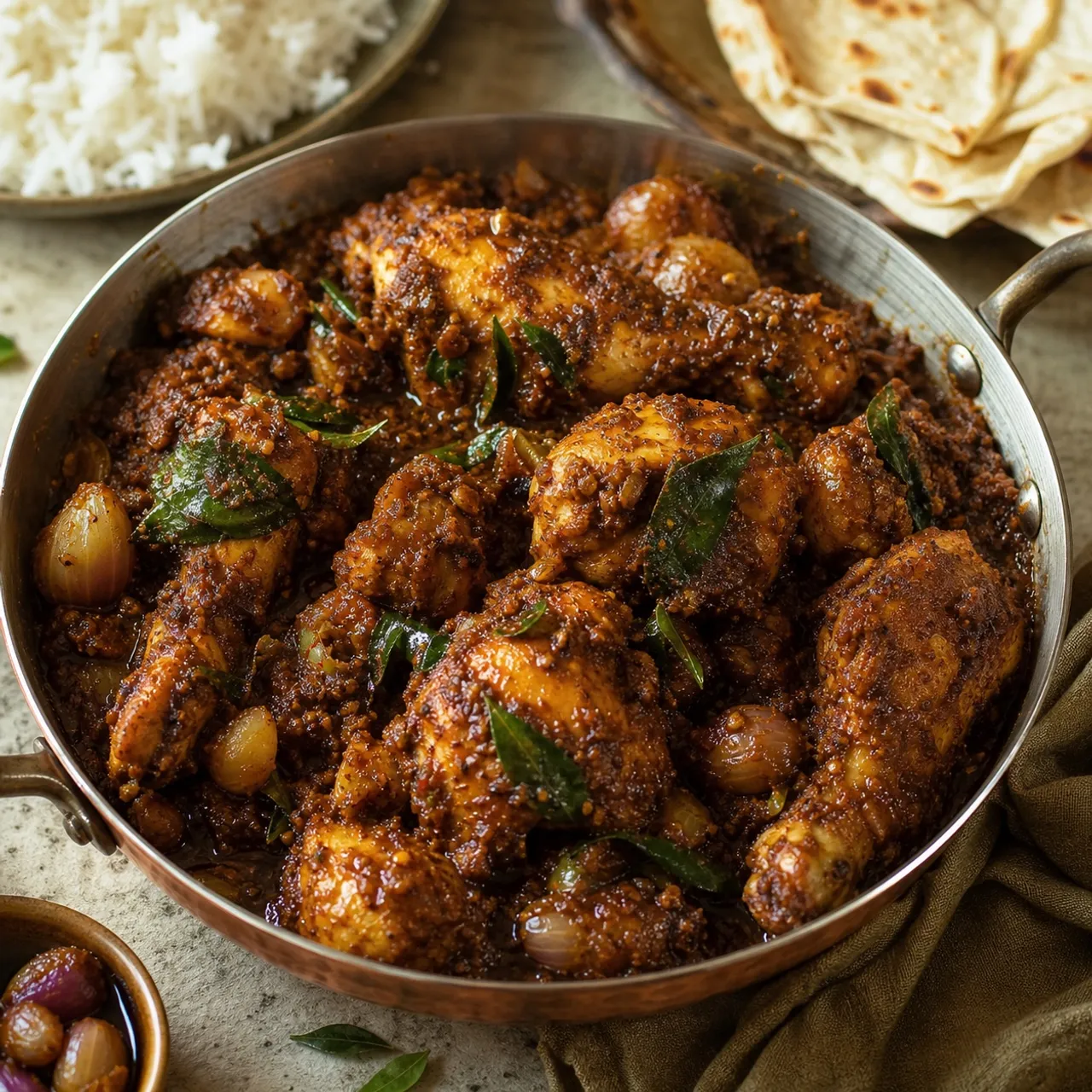
 Indian Images are for illustrative purposes only, may be inaccurate, and do not guarantee the presence or absence of specific ingredients.
 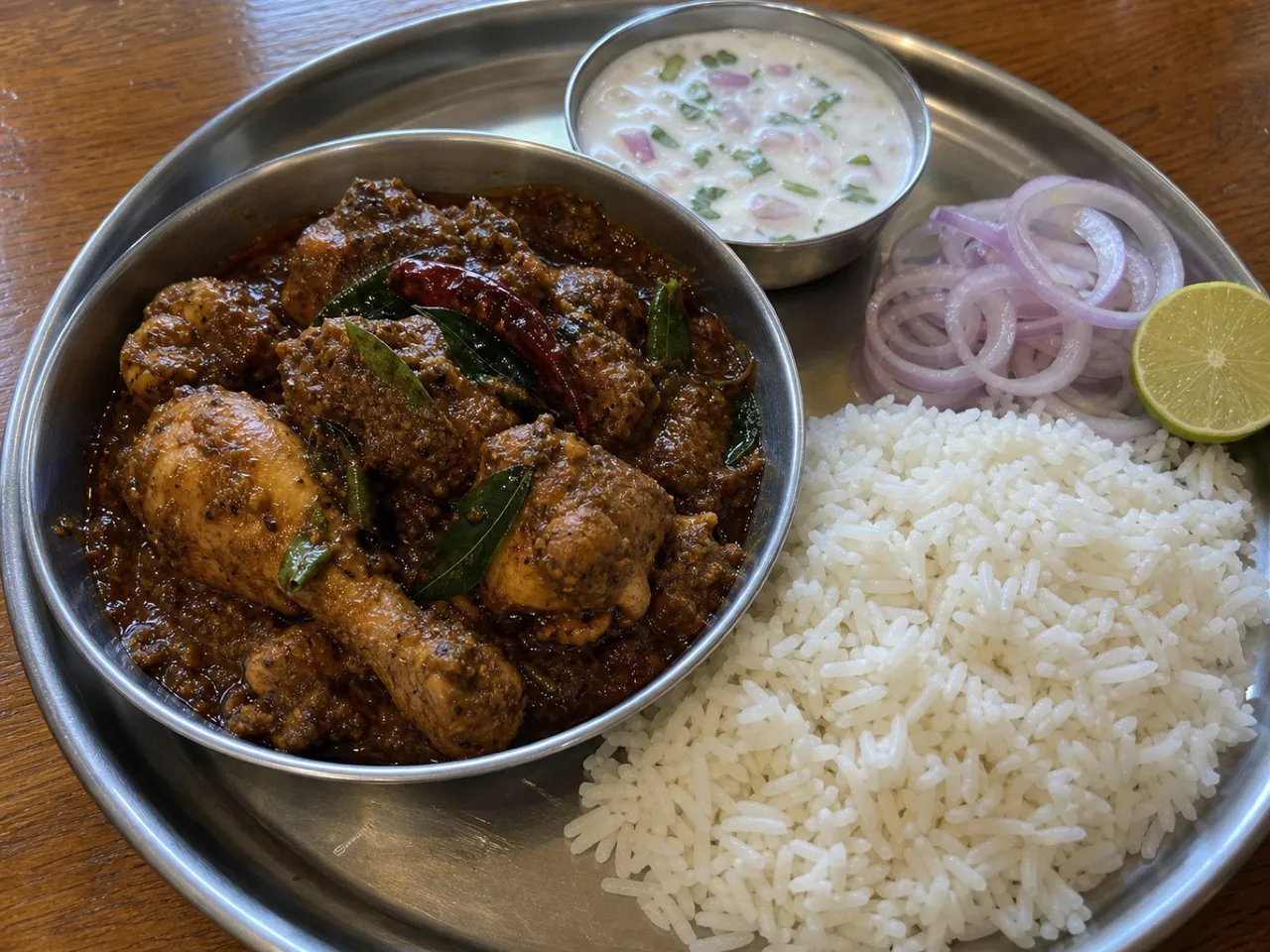 Serving Images are for illustrative purposes only, may be inaccurate, and do not guarantee the presence or absence of specific ingredients.
 Chicken Chettinad
Turn up the heat with this spectacularly fragrant South Indian chicken curry, boasting a dark, peppery, deeply complex roasted coconut masala.
Contains common allergens
In the app, Listahan checks these against your household automatically.
Instructions
6 steps- 1
Dry Roast the Spices: In a dry skillet over low heat, gently toast 1 tbsp black peppercorns, 1 tbsp coriander seeds, 1 tsp fennel seeds, 1 tsp cumin seeds, 2 star anise, 4 dried red chilies, and a small cinnamon stick. Roast until deeply aromatic (about 3 mins).
- 2
Roast the Coconut: Add the grated coconut to the spices. Roast until the coconut turns a dark, golden brown. Let it cool, then grind it in a blender with a little water into a thick, dark, smooth paste.
- 3
Sauté Aromatics: Heat 3 tbsp sesame oil (or vegetable oil) in a heavy pan. Crackle 1 tsp mustard seeds and fry the curry leaves. Add the chopped shallots and sauté until they turn brown.
- 4
Brown the Chicken: Stir in 1 tbsp ginger-garlic paste and 1 chopped tomato. Cook until mushy. Add the chicken pieces and a pinch of turmeric. Sear the chicken for 5 minutes until it changes color.
- 5
Add the Chettinad Paste: Pour the dark, spicy coconut paste over the chicken. Mix well to coat the chicken entirely. Add 1 cup of hot water and salt.
- 6
Slow Cook: Bring to a boil, then cover and simmer on low heat for 25-30 minutes. The curry is done when the chicken is tender and a layer of oil floats to the surface, carrying the intense aroma of toasted spices and pepper.
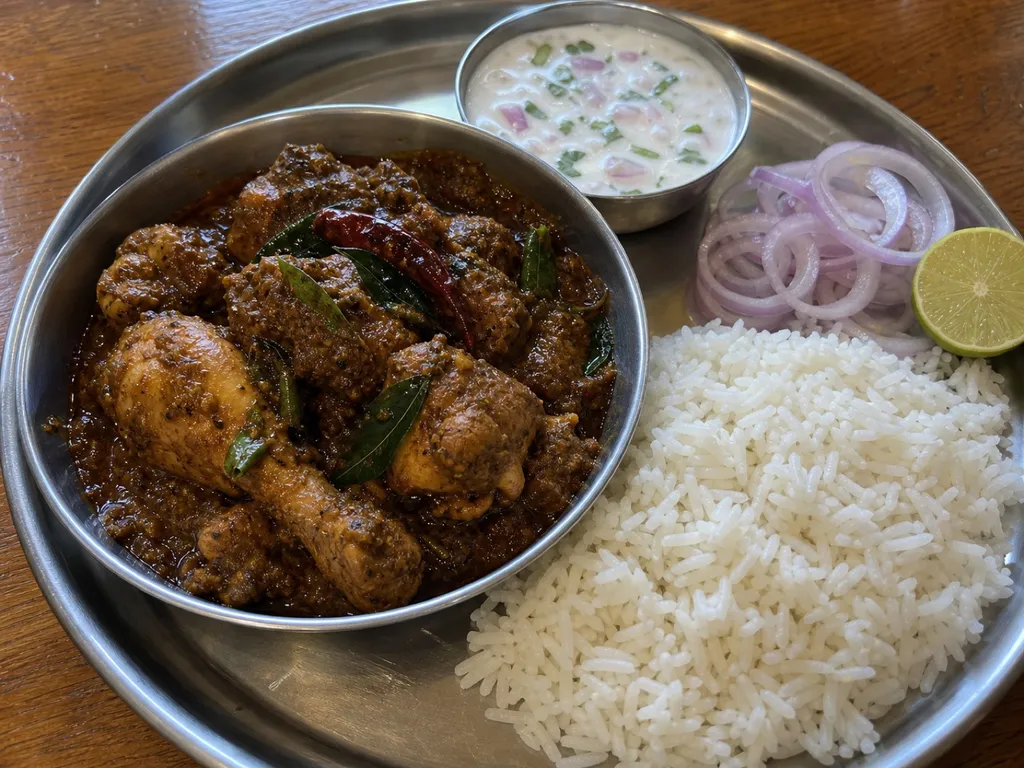 Images are for illustrative purposes only, may be inaccurate, and do not guarantee the presence or absence of specific ingredients.
 Listahan Family Score™
55/100
Works for many families
Score reflects how well this recipe fits a typical busy household. In the app, your Family Score is personalized to your household's allergens, kids, and pantry.
Nutrition
per serving435
Calories
44 g
Protein
9 g
Carbs
26 g
Fat
Estimated per serving. Actual values depend on the brands and portions you use.
Listahan cooking guide
Chef notes & practical guide
Technique notes, ingredient swaps, serve-alongside ideas, storage guidance, and equipment for this recipe.
Cultural context
Chettinad cuisine originates from the Chettinad region of Tamil Nadu in South India, historically home to the Nattukotai Chettiars, a merchant community whose trade routes brought rare spices — kalpasi (stone flower), marathi mokku (dried flower pods), and star anise — back from Southeast Asia. Chicken Chettinad is perhaps the most internationally recognized dish from this tradition, notable for its complex, dark spice paste and a heat level that is genuinely formidable compared to most Indian regional curries. The dish reflects both local South Indian tempering technique and the imported spice knowledge of a community that once connected India to Burma, Sri Lanka, and beyond.
Listahan note
This version dry-toasts and freshly grinds the whole spices rather than using a pre-made Chettinad powder, because that step is where the dish's extraordinary aroma is either made or lost.
Technique cues
- Toast each whole spice separately in a dry pan because they have different moisture contents and toast at different rates — coriander seeds toast in 90 seconds while star anise needs nearly 3 minutes, and burning any one spice ruins the batch.
- Marinate the chicken in the ground spice paste for at least 2 hours, or overnight; Chettinad spices are highly aromatic but need time to penetrate bone-in pieces, and the difference in flavor depth between a 30-minute and overnight marinate is significant.
- Let the cooked curry rest covered for 10 minutes off heat before serving; the oil visibly separates and rises to the surface, which is a sign the spices have fully cooked through and the dish is ready — skim the oil or swirl it back in based on preference.
Kitchen flow
- Parallel prep
- Marinate chicken the night before; the next day the active cooking time is under 45 minutes, making this a realistic weeknight dinner with morning prep.
- Make-ahead
- Chettinad curry tastes better on day two as the spices mellow and integrate; make a full batch, refrigerate, and reheat for an easy dinner the following night.
- Leftover move
- Shred leftover chicken off the bone, mix with the remaining sauce, and use as a filling for dosas or as a topping for idlis with a spoonful of coconut chutney.
- Cleanup rhythm
- Use the same heavy pan for toasting spices and building the curry to reduce dishes; deglaze the pan with a small amount of water after the spice paste to capture the fond.
Ingredient brief
Role, handling, and swap guidance for each key ingredient.
whole black peppercorns
primary heat source
Purpose: Chettinad curries derive much of their heat from black pepper rather than chili, giving a deep, warming burn that builds slowly rather than hitting immediately.
Handling: Toast until fragrant and beginning to pop, then grind with the other spices; use more or less to dial in the heat level.
Adaptation: There is no direct substitute for black pepper's role here; reducing the quantity is the best approach for heat-sensitive eaters rather than swapping it out.
kalpasi (stone flower)
signature aromatic
Purpose: Kalpasi contributes a woodsy, mossy aroma that is unique to Chettinad cooking and difficult to describe — it is what makes the dish smell distinctly different from any other South Indian curry.
Handling: Use in small quantities (1-2 pieces); toast very briefly as it can turn bitter.
Adaptation: Omit if unavailable; the curry will still be excellent, just missing one layer of its characteristic complexity.
fresh curry leaves
tempering fragrance
Purpose: Fresh curry leaves bloomed in hot oil at the start and again at the end of cooking provide a citrusy, savory backbone that runs through the entire dish.
Handling: Pat dry before adding to hot oil to prevent intense spattering; use a splatter screen.
Adaptation: Dried curry leaves deliver about 20% of the aromatic impact of fresh; frozen curry leaves (increasingly available in Indian grocery stores) are an excellent intermediate option.
coconut (fresh or desiccated)
sauce body and sweetness
Purpose: Ground coconut thickens the gravy and provides sweetness that moderates the intense spice and heat.
Handling: Toast desiccated coconut in a dry pan until golden before grinding; fresh coconut can be used as-is.
Adaptation: Coconut cream (3 tablespoons) stirred in late in cooking approximates the richness without the texture contribution.
bone-in chicken pieces
protein and stock
Purpose: Bones contribute gelatin and depth to the sauce during the long cook; the marrow flavors the gravy in a way boneless chicken cannot match.
Handling: Score the chicken pieces through to the bone in 2-3 places so the spice marinade penetrates to the center.
Adaptation: Boneless thighs with reduced cooking time (20 minutes versus 35) will absorb the spice paste well and work in a weeknight timeframe.
Technique notes
- The traditional technique of finishing with a second tempering — fresh curry leaves and a red chili crackled in a teaspoon of oil poured over the top right before serving — adds a fragrant top note that lifts the entire dish.
- If the curry tastes bitter after cooking, a small amount of jaggery or brown sugar (half a teaspoon) stirred in rounds it out immediately; bitterness usually means one spice was slightly over-toasted.
- Use a stone grinder or mortar and pestle rather than a blender for the spice paste if you have the time — the coarser texture clings to the chicken pieces better and creates a more textured sauce.
Ingredient swaps
- Lower-heat direction
- Halve the black peppercorns and reduce dried red chilies by two-thirds; add a tablespoon of coconut cream at the end to further soften the heat without losing the complex spice character.
- Gluten-free direction
- The dish is naturally gluten-free; serve with steamed rice or rice-based dosa rather than wheat flatbreads.
- Weeknight shortcut
- A good-quality store-bought Chettinad masala powder (2 tablespoons) can replace the fresh-ground whole spice blend; toast it briefly in oil before adding for 30 seconds to revive the aromatics.
Serve alongside
- Appam (lacy coconut rice crepes)
- Steamed white rice
- Coconut chutney
- Parotta (layered South Indian flatbread)
- Tender coconut water
- Tamarind-ginger cooler
- Cold filter coffee (South Indian style)
Serving suggestions only — check pairings for your household's allergens.
Storage & reheating
- Refrigerate cooled curry in an airtight container for up to 3 days; the spice flavors intensify with time and the dish is arguably best on day two.
- Freeze for up to 2 months in portions; thaw overnight in the refrigerator and reheat gently over low heat, adding a splash of water to loosen the sauce which thickens in the cold.
Equipment
- Dry cast-iron pan for toasting whole spices without burning (thin pans create hot spots)
- Spice grinder or mortar and pestle for grinding the toasted spices to a paste
- Deep, heavy-bottomed pot or Dutch oven for even heat during the long simmer
- Splatter screen for when curry leaves hit the hot oil
Make this household-aware
Listahan Pro checks this recipe against your household's allergens, finds pantry-aware swaps, builds the shopping list, and helps you plan the week around it.
Plan it in Listahan
Add Chicken Chettinad to your week, check it against your household's allergens, and build the shopping list automatically.
More Indian recipes
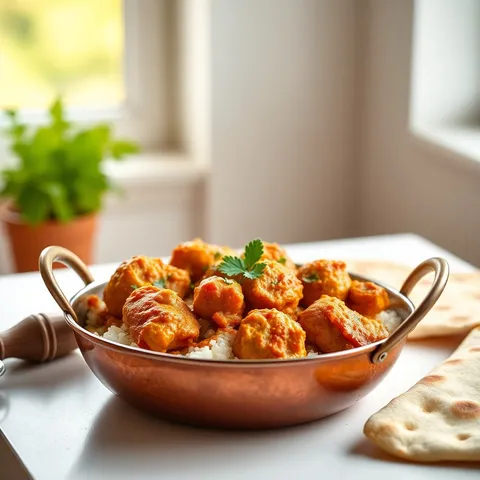 Indian Lens Verified Images are for illustrative purposes only, may be inaccurate, and do not guarantee the presence or absence of specific ingredients.
 Chicken Tikka Masala
Indulge in succulent, yogurt-marinated chicken chunks roasted to perfection and enveloped in a luscious, deeply spiced tomato-cream sauce.
 Indian Lens Verified Images are for illustrative purposes only, may be inaccurate, and do not guarantee the presence or absence of specific ingredients.
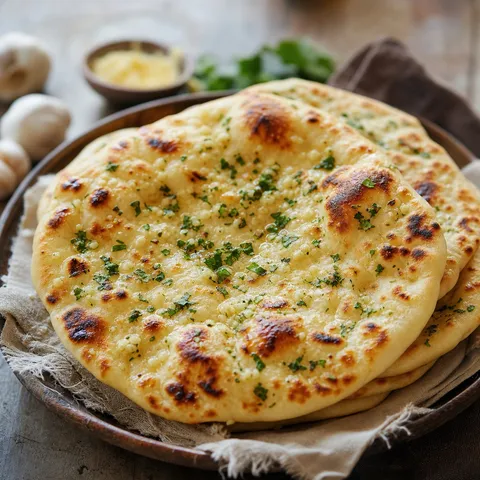
 Garlic Naan
Tear into this piping hot, blistered flatbread packed with aromatic garlic and brushed generously with irresistible melted butter.
 Indian Lens Verified Images are for illustrative purposes only, may be inaccurate, and do not guarantee the presence or absence of specific ingredients.
 Lamb Pasanda
A rich Mughlai dish made with flattened lamb steaks in a creamy almond sauce.