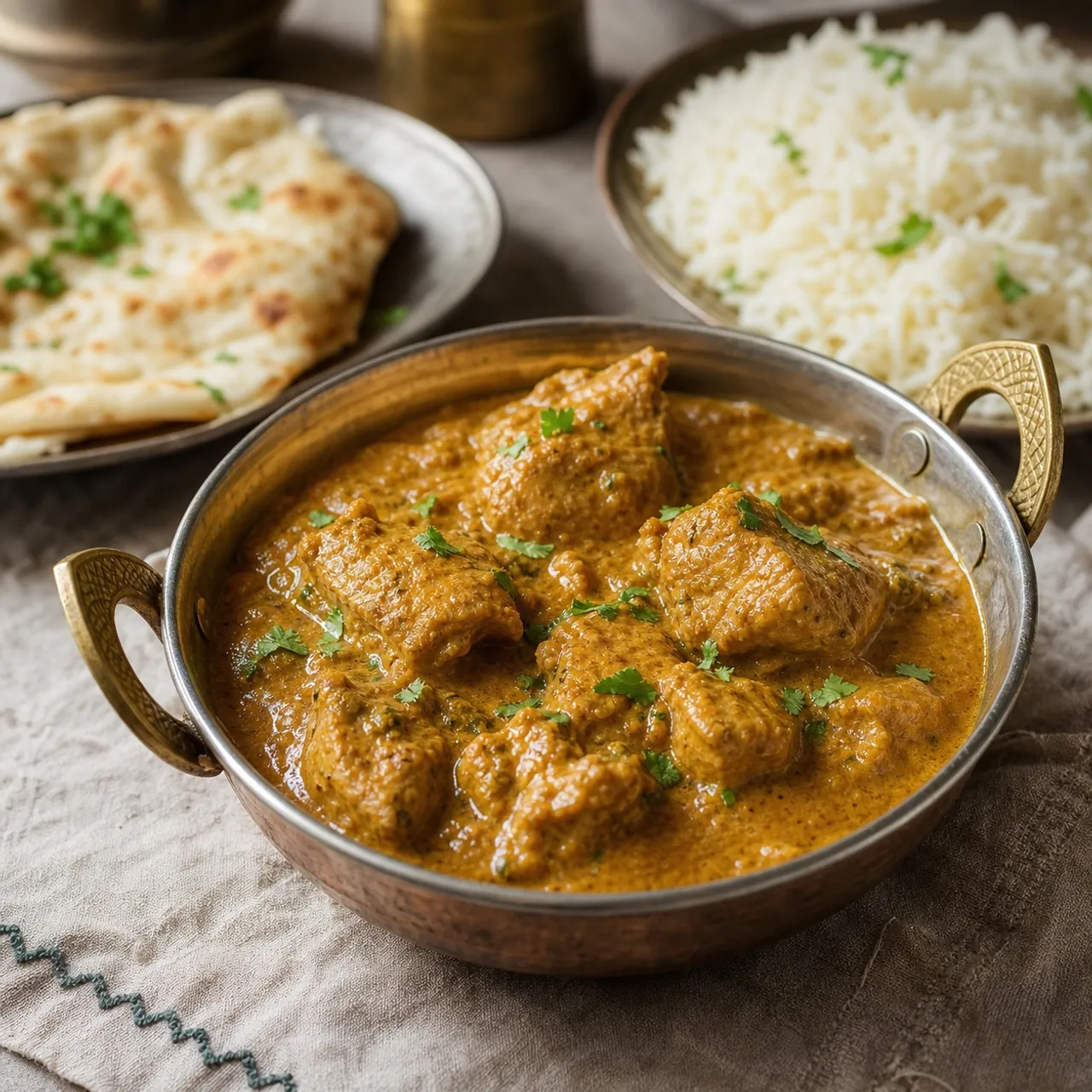
 Indian Images are for illustrative purposes only, may be inaccurate, and do not guarantee the presence or absence of specific ingredients.
 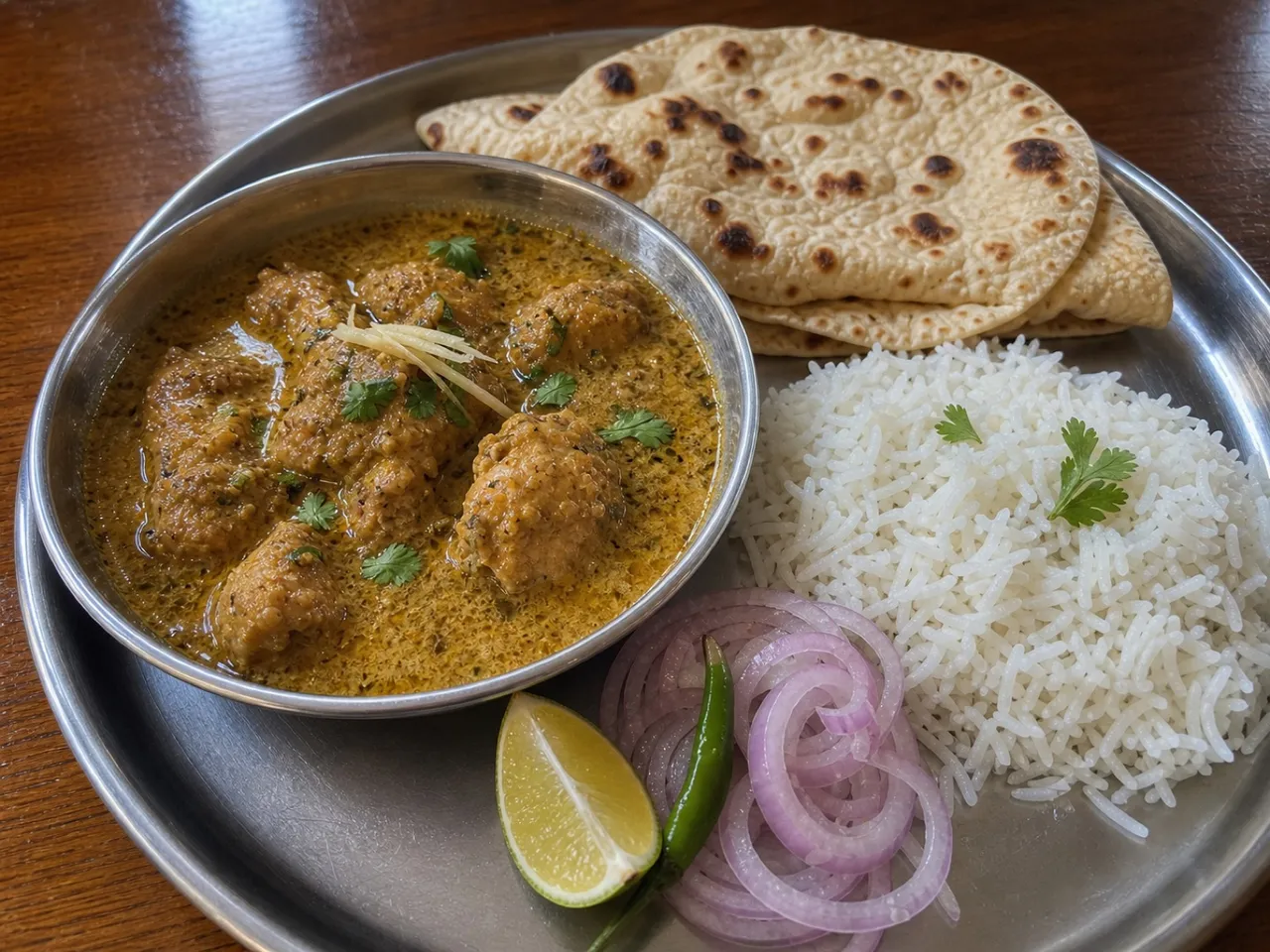 Serving Images are for illustrative purposes only, may be inaccurate, and do not guarantee the presence or absence of specific ingredients.
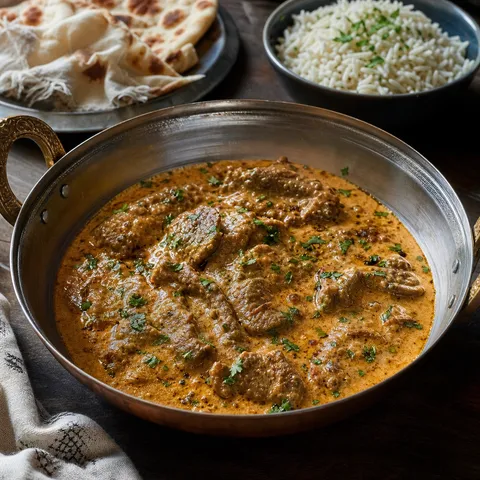
 Chicken Korma
Indulge in an exquisite, impossibly creamy and mildly spiced chicken curry enriched with yogurt and a luxurious cashew nut paste.
Contains common allergens
In the app, Listahan checks these against your household automatically.
Instructions
6 steps- 1
Fry Onions (Birista): Heat 3 tbsp ghee or oil in a heavy pot over medium heat. Fry the sliced onions slowly until they are deeply browned and crispy. Remove with a slotted spoon.
- 2
Blend the Base: Once the fried onions have cooled slightly, place them in a blender along with the yogurt and a splash of water. Blend into a completely smooth brown paste.
- 3
Sear the Chicken: In the same pot with the leftover onion oil, add the cardamom pods, 2 cloves, and a cinnamon stick. Add the chicken chunks and 1 tbsp ginger-garlic paste. Sauté until the chicken is browned on all sides.
- 4
Cook with Yogurt Paste: Reduce the heat to low. Pour the onion-yogurt paste over the chicken. Add 1 tsp coriander powder and 1/2 tsp garam masala. Stir continuously until it reaches a simmer to prevent the yogurt from splitting.
- 5
Add Cashew Paste: Cover and cook for 15 minutes. Stir in the cashew paste (made by blending soaked cashews) and 1/2 cup of water.
- 6
Simmer and Finish: Let the korma simmer gently for another 10-15 minutes until the chicken is tender and a thick, creamy, rich gravy has formed, with oil separating at the edges. Garnish with a few toasted almonds.
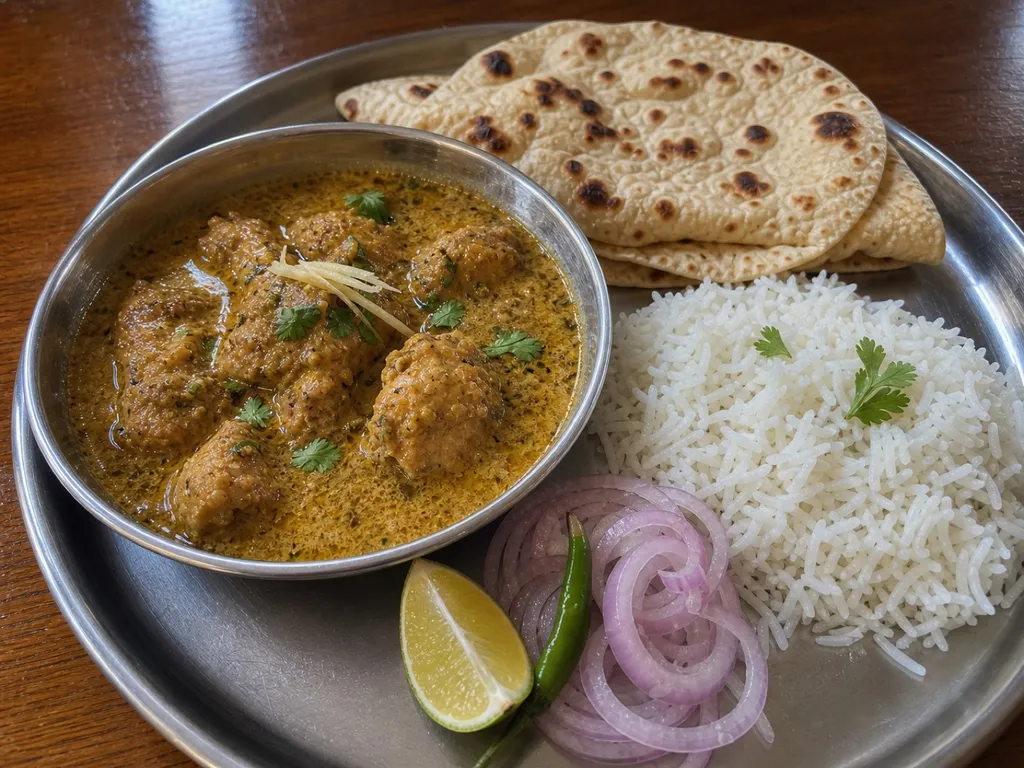 Images are for illustrative purposes only, may be inaccurate, and do not guarantee the presence or absence of specific ingredients.
 Listahan Family Score™
63/100
Works for many families
Score reflects how well this recipe fits a typical busy household. In the app, your Family Score is personalized to your household's allergens, kids, and pantry.
Nutrition
per serving465
Calories
50 g
Protein
12 g
Carbs
24 g
Fat
Estimated per serving. Actual values depend on the brands and portions you use.
Listahan cooking guide
Chef notes & practical guide
Technique notes, ingredient swaps, serve-alongside ideas, storage guidance, and equipment for this recipe.
Cultural context
Korma is a Mughal braising technique in which meat is slowly cooked in a yogurt and nut-enriched sauce over very low heat to produce a delicate, creamy, and mildly spiced dish. It originated in the royal kitchens of the Mughal emperors in the 16th century and was designed to be refined and subtle rather than fiery, reflecting the Persian influence on Mughal court cuisine. The word korma derives from the Turkish/Urdu word meaning 'braised' or 'braise', and the technique spread from the Mughal heartland across South Asia in many regional variations.
Listahan note
This version produces the pale, ivory-colored korma sauce with a properly smooth texture by using a cashew and onion paste rather than cream alone, which creates a more complex, less heavy richness.
Technique cues
- Fry the sliced onion until deeply golden-brown, then blend to a smooth paste before making the sauce; this caramelized onion paste is what gives korma its characteristic sweetness and amber undertone without overpowering the delicate spices.
- Never let korma boil aggressively once the yogurt is added; the protein in the yogurt breaks and the sauce becomes grainy if cooked above a gentle simmer.
- Add the nut paste (cashew or almond) near the end of cooking rather than the beginning; it thickens the sauce quickly and adding it early can cause scorching on the bottom of the pan.
Kitchen flow
- Parallel prep
- Marinate the chicken overnight; make the caramelized onion paste and cashew paste the same day, ideally in the morning, so the sauce comes together quickly at cook time.
- Make-ahead
- Korma tastes better the next day; make the complete dish up to 2 days ahead and reheat very gently over low heat, stirring frequently to prevent separation.
- Leftover move
- Thin leftover korma sauce with coconut milk and use as a base for a quick vegetable curry, or shred the leftover chicken and serve over rice with the diluted sauce.
- Cleanup rhythm
- Rinse the blender immediately after making the nut paste before the cashew protein dries on; the pot and pan soak clean easily if deglazed with hot water while still warm.
Ingredient brief
Role, handling, and swap guidance for each key ingredient.
chicken thighs
main protein
Purpose: Bone-in, skin-on thighs braise more moistly than breast meat and hold up to the low-and-slow korma cooking method without drying out.
Handling: Score deeply with a knife and marinate in yogurt and spices for at least 2 hours so the marinade penetrates to the bone.
Adaptation: Bone-in chicken pieces of any cut work well; boneless thighs reduce cooking time but produce a slightly less rich sauce.
onion paste
sauce body and sweetness
Purpose: Deeply caramelized onion blended to a smooth paste thickens the korma and provides the sweet, savory backbone that distinguishes it from a cream-based sauce.
Handling: Fry thinly sliced onion in generous oil until golden-brown, let cool slightly, then blend with a small amount of water to a very smooth paste.
Adaptation: Store-bought fried onions (birista) blended with water are a fast shortcut that produces a slightly different but acceptable substitute.
cashew paste
richness and thickener
Purpose: Blended soaked cashews add a creamy, velvety richness that gives Mughal-style korma its distinctively smooth, coating texture.
Handling: Soak raw cashews in warm water for 20 minutes, drain, then blend with a small amount of water to a very smooth paste with no grainy texture.
Adaptation: Blanched almonds (badam) produce a slightly lighter, drier result; heavy cream adds richness without the nut flavor.
yogurt
tenderizing marinade and sauce acid
Purpose: Yogurt in the marinade tenderizes the chicken through mild acid and adds a subtle tanginess that prevents the korma from tasting flat despite its mild spicing.
Handling: Use full-fat yogurt at room temperature; whisk smooth before adding to the hot pan to prevent immediate curdling.
Adaptation: Sour cream or unsweetened coconut yogurt can substitute; avoid low-fat yogurt which separates more readily under heat.
green cardamom
primary aromatic spice
Purpose: Green cardamom defines the floral, cooling aromatic character of korma and distinguishes it from the warmer, earthier spice profile of most Indian curries.
Handling: Lightly bruise the pods with the flat of a knife before adding to hot oil so the seeds are exposed and the aromatic oils can release.
Adaptation: A tiny amount of pre-ground cardamom can substitute but is more potent; use one-quarter the amount of whole pods called for.
Technique notes
- Bloom whole spices (bay leaf, cinnamon stick, clove, and cardamom) in hot oil for 30-40 seconds before adding any other ingredients; this step extracts the fat-soluble aromatic compounds that give korma its distinctive layered spice fragrance.
- A teaspoon of kewra water or a few drops of rose water added off-heat at the very end imparts the floral, Mughal-inspired finishing touch that separates restaurant-quality korma from home versions.
- Do not cover the pot during the final 15 minutes of simmering; leaving it uncovered concentrates the sauce and allows the nut and onion paste to properly thicken without making the sauce too heavy.
Ingredient swaps
- Nut-free direction
- Replace cashew paste with 2 tablespoons of tahini or sunflower seed butter for a nut-free sauce with similar richness.
- Dairy-free option
- Substitute coconut milk for the yogurt marinade and coconut cream for the sauce; the flavor changes to a Thai-influenced direction but the korma technique still applies.
- Vegetarian direction
- Replace chicken with firm paneer cubes or large cauliflower florets; reduce cooking time significantly as these do not need the extended braise that chicken requires.
Serve alongside
- Garlic naan
- Saffron basmati rice
- Cucumber raita
- Rose-flavored lassi
- Cold mango lassi
Serving suggestions only — check pairings for your household's allergens.
Storage & reheating
- Refrigerate in an airtight container for up to 3 days; the sauce thickens significantly as it cools, so add a splash of water when reheating.
- Korma freezes well for up to 2 months; thaw overnight in the refrigerator and reheat gently on the stovetop over very low heat to prevent the sauce from separating.
Equipment
- Heavy-bottomed pot or Dutch oven for even, gentle heat during the long braise
- Blender or food processor for smooth onion and cashew pastes without any graininess
- Fine-mesh strainer for straining the onion paste if a perfectly smooth sauce is desired
- Small bowl for blooming whole spices and having them ready at the start of cooking
Make this household-aware
Listahan Pro checks this recipe against your household's allergens, finds pantry-aware swaps, builds the shopping list, and helps you plan the week around it.
Plan it in Listahan
Add Chicken Korma to your week, check it against your household's allergens, and build the shopping list automatically.
More Indian recipes
 Indian Lens Verified Images are for illustrative purposes only, may be inaccurate, and do not guarantee the presence or absence of specific ingredients.
 Chicken Tikka Masala
Indulge in succulent, yogurt-marinated chicken chunks roasted to perfection and enveloped in a luscious, deeply spiced tomato-cream sauce.
 Indian Lens Verified Images are for illustrative purposes only, may be inaccurate, and do not guarantee the presence or absence of specific ingredients.
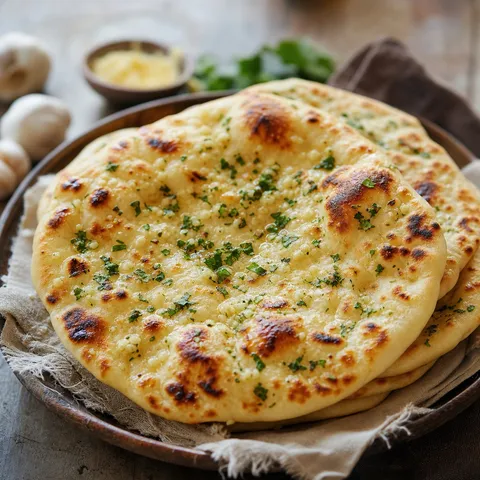
 Garlic Naan
Tear into this piping hot, blistered flatbread packed with aromatic garlic and brushed generously with irresistible melted butter.
 Indian Lens Verified Images are for illustrative purposes only, may be inaccurate, and do not guarantee the presence or absence of specific ingredients.
 Lamb Pasanda
A rich Mughlai dish made with flattened lamb steaks in a creamy almond sauce.