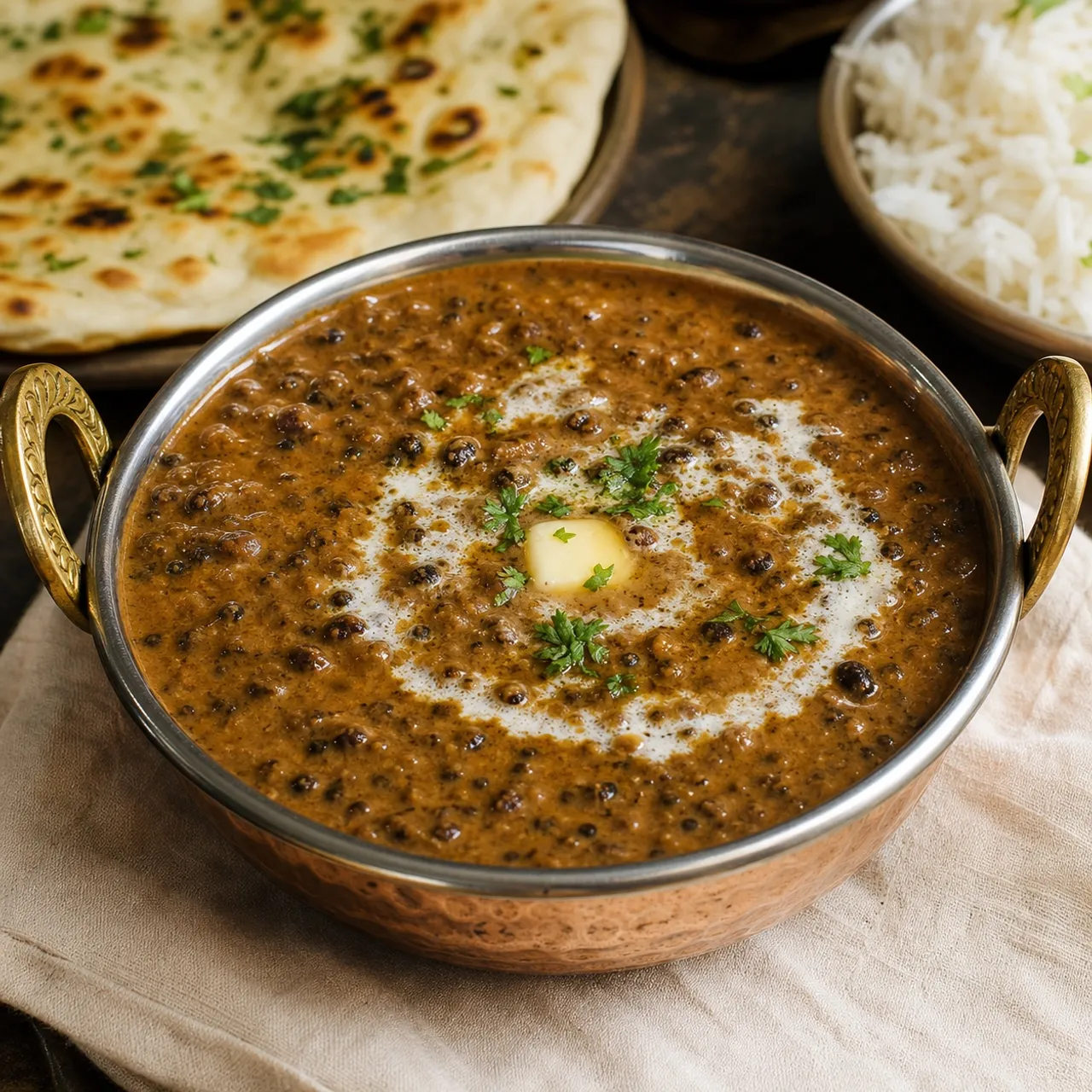
 Indian Images are for illustrative purposes only, may be inaccurate, and do not guarantee the presence or absence of specific ingredients.
 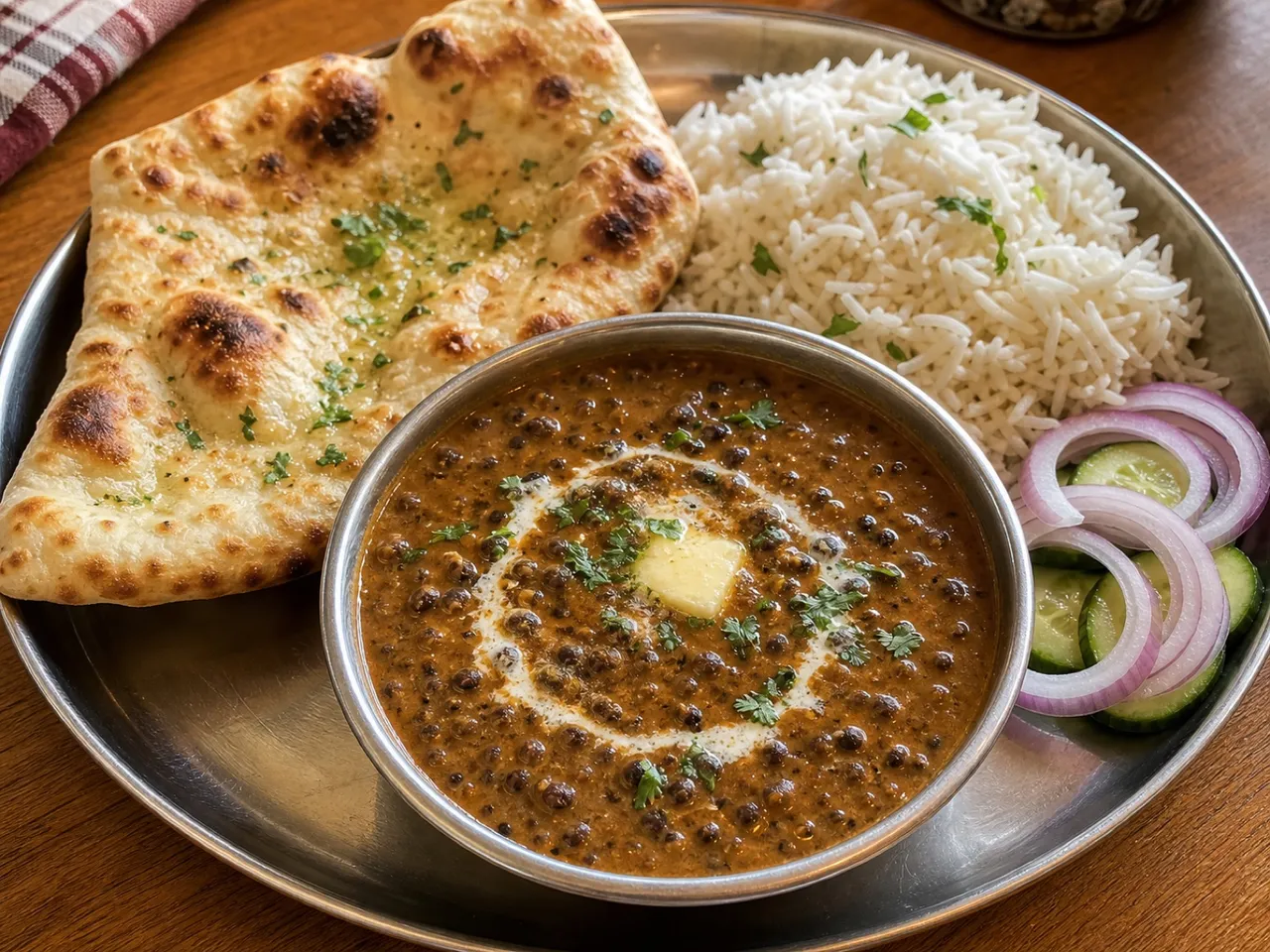 Serving Images are for illustrative purposes only, may be inaccurate, and do not guarantee the presence or absence of specific ingredients.
 Dal Makhani
Revel in a remarkably smooth and hearty slow-cooked lentil stew, enriched with a touch of butter and cream for the ultimate comfort food experience.
Contains common allergens
In the app, Listahan checks these against your household automatically.
Instructions
6 steps- 1
Soak the Lentils: Wash the whole black lentils and kidney beans thoroughly. Soak them together in plenty of water for 8-12 hours. Drain and rinse well before cooking.
- 2
Boil the Lentils: In a large heavy-bottomed pot or pressure cooker, add the soaked lentils, 4 cups of water, and a pinch of salt. Cook on medium heat for 1-2 hours (or 30 mins in a pressure cooker) until the lentils are completely soft and mash easily between your fingers.
- 3
Prepare the Masala: Heat 2 tbsp butter in a separate pan over medium heat. Sauté 1 tbsp ginger-garlic paste until fragrant (about 1 minute). Add the tomato puree, 1 tsp Kashmiri chili powder, and 1/2 tsp garam masala. Cook for 10 minutes until the oil separates.
- 4
Slow Cook: Transfer the tomato masala to the pot of cooked lentils. Reduce the heat to the lowest setting. Simmer uncovered for at least 2-4 hours, stirring occasionally and mashing some of the lentils against the side of the pot to create a creamy texture. Add hot water if it gets too thick.
- 5
Add the Richness: During the final 30 minutes of cooking, stir in the remaining 2 tbsp butter and the heavy cream.
- 6
Final Tempering: For a smoky flavor, you can place a hot charcoal in a small steel bowl over the dal, drizzle ghee on it, and cover for 10 minutes (dhungar method). Stir well and serve hot with a pat of butter.
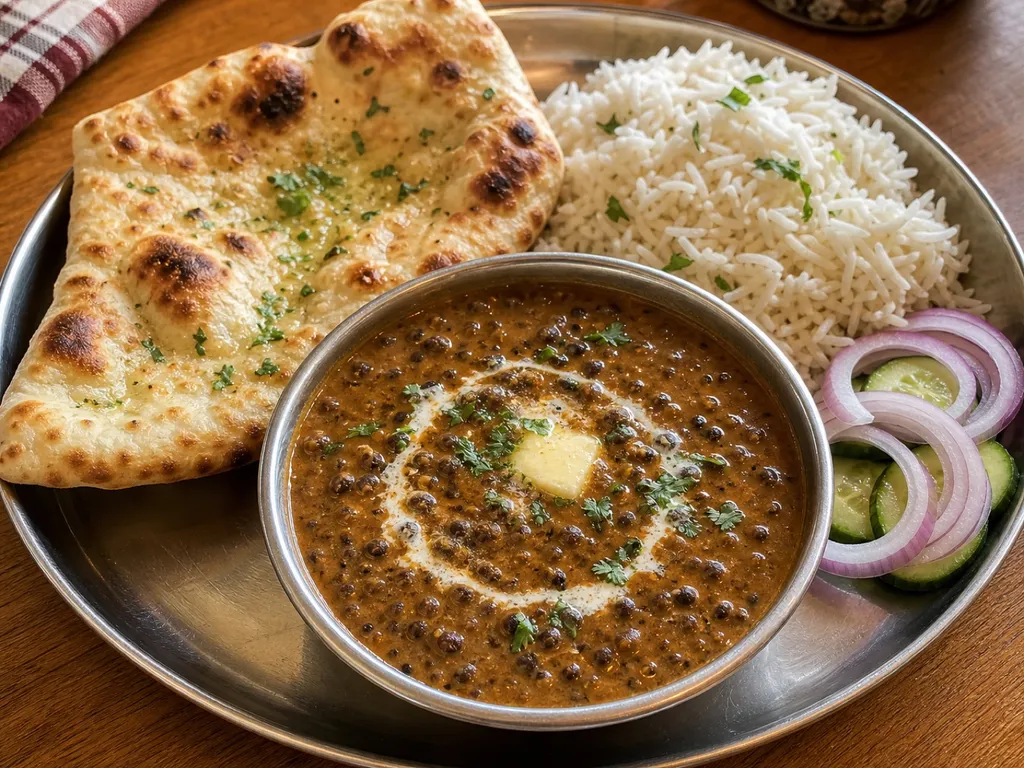 Images are for illustrative purposes only, may be inaccurate, and do not guarantee the presence or absence of specific ingredients.
 Listahan Family Score™
64/100
Works for many families
Score reflects how well this recipe fits a typical busy household. In the app, your Family Score is personalized to your household's allergens, kids, and pantry.
Nutrition
per serving300
Calories
7 g
Protein
19 g
Carbs
23 g
Fat
Estimated per serving. Actual values depend on the brands and portions you use.
Listahan cooking guide
Chef notes & practical guide
Technique notes, ingredient swaps, serve-alongside ideas, storage guidance, and equipment for this recipe.
Cultural context
Dal makhani was created at Moti Mahal restaurant in Delhi in the 1950s — the same kitchen that gave rise to butter chicken — as a slow-simmered overnight preparation using whole black lentils (urad) and kidney beans that the cooks kept on low wood-fired heat after the dinner service closed. The dish gained its luxurious texture through hours of cooking, not from cream alone. It is considered one of the most labor-intensive dals and is often reserved for celebratory occasions in Punjabi households.
Listahan note
This version simulates the overnight slow-cook by using a pressure cooker for the lentils and then finishing on a low stovetop simmer with butter and cream for at least 30 minutes, which is the minimum needed to get the sauce to thicken and silk up.
Technique cues
- Pressure cook the soaked urad lentils until they are fully soft and beginning to break down before starting the sauce — undercooked lentils will not absorb the butter or cream regardless of how long you simmer.
- Add the butter in stages throughout the simmer rather than all at once at the end; each addition emulsifies into the dal and builds layers of richness.
- Do not rush the stovetop simmer phase — the sauce transforms from thin and grainy to thick and velvety only after 20-30 minutes of slow stirring and low heat.
Kitchen flow
- Parallel prep
- Pressure cook the soaked lentils first thing — they take 25-30 minutes — while you prepare the onion-tomato masala base on a separate burner.
- Make-ahead
- Dal makhani is significantly better on day 2 and day 3 as the lentils absorb the butter and cream overnight; make a large batch and refrigerate.
- Leftover move
- Thin leftover dal makhani with a little water and serve as a sauce over roasted cauliflower or baked paneer cubes.
- Cleanup rhythm
- Use the pressure cooker insert as the starting pot for the dal, then transfer everything to a wide heavy pot for the long simmer — the pressure cooker is then fully done and can be washed while the dal finishes.
Ingredient brief
Role, handling, and swap guidance for each key ingredient.
whole black urad lentils
body and earthiness
Purpose: Whole urad lentils provide the distinctive earthy, creamy flavor of dal makhani that split lentils cannot replicate.
Handling: Soak overnight in cold water; this halves the cooking time and ensures even softening.
Adaptation: Split urad dal can be used in a pinch but produces a looser, less textured result.
kidney beans
textural contrast
Purpose: The few whole kidney beans provide a slightly firmer bite against the creamier lentils and add visual contrast.
Handling: If using dried beans, soak and cook separately as they take longer than urad lentils; canned kidney beans can be added in the last 20 minutes of simmering.
Adaptation: Omit if unavailable; the dish is still classic without them.
unsalted butter
richness and gloss
Purpose: Butter is what makes dal 'makhani' (buttery) — it rounds the earthy lentil flavor and gives the sauce a distinctive silkiness.
Handling: Add cold cubed butter to the simmering dal in three additions, stirring each time until melted before adding the next.
Adaptation: Ghee intensifies the flavor further; vegan butter creates a similar texture.
heavy cream
body and color
Purpose: Cream adds the final layer of richness and lightens the color from dark brown to a warm red-brown.
Handling: Add in the last 10 minutes of simmering and do not allow the dal to boil after this point.
Adaptation: Cashew cream adds richness without dairy; full-fat coconut cream is a slightly sweeter alternative.
canned crushed tomatoes
acidity and sauce base
Purpose: Tomatoes balance the heaviness of the butter and cream and provide the sauce's body and depth.
Handling: Cook the tomato paste with spices until the oil separates before adding the cooked lentils.
Adaptation: Tomato passata (strained tomatoes) gives an equally smooth result.
Technique notes
- A small piece of dried fenugreek leaf (kasuri methi) added 5 minutes before serving gives dal makhani its restaurant signature without any detectable fenugreek flavor — it acts as a flavor integrator rather than a distinct note.
- Cook the ginger-garlic paste in the butter until it turns a deep golden and stops smelling raw — undercooked garlic-ginger makes the dal taste metallic under the cream.
- The dal is done when a spoonful holds its shape briefly on the plate before slowly spreading — if it pours like soup, continue simmering uncovered.
Ingredient swaps
- Dairy-free direction
- Use refined coconut oil in place of butter, cashew cream for the heavy cream, and add 1 tablespoon of coconut oil at the end for gloss — the result is rich and convincing.
- Lower-fat direction
- Reduce butter to 1 tablespoon and cream to 2 tablespoons, and replace the remainder with whole milk — the dal will be lighter but still creamy.
Serve alongside
- butter naan
- jeera rice
- sliced raw red onion with lime
- lassi (sweet or salted)
- strong masala chai
Serving suggestions only — check pairings for your household's allergens.
Storage & reheating
- Refrigerate in an airtight container for up to 5 days; the dal thickens considerably when cold and benefits from a splash of water when reheating on the stovetop over low heat.
- Freezes well in portions for up to 3 months; thaw overnight and reheat slowly, adding water and a small pat of butter to restore the texture.
Equipment
- pressure cooker or Instant Pot for softening the lentils efficiently
- wide heavy-bottomed pot for the slow simmer phase
- wooden spoon for the frequent stirring needed during the finishing stage
Make this household-aware
Listahan Pro checks this recipe against your household's allergens, finds pantry-aware swaps, builds the shopping list, and helps you plan the week around it.
Plan it in Listahan
Add Dal Makhani to your week, check it against your household's allergens, and build the shopping list automatically.
More Indian recipes
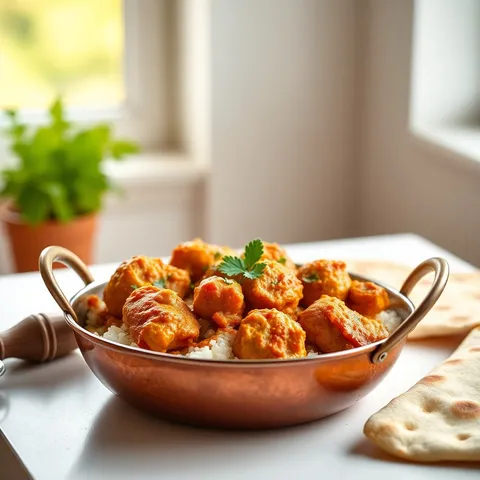 Indian Lens Verified Images are for illustrative purposes only, may be inaccurate, and do not guarantee the presence or absence of specific ingredients.
 Chicken Tikka Masala
Indulge in succulent, yogurt-marinated chicken chunks roasted to perfection and enveloped in a luscious, deeply spiced tomato-cream sauce.
 Indian Lens Verified Images are for illustrative purposes only, may be inaccurate, and do not guarantee the presence or absence of specific ingredients.
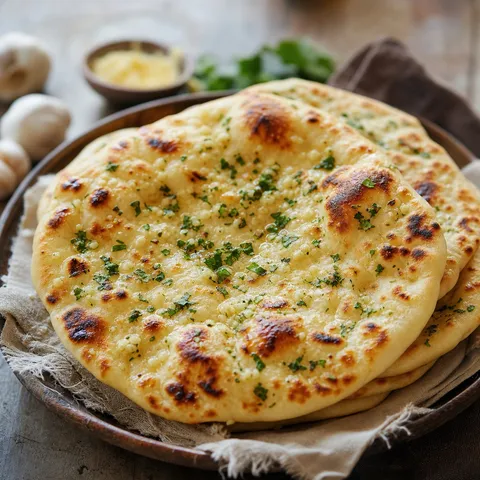
 Garlic Naan
Tear into this piping hot, blistered flatbread packed with aromatic garlic and brushed generously with irresistible melted butter.
 Indian Lens Verified Images are for illustrative purposes only, may be inaccurate, and do not guarantee the presence or absence of specific ingredients.
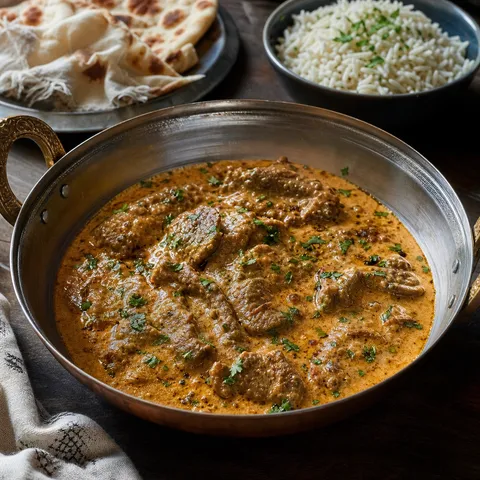
 Lamb Pasanda
A rich Mughlai dish made with flattened lamb steaks in a creamy almond sauce.