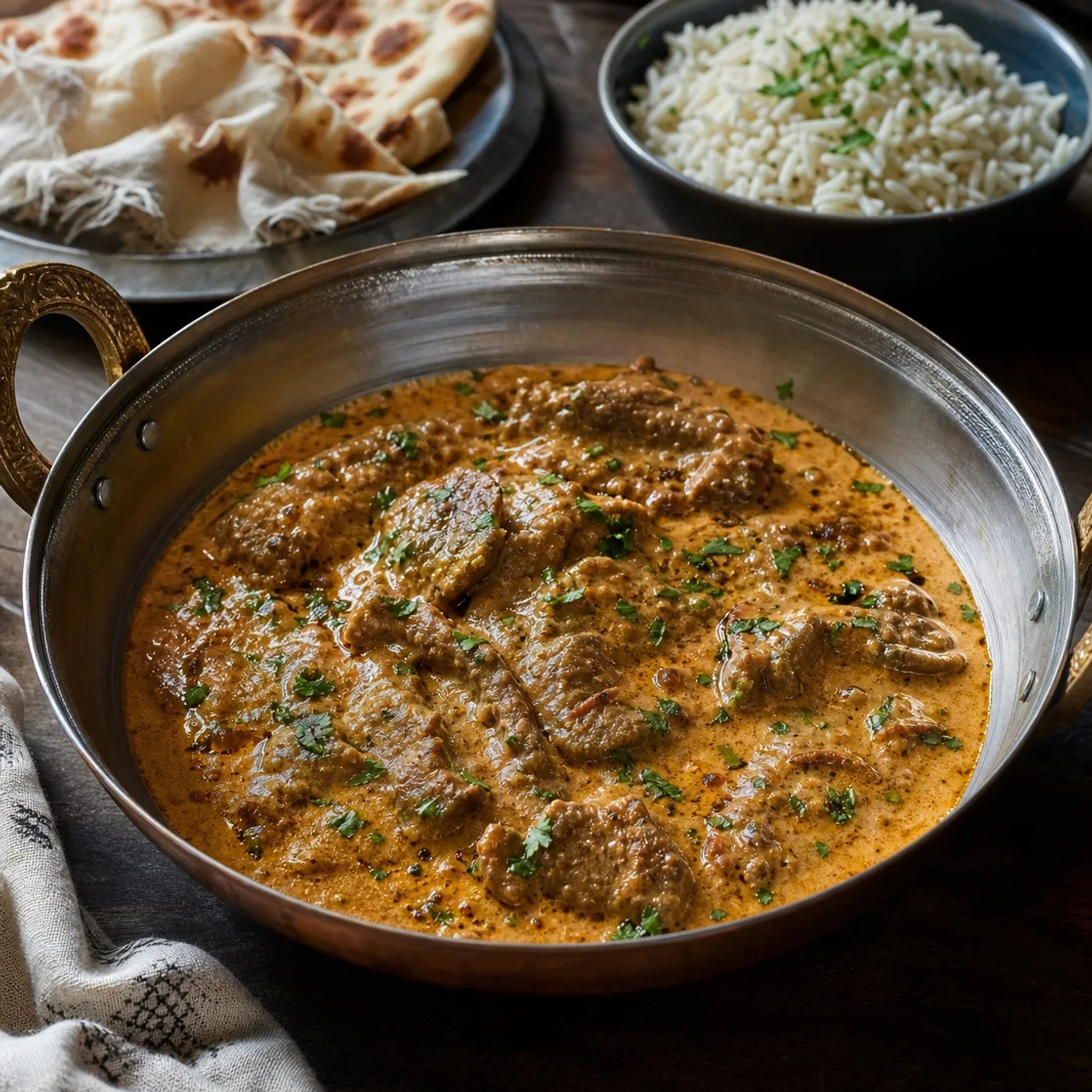
 Indian Images are for illustrative purposes only, may be inaccurate, and do not guarantee the presence or absence of specific ingredients.
 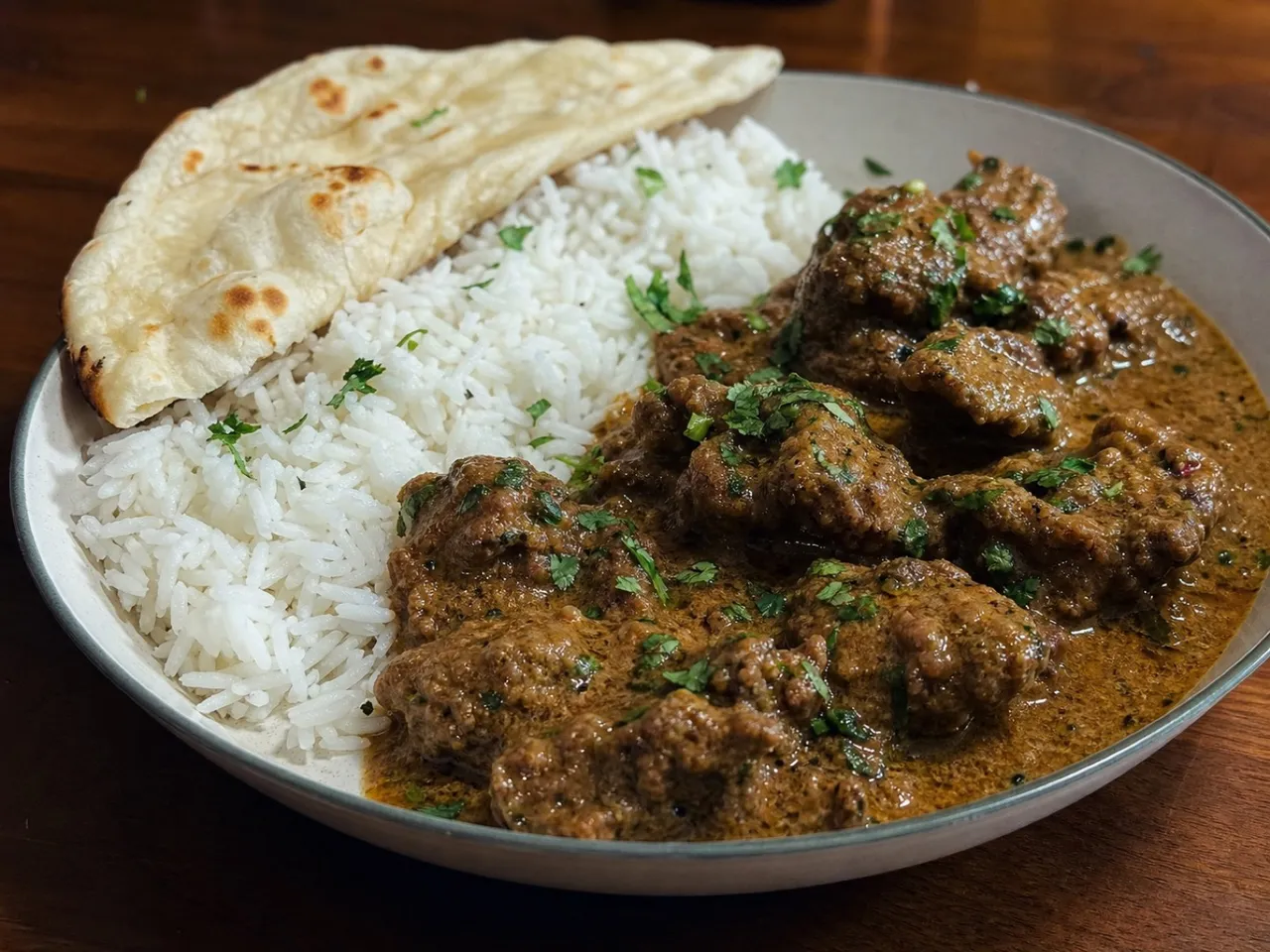 Serving Images are for illustrative purposes only, may be inaccurate, and do not guarantee the presence or absence of specific ingredients.
 Lamb Pasanda
A rich Mughlai dish made with flattened lamb steaks in a creamy almond sauce.
Contains common allergens
In the app, Listahan checks these against your household automatically.
Good to know
- One-pot
Matched from this dish's own ingredients and timing. Browse more: one-pot dinners
Instructions
6 steps- 1
Flatten the Lamb: Place the lamb slices between two pieces of plastic wrap and pound them gently with a meat mallet to flatten them (this makes the "pasandas").
- 2
Marinate: Mix the yogurt, 1 tbsp raw papaya paste (optional tenderizer), 1 tbsp ginger-garlic paste, 1 tsp white pepper, and salt. Coat the lamb and marinate for at least 2 hours.
- 3
Prepare Almond-Onion Paste: Blend the pre-fried onions with the almond paste and a splash of milk to form a completely smooth, rich puree.
- 4
Sear the Meat: Heat 3 tbsp ghee in a heavy pot. Add 4 cloves and a cinnamon stick. Sear the marinated lamb slices over high heat for 5 minutes until lightly browned.
- 5
Simmer the Sauce: Lower the heat. Pour the almond-onion puree over the lamb. Add 1 cup of hot water or lamb stock. Cover and simmer gently on low heat for 45-60 minutes until the lamb melts in the mouth.
- 6
Finish with Cream: Stir in the heavy cream, green cardamom powder, and a few drops of rose water or kewra water. Simmer for 2 more minutes. Serve with naan or sheermal.
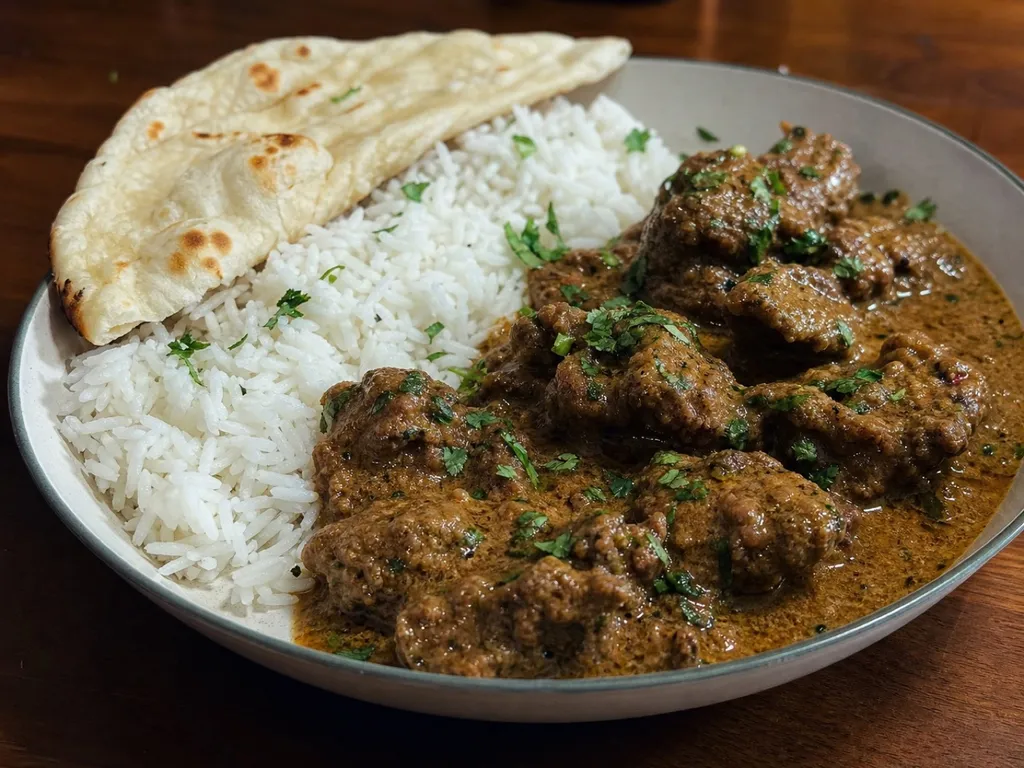 Images are for illustrative purposes only, may be inaccurate, and do not guarantee the presence or absence of specific ingredients.
 Listahan Family Score™
61/100
Works for many families
Score reflects how well this recipe fits a typical busy household. In the app, your Family Score is personalized to your household's allergens, kids, and pantry.
Nutrition
per serving680
Calories
48 g
Protein
11 g
Carbs
49 g
Fat
Estimated per serving. Actual values depend on the brands and portions you use.
Listahan cooking guide
Chef notes & practical guide
Technique notes, ingredient swaps, serve-alongside ideas, storage guidance, and equipment for this recipe.
Cultural context
Pasanda is a Mughal-era dish whose name derives from the Urdu word for 'favorite' (pasand), reflecting its origin as a preferred dish of the imperial court. The original preparation used flattened strips of lamb leg marinated in a yogurt and spice mixture and cooked in a creamy, nut-thickened sauce — a technique designed to produce tender meat that required minimal chewing, which was fashionable at a court where elaborate food presentation was a form of political display. Modern pasanda retains the essential character: a mild, cream-enriched sauce with a hint of aromatic spices that showcases the quality of the lamb rather than masking it.
Listahan note
This version focuses on the marinade time and the low, slow cook that are the technical foundations of pasanda's tenderness, and uses a restrained spice profile that lets the lamb flavor lead the dish.
Technique cues
- Pound lamb strips to an even 1/4-inch thickness before marinating so the yogurt and spice mixture penetrates all the way through; thick pieces will have a spiced exterior and a bland center even after hours of marinating.
- Cook the marinated lamb in batches over high heat until well-seared on both sides before adding the sauce — this step creates the fond and roasted flavor that prevents the finished dish from tasting boiled.
- Keep the sauce at a gentle, barely visible simmer rather than a rolling boil once the cream is added; high heat breaks the emulsion and produces a greasy, curdled sauce instead of the silky consistency that defines a well-made pasanda.
Kitchen flow
- Parallel prep
- Pound and marinate the lamb the night before; the next day the active cooking time is about 35 minutes for a dish that tastes like it took all day.
- Make-ahead
- Pasanda is excellent the day after cooking; store covered in the refrigerator and reheat gently — the sauce actually thickens and the lamb absorbs more flavor overnight.
- Leftover move
- Slice leftover lamb thin and tuck into pita bread with sliced cucumber, tomato, and a dollop of yogurt for a Mughal-inspired sandwich the next day.
- Cleanup rhythm
- Pound lamb inside a zip-lock bag on a cutting board to contain splatter; clean the bag and board first, then move to the cooking steps in a single pot.
Ingredient brief
Role, handling, and swap guidance for each key ingredient.
boneless lamb leg
main protein
Purpose: Lamb leg has enough fat marbling to stay tender during a longer cook while delivering a clean, distinct lamb flavor that the cream sauce complements without overpowering.
Handling: Slice across the grain into strips about the width of a finger, then pound each strip flat between sheets of plastic wrap.
Adaptation: Boneless lamb shoulder has more fat and connective tissue and works in a longer braise; if using, cut cooking time in half and add liquid to prevent drying.
full-fat yogurt
marinade tenderizer and sauce starter
Purpose: The lactic acid in yogurt breaks down muscle fibers in the lamb over the marinating period, resulting in significantly more tender meat without the sharp acidity of vinegar-based marinades.
Handling: Use at room temperature; cold yogurt can cause the meat to tense up rather than relax during marinating.
Adaptation: Coconut yogurt works as a dairy-free alternative with a mild sweetness that is actually pleasant in this dish.
blanched almonds
sauce thickener and richness
Purpose: Ground almonds give the sauce body, a subtle nuttiness, and a pale color that is visually distinctive from other Indian cream curries.
Handling: Blend soaked almonds with a small amount of water to a very smooth paste; strain if your blender leaves any graininess.
Adaptation: Raw cashews produce a slightly sweeter, creamier paste and are an equally traditional Mughal-era thickener.
cardamom pods
primary warm aromatic
Purpose: Cardamom is the dominant spice note in pasanda, providing a floral, slightly eucalyptus warmth that lifts the richness of the cream without adding heat.
Handling: Crack the pods with the flat of a knife and add whole to the hot oil; remove before serving or warn guests.
Adaptation: Ground cardamom (1/4 teaspoon per 4 pods) can substitute when whole pods are unavailable; add with the onion rather than as a tempering spice.
heavy cream
sauce finish
Purpose: Cream rounds out the yogurt's acidity and creates the satiny, pale sauce that is the defining visual and textural signature of pasanda.
Handling: Bring to room temperature before adding to the pan; cold cream added to a hot sauce increases the risk of separation.
Adaptation: Full-fat coconut cream gives a richer, slightly sweeter result that is excellent in its own right and completely dairy-free.
Technique notes
- A small amount of rose water (1/2 teaspoon) stirred into the sauce at the very end is an authentic Mughal touch that adds a delicate floral quality and transforms the dish from good to genuinely special.
- Fry the onions used in the sauce until they are deeply golden — almost to the point you think they have gone too far — before blending; this caramelization is what gives pasanda its characteristic nutty sweetness without adding sugar.
- Resting the finished dish for 5 minutes off heat before serving gives the sauce time to settle and the oil to re-emulsify slightly after the final stir; rushing to the table after cooking often results in a slightly broken-looking sauce.
Ingredient swaps
- Dairy-free direction
- Use coconut yogurt for marinating and coconut cream for the sauce finish; the resulting dish is excellent and the coconut note pairs naturally with the cardamom spice profile.
- Tree-nut-free direction
- Replace the almond paste with sunflower seed paste (sunflower seeds soaked and blended with water) for a similarly rich, neutral-flavored sauce thickener.
- Budget direction
- Bone-in lamb shoulder chops braised for 90 minutes in the sauce produce equally tender results at a fraction of the cost of boneless leg; just add a cup of water to the sauce and simmer covered.
Serve alongside
- Saffron basmati rice
- Butter naan
- Shahi tukda (Mughal bread pudding) as dessert
- Onion and tomato salad with chaat masala
- Rosewater-flavored sharbat
- Light dry red wine such as Pinot Noir
- Warm masala chai
Serving suggestions only — check pairings for your household's allergens.
Storage & reheating
- Store in an airtight container in the refrigerator for up to 3 days; the cream sauce thickens considerably when cold and will need a splash of water when reheating.
- Freeze without the cream addition for up to 2 months; thaw overnight and stir in fresh cream when reheating to avoid the texture change that frozen dairy causes.
Equipment
- Meat mallet or rolling pin for pounding the lamb strips flat
- Zip-lock bag or plastic wrap for mess-free pounding
- Heavy-bottomed Dutch oven or deep saute pan with a lid
- Blender for the almond and fried onion paste
Make this household-aware
Listahan Pro checks this recipe against your household's allergens, finds pantry-aware swaps, builds the shopping list, and helps you plan the week around it.
Plan it in Listahan
Add Lamb Pasanda to your week, check it against your household's allergens, and build the shopping list automatically.
More Indian recipes
 Indian Lens Verified Images are for illustrative purposes only, may be inaccurate, and do not guarantee the presence or absence of specific ingredients.
 Chicken Tikka Masala
Indulge in succulent, yogurt-marinated chicken chunks roasted to perfection and enveloped in a luscious, deeply spiced tomato-cream sauce.
 Indian Lens Verified Images are for illustrative purposes only, may be inaccurate, and do not guarantee the presence or absence of specific ingredients.
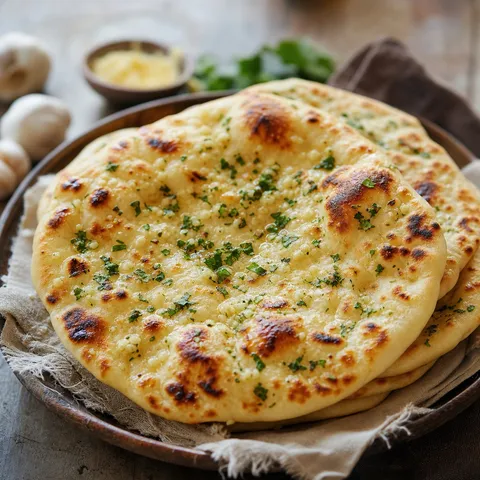
 Garlic Naan
Tear into this piping hot, blistered flatbread packed with aromatic garlic and brushed generously with irresistible melted butter.
 Indian Lens Verified Images are for illustrative purposes only, may be inaccurate, and do not guarantee the presence or absence of specific ingredients.
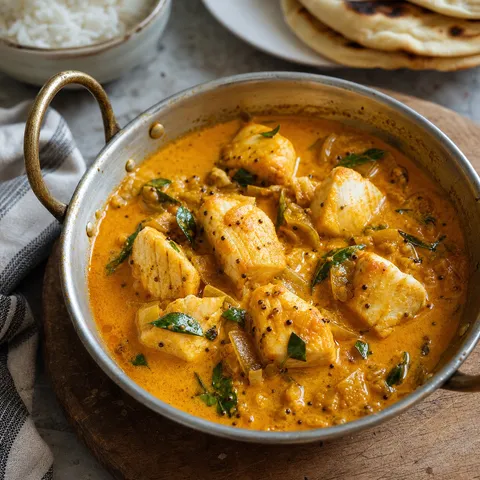
 Fish Curry
A tangy and spicy coastal curry usually made with coconut and tamarind.