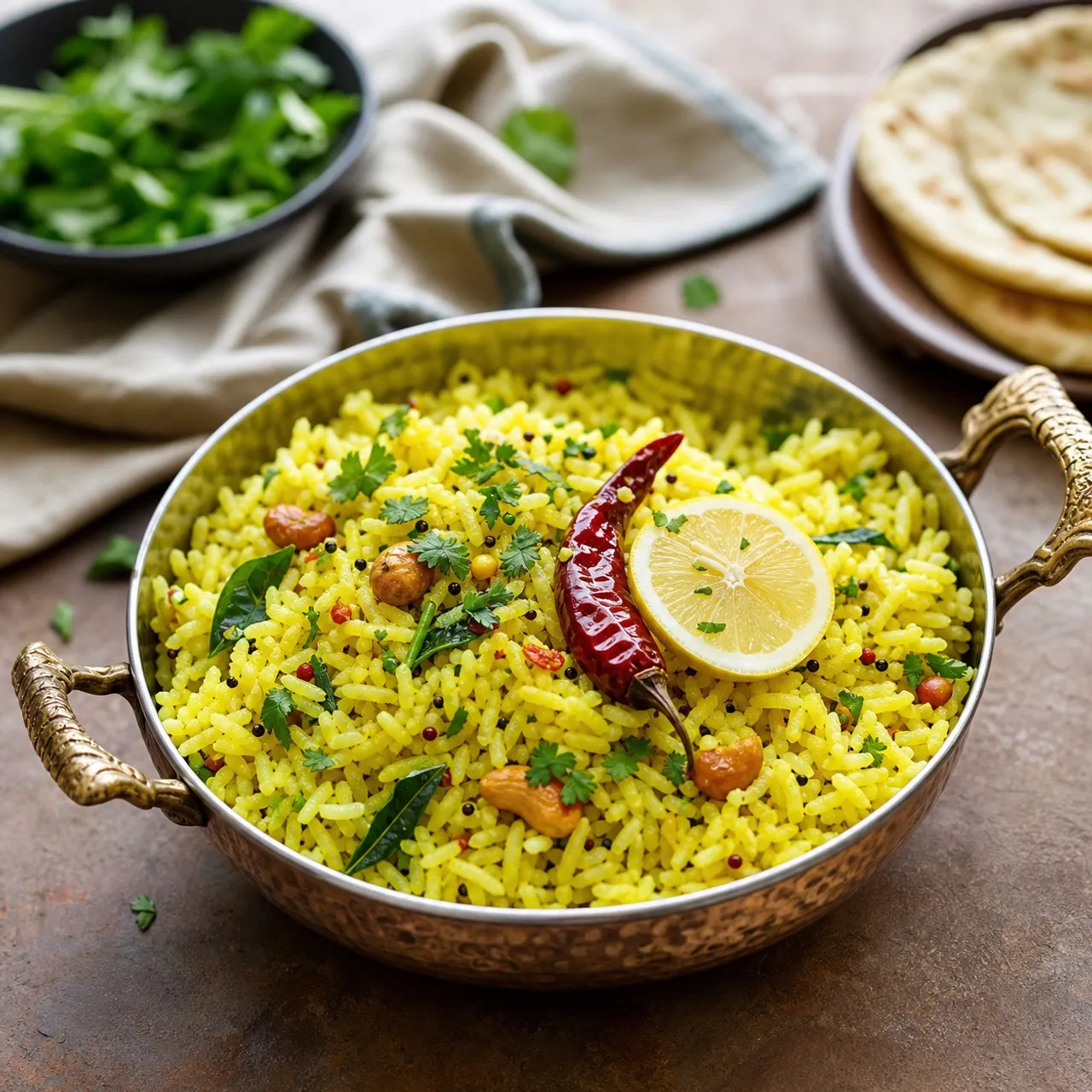
 Indian Images are for illustrative purposes only, may be inaccurate, and do not guarantee the presence or absence of specific ingredients.
 Lemon Rice
A bright, tangy South Indian rice dish tossed with a peanut-and-mustard tempering and finished with fresh lemon juice.
Contains common allergens
In the app, Listahan checks these against your household automatically.
Good to know
- Ready in under 30 minutes
Matched from this dish's own ingredients and timing. Browse more: 30-minute meals
Instructions
6 steps- 1
Spread the cooked rice on a wide plate to cool so the grains stay separate, and fluff it gently with a fork.
- 2
Heat the peanut oil in a large pan over medium heat, add the mustard seeds, and let them splutter for about 20 seconds.
- 3
Add the urad dal and raw peanuts and fry for 2 to 3 minutes until both turn golden, then toss in the slit green chili and curry leaves and saute for 15 seconds.
- 4
Sprinkle in the turmeric, stir for 5 seconds off direct high heat so it does not burn, then add the salt.
- 5
Add the cooled rice and gently fold everything together over low heat for 2 minutes until evenly coated and warmed through.
- 6
Turn off the heat, drizzle in the lemon juice, toss once more, and serve warm garnished with fresh cilantro.
Listahan Family Score™
64/100
Works for many families
Score reflects how well this recipe fits a typical busy household. In the app, your Family Score is personalized to your household's allergens, kids, and pantry.
Nutrition
per serving455
Calories
9 g
Protein
77 g
Carbs
12 g
Fat
Estimated per serving. Actual values depend on the brands and portions you use.
Listahan cooking guide
Chef notes & practical guide
Technique notes, ingredient swaps, serve-alongside ideas, storage guidance, and equipment for this recipe.
Cultural context
Lemon rice, known as chitranna or elumichai sadam in South India, is a temple-food staple often prepared as prasadam, or blessed food, and shared at gatherings. Its bright tang and crackling peanut-mustard tempering make it a common way to use up leftover rice while turning it into something distinct rather than just reheated.
Listahan note
This version relies on fully cooled rice, since day-old or spread-out cooled rice keeps its grains separate through the tempering and tossing, avoiding the mushy texture that warm, fresh rice can produce.
Technique cues
- Spreading the cooked rice on a wide plate to cool, rather than leaving it in a pot, lets excess steam escape so the grains stay distinct and don't clump.
- Letting the mustard seeds fully splutter before adding the next ingredient releases their aromatic oils, which is the base of the tempering's flavor.
- Adding the lemon juice only after the heat is off preserves its bright acidity, since cooking lemon juice directly can dull its sharpness.
Kitchen flow
- Parallel prep
- Cook and cool the rice well ahead of time, ideally the day before, so it's ready to fold in as soon as the tempering is done.
- Make-ahead
- This is a great way to use rice cooked a day or two ahead; freshly cooked warm rice makes the dish stickier.
- Leftover move
- Pack leftover lemon rice cold into a lunchbox; it tastes great at room temperature, unlike many rice dishes.
- Cleanup rhythm
- Make the tempering directly in the pan you'll toss the rice in, adding the rice straight to the same pan rather than switching vessels.
Ingredient brief
Role, handling, and swap guidance for each key ingredient.
Cooked and cooled basmati rice
Base
Purpose: Fully cooled rice holds its shape and separates easily when tossed with the tempering, rather than turning sticky.
Handling: Spread it out to cool and fluff with a fork before using, ideally rice that's been refrigerated overnight.
Adaptation: Any long-grain rice works, though basmati's fragrance is traditional to this dish.
Peanut oil and black mustard seeds
Tempering base
Purpose: The hot oil and popping mustard seeds are the foundation of the tempering, or tadka, that gives the rice its distinctive crackle and aroma.
Handling: Heat the oil until shimmering before adding the mustard seeds, letting them splutter fully before moving on.
Adaptation: A neutral oil like sunflower can replace peanut oil if there's a peanut allergy concern in the household, though the raw peanuts in the dish would also need to be omitted.
Raw peanuts and urad dal
Crunch and texture
Purpose: Fried until golden, they add a nutty crunch that contrasts with the soft rice.
Handling: Fry until both are golden brown, which takes just a couple minutes over medium heat.
Adaptation: Cashews can replace peanuts for a different but similarly crunchy addition.
Fresh lemon juice
Signature tang
Purpose: Added at the very end, it gives the dish its name and its bright, tangy character.
Handling: Drizzle it in only after the heat is turned off, tossing to distribute evenly.
Adaptation: A mix of lemon and a small amount of tamarind paste gives a more complex, traditional sourness.
Technique notes
- Use fully cooled, ideally day-old rice; warm rice breaks down and turns gluey when tossed with the tempering.
- Toast the turmeric only briefly off direct high heat, since it burns and turns bitter quickly.
- Add the lemon juice off the heat entirely, tossing rather than stirring vigorously to avoid breaking the rice grains.
Ingredient swaps
- Nut-free direction
- Omit the raw peanuts and increase the urad dal slightly for crunch without tree nuts or peanuts.
- Extra vegetable direction
- Stir in blanched peas or diced carrots for a more colorful, substantial dish.
- Milder direction
- Reduce or omit the green chili for a version with less heat.
Serve alongside
- Yogurt
- Papadum
- Coconut Chutney
- Buttermilk
- Masala chai
- Sparkling water with lime
Serving suggestions only — check pairings for your household's allergens.
Storage & reheating
- Refrigerate in an airtight container for up to 3 days.
- Serve cold or at room temperature, or reheat briefly in the microwave with a splash of water to loosen the grains.
- Freezing is possible for up to a month, though the texture softens somewhat after thawing.
Equipment
- Wide plate for cooling the rice
- Large pan for the tempering
- Wooden spoon
Make this household-aware
Listahan Pro checks this recipe against your household's allergens, finds pantry-aware swaps, builds the shopping list, and helps you plan the week around it.
Plan it in Listahan
Add Lemon Rice to your week, check it against your household's allergens, and build the shopping list automatically.
More Indian recipes
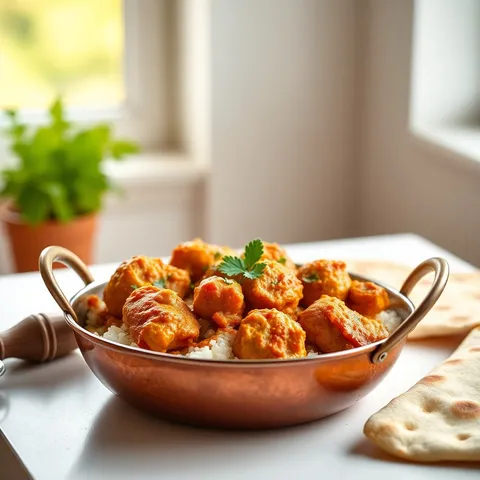 Indian Lens Verified Images are for illustrative purposes only, may be inaccurate, and do not guarantee the presence or absence of specific ingredients.
 Chicken Tikka Masala
Indulge in succulent, yogurt-marinated chicken chunks roasted to perfection and enveloped in a luscious, deeply spiced tomato-cream sauce.
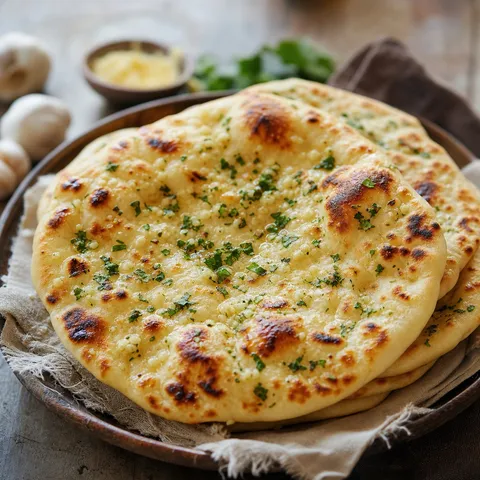 Indian Lens Verified Images are for illustrative purposes only, may be inaccurate, and do not guarantee the presence or absence of specific ingredients.
 Garlic Naan
Tear into this piping hot, blistered flatbread packed with aromatic garlic and brushed generously with irresistible melted butter.
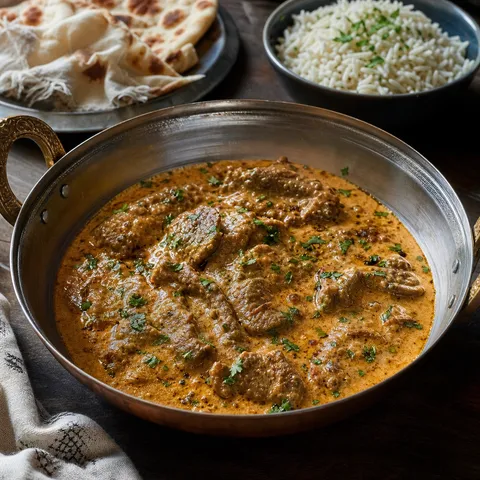 Indian Lens Verified Images are for illustrative purposes only, may be inaccurate, and do not guarantee the presence or absence of specific ingredients.
 Lamb Pasanda
A rich Mughlai dish made with flattened lamb steaks in a creamy almond sauce.