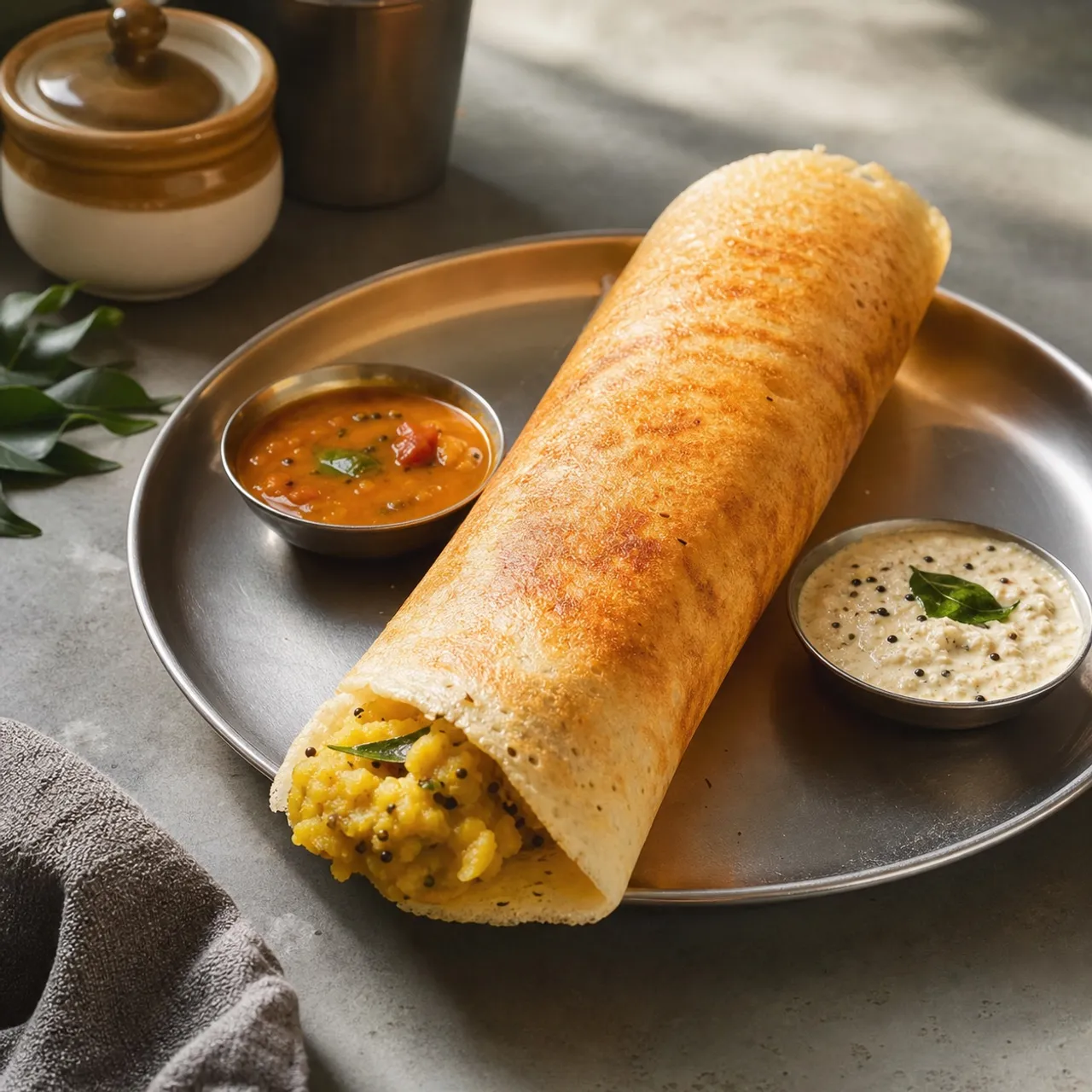
 Indian Images are for illustrative purposes only, may be inaccurate, and do not guarantee the presence or absence of specific ingredients.
 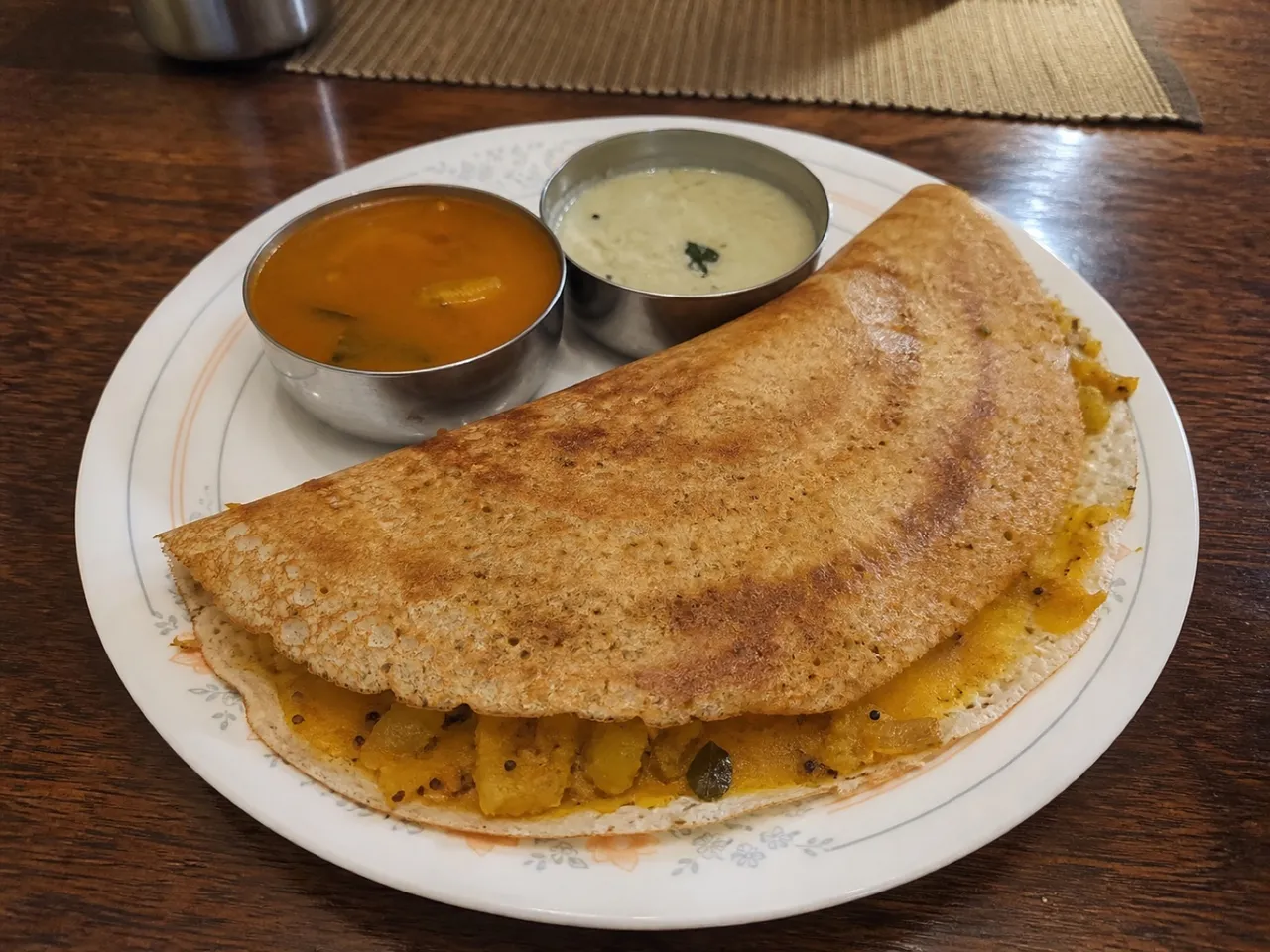 Serving Images are for illustrative purposes only, may be inaccurate, and do not guarantee the presence or absence of specific ingredients.
 Masala Dosa
A popular South Indian crispy crepe made from a fermented batter, filled with potato curry.
Contains common allergens
In the app, Listahan checks these against your household automatically.
Good to know
- Crispy
Matched from this dish's own ingredients and timing. Browse more: crispy recipes
Instructions
6 steps- 1
Soak and Grind: Soak the rice, urad dal, and fenugreek seeds in separate bowls with water for at least 6 hours. Drain. Grind the dal to a fluffy, smooth paste, and the rice to a slightly gritty paste.
- 2
Ferment the Batter: Mix the rice and dal batters together with 1 tsp of salt. Cover and place in a warm area to ferment for 8-12 hours until the batter has risen and is bubbly and airy.
- 3
Prepare Potato Filling (Aloo Masala): Heat 2 tbsp oil in a pan. Splutter 1 tsp mustard seeds and 1 tbsp chana dal. Add sliced onions, green chilies, and curry leaves. Sauté until onions are translucent.
- 4
Finish the Filling: Stir in 1/2 tsp turmeric and salt. Add the mashed potatoes and mix thoroughly. Turn off the heat and garnish with fresh cilantro.
- 5
Make the Dosa: Heat a cast-iron tawa (griddle) over medium-high heat. Lightly oil it, then wipe off excess. Pour a ladle of fermented batter in the center and quickly spread it outward in a circular motion to form a thin, large crepe.
- 6
Cook and Stuff: Drizzle a little ghee or oil around the edges. Cook until the bottom is crispy and golden brown. Place a generous scoop of the potato filling in the center, fold the dosa over it, and serve hot with sambhar and coconut chutney.
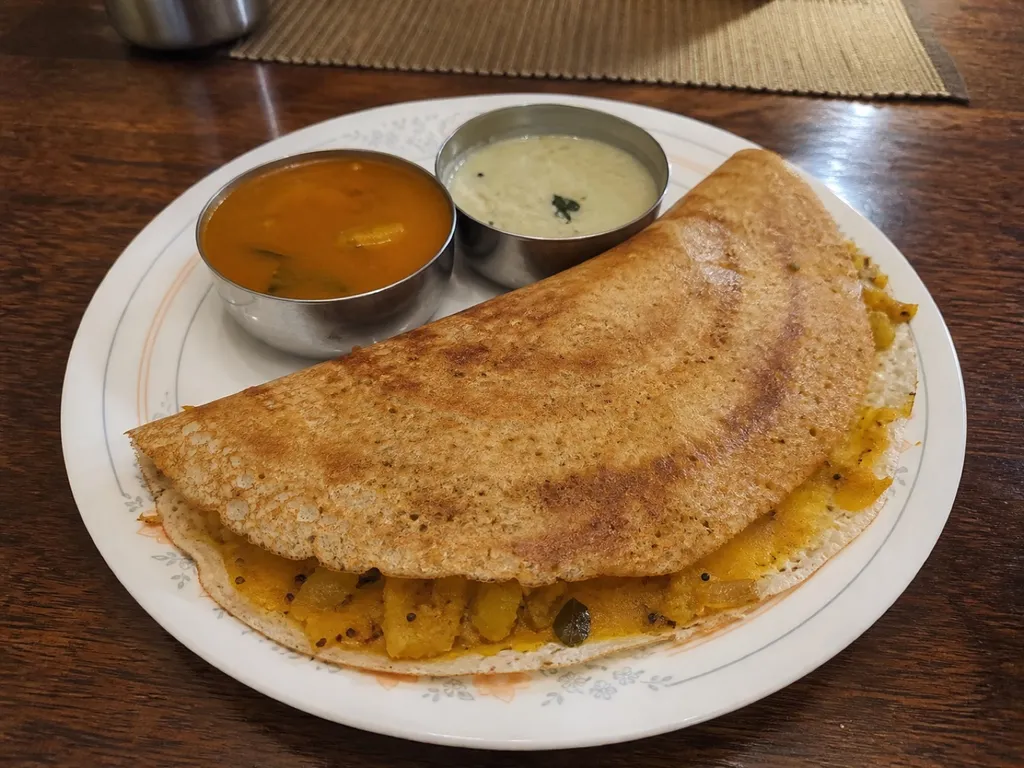 Images are for illustrative purposes only, may be inaccurate, and do not guarantee the presence or absence of specific ingredients.
 Listahan Family Score™
59/100
Works for many families
Score reflects how well this recipe fits a typical busy household. In the app, your Family Score is personalized to your household's allergens, kids, and pantry.
Nutrition
per serving690
Calories
17 g
Protein
148 g
Carbs
2 g
Fat
Estimated per serving. Actual values depend on the brands and portions you use.
Listahan cooking guide
Chef notes & practical guide
Technique notes, ingredient swaps, serve-alongside ideas, storage guidance, and equipment for this recipe.
Cultural context
The dosa is a fermented crepe that originated in South India, with the masala (spiced potato-filled) version attributed to the Udupi restaurant tradition of coastal Karnataka that spread across India and the diaspora. The batter of fermented rice and urad lentils creates a naturally sour, light pancake that is distinct from North Indian breads and reflects the ingredients, climate, and culinary philosophy of the Deccan region. Masala dosa became the most recognized South Indian dish internationally, though it represents only one aspect of a vastly diverse regional cuisine.
Listahan note
This version focuses on the two elements most home cooks underinvest in — fermenting the batter long enough to develop sourness and making the potato filling properly seasoned — because both are what separate an authentic dosa from a plain bland crepe.
Technique cues
- Ferment the batter at room temperature for 12-16 hours in warm climates or 24 hours in a cooler kitchen — the batter should smell pleasantly sour and have increased in volume by roughly 50% when ready; under-fermented batter produces dosas that tear and taste flat.
- Pour the batter on a hot pan and immediately spread it in a single outward spiral motion — if you go over a spot twice it tears, and if the pan is too cool the batter sticks before you can spread it.
- Add oil around the edges of the dosa after the top sets but before the bottom browns fully — this is what creates the crispy lace-like border and the golden underside characteristic of a well-made dosa.
Kitchen flow
- Parallel prep
- Soak the rice and lentils the night before, grind in the morning, and let the batter ferment all day — the active prep is minimal and spread over 24 hours rather than concentrated.
- Make-ahead
- The batter keeps refrigerated for up to 5 days and continues to ferment slowly; dosas made on day 3 are often more sour and complex than day 1.
- Leftover move
- Leftover potato filling reheats perfectly and makes excellent stuffed parathas, breakfast hash, or a quick aloo sabzi served with yogurt.
- Cleanup rhythm
- Season a cast-iron flat griddle before the first dosa by rubbing with a cut onion dipped in oil — this prevents sticking and takes under a minute; a single griddle handles the entire batch without cleaning between dosas.
Ingredient brief
Role, handling, and swap guidance for each key ingredient.
long-grain rice
batter base
Purpose: Rice provides the starchy body and crispness of the dosa; parboiled or raw rice both work but raw produces a slightly lacier, more delicate crepe.
Handling: Soak separately from the lentils for at least 4 hours; grind to a smooth batter with enough water to achieve a thick but pourable consistency.
Adaptation: Rice flour can be used for a quick unbaked dosa, but the fermented flavor cannot be replicated.
whole black urad dal
batter leavening and protein
Purpose: The urad lentils provide the protein for fermentation and the characteristic flavor and slight stickiness that allows the dosa to spread and adhere.
Handling: Soak separately and grind to a very smooth, slightly aerated batter; the longer you grind, the fluffier and more ferment-ready the batter becomes.
Adaptation: Split urad dal (without skin) can substitute but produces a slightly paler, less flavorful dosa.
Yukon Gold potatoes
filling base
Purpose: Yukon Golds mash smoothly while still holding slightly distinct pieces, providing the interior texture that defines masala dosa.
Handling: Boil until just tender, then mash coarsely — not to a smooth puree — for texture variation in the filling.
Adaptation: Russets also work; the filling can include finely diced carrots or peas added with the onions.
mustard seeds
filling aromatics
Purpose: Mustard seeds bloomed in oil is the fundamental technique of South Indian cooking, providing a nutty, slightly bitter base note absent from North Indian cooking.
Handling: Add to very hot oil and cover immediately — they pop violently and splatter, and the cover prevents burns and mess.
Adaptation: Cumin seeds can be substituted but produce a distinctly North Indian rather than South Indian flavor profile.
fresh curry leaves
South Indian aromatic signature
Purpose: Curry leaves added to the hot oil release a complex fragrance that is unmistakably South Indian and cannot be replicated by any dried or powder substitute.
Handling: Add to hot oil immediately after the mustard seeds pop and stand back — they will spatter in the oil.
Adaptation: Dried curry leaves have some fragrance; omitting entirely produces a dosa filling that tastes correct but missing a defining regional note.
Technique notes
- The griddle is at the right temperature when a drop of water sprinkled on it skitters and evaporates instantly — too cool and the batter sticks, too hot and the batter sets before you can spread it.
- Spread the dosa batter from the center outward in a single continuous motion covering about 10 inches in diameter; the thinner the crepe, the crispier the result.
- The potato filling should be well-seasoned to the point of tasting slightly over-salted on its own because it will be encased in a bland crepe — a properly seasoned filling is what carries the whole dish.
Ingredient swaps
- Gluten-free direction
- Traditional masala dosa is naturally gluten-free; verify that no wheat is present in any store-bought spice mix used in the filling.
- Weeknight shortcut
- Use dosa batter mix available at South Asian grocery stores — it needs only water and a short rest, eliminating the soaking and grinding steps entirely.
Serve alongside
- sambar
- coconut chutney
- tomato-onion chutney
- filter coffee (South Indian style)
- masala chai
Serving suggestions only — check pairings for your household's allergens.
Storage & reheating
- The batter keeps refrigerated in a sealed container for up to 5 days; stir before each use as the heavier starch settles to the bottom.
- Cooked dosas do not store well — they become soft and lose their crispness; make batter ahead and cook dosas fresh to order.
Equipment
- flat cast-iron tawa or heavy crepe pan for even heat distribution
- wide ladle for spreading batter in a consistent spiral
- long thin spatula for rolling and removing the dosa without tearing
Make this household-aware
Listahan Pro checks this recipe against your household's allergens, finds pantry-aware swaps, builds the shopping list, and helps you plan the week around it.
Plan it in Listahan
Add Masala Dosa to your week, check it against your household's allergens, and build the shopping list automatically.
More Indian recipes
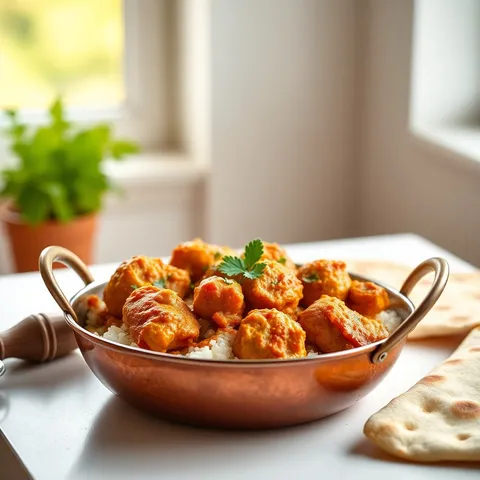 Indian Lens Verified Images are for illustrative purposes only, may be inaccurate, and do not guarantee the presence or absence of specific ingredients.
 Chicken Tikka Masala
Indulge in succulent, yogurt-marinated chicken chunks roasted to perfection and enveloped in a luscious, deeply spiced tomato-cream sauce.
 Indian Lens Verified Images are for illustrative purposes only, may be inaccurate, and do not guarantee the presence or absence of specific ingredients.
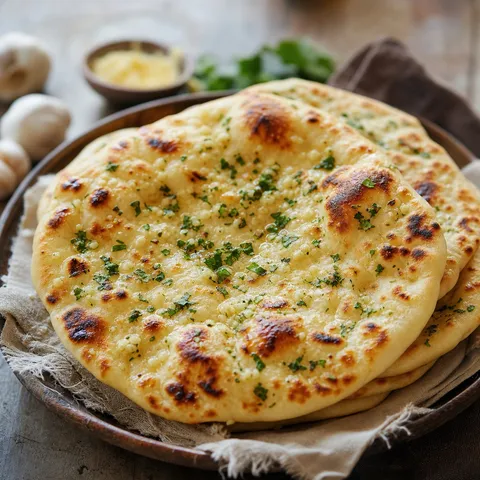
 Garlic Naan
Tear into this piping hot, blistered flatbread packed with aromatic garlic and brushed generously with irresistible melted butter.
 Indian Lens Verified Images are for illustrative purposes only, may be inaccurate, and do not guarantee the presence or absence of specific ingredients.
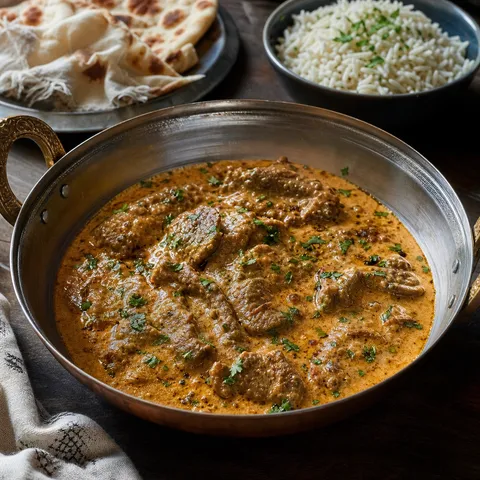
 Lamb Pasanda
A rich Mughlai dish made with flattened lamb steaks in a creamy almond sauce.