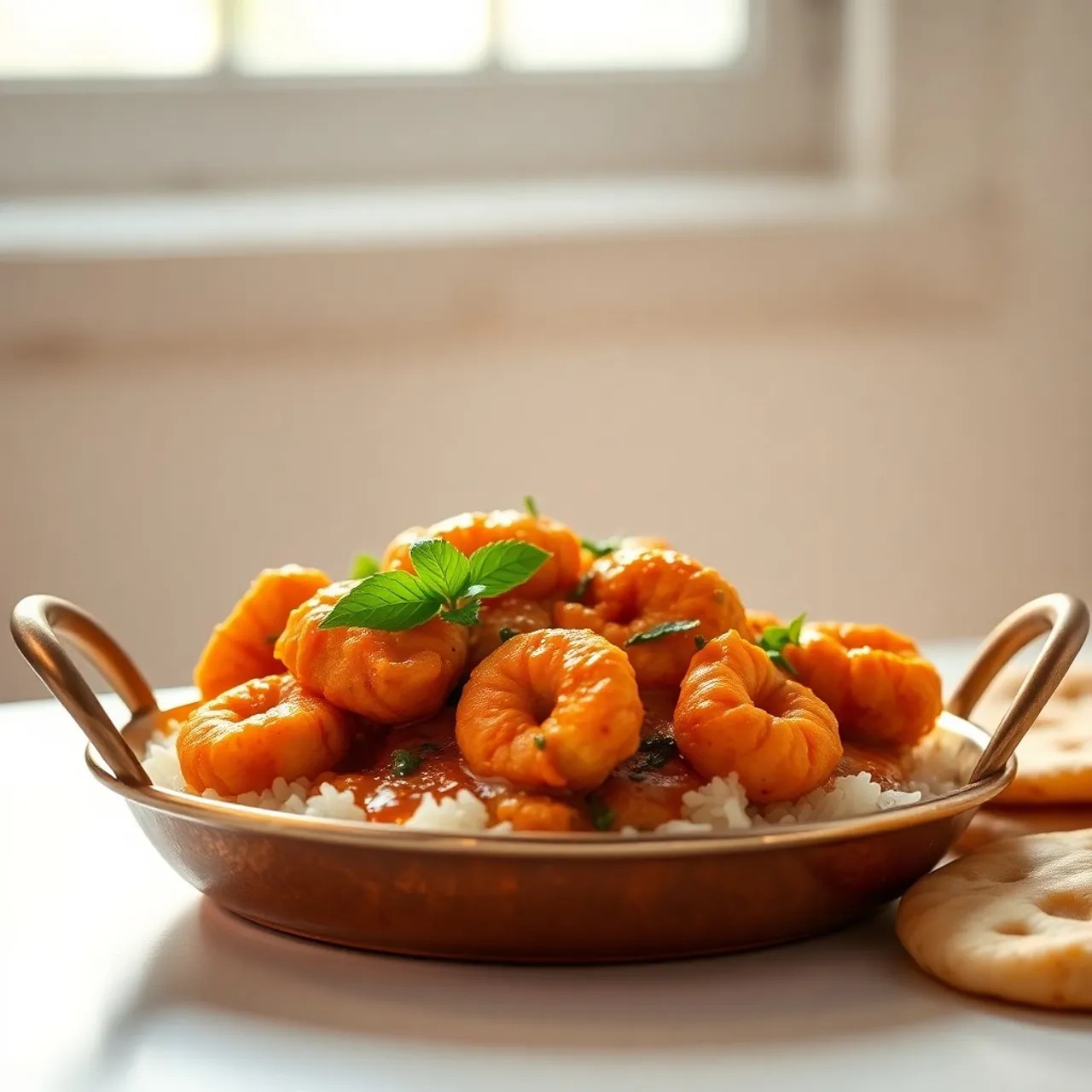
 Indian Images are for illustrative purposes only, may be inaccurate, and do not guarantee the presence or absence of specific ingredients.
 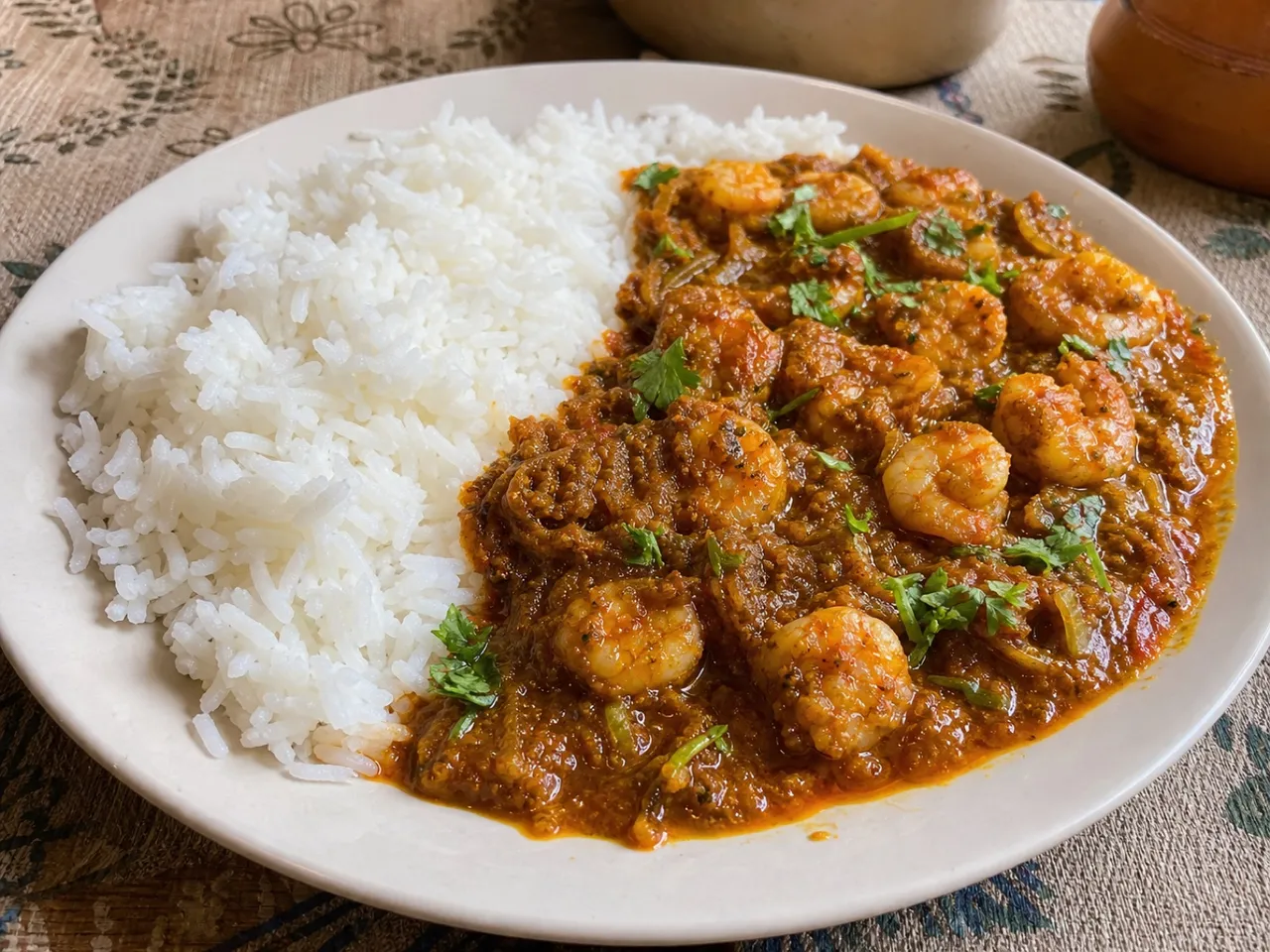 Serving Images are for illustrative purposes only, may be inaccurate, and do not guarantee the presence or absence of specific ingredients.
 Prawn Masala
A spicy, semi-dry prawn preparation coated in a thick tomato-onion masala.
Contains common allergens
In the app, Listahan checks these against your household automatically.
Good to know
- Ready in under 30 minutes
Matched from this dish's own ingredients and timing. Browse more: 30-minute meals
Instructions
6 steps- 1
Marinate Prawns: In a bowl, toss the cleaned prawns with 1/2 tsp turmeric, 1/2 tsp red chili powder, and 1/2 tsp salt. Set aside for 15 minutes.
- 2
Cook the Masala Base: Heat 3 tbsp oil in a skillet over medium heat. Add 1/2 tsp mustard seeds and a few curry leaves. Add the finely diced onions and sauté for 8-10 minutes until deep golden brown.
- 3
Add Aromatics & Tomatoes: Stir in the ginger-garlic paste and cook for 1 minute. Add the pureed tomatoes, Kashmiri chili powder, and 1 tsp coriander powder.
- 4
Reduce the Masala: Cook the tomato-onion mixture for 8-10 minutes, stirring frequently, until it reduces to a thick, dark paste and the oil leaves the sides of the pan.
- 5
Cook Prawns: Increase the heat to medium-high. Toss the marinated prawns into the thick masala. Stir-fry for 4-6 minutes.
- 6
Finish: The prawns are done when they curl into a 'C' shape and turn pink and opaque. Do not overcook, or they will become rubbery. Garnish with a squeeze of lime and fresh cilantro.
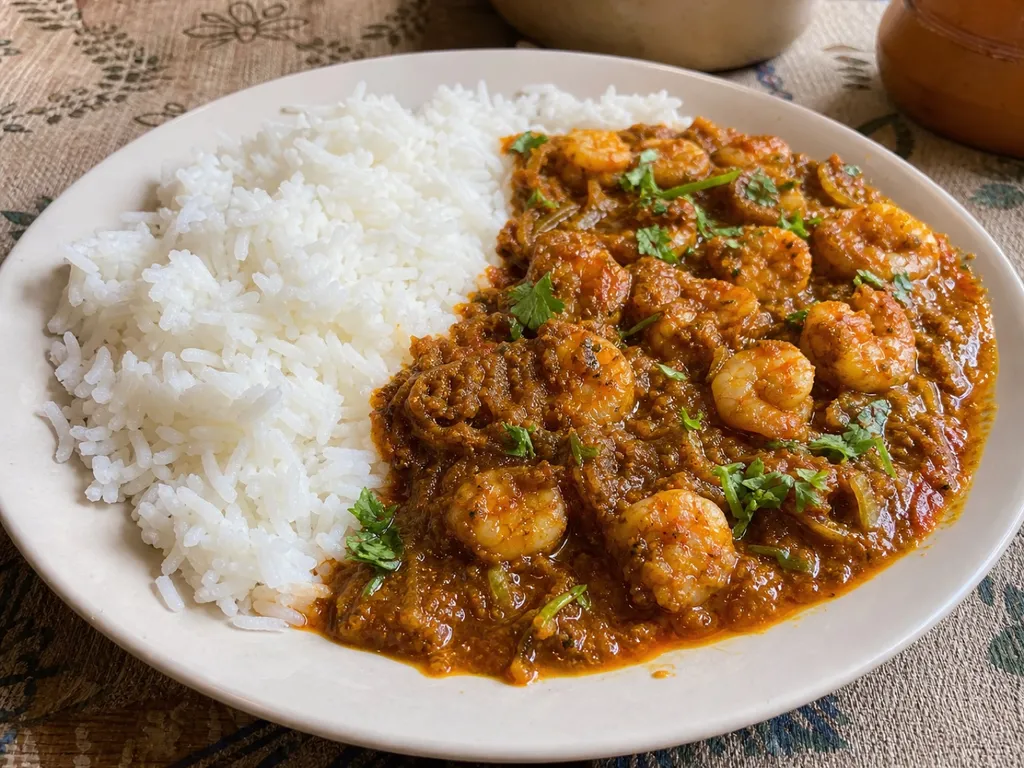 Images are for illustrative purposes only, may be inaccurate, and do not guarantee the presence or absence of specific ingredients.
 Listahan Family Score™
62/100
Works for many families
Score reflects how well this recipe fits a typical busy household. In the app, your Family Score is personalized to your household's allergens, kids, and pantry.
Nutrition
per serving150
Calories
29 g
Protein
9 g
Carbs
1 g
Fat
Estimated per serving. Actual values depend on the brands and portions you use.
Listahan cooking guide
Chef notes & practical guide
Technique notes, ingredient swaps, serve-alongside ideas, storage guidance, and equipment for this recipe.
Cultural context
Prawn masala appears in various forms along India's entire coastline — from Goan prawn curries enriched with coconut milk to the dry, tomato-forward versions of Maharashtra and the tamarind-soured preparations of the Malabar coast. What the coastal versions share is a lightness of hand with aromatics that allows the natural sweetness of fresh prawns to remain perceptible through the spice. Inland Indian prawn masala, by contrast, tends toward richer, more aromatic gravies influenced by Mughal cooking. Both traditions agree that prawns should never be overcooked, and this principle is the dish's most important technical rule.
Listahan note
This version keeps the sauce sharp and tomato-forward with a restrained use of cream, so the prawn flavor comes through clearly and the dish works well over both rice and with flatbread.
Technique cues
- Cook prawns for no more than 2-3 minutes total — they continue cooking off heat from residual warmth, and overcooked prawns turn rubbery and lose the sweetness that makes prawn masala worth making.
- Build the masala base until the oil visibly separates from the tomato-onion mixture before adding prawns; a properly cooked base means the spices are bloomed and the sauce will cling to the prawns rather than sliding off.
- Deglaze the pan with a tablespoon of water immediately after adding the spices to the onion base — this prevents the delicate ground spices from scorching in the brief window before the tomatoes are added.
Kitchen flow
- Parallel prep
- Make the masala base fully in advance; when ready to eat, simply reheat the base, add prawns, and the meal is on the table in under 5 minutes.
- Make-ahead
- The masala base (without prawns) keeps refrigerated for up to 4 days; cook prawns fresh each time and add to the heated base for best texture.
- Leftover move
- Flake leftover cooked prawns from the sauce and toss with cooked rice noodles and a squeeze of lime for a quick next-day noodle bowl.
- Cleanup rhythm
- A single wide pan handles the entire dish; deglaze with a small amount of water between the spice and tomato stages to lift any spice fond and prevent burnt residue.
Ingredient brief
Role, handling, and swap guidance for each key ingredient.
large prawns (shell-on or peeled)
main protein
Purpose: Large prawns hold their texture better than small shrimp during even brief overcooking, giving you a wider margin of error.
Handling: Devein but leave tails on if shell-on; pat completely dry before adding to the pan so they sear rather than steam.
Adaptation: Large sea scallops (halved horizontally) can replace prawns for an equally sweet shellfish alternative with similar quick-cooking requirements.
tomatoes
sauce acid and body
Purpose: Tomatoes provide the tangy, fruity backbone that balances the heat of the spices and the sweetness of the prawns.
Handling: Use ripe Roma tomatoes, chopped fine; cook over medium-high heat until they break down into a thick paste with visible oil separation.
Adaptation: One 14-oz can of crushed tomatoes reduces the cooking time and works well outside of peak tomato season.
ginger-garlic paste
aromatic base
Purpose: The combination of fresh ginger and garlic provides the pungent, warming base that distinguishes Indian masala from other prawn preparations.
Handling: Use equal parts by weight, blended to a smooth paste; cook until the raw aroma disappears before adding tomatoes.
Adaptation: Store-bought ginger-garlic paste (available in Indian grocery stores) is a perfectly good time saver.
Kashmiri red chili powder
color and mild heat
Purpose: Kashmiri chili provides the characteristic deep red color of Indian restaurant-style masala with moderate rather than intense heat.
Handling: Add to hot oil with other ground spices and stir continuously for 20-30 seconds to bloom the color compounds.
Adaptation: A mix of one part regular chili powder to two parts smoked paprika approximates the color and mild heat level.
fresh cilantro
herbal finish
Purpose: Added off heat, fresh cilantro brightens the finished dish and provides a visual contrast against the red sauce.
Handling: Chop both leaves and thin stems; add after the pan is off heat to keep the flavor fresh rather than cooked.
Adaptation: Thinly sliced green onion tops provide a similar freshness for cilantro-averse eaters.
Technique notes
- Searing prawns for 60 seconds in a very hot dry pan before adding them to the sauce creates a light Maillard crust that holds up to the masala and adds a subtle roasted note.
- A teaspoon of ghee stirred in at the very end enriches the sauce and adds a nutty background note that ties together all the spices — one of the most impactful finishing moves in Indian cooking for the effort involved.
- If cooking large prawns in shell, make a shallow cut down the back through the shell to the vein, remove the vein, and cook shell-on; the shell protects the prawn from direct heat and results in noticeably juicier meat.
Ingredient swaps
- Shellfish-free direction
- Replace prawns with cubed firm tofu (pressed and pan-seared first) or paneer for a vegetarian masala that uses the same spice base.
- Lower-sodium direction
- Reduce added salt by half and finish with a squeeze of lime juice; the acidity reads as saltiness and compensates effectively.
- Weeknight shortcut
- Frozen, pre-peeled, deveined prawns thawed under cold water work perfectly here; buy the largest size available to ensure the best texture.
Serve alongside
- Steamed basmati rice
- Roomali roti (thin handkerchief bread)
- Cucumber raita
- Lemon pickle
- Cold Kingfisher beer or any light lager
- Fresh lime soda (salted or sweet)
- Chilled mango lassi
Serving suggestions only — check pairings for your household's allergens.
Storage & reheating
- Cooked prawn masala keeps for 1 day refrigerated; beyond that, the prawns toughen significantly and the texture becomes unpleasant.
- Do not freeze cooked prawns in sauce — they become waterlogged and rubbery when thawed; the masala base alone freezes well for up to 1 month.
Equipment
- Wide skillet or karahi for even heat and quick evaporation of the tomato base
- Splatter screen for the tomato reduction stage
- Instant-read thermometer (optional but useful — prawns are done at 120F internal temperature)
- Paper towels for drying prawns before cooking
Make this household-aware
Listahan Pro checks this recipe against your household's allergens, finds pantry-aware swaps, builds the shopping list, and helps you plan the week around it.
Plan it in Listahan
Add Prawn Masala to your week, check it against your household's allergens, and build the shopping list automatically.
More Indian recipes
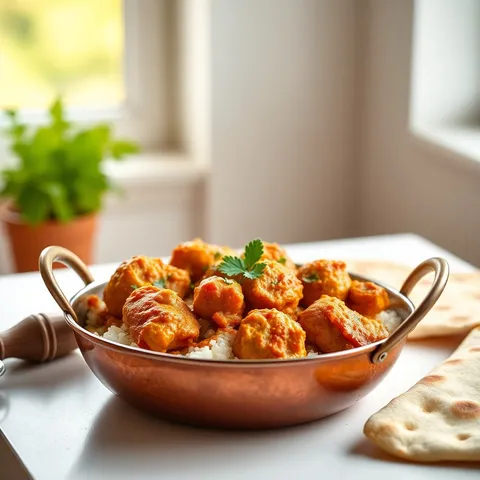 Indian Lens Verified Images are for illustrative purposes only, may be inaccurate, and do not guarantee the presence or absence of specific ingredients.
 Chicken Tikka Masala
Indulge in succulent, yogurt-marinated chicken chunks roasted to perfection and enveloped in a luscious, deeply spiced tomato-cream sauce.
 Indian Lens Verified Images are for illustrative purposes only, may be inaccurate, and do not guarantee the presence or absence of specific ingredients.
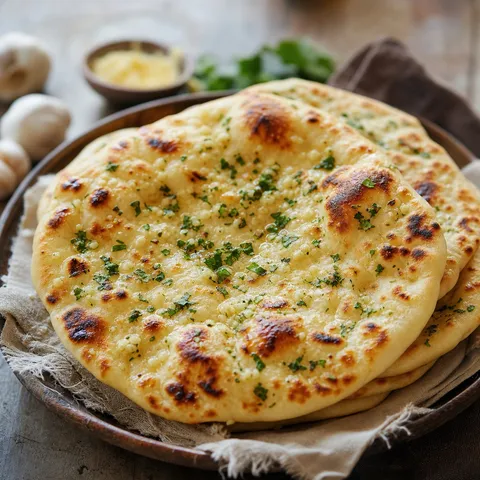
 Garlic Naan
Tear into this piping hot, blistered flatbread packed with aromatic garlic and brushed generously with irresistible melted butter.
 Indian Lens Verified Images are for illustrative purposes only, may be inaccurate, and do not guarantee the presence or absence of specific ingredients.
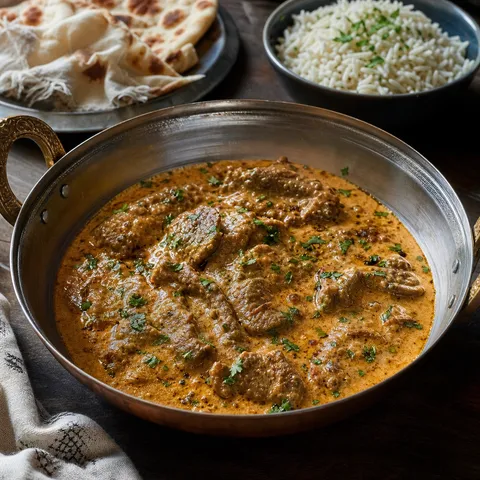
 Lamb Pasanda
A rich Mughlai dish made with flattened lamb steaks in a creamy almond sauce.