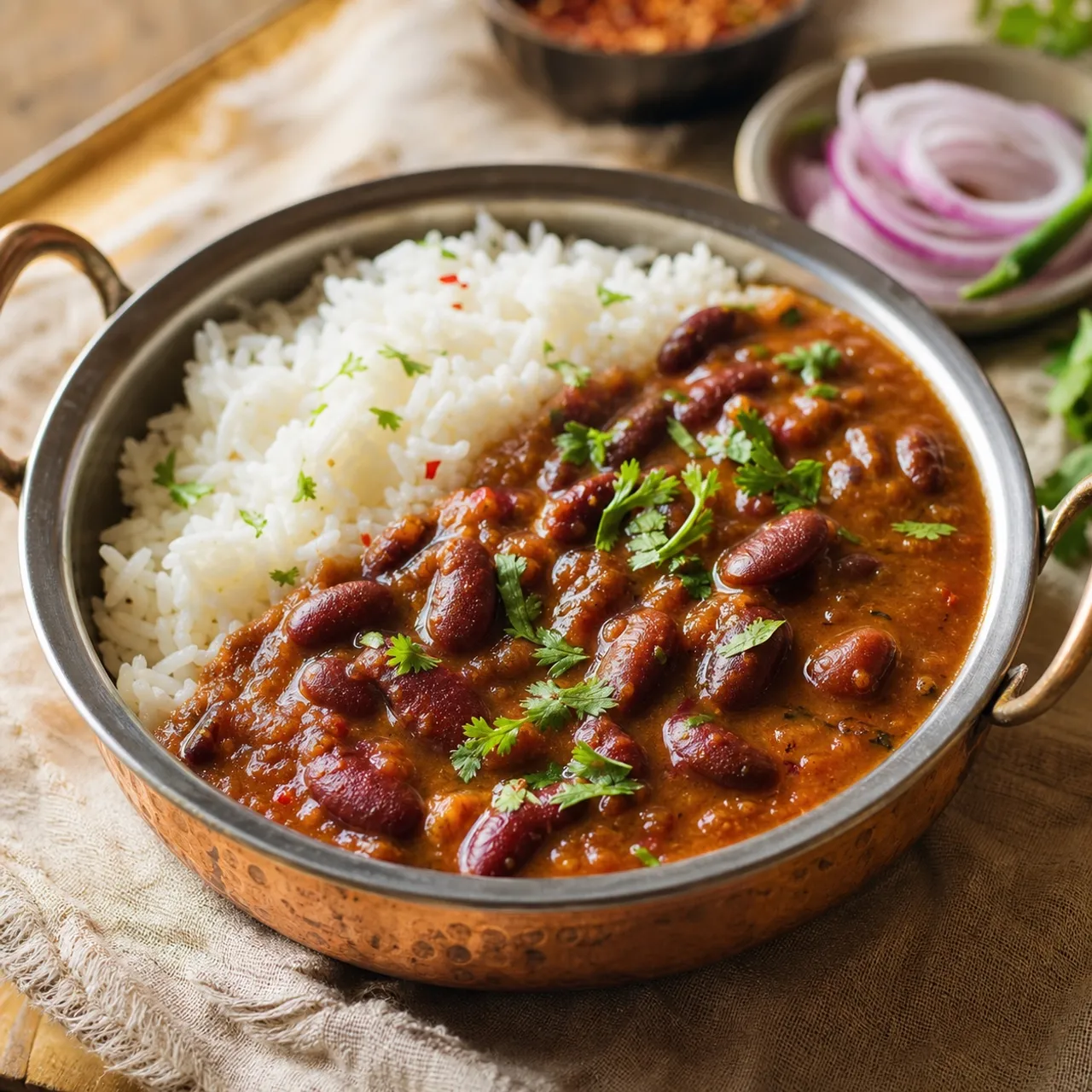
 Indian Images are for illustrative purposes only, may be inaccurate, and do not guarantee the presence or absence of specific ingredients.
 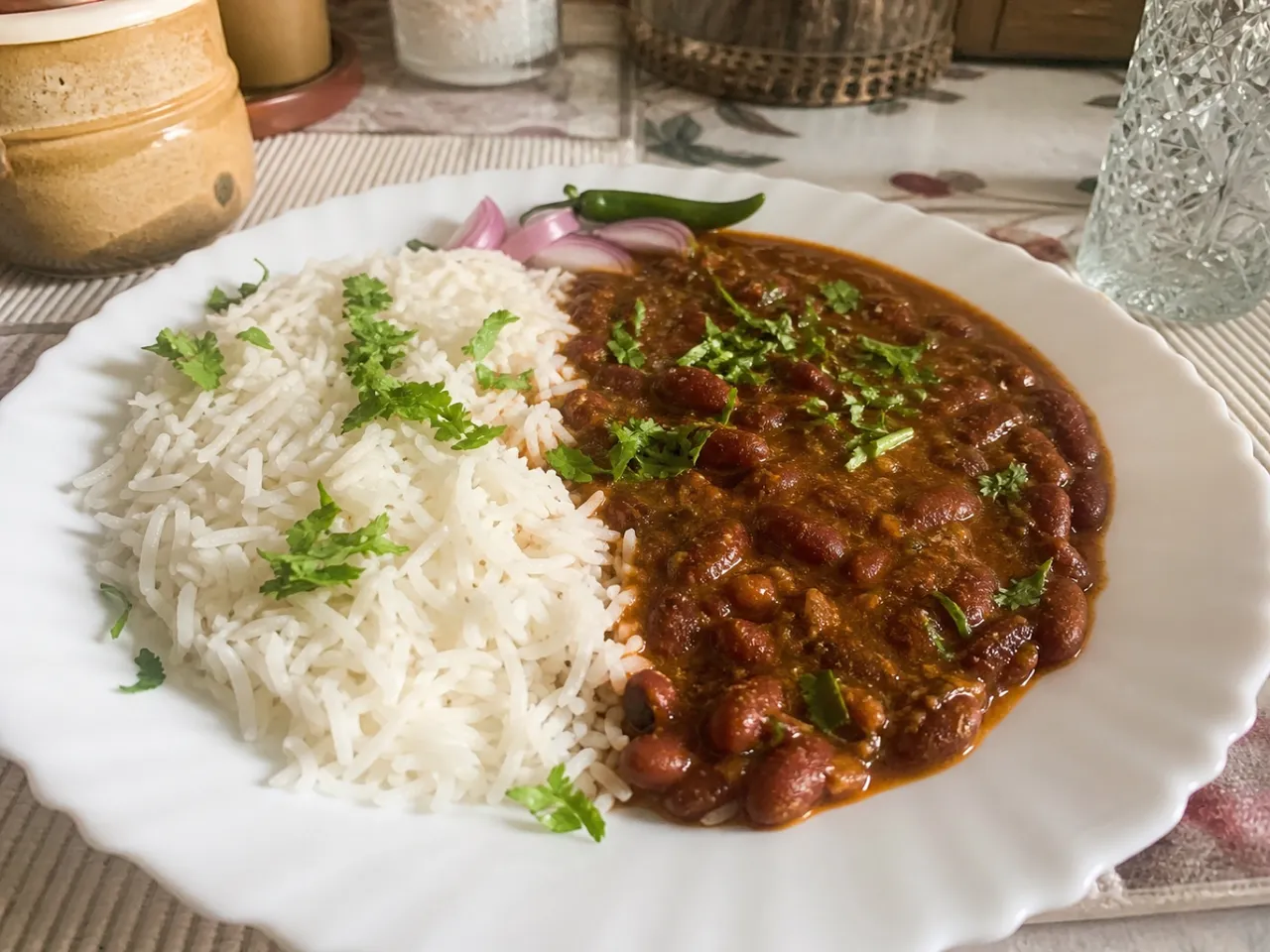 Serving Images are for illustrative purposes only, may be inaccurate, and do not guarantee the presence or absence of specific ingredients.
 Rajma Chawal
Red kidney beans in a thick gravy with many Indian whole spices, usually served with rice.
Contains common allergens
In the app, Listahan checks these against your household automatically.
Instructions
6 steps- 1
Boil the Beans: Drain the soaked kidney beans. Place them in a pressure cooker with 3 cups of water and 1 tsp salt. Cook for 20-25 minutes (about 4-5 whistles) until the beans are incredibly soft and easily mashable.
- 2
Cook the Onions: Heat 2 tbsp oil in a heavy-bottomed pot over medium heat. Crackle the cumin seeds. Add the pureed onions and cook for 10-12 minutes until deeply golden brown and the raw smell is gone.
- 3
Aromatics and Spices: Stir in the ginger-garlic paste and cook for 1 minute. Add 1 tsp coriander powder, 1 tsp Kashmiri chili powder, and 1/2 tsp turmeric. Sauté for 30 seconds.
- 4
Simmer the Tomatoes: Pour in the tomato puree. Cook for 10-15 minutes on medium heat until the masala thickens, reduces, and the oil separates at the edges.
- 5
Combine: Add the boiled kidney beans along with their cooking liquid to the masala. Mash a few beans against the side of the pot to thicken the gravy.
- 6
Finish: Simmer uncovered for 15 minutes to allow the beans to absorb the rich flavors. Stir in 1/2 tsp garam masala, 2 tbsp butter, and a handful of chopped cilantro. Serve piping hot over steamed Basmati rice.
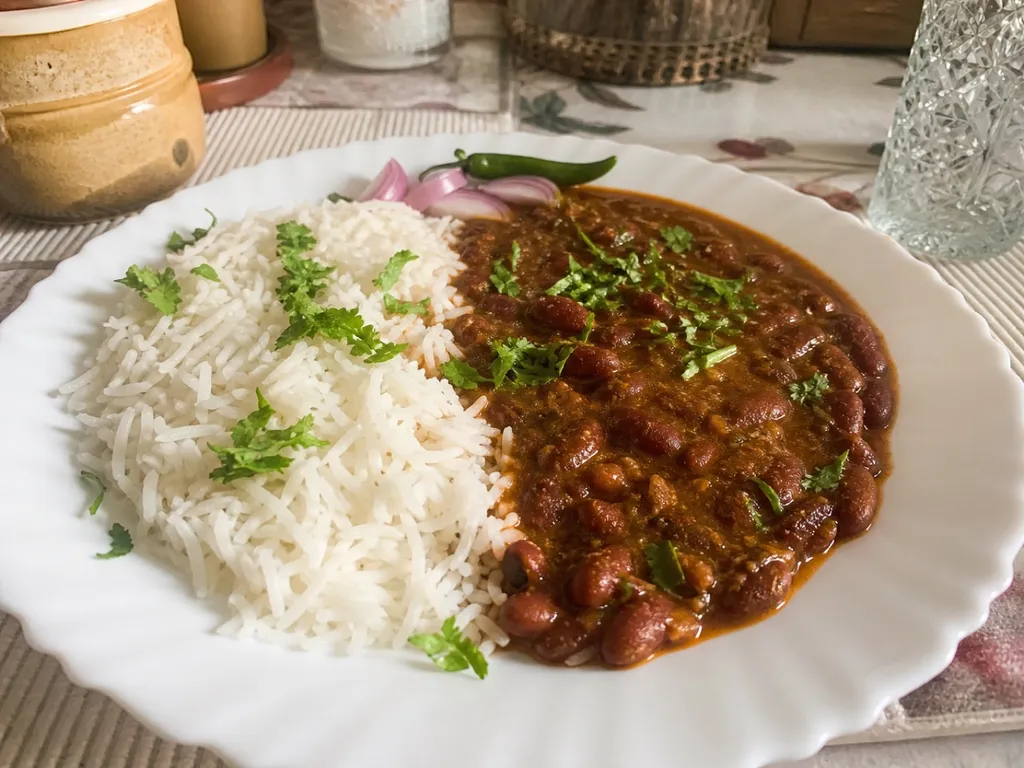 Images are for illustrative purposes only, may be inaccurate, and do not guarantee the presence or absence of specific ingredients.
 Listahan Family Score™
62/100
Works for many families
Score reflects how well this recipe fits a typical busy household. In the app, your Family Score is personalized to your household's allergens, kids, and pantry.
Nutrition
per serving150
Calories
6 g
Protein
20 g
Carbs
6 g
Fat
Estimated per serving. Actual values depend on the brands and portions you use.
Listahan cooking guide
Chef notes & practical guide
Technique notes, ingredient swaps, serve-alongside ideas, storage guidance, and equipment for this recipe.
Cultural context
Rajma chawal, kidney beans in spiced tomato gravy served over rice, is the definitive comfort food of North India, particularly in Punjab and Delhi. The dish became widespread in North India in the 20th century after kidney beans arrived via trade routes from the Americas and found a natural home in the Punjabi style of long-simmered, tomato-based gravies. It is now synonymous with home cooking and is treated by many North Indians the way mac and cheese is treated in North America: a dish that no restaurant version ever matches what your family makes.
Listahan note
This version builds a deeply flavored masala base that cooks long enough for the tomatoes and onion to turn almost jammy, then finishes with the kidney beans smashed slightly to thicken the gravy naturally.
Technique cues
- Cook the onion-tomato masala base on medium-low heat until the oil visually separates from the sides of the mixture (the 'bhunao' stage); this means the raw flavors have fully cooked out and the base is caramelized properly.
- Use dried kidney beans that you have soaked and pressure cooked yourself rather than canned; they hold their shape better and release starch into the gravy that you cannot get from canned beans.
- Mash 4-5 beans directly into the gravy with the back of a spoon after the first 10 minutes of simmering to thicken the sauce naturally without adding flour or cornstarch.
Kitchen flow
- Parallel prep
- While the beans pressure cook, build the masala base so both are ready to combine at the same time; the rice can cook simultaneously on a second burner.
- Make-ahead
- Rajma tastes significantly better on day two after the beans have absorbed the gravy overnight; make the full batch a day ahead and reheat gently.
- Leftover move
- Mash leftover rajma into a thick paste and use as a filling for parathas or as a spread on toast with a squeeze of lime and raw onion.
- Cleanup rhythm
- The pressure cooker insert and masala pot are the two main pieces to clean; soak both immediately after emptying to prevent the starchy cooking liquid from cementing to the sides.
Ingredient brief
Role, handling, and swap guidance for each key ingredient.
dried kidney beans (rajma)
protein and body
Purpose: Slow-cooked dried kidney beans develop a creamy interior and release starch that thickens the gravy in a way canned beans cannot replicate.
Handling: Soak overnight in plenty of cold water, drain, then pressure cook with salt until completely tender but still holding their shape.
Adaptation: Canned kidney beans work on weeknights; rinse well and reduce the simmering time to 15 minutes since they are already fully cooked.
onions
masala base
Purpose: Deeply caramelized onion creates the sweet, savory foundation that gives the gravy its depth and body.
Handling: Finely dice and cook over medium heat until golden-brown, at least 15 minutes, before adding tomatoes.
Adaptation: No good substitute; shallots can replace standard onions but will produce a milder, slightly sweeter base.
tomatoes
acidity and body
Purpose: Fresh or canned tomatoes cook down into the caramelized masala to form a thick, tangy base that balances the earthiness of the beans.
Handling: Use ripe fresh tomatoes blended to a puree, or crushed canned tomatoes; add to the cooked onion and cook until the mixture is paste-like and oil separates.
Adaptation: Canned crushed tomatoes are a consistent, year-round substitute that often produce better results than out-of-season fresh tomatoes.
garam masala
finishing spice
Purpose: Added at the very end of cooking, garam masala provides aromatic top notes that would be driven off if cooked too long.
Handling: Stir in off-heat or in the last 2 minutes of cooking so the volatile aromatics remain in the finished dish.
Adaptation: A mixture of ground cardamom, clove, cinnamon, and black pepper makes a usable quick substitute.
basmati rice
serving vehicle
Purpose: Long-grain basmati rice with its floral aroma is the culturally correct pairing that balances the rich, spiced gravy.
Handling: Rinse until the water runs clear, then cook using the absorption method with a pinch of salt for properly fluffy, separate grains.
Adaptation: Any long-grain white rice works; short-grain varieties become sticky and absorb the gravy in an undesirable way.
Technique notes
- A tablespoon of dried fenugreek leaves (kasuri methi) crumbled over the rajma in the last 5 minutes of cooking adds a slightly bitter, aromatic complexity that restaurant versions rely on but many home recipes omit.
- Do not rush the onion-tomato masala stage; the 20-25 minutes of cooking until the oil separates is the single most important step, and cutting it short produces a thin, raw-tasting gravy that no amount of extra simmering will fix.
- Serve with a knob of butter or ghee on the rice, not the rajma; it melts into the grains and adds richness without making the already-substantial bean gravy even heavier.
Ingredient swaps
- Gluten-free direction
- Rajma chawal is naturally gluten-free; verify that any commercial spice blends used do not contain anti-caking fillers that include wheat starch.
- Weeknight shortcut
- Use two cans of drained kidney beans and a 14-ounce can of crushed tomatoes to cut active cook time to under 30 minutes.
- Lower-sodium direction
- Use dried beans with no added salt and reduce sodium by skipping the salt during the masala build, adjusting only at the end when you can taste the full dish.
Serve alongside
- Sliced raw red onion with lemon
- Plain yogurt raita
- Aloo paratha
- Cold sweet lassi
- Chaas (plain salted buttermilk)
Serving suggestions only — check pairings for your household's allergens.
Storage & reheating
- Rajma keeps well in the refrigerator for up to 4 days in a sealed container; the beans absorb more gravy as it sits, so add a splash of water when reheating.
- Freeze the rajma (without the rice) for up to 2 months; thaw overnight in the fridge and reheat on the stovetop over low heat, stirring to prevent sticking.
Equipment
- Pressure cooker or Instant Pot for cooking dried kidney beans efficiently
- Heavy-bottomed pot or Dutch oven for the masala and final simmer
- Potato masher or the back of a large spoon for partially crushing beans into the gravy
- Fine-mesh strainer for rinsing the beans thoroughly after soaking
Make this household-aware
Listahan Pro checks this recipe against your household's allergens, finds pantry-aware swaps, builds the shopping list, and helps you plan the week around it.
Plan it in Listahan
Add Rajma Chawal to your week, check it against your household's allergens, and build the shopping list automatically.
More Indian recipes
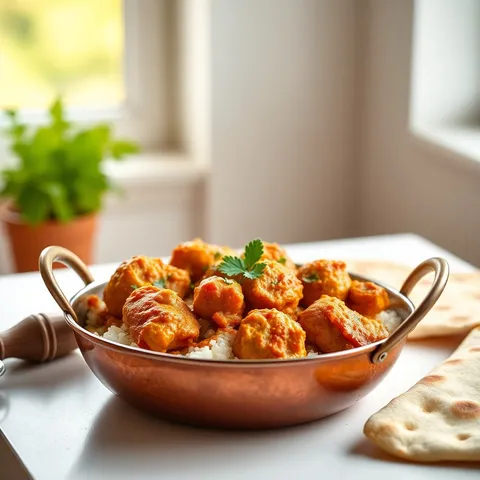 Indian Lens Verified Images are for illustrative purposes only, may be inaccurate, and do not guarantee the presence or absence of specific ingredients.
 Chicken Tikka Masala
Indulge in succulent, yogurt-marinated chicken chunks roasted to perfection and enveloped in a luscious, deeply spiced tomato-cream sauce.
 Indian Lens Verified Images are for illustrative purposes only, may be inaccurate, and do not guarantee the presence or absence of specific ingredients.
 Garlic Naan
Tear into this piping hot, blistered flatbread packed with aromatic garlic and brushed generously with irresistible melted butter.
 Indian Lens Verified Images are for illustrative purposes only, may be inaccurate, and do not guarantee the presence or absence of specific ingredients.
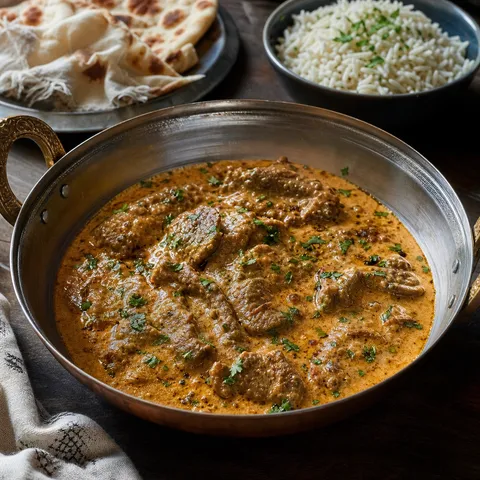
 Lamb Pasanda
A rich Mughlai dish made with flattened lamb steaks in a creamy almond sauce.