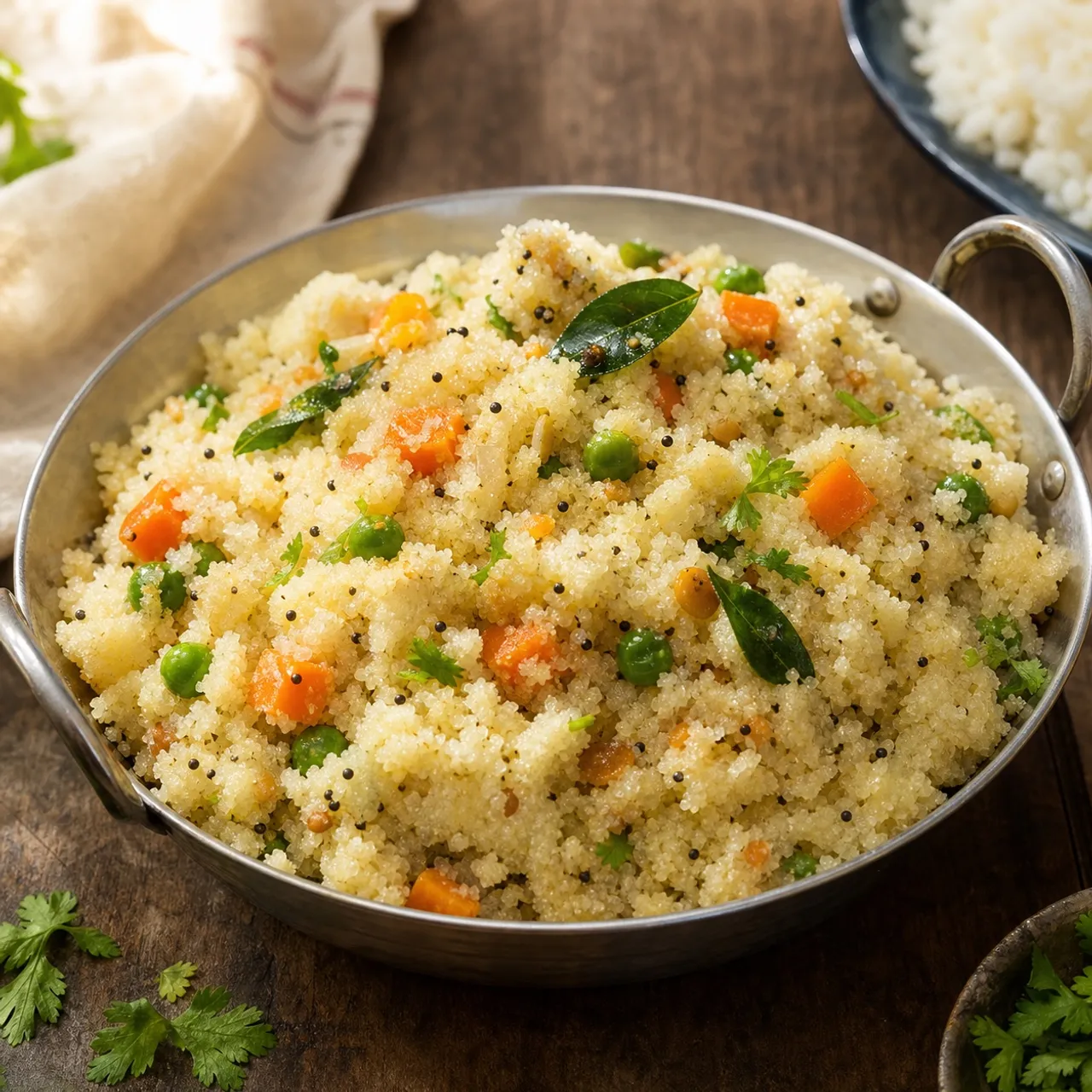
 Indian Images are for illustrative purposes only, may be inaccurate, and do not guarantee the presence or absence of specific ingredients.
 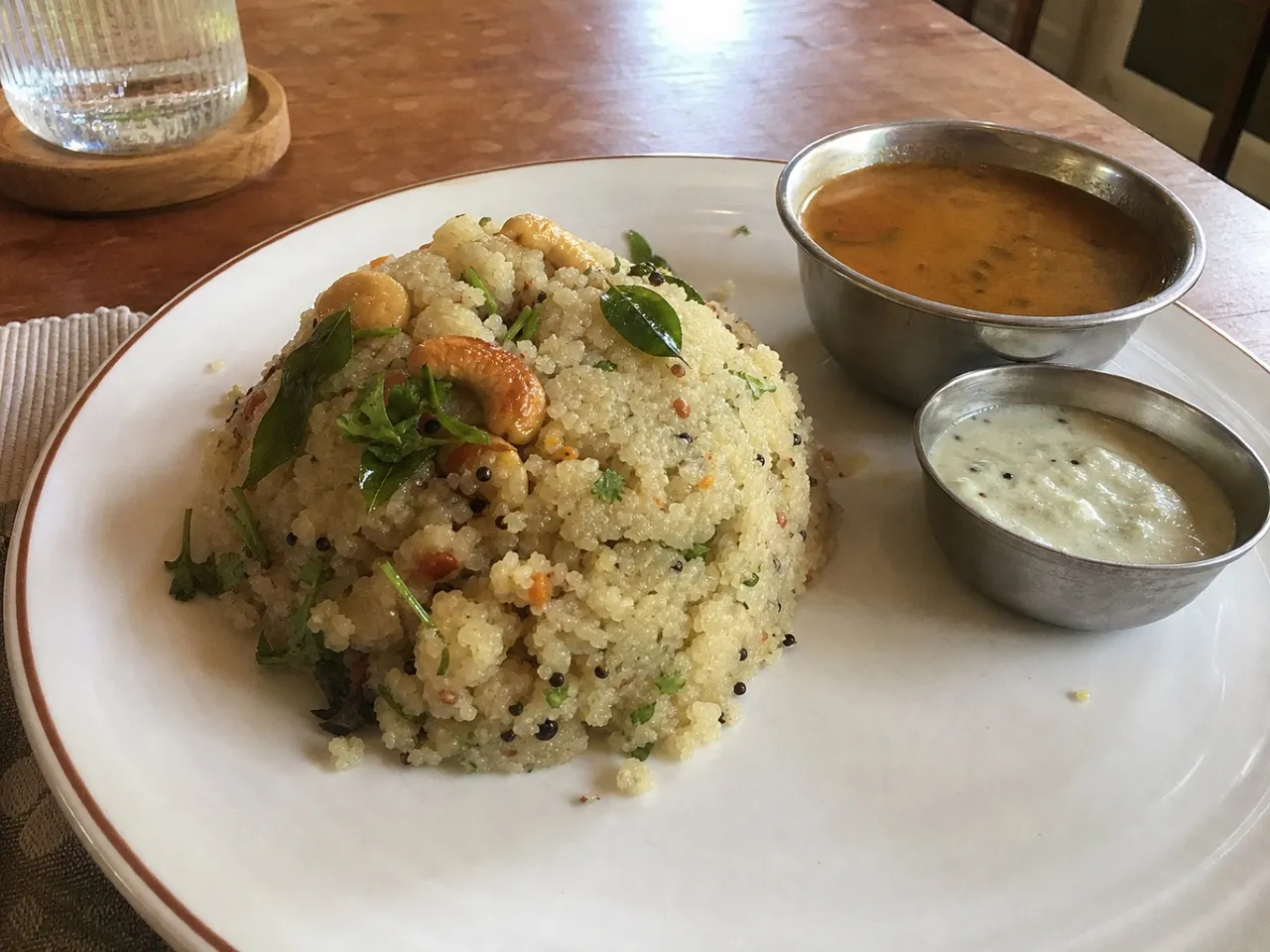 Serving Images are for illustrative purposes only, may be inaccurate, and do not guarantee the presence or absence of specific ingredients.
 Upma
A thick porridge from dry roasted semolina or coarse rice flour.
Contains common allergens
In the app, Listahan checks these against your household automatically.
Good to know
- Ready in under 30 minutes
Matched from this dish's own ingredients and timing. Browse more: 30-minute meals
Instructions
6 steps- 1
Dry Roast Semolina: Place a dry pan over medium heat. Add the semolina and roast continuously for 5-7 minutes until it becomes aromatic and turns a very pale golden color. Transfer to a plate.
- 2
Prepare Boiling Water: In a separate kettle or pot, bring 2.5 cups of water to a rolling boil. Keep it hot.
- 3
Temper the Spices: Heat 2 tbsp oil or ghee in the pan. Crackle the mustard seeds, then add the urad dal and fry until golden. Add grated ginger, 1 slit green chili, and curry leaves.
- 4
Cook Vegetables: Toss in the finely diced mixed vegetables and sauté for 2 minutes. Pour in the boiling water and add 1 tsp salt. Let the vegetables boil for 2-3 minutes until tender.
- 5
Incorporate Semolina: Lower the heat to a simmer. Pour the roasted semolina into the boiling water in a slow, steady stream with one hand, while whisking vigorously with the other to prevent lumps from forming.
- 6
Cover and Steam: The semolina will quickly absorb the water. Cover the pan with a lid and let it steam on the lowest heat for 3-5 minutes until it becomes fluffy. Fluff with a fork and serve hot.
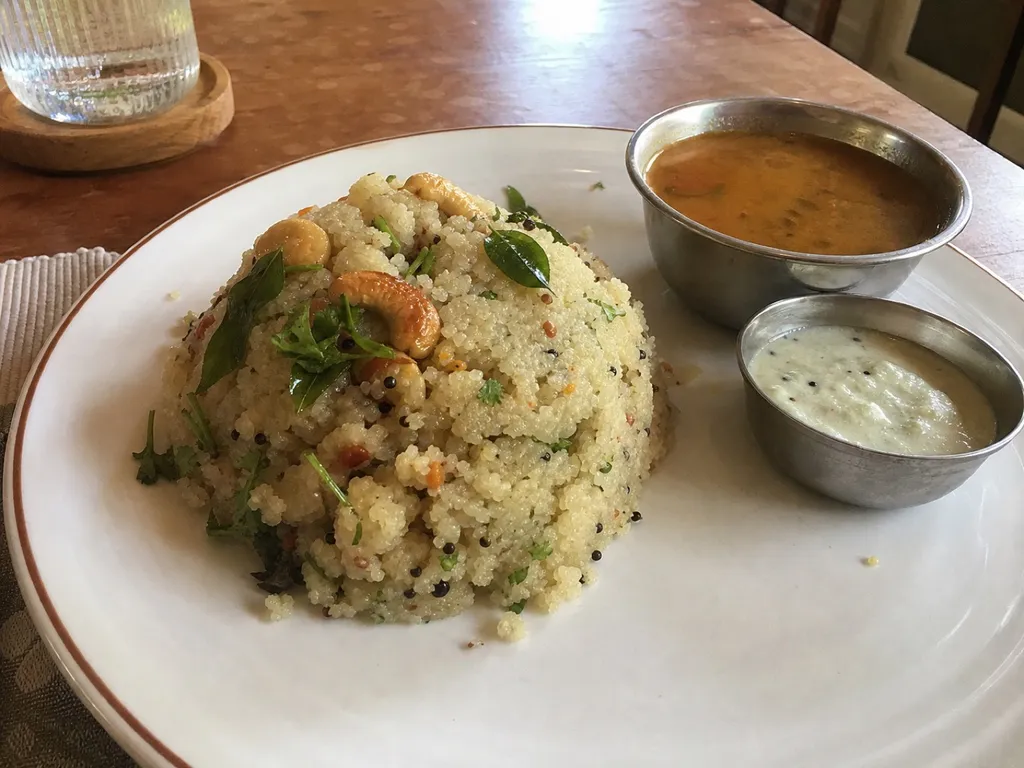 Images are for illustrative purposes only, may be inaccurate, and do not guarantee the presence or absence of specific ingredients.
 Listahan Family Score™
66/100
Works for many families
Score reflects how well this recipe fits a typical busy household. In the app, your Family Score is personalized to your household's allergens, kids, and pantry.
Nutrition
per serving160
Calories
6 g
Protein
33 g
Carbs
1 g
Fat
Estimated per serving. Actual values depend on the brands and portions you use.
Listahan cooking guide
Chef notes & practical guide
Technique notes, ingredient swaps, serve-alongside ideas, storage guidance, and equipment for this recipe.
Cultural context
Upma is a savory porridge made from dry-roasted semolina (sooji or rava) that is a staple breakfast food across South India, particularly in Karnataka, Tamil Nadu, and Andhra Pradesh. Though modest in ingredients, it requires careful technique: the semolina must be dry-roasted before cooking and the boiling liquid must be added all at once to prevent lumping. Its name comes from Sanskrit meaning 'salt mixed in', and it appears in ancient texts, making it one of India's older documented dishes still eaten daily.
Listahan note
This version focuses on getting the semolina texture exactly right: fluffy and distinct, never gummy, with the cashews roasted golden for crunch and a proper tempering that builds flavor from the bottom of the pan up.
Technique cues
- Dry-roast the semolina in a dry pan over medium heat until it turns a shade darker and smells nutty before adding any liquid; skipping this step causes the final upma to be sticky and pasty rather than fluffy.
- Heat the water or stock to a full boil before pouring it into the cooked semolina mixture; cold or warm liquid poured into the hot semolina creates uneven cooking and stubborn lumps.
- Stir quickly and continuously for the first 30 seconds after adding the liquid; this window is when lumps form, and active stirring prevents them from setting.
Kitchen flow
- Parallel prep
- Dry-roast the semolina first in one pan, then start the tempering in another; both steps take about 5 minutes and can run simultaneously once you are comfortable with the recipe.
- Make-ahead
- Upma does not hold well and is best eaten fresh; prep all ingredients the night before so the 10-minute morning assembly is straightforward.
- Leftover move
- Leftover upma can be shaped into small patties and pan-fried in a little ghee until golden on both sides for a savory fritter-style snack.
- Cleanup rhythm
- Soak the semolina pan immediately after emptying because dry semolina residue sets hard quickly; one brief soak makes cleanup trivial.
Ingredient brief
Role, handling, and swap guidance for each key ingredient.
semolina (sooji/rava)
main grain
Purpose: Coarse semolina, once roasted and hydrated, produces upma's characteristic slightly grainy, light texture that distinguishes it from a smooth porridge.
Handling: Roast in a dry skillet over medium heat, stirring constantly, for 4-5 minutes until fragrant and a shade deeper in color; cool slightly before using.
Adaptation: Fine semolina produces a softer, more porridge-like texture; vermicelli (seviyan) can replace semolina entirely for a different but equally traditional dish called sevai upma.
cashews
texture and richness
Purpose: Whole or halved cashews toasted in ghee at the start of cooking add richness and a satisfying crunch that contrasts with the soft upma.
Handling: Fry in ghee or oil over medium heat until golden brown before beginning the tempering; remove and set aside, returning them only at the end so they stay crisp.
Adaptation: Roasted peanuts are a common and cheaper substitute, particularly in Maharashtra-style upma.
ghee
cooking fat and flavor
Purpose: Ghee gives upma a rich, slightly nutty flavor that neutral oil cannot replicate; even a small amount makes a noticeable difference to the finished dish.
Handling: Use at both the tempering stage and as a finishing drizzle over individual servings.
Adaptation: Neutral oil works fine for a dairy-free version; the nuttiness of ghee is lost but the dish is still excellent.
curry leaves
aromatic tempering
Purpose: Curry leaves fried in hot ghee bloom a citrusy, herbal fragrance that is the characteristic aroma of South Indian upma.
Handling: Add to the hot oil before any other tempering spices as they need direct fat contact to release their volatile oils.
Adaptation: Dried curry leaves are notably weaker; if unavailable, add a small amount of fresh bay leaf and a thin strip of lime zest to approximate the herbal quality.
Technique notes
- Use a ratio of 1 part semolina to 2.5 parts water for standard upma; less water produces a drier crumble, more produces a soft porridge, and both are valid regional preferences worth knowing.
- Adding a teaspoon of lemon juice just before serving brightens the whole dish and cuts through the starchy richness in the same way a squeeze of citrus lifts any grain-based dish.
- Cover the pan after adding the liquid and cook on low heat for 3 minutes undisturbed so the steam sets the upma evenly; lifting the lid too early allows steam to escape and creates uneven cooking.
Ingredient swaps
- Dairy-free option
- Replace ghee with coconut oil for a dairy-free version that adds a faint coconut aroma, which actually complements the South Indian spice profile well.
- Gluten-free direction
- Traditional upma uses wheat semolina and is not gluten-free; substitute certified gluten-free cornmeal (coarse grind) or rice rava for a gluten-free version with a slightly different texture.
- Higher-protein direction
- Stir in a handful of cooked lentils or frozen peas along with the liquid for added protein and color without changing the cooking method.
Serve alongside
- Coconut chutney
- Mango pickle
- Banana
- Hot filter coffee
- Masala chai
Serving suggestions only — check pairings for your household's allergens.
Storage & reheating
- Upma keeps in the refrigerator for up to 1 day but stiffens considerably; it is intended to be eaten fresh.
- To reheat, sprinkle 2-3 tablespoons of water over the upma and warm covered in a pan on low heat, stirring gently until the steam softens and loosens it back to a pleasantly fluffy texture.
Equipment
- Two pans: one for dry-roasting the semolina, one for the tempering and final assembly
- Lid that fits the cooking pan for the covered steaming step
- Wooden spoon or silicone spatula for stirring without scratching a non-stick surface
- Kettle or small saucepan for heating the water to a full boil before adding
Make this household-aware
Listahan Pro checks this recipe against your household's allergens, finds pantry-aware swaps, builds the shopping list, and helps you plan the week around it.
Plan it in Listahan
Add Upma to your week, check it against your household's allergens, and build the shopping list automatically.
More Indian recipes
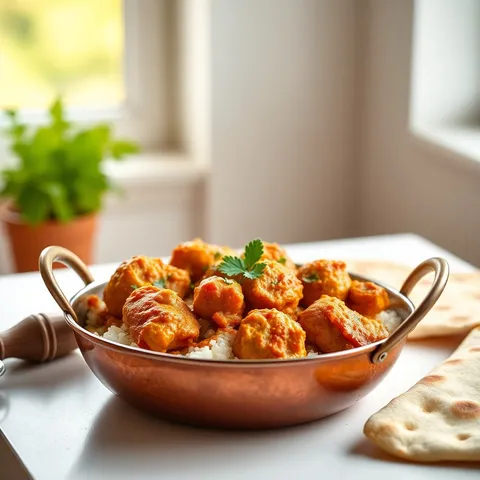 Indian Lens Verified Images are for illustrative purposes only, may be inaccurate, and do not guarantee the presence or absence of specific ingredients.
 Chicken Tikka Masala
Indulge in succulent, yogurt-marinated chicken chunks roasted to perfection and enveloped in a luscious, deeply spiced tomato-cream sauce.
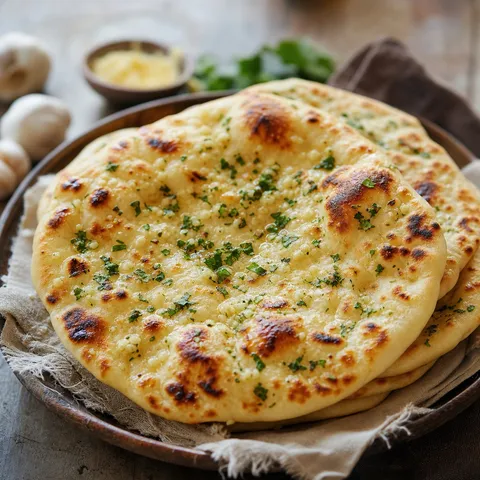 Indian Lens Verified Images are for illustrative purposes only, may be inaccurate, and do not guarantee the presence or absence of specific ingredients.
 Garlic Naan
Tear into this piping hot, blistered flatbread packed with aromatic garlic and brushed generously with irresistible melted butter.
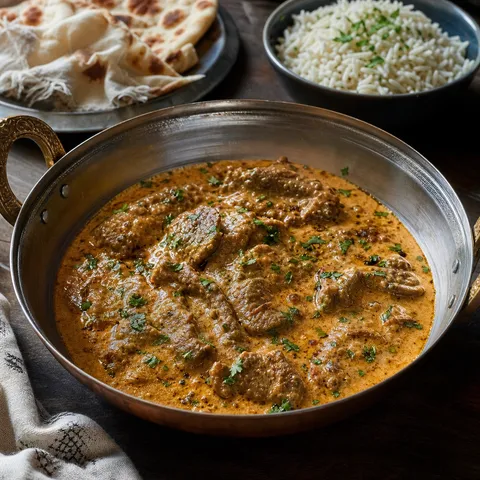 Indian Lens Verified Images are for illustrative purposes only, may be inaccurate, and do not guarantee the presence or absence of specific ingredients.
 Lamb Pasanda
A rich Mughlai dish made with flattened lamb steaks in a creamy almond sauce.