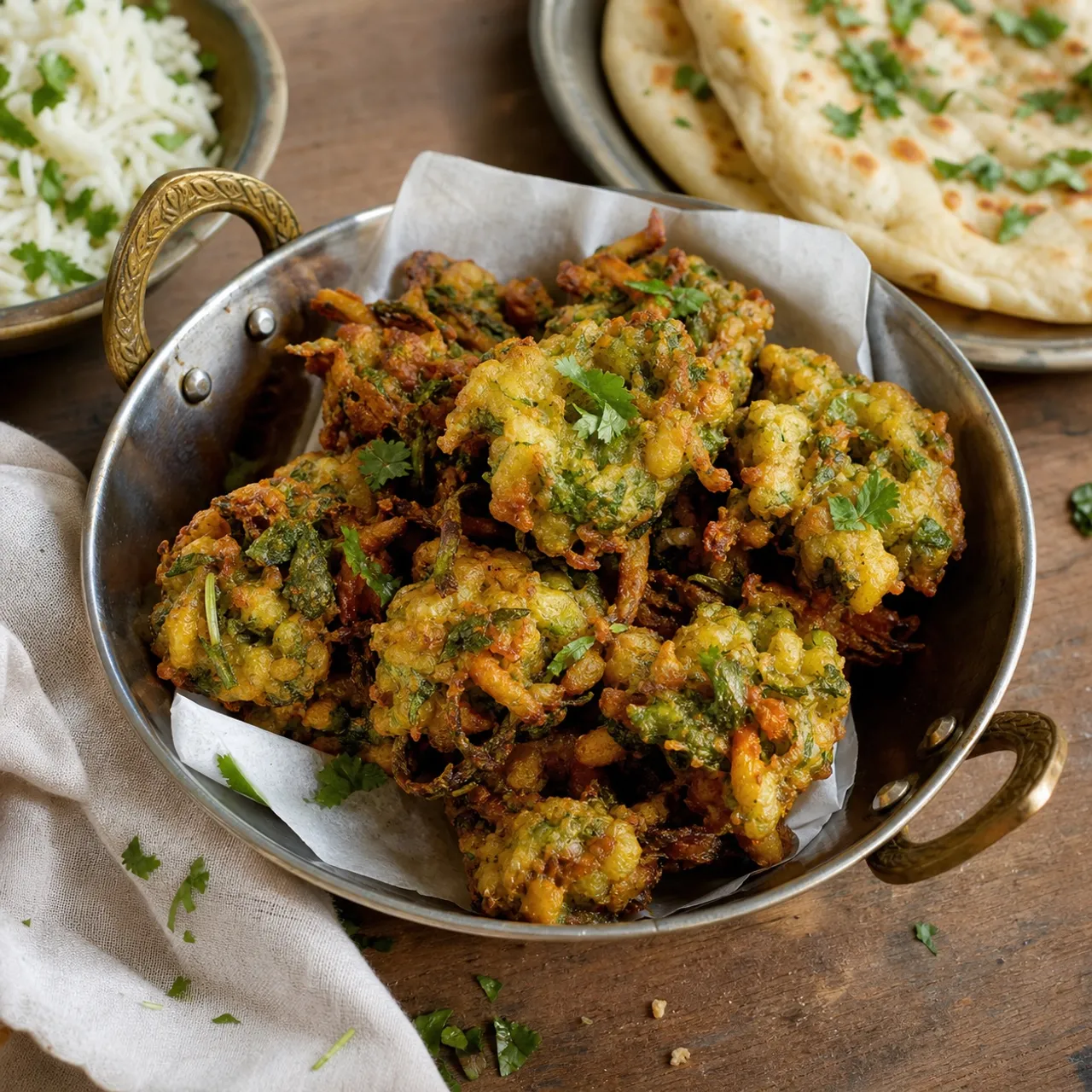
 Indian Images are for illustrative purposes only, may be inaccurate, and do not guarantee the presence or absence of specific ingredients.
 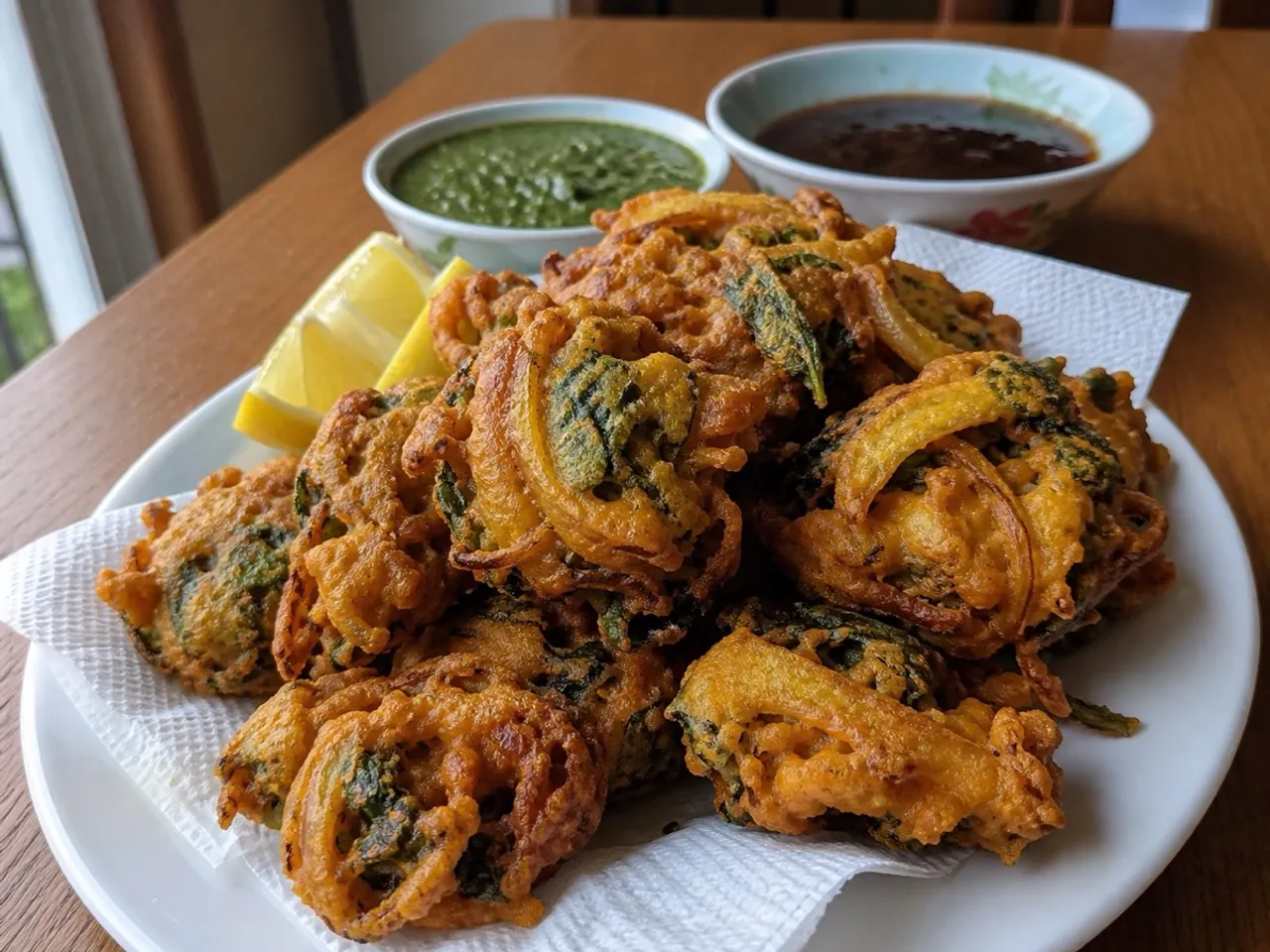 Serving Images are for illustrative purposes only, may be inaccurate, and do not guarantee the presence or absence of specific ingredients.
 Vegetable Pakora
Crispy chickpea-battered vegetable fritters that are golden outside, soft inside, and irresistible with chutney on a rainy afternoon.
No common allergens detected
Based on this recipe's ingredient list. Always verify with your own brands and labels.
Good to know
- Crispy
- Ready in under 30 minutes
Matched from this dish's own ingredients and timing. Browse more: crispy recipes30-minute meals
Instructions
6 steps- 1
In a large bowl, whisk together the chickpea flour, carom seeds, red chili powder, turmeric, and salt, then gradually add about 2/3 cup water to form a thick, smooth batter that coats the back of a spoon.
- 2
Fold the sliced potato, onion, and torn spinach into the batter until every piece is evenly coated.
- 3
Heat the oil in a deep, heavy pan to 350 degrees F, testing readiness by dropping in a pinch of batter that should sizzle and rise immediately.
- 4
Gently drop in spoonfuls of the coated vegetables in small batches, frying for 4 to 5 minutes while turning occasionally until deep golden and crisp.
- 5
Lift the pakoras out with a slotted spoon and drain on a paper-towel-lined plate.
- 6
Serve hot with mint-cilantro chutney or tamarind chutney and a wedge of lemon.
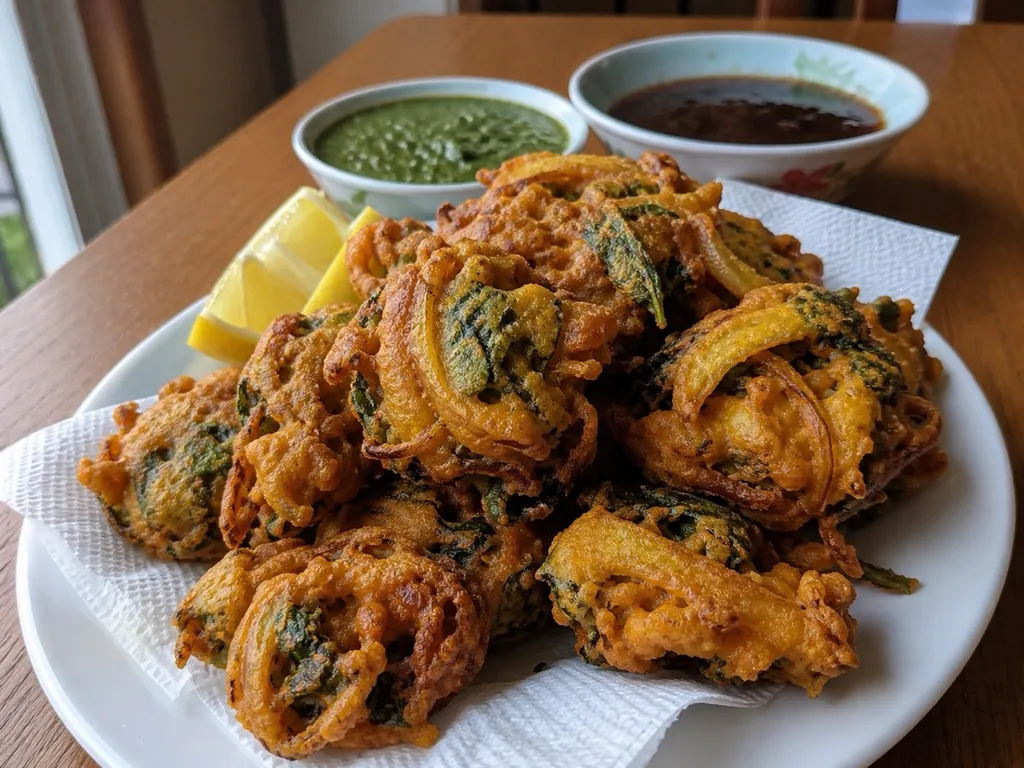 Images are for illustrative purposes only, may be inaccurate, and do not guarantee the presence or absence of specific ingredients.
 Listahan Family Score™
71/100
Good fit for most families
Score reflects how well this recipe fits a typical busy household. In the app, your Family Score is personalized to your household's allergens, kids, and pantry.
Nutrition
per serving305
Calories
5 g
Protein
34 g
Carbs
17 g
Fat
Estimated per serving. Actual values depend on the brands and portions you use.
Listahan cooking guide
Chef notes & practical guide
Technique notes, ingredient swaps, serve-alongside ideas, storage guidance, and equipment for this recipe.
Cultural context
Pakora are a staple street food and rainy-season snack across South Asia, where vegetables are dipped in a spiced chickpea flour batter and deep fried. Vendors and home cooks alike vary the vegetables used depending on what's fresh, though onion and potato are among the most common.
Listahan note
This version keeps the batter thin enough to coat the vegetables lightly rather than forming a thick, doughy shell, so the vegetables themselves stay the focus.
Technique cues
- Whisk the batter to a consistency that coats a spoon but still drips off; too thick and the pakora turn doughy instead of crisp.
- Keep the oil at a steady temperature by frying in small batches; overcrowding the pot drops the temperature and makes the pakora greasy.
- Salt the batter just before frying rather than earlier, since salt draws moisture out of the vegetables and can thin the batter over time.
Kitchen flow
- Parallel prep
- Slice the vegetables while the oil heats so everything goes into the batter at the last moment for the crispest result.
- Make-ahead
- Mix the dry batter ingredients ahead of time, but add the water and vegetables just before frying to keep the coating crisp.
- Leftover move
- Re-crisp leftover pakora in an air fryer or hot oven rather than the microwave, which turns them soft.
- Cleanup rhythm
- Fry everything in one pot of oil and strain it once cool for reuse; line a tray with paper towels for draining as you go.
Ingredient brief
Role, handling, and swap guidance for each key ingredient.
Chickpea flour (besan)
Batter base
Purpose: Its slightly nutty flavor and natural binding ability make it the traditional base for pakora batter.
Handling: Whisk it with water gradually to avoid lumps, adding just enough to reach a coating consistency.
Adaptation: There is no close substitute for the flavor, though a mix of rice flour and a binder can approximate the texture.
Potato and onion
Main vegetables
Purpose: Their contrasting textures, potato tender and onion slightly crisp, are the classic pakora combination.
Handling: Slice both thinly so they cook through fully during the short fry time.
Adaptation: Cauliflower florets, spinach leaves, or sliced bell pepper all work well in the same batter.
Carom seeds (ajwain)
Digestive spice
Purpose: Their sharp, thyme-like flavor is traditional in pakora batter and is said to help digest the fried food.
Handling: Crush them lightly between your fingers before adding to release more of their flavor.
Adaptation: A pinch of dried thyme or cumin seeds can stand in if ajwain is unavailable.
Red chili powder and turmeric
Color and heat
Purpose: Turmeric gives the batter its golden color and chili powder brings gentle heat.
Handling: Adjust the chili powder amount to taste; the batter should be seasoned but not aggressively spicy.
Adaptation: Cayenne pepper can replace red chili powder in a similar amount.
Vegetable oil
Frying medium
Purpose: A neutral, high-smoke-point oil is essential for even frying without burning.
Handling: Heat it to around 350 F and maintain that temperature by frying in small batches.
Adaptation: Peanut or sunflower oil both work well for deep frying.
Technique notes
- Test the oil temperature with a small drop of batter; it should sizzle and rise to the surface immediately without burning.
- Fry in two stages for extra crispness: once to cook through, then a second quick fry at a slightly higher temperature just before serving.
- Drain the pakora standing upright against each other on a rack rather than lying flat on paper towels, so steam escapes instead of softening the bottom.
Ingredient swaps
- Gluten-free direction
- The batter is chickpea flour (besan) rather than wheat flour. Check your asafoetida if you add any — it is commonly cut with wheat.
- Baked direction
- Brush the battered vegetables with oil and bake at 425 F, flipping halfway, for a lighter version with less crunch.
- Vegan direction
- This recipe is naturally vegan as written, with no dairy or egg in the batter.
Serve alongside
- Mint chutney
- Tamarind chutney
- Sliced onion with lemon
- Cucumber raita
- Masala chai
- Sweet lassi
- Sparkling water with lime
Serving suggestions only — check pairings for your household's allergens.
Storage & reheating
- Best eaten fresh and hot, but leftovers keep refrigerated in an airtight container for up to 2 days.
- Reheat in an air fryer or 400 F oven until crisp again; microwaving makes them soft.
- Freezing is not recommended, as the coating loses its crisp texture on thawing.
Equipment
- Deep, heavy pot or wok for frying
- Slotted spoon for turning and removing
- Wire rack or paper towels for draining
Make this household-aware
Listahan Pro checks this recipe against your household's allergens, finds pantry-aware swaps, builds the shopping list, and helps you plan the week around it.
Plan it in Listahan
Add Vegetable Pakora to your week, check it against your household's allergens, and build the shopping list automatically.
More Indian recipes
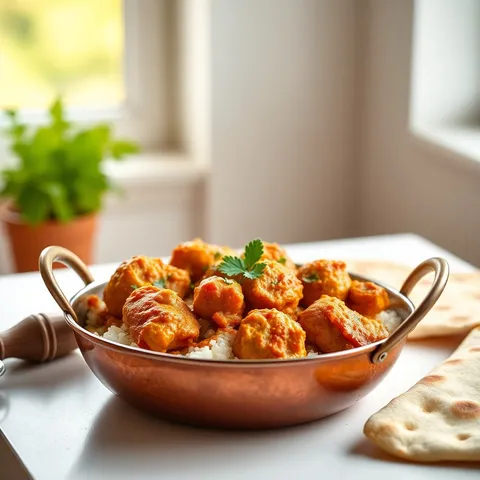 Indian Lens Verified Images are for illustrative purposes only, may be inaccurate, and do not guarantee the presence or absence of specific ingredients.
 Chicken Tikka Masala
Indulge in succulent, yogurt-marinated chicken chunks roasted to perfection and enveloped in a luscious, deeply spiced tomato-cream sauce.
 Indian Lens Verified Images are for illustrative purposes only, may be inaccurate, and do not guarantee the presence or absence of specific ingredients.
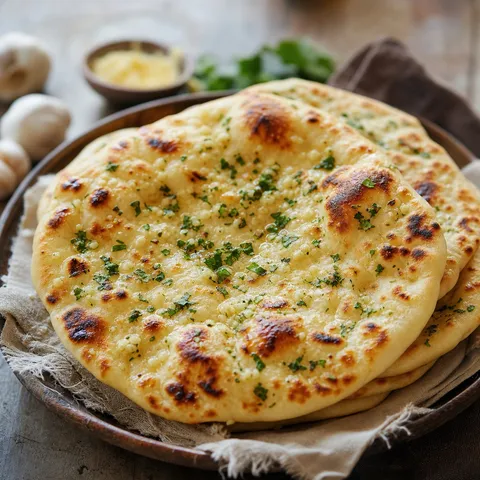
 Garlic Naan
Tear into this piping hot, blistered flatbread packed with aromatic garlic and brushed generously with irresistible melted butter.
 Indian Lens Verified Images are for illustrative purposes only, may be inaccurate, and do not guarantee the presence or absence of specific ingredients.
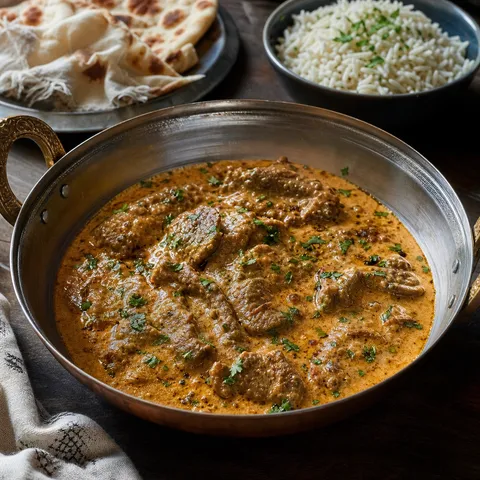
 Lamb Pasanda
A rich Mughlai dish made with flattened lamb steaks in a creamy almond sauce.