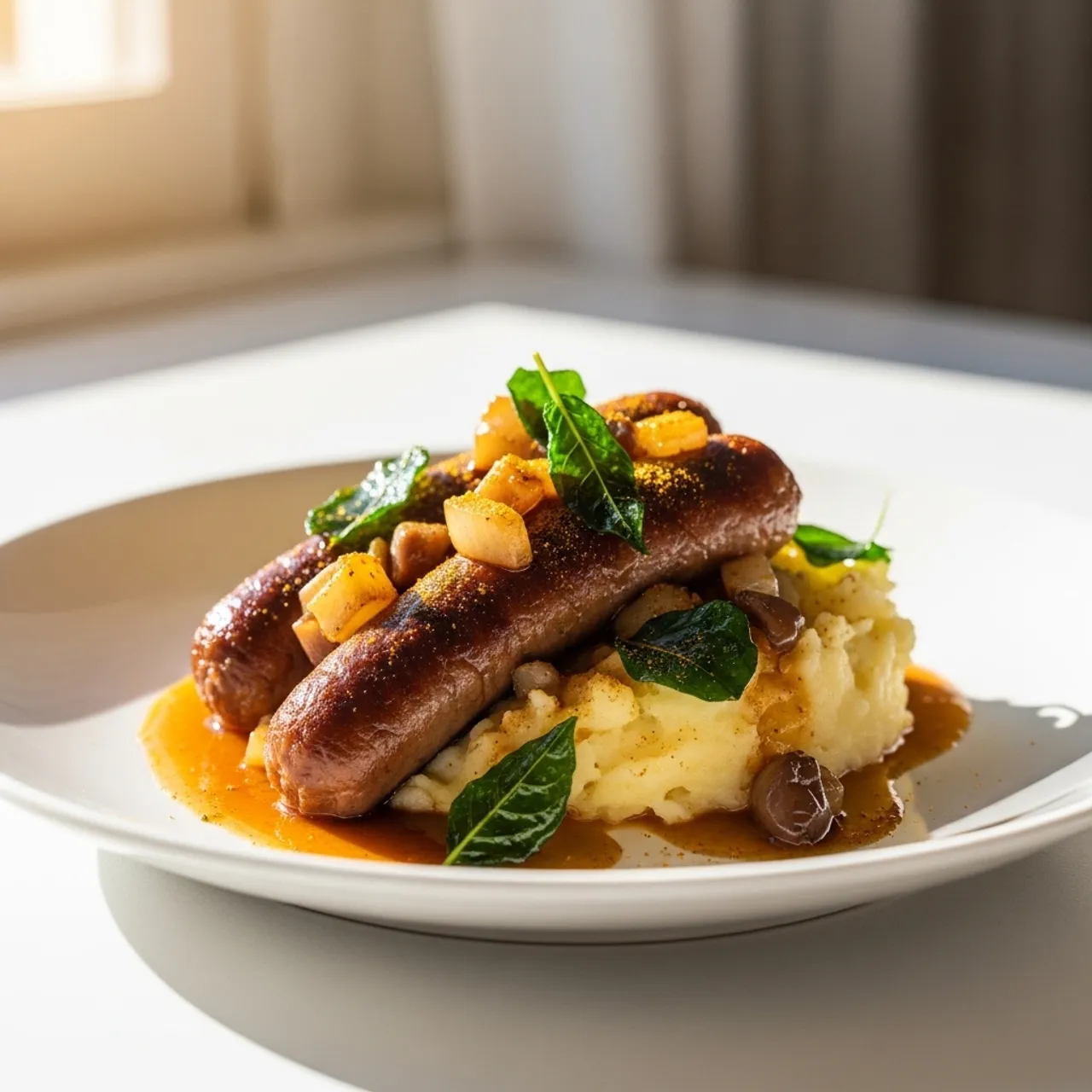
 British & Irish Images are for illustrative purposes only, may be inaccurate, and do not guarantee the presence or absence of specific ingredients.
 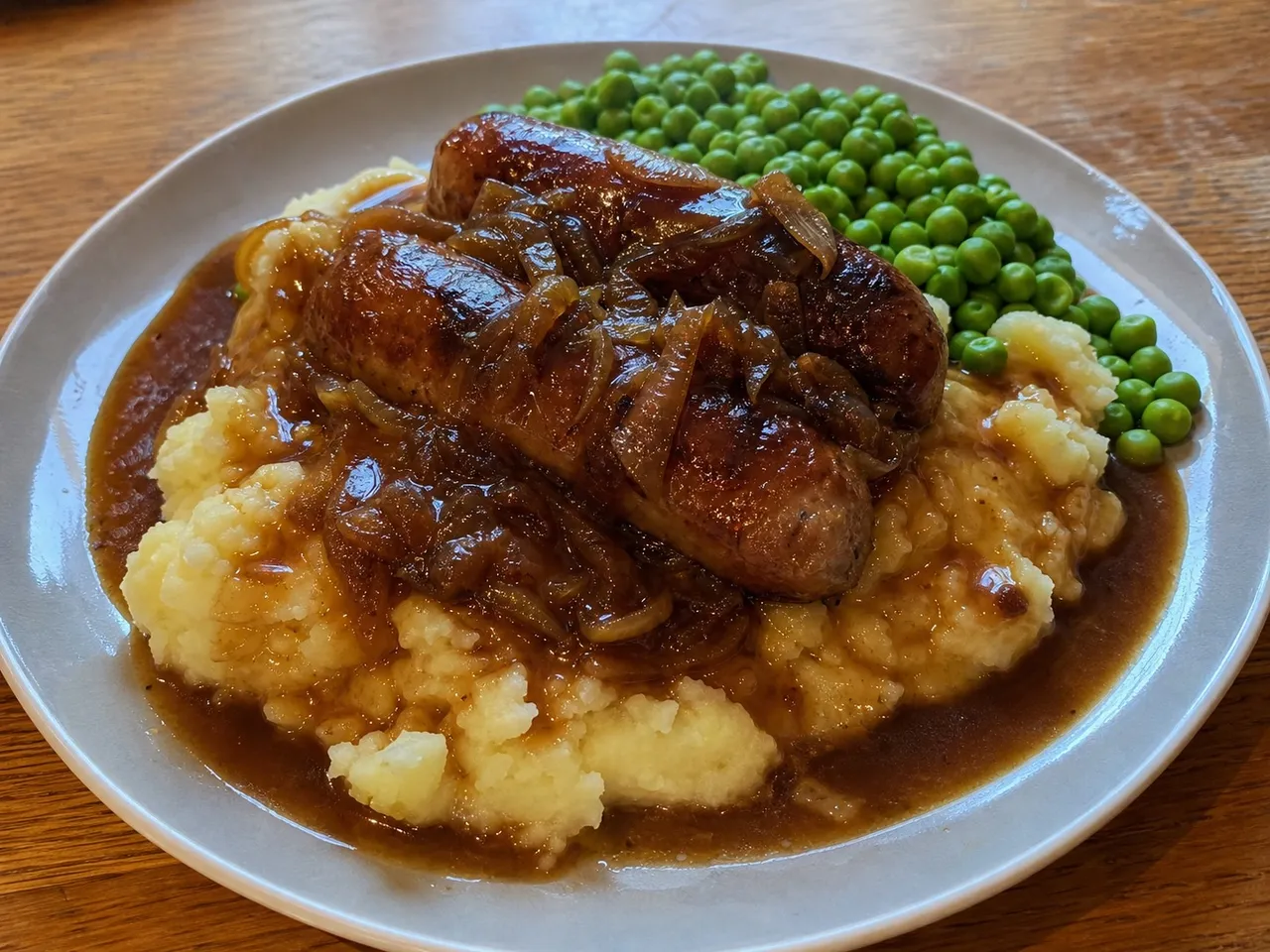 Serving Images are for illustrative purposes only, may be inaccurate, and do not guarantee the presence or absence of specific ingredients.
 Bangers and Mash
Plump, juicy pork sausages on a cloud of buttery mash, smothered in a deeply savory caramelized onion gravy. British pub comfort at its finest.
Contains common allergens
In the app, Listahan checks these against your household automatically.
Instructions
6 steps- 1
Boil the potatoes: Place the chunked potatoes in a large pot of salted water. Bring to a boil and simmer for 15-20 minutes until completely tender.
- 2
Cook the sausages: Heat a drizzle of oil in a large frying pan over medium-low heat. Add the sausages and cook gently for 15-20 minutes, turning frequently, until evenly browned and cooked through. Remove and keep warm.
- 3
Caramelize the onions: In the same frying pan (using the sausage fat), add the sliced onions. Cook over medium heat for 10-15 minutes until soft, sweet, and deeply caramelized.
- 4
Make the gravy: Sprinkle the flour over the caramelized onions and stir for 1 minute. Gradually pour in the beef stock and balsamic vinegar, stirring constantly to prevent lumps. Simmer for 5-8 minutes until a rich, glossy gravy forms.
- 5
Prepare the mash: Drain the potatoes well. Mash vigorously with the butter, milk, and a good pinch of salt and white pepper until exceptionally smooth.
- 6
Serve: Divide the creamy mash among plates, top with two sausages per person, and generously ladle the hot onion gravy over everything.
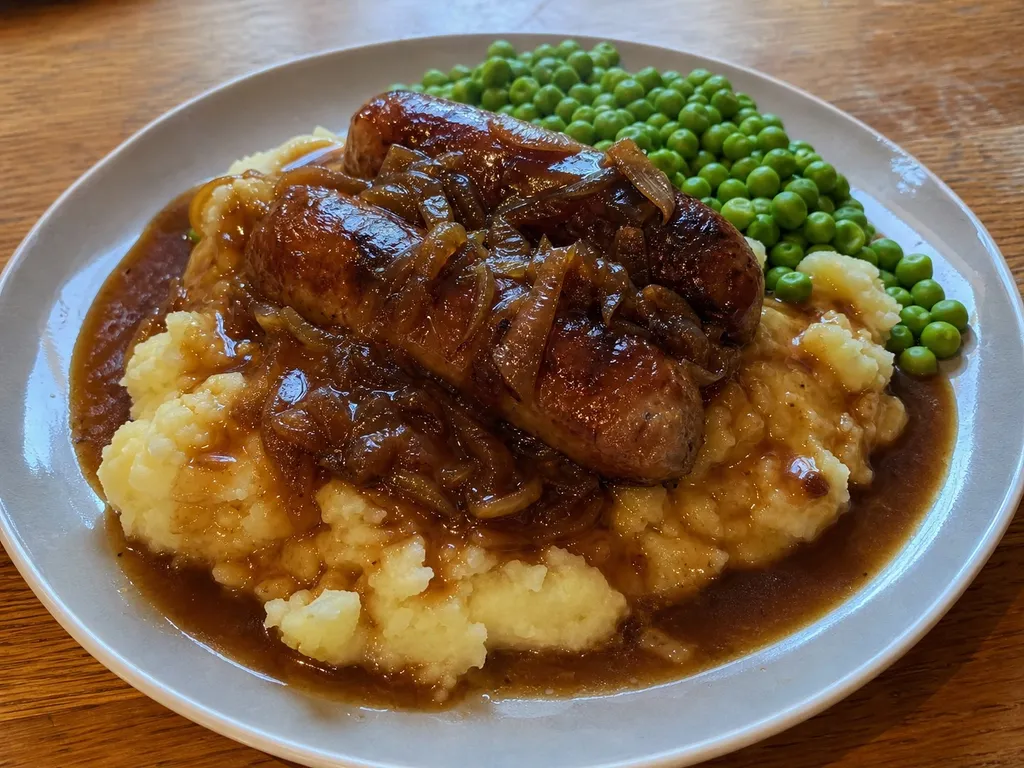 Images are for illustrative purposes only, may be inaccurate, and do not guarantee the presence or absence of specific ingredients.
 Listahan Family Score™
66/100
Works for many families
Score reflects how well this recipe fits a typical busy household. In the app, your Family Score is personalized to your household's allergens, kids, and pantry.
Nutrition
per serving170
Calories
4 g
Protein
24 g
Carbs
6 g
Fat
Estimated per serving. Actual values depend on the brands and portions you use.
Listahan cooking guide
Chef notes & practical guide
Technique notes, ingredient swaps, serve-alongside ideas, storage guidance, and equipment for this recipe.
Cultural context
The nickname 'bangers' dates to World War I, when meat shortages forced sausage-makers to pad their product with water and cereal, causing the skins to burst — or bang — in the pan during frying. The pairing with mashed potatoes is older still, a thrifty pub staple that could be made in large quantities and served cheaply to working men. Onion gravy became the essential third element, adding the savory depth that neither sausages nor plain mash alone could provide.
Listahan note
This version builds the onion gravy in the same pan the sausages browned in, so every bit of flavor sticking to the pan ends up in the sauce.
Technique cues
- Cook sausages over medium-low heat rather than high heat — slow browning renders the fat evenly and prevents the skins from splitting before the interior is cooked through.
- For silky mash, rice the potatoes while still steaming hot, then fold in warm butter and hot milk; adding cold dairy to hot potatoes makes the starch seize and turn gluey.
- Let the sliced onions caramelize slowly for at least 20 minutes before adding stock — rushing this step with high heat gives you softened onions instead of the deep, sweet base the gravy needs.
Kitchen flow
- Parallel prep
- Start the potatoes boiling before you begin frying the sausages; both should finish within minutes of each other.
- Make-ahead
- The onion gravy can be made up to 3 days ahead and refrigerated; reheat gently while the sausages cook fresh.
- Leftover move
- Form leftover mash into patties and pan-fry in butter until golden — serve with the reheated gravy for a next-day meal.
- Cleanup rhythm
- Use a single wide skillet for sausages then gravy in sequence; soak the mash pot immediately after serving.
Ingredient brief
Role, handling, and swap guidance for each key ingredient.
pork sausages
main protein
Purpose: Coarsely ground pork sausages with natural casings brown beautifully and hold their shape, providing the savory centerpiece of the dish.
Handling: Prick lightly once or twice if using thick casings to allow some fat to escape, but leave natural skins intact for the best texture.
Adaptation: Chicken or turkey sausages work well; for a vegetarian version, use a high-quality plant-based banger designed for pan-frying.
floury potatoes
mash base
Purpose: High-starch varieties like russets or Maris Pipers break down into a fluffy, smooth mash rather than the dense, gluey texture waxy potatoes produce.
Handling: Peel, cut into even chunks, and start in cold salted water so they cook evenly from the outside in.
Adaptation: Yukon Golds make a richer, butterier mash with a slightly denser texture that many prefer.
yellow onions
gravy foundation
Purpose: Slowly caramelized onions form the sweet, savory backbone of the gravy that ties the sausages and mash together.
Handling: Slice into thin half-moons and cook in the sausage drippings over medium-low heat, stirring only occasionally.
Adaptation: Red onions make a slightly sweeter, more colorful gravy.
beef or chicken stock
gravy liquid
Purpose: Good stock gives the gravy body and depth; it deglazes the pan and dissolves the browned bits that carry the most flavor.
Handling: Use warm stock so it does not drop the pan temperature sharply when you pour it in.
Adaptation: Vegetable stock works for a meatless version; add a splash of soy sauce or Worcestershire for extra depth.
unsalted butter
mash enricher
Purpose: Butter emulsified into hot riced potato gives mash its characteristic richness and silky finish.
Handling: Use at room temperature or melt slightly before folding in to avoid cooling the mash.
Adaptation: Olive oil or plant-based butter produces a lighter, dairy-free mash.
Technique notes
- Resting sausages off the heat for 3 minutes after cooking keeps the juices inside when you slice; cutting immediately sends them all onto the plate.
- Finish the gravy with a small knob of cold butter stirred in off the heat — it adds gloss and a rounded richness that stock alone cannot give.
- Season mash aggressively with salt; potatoes absorb a surprising amount of seasoning and bland mash is the most common shortcoming of this dish.
Ingredient swaps
- Dairy-free direction
- Use oat milk and plant-based butter in the mash; the result is nearly indistinguishable from the dairy version.
- Gluten-free direction
- Thicken the gravy with cornstarch slurry instead of flour, and verify your sausage brand is gluten-free as many contain rusk.
- Lower-fat direction
- Use lean chicken sausages and skip the drippings by starting the onion in a small amount of oil; the gravy will be lighter but still flavorful.
Serve alongside
- Steamed garden peas
- Braised red cabbage
- Baked beans
- Pale ale
- Strong builder's tea
Serving suggestions only — check pairings for your household's allergens.
Storage & reheating
- Sausages and gravy keep refrigerated for up to 3 days; reheat gently in a covered pan with a splash of stock to loosen the gravy.
- Mash is best made fresh but can be refrigerated for 1 day and reheated in a pan with a little butter and milk, stirring until smooth.
Equipment
- Wide heavy skillet for browning sausages and building gravy in sequence
- Potato ricer for the smoothest possible mash
- Wooden spoon for deglazing without scratching the pan
- Ladle for pouring gravy evenly at the table
Make this household-aware
Listahan Pro checks this recipe against your household's allergens, finds pantry-aware swaps, builds the shopping list, and helps you plan the week around it.
Plan it in Listahan
Add Bangers and Mash to your week, check it against your household's allergens, and build the shopping list automatically.
More British & Irish recipes
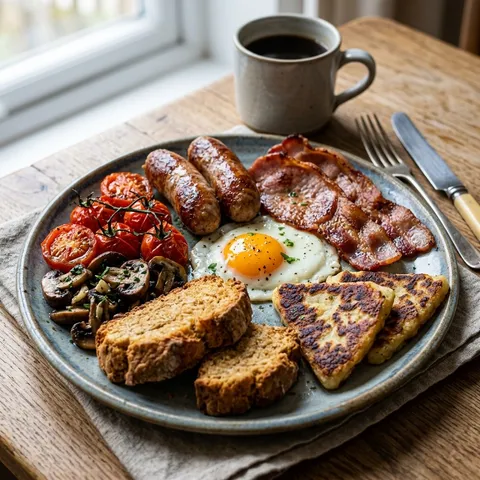 British & Irish Lens Verified Images are for illustrative purposes only, may be inaccurate, and do not guarantee the presence or absence of specific ingredients.
 Ulster Fry
Northern Ireland's legendary fry-up: bacon, sausages, eggs, black pudding, potato bread, and soda bread — fuller and heartier than its English cousin.
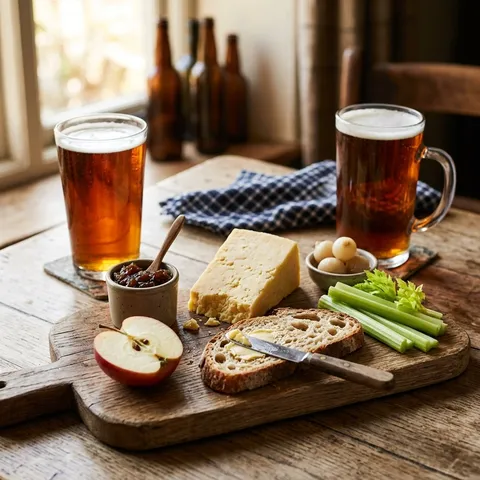 British & Irish Lens Verified Images are for illustrative purposes only, may be inaccurate, and do not guarantee the presence or absence of specific ingredients.
 Ploughman's Lunch
Sharp aged cheddar, crusty bread, tangy Branston pickle, and a boiled egg — a beloved no-cook British lunch that's greater than the sum of its parts.
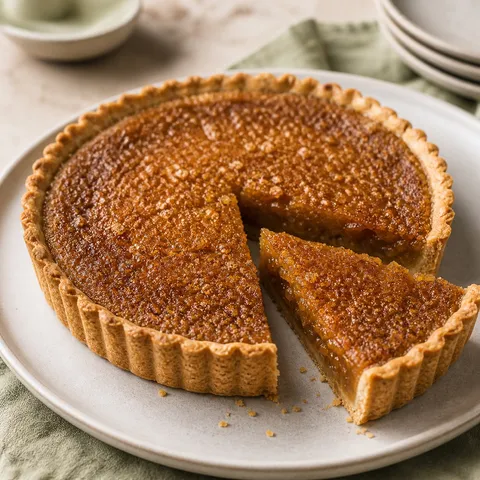 British & Irish Lens Verified Images are for illustrative purposes only, may be inaccurate, and do not guarantee the presence or absence of specific ingredients.
 Treacle Tart
A sweet, sticky tart filled with golden syrup and fresh breadcrumbs, with a gently caramelized top and a hint of lemon — Harry Potter's favorite dessert.