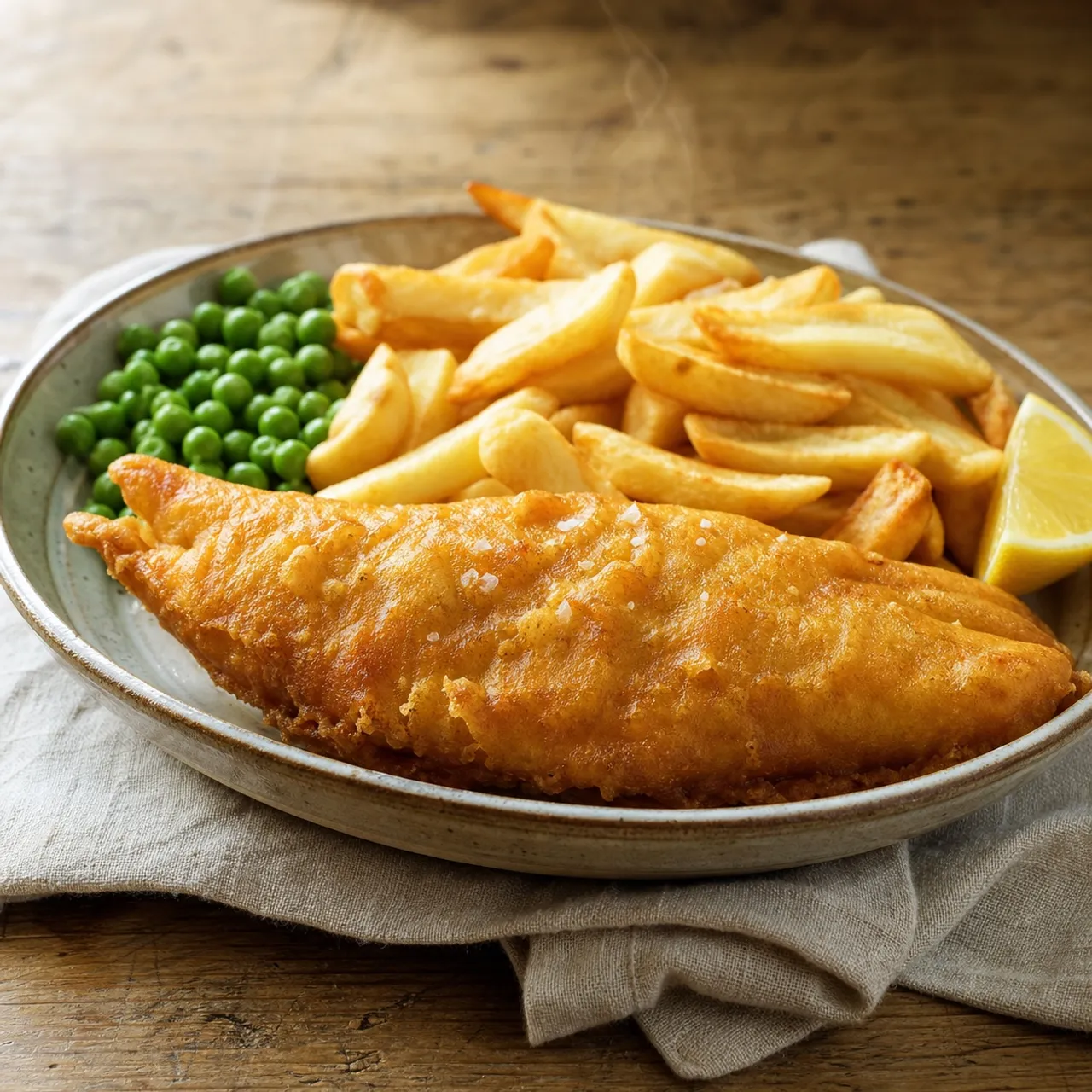
 British & Irish Images are for illustrative purposes only, may be inaccurate, and do not guarantee the presence or absence of specific ingredients.
 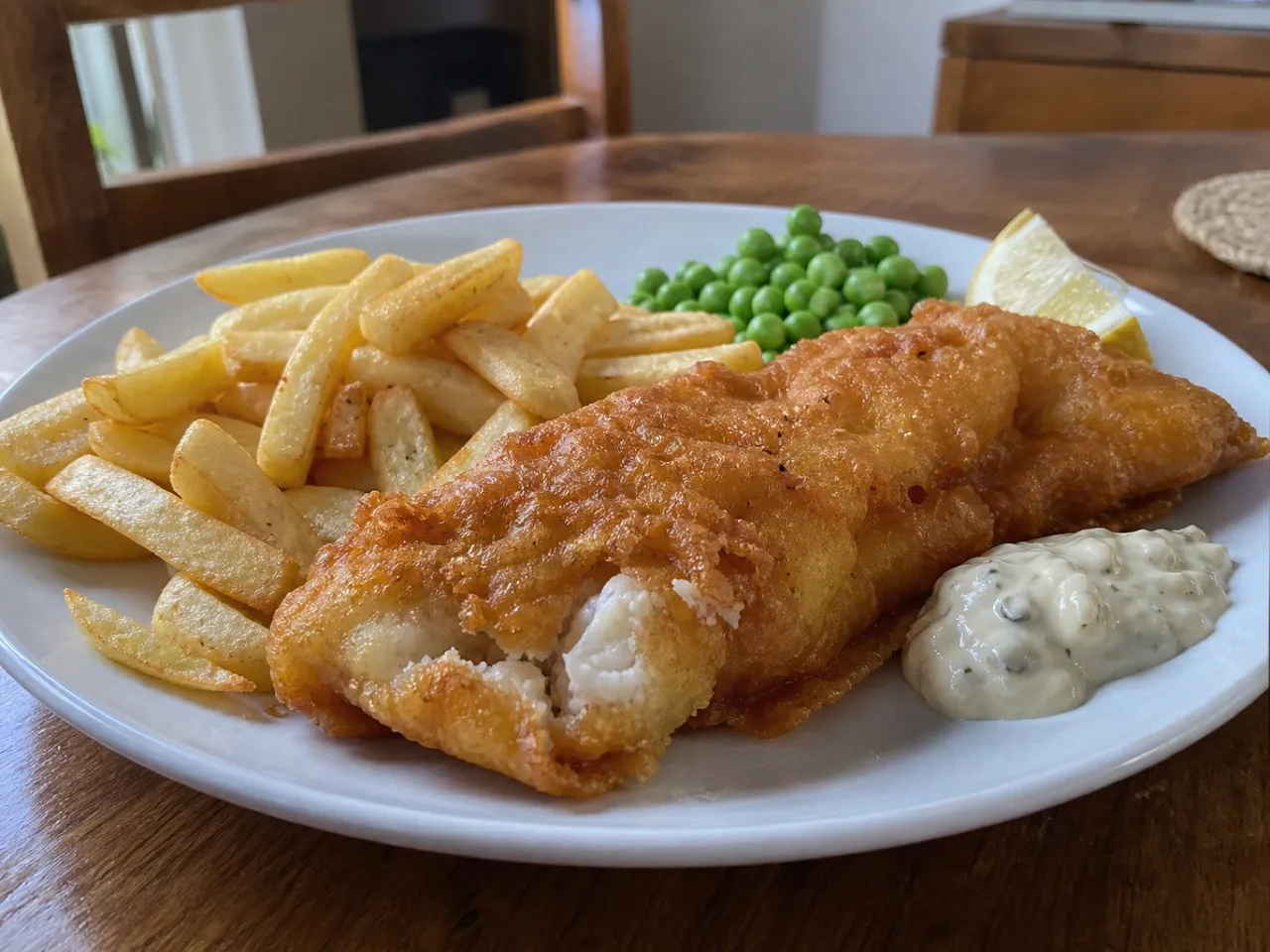 Serving Images are for illustrative purposes only, may be inaccurate, and do not guarantee the presence or absence of specific ingredients.
 Fish and Chips
Golden beer-battered cod with thick, fluffy chips — Britain's greatest Friday tradition, best eaten from paper with malt vinegar.
Contains common allergens
In the app, Listahan checks these against your household automatically.
Good to know
- One-pot
- Crispy
Matched from this dish's own ingredients and timing. Browse more: one-pot dinnerscrispy recipes
Instructions
6 steps- 1
Prepare the chips: Cut the peeled potatoes into thick batons (about 1.5cm thick). Rinse well in cold water, then pat completely dry with a clean tea towel.
- 2
Heat the oil: Fill a large, deep saucepan or deep fat fryer one-third full with vegetable oil. Heat to 130°C (265°F).
- 3
Blanch the chips: Carefully lower the chips into the hot oil and fry for 8-10 minutes until soft but not colored. Remove with a slotted spoon and drain on kitchen paper. Increase oil temperature to 180°C (350°F).
- 4
Make the batter: In a large bowl, whisk together the self-raising flour, salt, and cold ale until a smooth, thick batter forms. Do not overmix; a few lumps are fine.
- 5
Fry the fish: Lightly dust the fish fillets in extra flour, dip them completely into the batter, and carefully lower them into the 180°C oil. Fry for 6-8 minutes until the batter is deep golden and perfectly crisp.
- 6
Finish the chips: Return the blanched chips to the 180°C oil for 2-3 minutes until golden brown and crispy. Drain both fish and chips, season generously with salt and malt vinegar, and serve immediately.
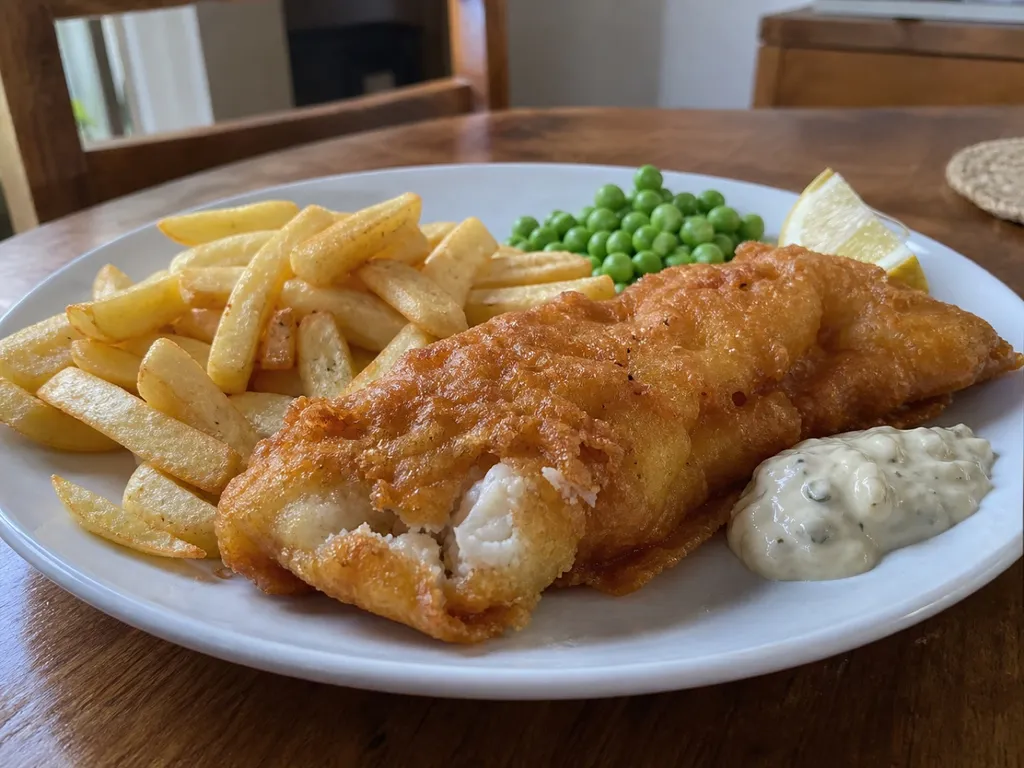 Images are for illustrative purposes only, may be inaccurate, and do not guarantee the presence or absence of specific ingredients.
 Listahan Family Score™
66/100
Works for many families
Score reflects how well this recipe fits a typical busy household. In the app, your Family Score is personalized to your household's allergens, kids, and pantry.
Nutrition
per serving630
Calories
17 g
Protein
135 g
Carbs
1 g
Fat
Estimated per serving. Actual values depend on the brands and portions you use.
Listahan cooking guide
Chef notes & practical guide
Technique notes, ingredient swaps, serve-alongside ideas, storage guidance, and equipment for this recipe.
Cultural context
Fish and chips emerged as a working-class staple in 19th-century Britain, with fried fish brought by Jewish immigrants from Portugal and Spain meeting the northern English tradition of frying potatoes in dripping. By the 1860s, dedicated chip shops were spreading rapidly through industrial cities, offering affordable hot meals to factory workers. The dish became so central to British identity that during World War II it was one of the few foods exempt from rationing.
Listahan note
This version prioritizes a very cold, carbonated beer batter that shatters on the first bite, and oven-finished chips that stay crisp without a second fry.
Technique cues
- Chill the batter bowl over ice while you prep the fish — a cold batter hitting hot oil creates the steam burst that makes it extra light and shatteringly crisp.
- Dry the fish fillets thoroughly with paper towels and dust them in plain flour before dipping in batter; that thin floury coating gives the batter something to grip so it does not slide off in the fryer.
- Fry the chips twice: a first fry at 300 degrees F cooks them through without browning, then a second blast at 375 degrees F just before serving turns them golden and crisp on the outside.
Kitchen flow
- Parallel prep
- Mix the dry batter ingredients ahead, then whisk in cold beer right before frying. While the first batch of fish fries, start the second fry on the chips.
- Make-ahead
- Par-fry the chips through the first stage and refrigerate up to 24 hours; finish the second fry fresh when ready to serve.
- Leftover move
- Leftover fish reheats best in a 400 degree F oven on a wire rack for 8-10 minutes — never microwave, which steams the batter soggy.
- Cleanup rhythm
- Let the frying oil cool completely, strain it through a fine-mesh sieve, and store in an airtight container for one more round of frying before discarding.
Ingredient brief
Role, handling, and swap guidance for each key ingredient.
cod or haddock fillets
main protein
Purpose: Both are traditional; cod has a larger flake and milder flavor, haddock has a slightly sweeter taste preferred in northern England.
Handling: Pat completely dry, pin-bone if needed, and cut into even portions so they cook at the same rate.
Adaptation: Pollock or tilapia works for a more budget-friendly option; avoid thin fillets like sole as they overcook instantly.
self-raising flour
batter base
Purpose: The leavening agents already in the flour add extra lift and lightness to the batter without extra steps.
Handling: Sift before mixing to remove lumps and ensure even aeration.
Adaptation: All-purpose flour plus 1 teaspoon baking powder per cup works as a direct substitute.
cold beer or sparkling water
batter liquid and aerator
Purpose: The carbonation creates bubbles in the batter that expand in hot oil, producing a crisp, open texture rather than a dense coating.
Handling: Use straight from the fridge; stir minimally into the flour — lumps are fine and overworking builds gluten that toughens the batter.
Adaptation: Club soda or seltzer keeps it alcohol-free and works just as well as beer for crispness.
russet potatoes
chips
Purpose: High starch content makes the inside fluffy and the outside capable of crisping up properly during the second fry.
Handling: Cut into thick batons, soak in cold water for 30 minutes to remove surface starch, then dry completely before the first fry.
Adaptation: Yukon Golds can be used for a creamier interior but will be slightly less crisp.
malt vinegar
classic condiment
Purpose: The sharp acidity of malt vinegar cuts through the fat of the batter and chips, making each bite feel lighter.
Handling: Serve in a shaker bottle at the table so everyone can apply it themselves.
Adaptation: Cider vinegar is a milder alternative; white wine vinegar is sharper and works in a pinch.
Technique notes
- The ideal batter consistency is like thin pancake batter — it should coat the back of a spoon but still be pourable. Too thick and it turns doughy; too thin and it slides off.
- Hold finished fish on a wire rack in a 250 degree F oven rather than on paper towels, which trap steam and soften the crust within minutes.
- Season the chips immediately out of the fryer while they are still glistening — salt only adheres properly when the surface is hot and slightly moist.
Ingredient swaps
- Gluten-free direction
- Use a blend of rice flour and cornstarch (3:1 ratio) with sparkling water in place of self-raising flour; the result is actually crispier than wheat batter.
- Lower-sodium direction
- Skip the salt in the batter and rely on a light sprinkle just after frying, reducing sodium without losing the surface seasoning effect.
- Weeknight shortcut
- Use frozen thick-cut oven chips and focus your effort on the beer-battered fish; the result is still far better than takeout.
- Oven-baked option
- Brush battered fish with oil and bake on a preheated sheet pan at 425 degrees F for 15 minutes; the batter will not shatter but stays pleasantly crisp.
Serve alongside
- Mushy peas
- Coleslaw
- Pickled onions
- Cold lager
- Sparkling water with lemon
Serving suggestions only — check pairings for your household's allergens.
Storage & reheating
- Fried fish is best eaten immediately; if needed, refrigerate up to 1 day loosely covered and reheat in a hot oven on a rack.
- Chips can be refrigerated after the first fry for up to 24 hours before finishing, but do not store fully fried chips as they turn limp.
Equipment
- Deep Dutch oven or countertop fryer for stable oil temperature
- Instant-read thermometer to monitor oil between 300 and 375 degrees F
- Wire rack set over a sheet pan for draining without steaming
- Spider or slotted spoon for lowering and removing fish safely
Make this household-aware
Listahan Pro checks this recipe against your household's allergens, finds pantry-aware swaps, builds the shopping list, and helps you plan the week around it.
Plan it in Listahan
Add Fish and Chips to your week, check it against your household's allergens, and build the shopping list automatically.
More British & Irish recipes
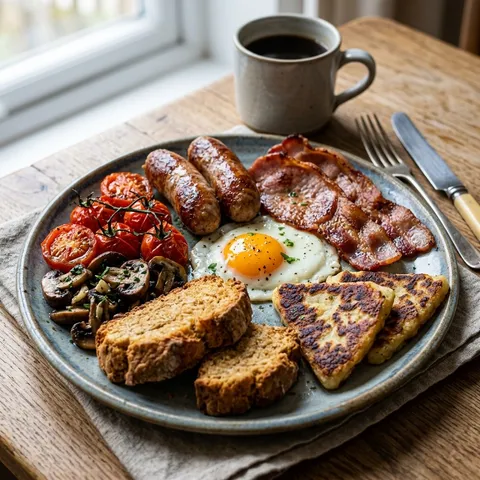 British & Irish Lens Verified Images are for illustrative purposes only, may be inaccurate, and do not guarantee the presence or absence of specific ingredients.
 Ulster Fry
Northern Ireland's legendary fry-up: bacon, sausages, eggs, black pudding, potato bread, and soda bread — fuller and heartier than its English cousin.
 British & Irish Lens Verified Images are for illustrative purposes only, may be inaccurate, and do not guarantee the presence or absence of specific ingredients.
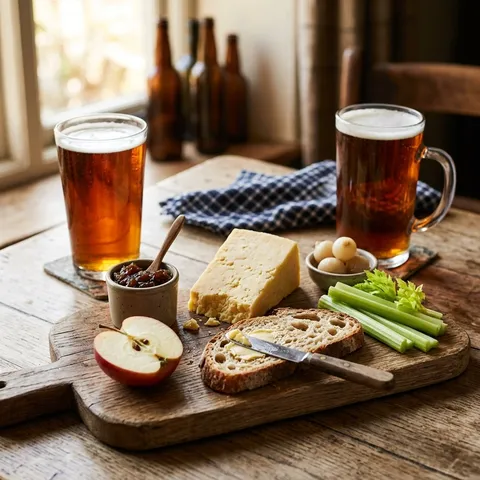
 Ploughman's Lunch
Sharp aged cheddar, crusty bread, tangy Branston pickle, and a boiled egg — a beloved no-cook British lunch that's greater than the sum of its parts.
 British & Irish Lens Verified Images are for illustrative purposes only, may be inaccurate, and do not guarantee the presence or absence of specific ingredients.
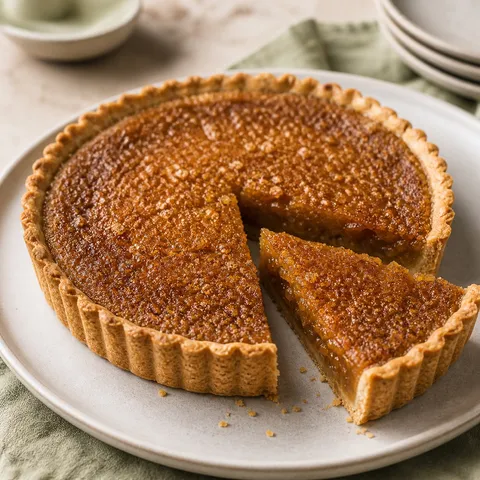
 Treacle Tart
A sweet, sticky tart filled with golden syrup and fresh breadcrumbs, with a gently caramelized top and a hint of lemon — Harry Potter's favorite dessert.