 British & Irish Images are for illustrative purposes only, may be inaccurate, and do not guarantee the presence or absence of specific ingredients.
  Serving Images are for illustrative purposes only, may be inaccurate, and do not guarantee the presence or absence of specific ingredients.
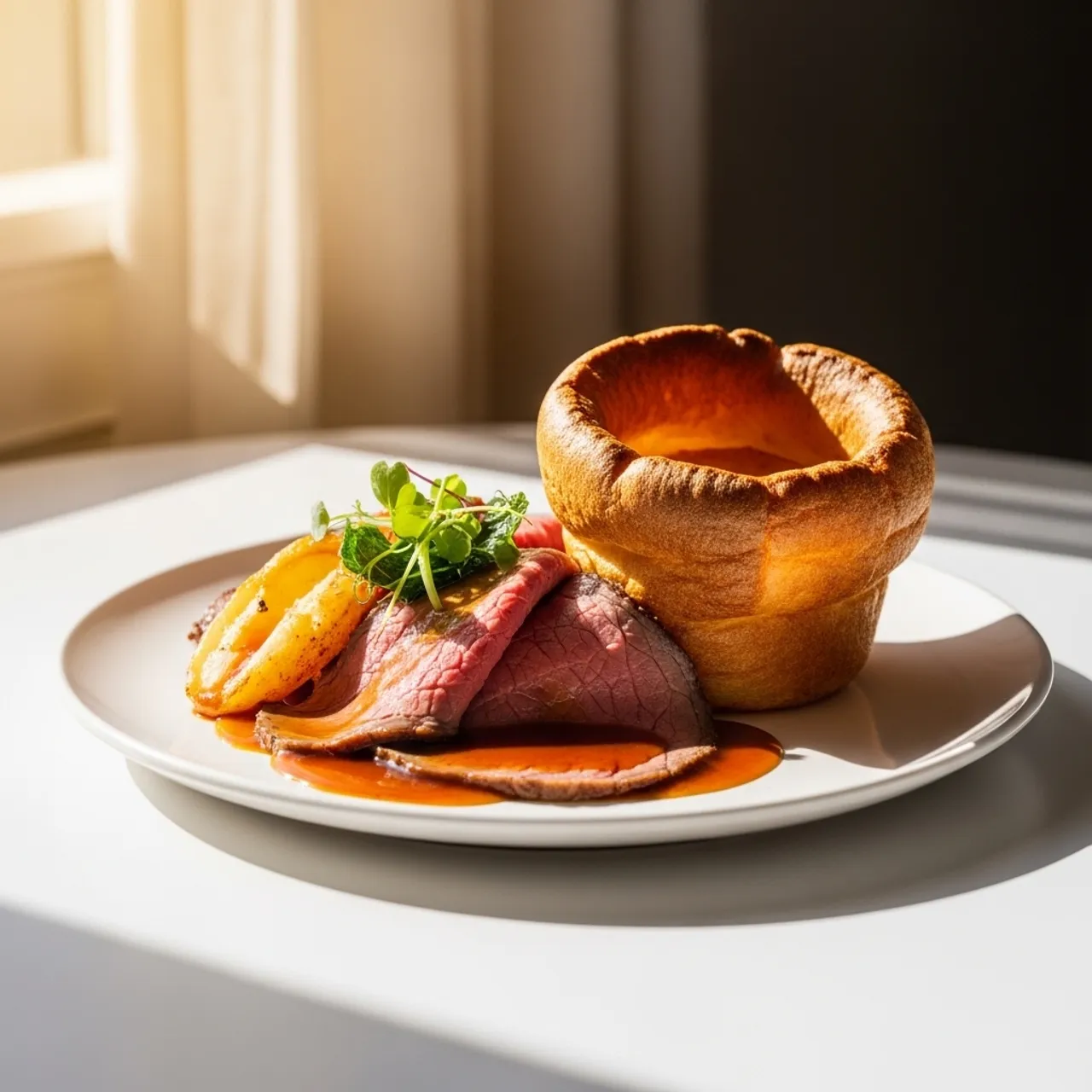
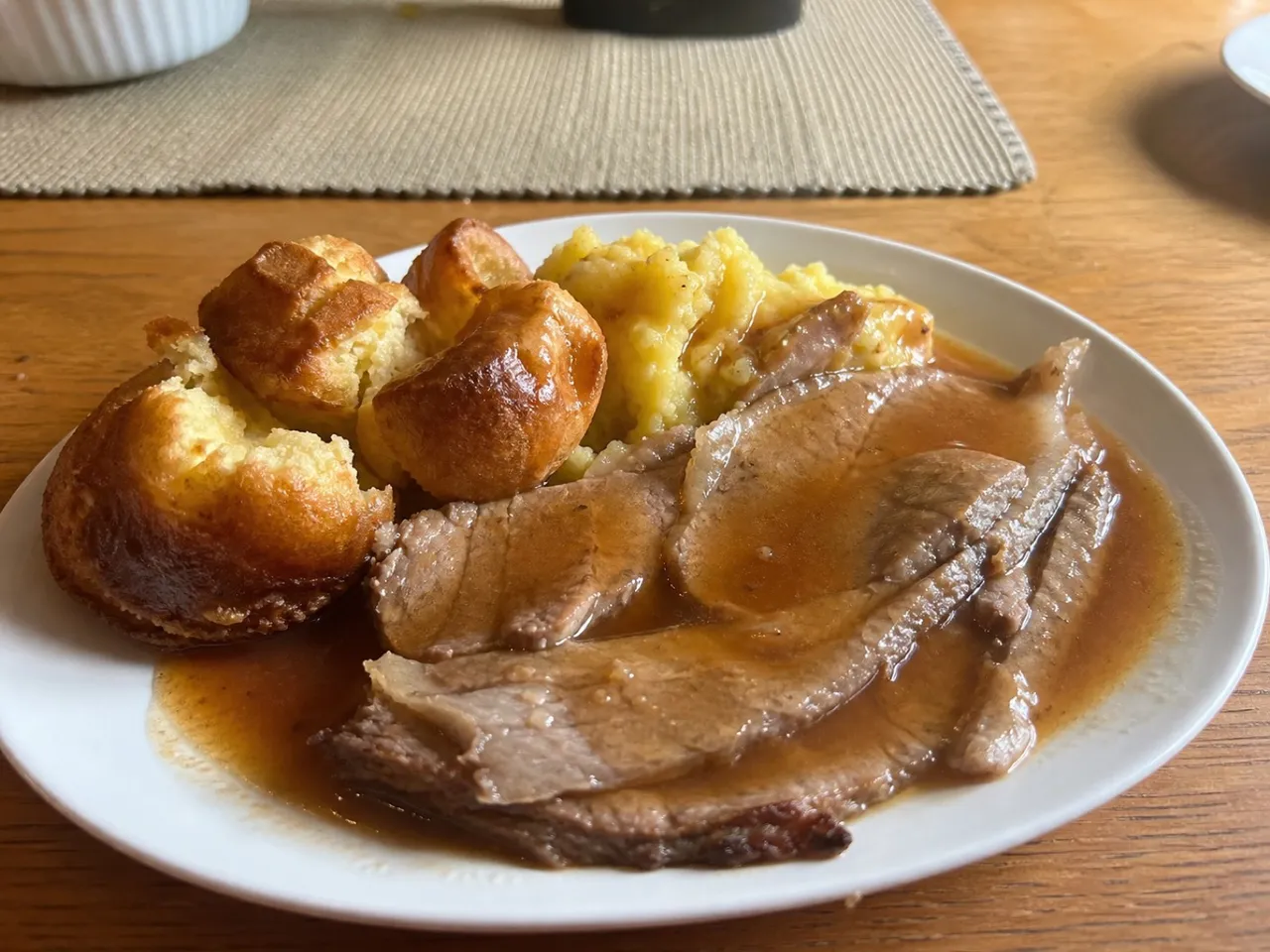
 Roast Beef and Yorkshire Pudding
Succulent, herb-crusted roast beef with crisp, airy Yorkshire puddings to soak up the rich pan juices — the definitive British Sunday roast.
Contains common allergens
In the app, Listahan checks these against your household automatically.
Good to know
- Crispy
Matched from this dish's own ingredients and timing. Browse more: crispy recipes
Instructions
6 steps- 1
Prepare the beef: Take the beef out of the fridge 1 hour before cooking. Preheat the oven to 220°C (430°F). Rub the joint with 2 tbsp vegetable oil and season generously with coarse salt and black pepper.
- 2
Roast the beef: Place the beef in a roasting tin and roast for 20 minutes to sear. Reduce oven temperature to 180°C (350°F) and cook for another 45-50 minutes for medium-rare (internal temp 55°C/130°F).
- 3
Rest the meat: Remove the beef from the oven, transfer to a warm platter, cover loosely with foil, and rest for at least 30-40 minutes.
- 4
Make the batter: While the beef rests, whisk the flour, eggs, milk, and salt in a jug until smooth and lump-free. Let the batter rest for 30 minutes.
- 5
Heat the pudding oil: Increase the oven temperature back to 220°C (430°F). Place 1 tsp of beef dripping or oil into each hole of a 12-hole muffin tin. Place in the oven for 10 minutes until the oil is smoking hot.
- 6
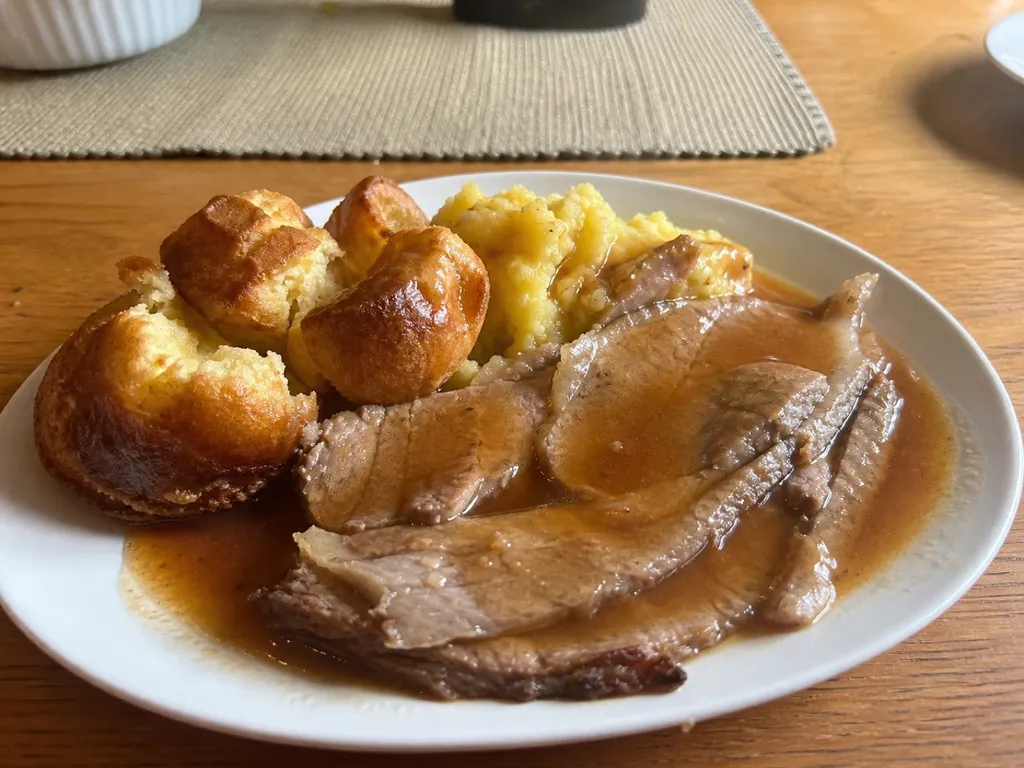
Bake the puddings: Carefully pour the rested batter evenly into the hot muffin tin holes (it should sizzle). Bake for 20-25 minutes until puffed, crisp, and deep golden. Do not open the oven door during baking!
 Images are for illustrative purposes only, may be inaccurate, and do not guarantee the presence or absence of specific ingredients.
 Listahan Family Score™
77/100
Good fit for most families
Score reflects how well this recipe fits a typical busy household. In the app, your Family Score is personalized to your household's allergens, kids, and pantry.
Nutrition
per serving615
Calories
55 g
Protein
15 g
Carbs
35 g
Fat
Estimated per serving. Actual values depend on the brands and portions you use.
Listahan cooking guide
Chef notes & practical guide
Technique notes, ingredient swaps, serve-alongside ideas, storage guidance, and equipment for this recipe.
Cultural context
Yorkshire pudding began in the north of England as a way to use the fat that dripped from a roasting joint of beef, catching it in a pan set below the meat and pouring in a simple batter of eggs, flour, and milk. Paired with a roasted beef joint and gravy, it became the anchor of the traditional British Sunday roast.
Listahan note
This version keeps the fat searing hot in the pudding tin before the batter goes in, since a cold tin produces flat, dense puddings rather than the tall, hollow rise Yorkshire pudding depends on.
Technique cues
- Rest the batter at room temperature for at least 30 minutes before baking; batter straight from the fridge is too cold to puff properly against the hot fat.
- Heat the fat in the tin in the oven until it's visibly smoking hot before pouring in the batter — this instant sizzle sets the outer edge and starts the pudding rising immediately.
- Don't open the oven door while the puddings bake; a rush of cooler air can collapse the trapped steam holding the pudding's puffed shape.
- Let the beef roast rest for 15 to 20 minutes after it comes out of the oven before carving, so the juices redistribute through the meat instead of running out onto the board.
Kitchen flow
- Parallel prep
- Prep any side dishes while Roast Beef and Yorkshire Pudding finishes with the beef roasting joint — the hands-off cook time is the window to use. Plan around the bake; that's the slow part.
- Make-ahead
- Roast Beef and Yorkshire Pudding reheats well, so cooking it a day ahead and finishing it just before serving is a reasonable way to spread out the work. This one leans on the beef roasting joint. Everything else is quick — the bake is the one step that takes real time.
- Leftover move
- Leftover Roast Beef and Yorkshire Pudding reheats well covered on the stove or in the oven with a splash of liquid; avoid the microwave, which tends to toughen the beef roasting joint on a fast reheat. The bake step is what sets the pace here.
- Cleanup rhythm
- Deglaze the pan used for Roast Beef and Yorkshire Pudding with a splash of water or broth right after cooking — it lifts the browned bits before they dry on and saves scrubbing later. This one leans on the beef roasting joint. The bake step is what sets the pace here.
Ingredient brief
Role, handling, and swap guidance for each key ingredient.
1.5kg beef roasting joint (e.g.
Main protein or body
Purpose: kg beef roasting joint (e.g. gives Roast Beef and Yorkshire Pudding its main substance and carries the seasoning.
Handling: Pat dry, cut evenly, and season before cooking so browning or sauce coverage is consistent.
Adaptation: Use the closest fresh equivalent and expect a modest shift in flavor or texture.
topside or sirloin)
Flavor support
Purpose: topside or sirloin) supports the balance of Roast Beef and Yorkshire Pudding and should taste integrated.
Handling: Prep before heat is high so the cooking step can move without rushing.
Adaptation: Use the closest fresh equivalent and expect a modest shift in flavor or texture.
2 tbsp vegetable oil
Richness and texture
Purpose: tbsp vegetable oil rounds the texture and helps the dish feel complete.
Handling: Wash, trim, and cut evenly so the pieces cook at the same pace.
Adaptation: Use the closest fresh equivalent and expect a modest shift in flavor or texture.
140g plain flour
Structural base
Purpose: g plain flour defines the shape and texture of the dish.
Handling: Measure before heating and break up clumps so the mix distributes evenly.
Adaptation: Use a certified gluten-free alternative when needed and expect a small texture change.
4 large eggs
Main protein or body
Purpose: large eggs gives Roast Beef and Yorkshire Pudding its main substance and carries the seasoning.
Handling: Prep before heat is high so the cooking step can move without rushing.
Adaptation: Use an egg-free substitute only when binding or glazing is not the main structure.
Technique notes
- Carve the beef against the grain in thin slices; roasting joints like topside or sirloin have a clear grain direction, and cutting with it instead of across it makes the meat noticeably chewier.
- Serve the Yorkshire puddings the moment they come out of the oven, since their signature rise and hollow center starts to deflate within a few minutes of leaving the heat.
- Save the meat drippings and pan juices to build the gravy rather than starting a sauce from scratch — that's where most of the roast's flavor concentrates.
Ingredient swaps
- Gluten-free direction
- Replace the plain flour with a certified gluten-free 1:1 flour blend or gluten-free noodles/breadcrumbs — check that any other packaged ingredients here are labeled gluten-free too. This one leans on the beef roasting joint.
- Dairy-free direction
- Swap the milk for a neutral dairy-free butter or oil and a full-fat plant milk (oat or coconut work best for body) — the texture shifts slightly but the dish holds together. This one leans on the beef roasting joint.
- Egg-aware direction
- Replace the eggs with a flax or chia egg (1 tbsp ground seed + 3 tbsp water, rested 5 minutes) for binding, best when eggs are there for binding rather than structure or rise. This one leans on the beef roasting joint.
- Lower-sodium direction
- Salt in stages instead of all at once, tasting as you go — you'll likely need less than the full amount. This one leans on the beef roasting joint.
Serve alongside
- Fresh berries
- Citrus fruit salad
- Mint leaves
- Black coffee
- Hot tea
- Sparkling water with lemon
Serving suggestions only — check pairings for your household's allergens.
Storage & reheating
- Store covered for 3 to 4 days, refrigerated when dairy, eggs, custard, or fresh fruit are involved.
- Reheat gently only when warmth improves the texture.
- Freeze sturdy baked portions up to 2 months; avoid freezing delicate fresh toppings.
Equipment
- Mixing bowls
- Baking dish or pan
- Cooling rack
Make this household-aware
Listahan Pro checks this recipe against your household's allergens, finds pantry-aware swaps, builds the shopping list, and helps you plan the week around it.
Plan it in Listahan
Add Roast Beef and Yorkshire Pudding to your week, check it against your household's allergens, and build the shopping list automatically.
More British & Irish recipes
 British & Irish Lens Verified Images are for illustrative purposes only, may be inaccurate, and do not guarantee the presence or absence of specific ingredients.
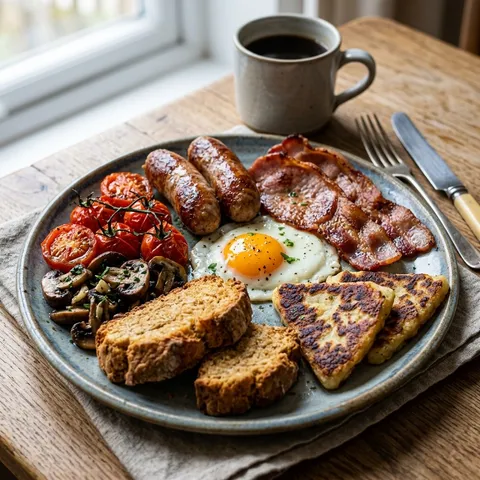
 Ulster Fry
Northern Ireland's legendary fry-up: bacon, sausages, eggs, black pudding, potato bread, and soda bread — fuller and heartier than its English cousin.
 British & Irish Lens Verified Images are for illustrative purposes only, may be inaccurate, and do not guarantee the presence or absence of specific ingredients.
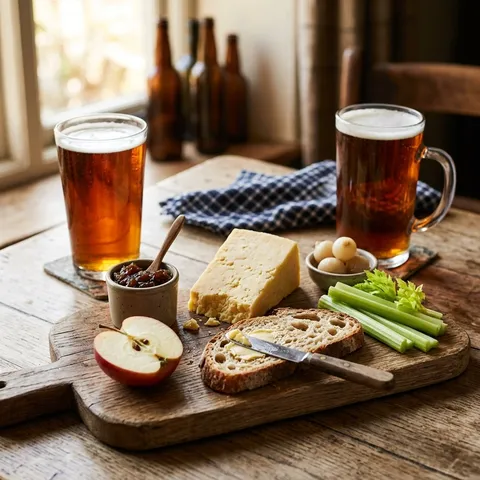
 Ploughman's Lunch
Sharp aged cheddar, crusty bread, tangy Branston pickle, and a boiled egg — a beloved no-cook British lunch that's greater than the sum of its parts.
 British & Irish Lens Verified Images are for illustrative purposes only, may be inaccurate, and do not guarantee the presence or absence of specific ingredients.
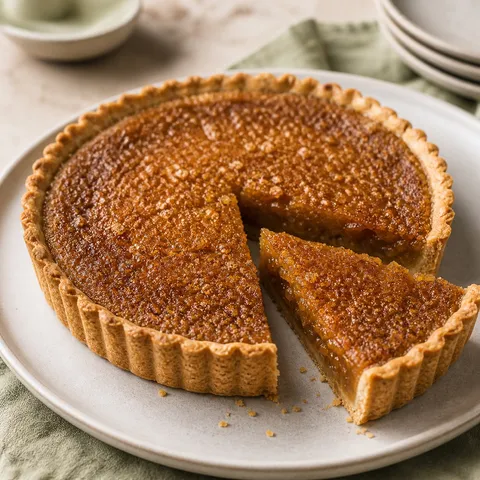
 Treacle Tart
A sweet, sticky tart filled with golden syrup and fresh breadcrumbs, with a gently caramelized top and a hint of lemon — Harry Potter's favorite dessert.