 British & Irish Images are for illustrative purposes only, may be inaccurate, and do not guarantee the presence or absence of specific ingredients.
  Serving Images are for illustrative purposes only, may be inaccurate, and do not guarantee the presence or absence of specific ingredients.
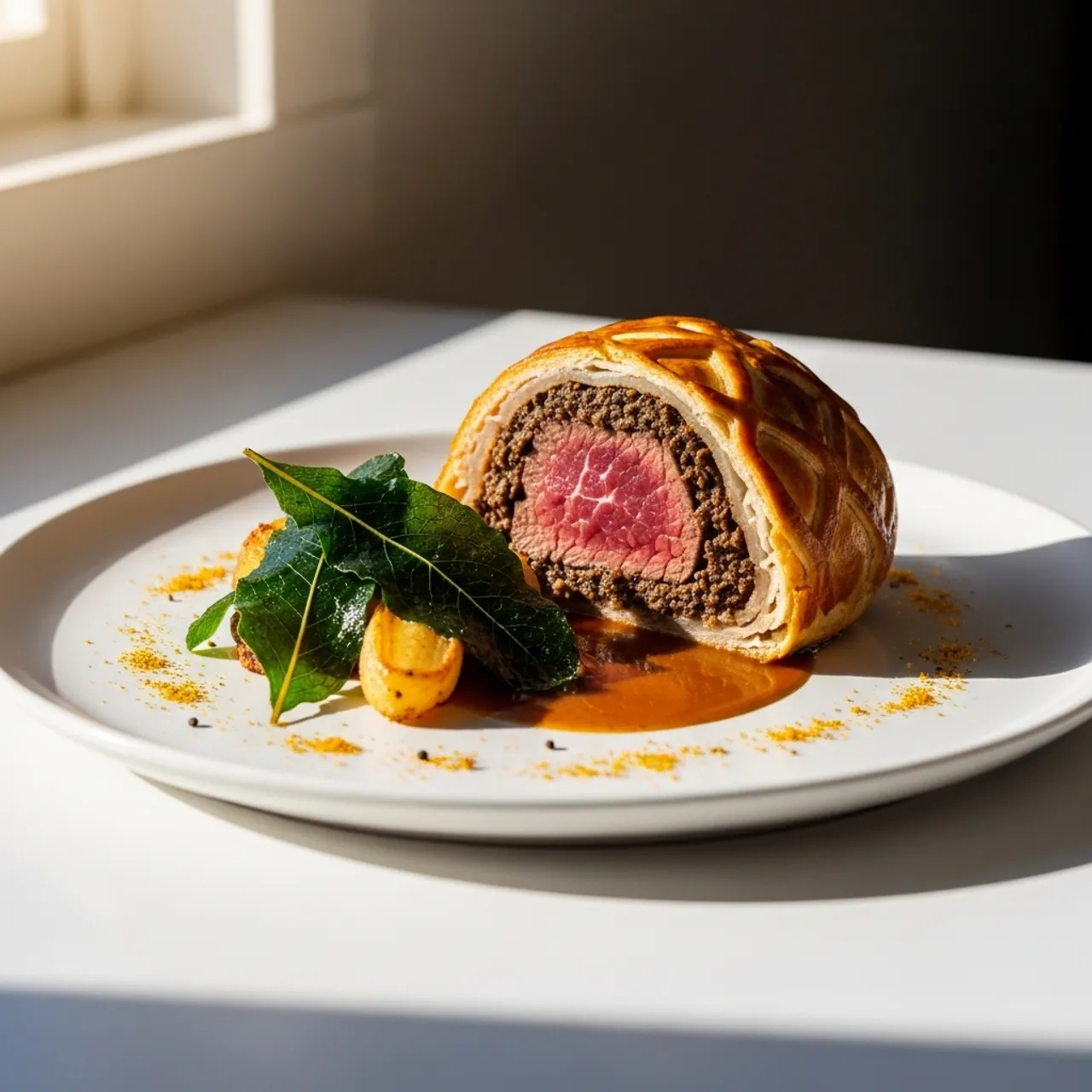
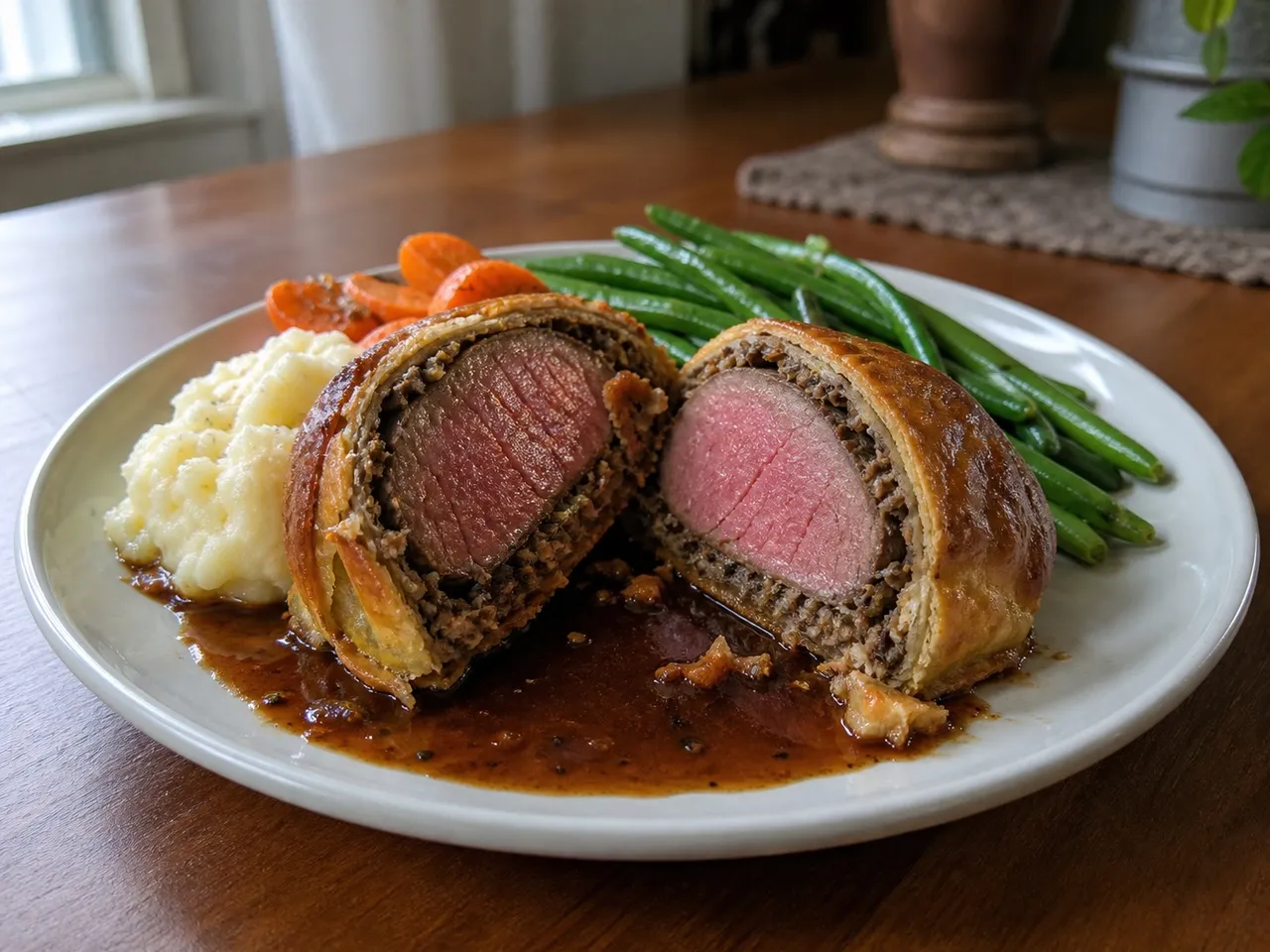
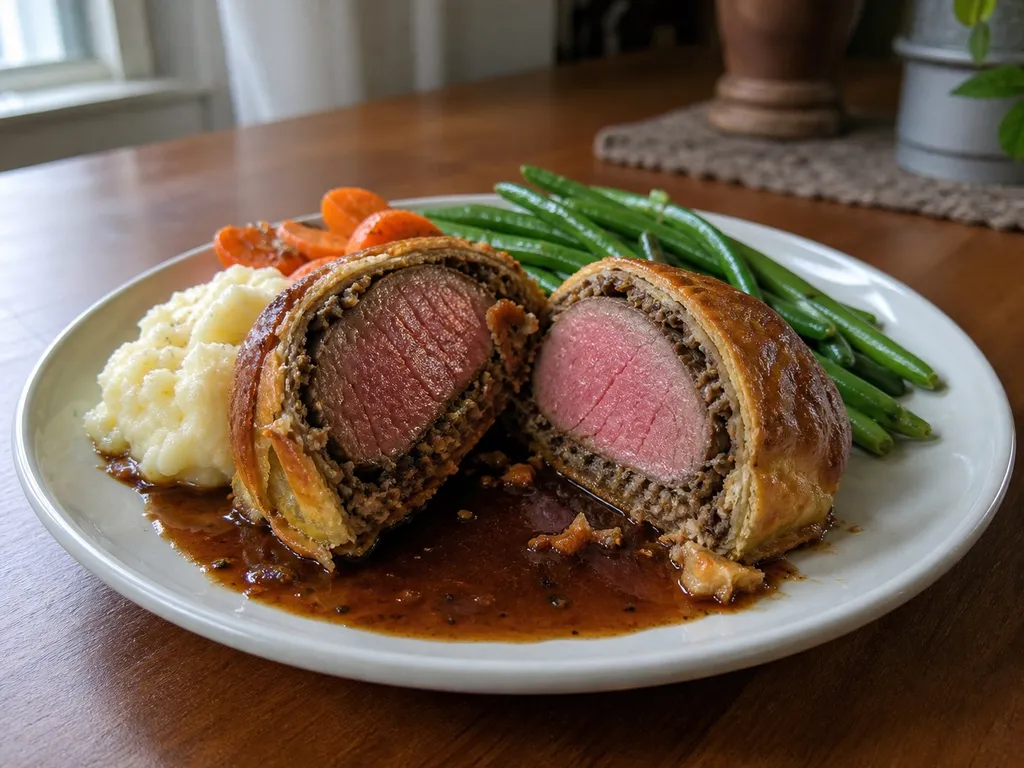
 Beef Wellington
Tender beef fillet wrapped in earthy mushroom duxelles and golden puff pastry — an impressive British showstopper with a spectacular rosy center.
Contains common allergens
In the app, Listahan checks these against your household automatically.
Instructions
6 steps- 1
Sear the beef: Season the beef fillet generously. Heat olive oil in a pan over high heat and sear the beef on all sides until browned (about 5 mins total). Remove, let cool slightly, and brush all over with English mustard.
- 2
Make the duxelles: In the same pan, cook the finely chopped mushrooms over medium-high heat until all their moisture evaporates and a dry, dark paste forms (about 10-15 mins). Let cool completely.
- 3
Wrap the beef: Lay out a large sheet of cling film. Arrange the Parma ham slices on it, slightly overlapping. Spread the cooled mushroom duxelles evenly over the ham. Place the beef in the center and use the cling film to roll the ham and mushrooms tightly around the beef. Twist the ends to form a tight log and chill for 20 minutes.
- 4
Prepare the pastry: Roll out the puff pastry on a lightly floured surface to a rectangle large enough to enclose the beef. Unwrap the chilled beef and place it in the center of the pastry.
- 5
Seal the Wellington: Brush the pastry edges with beaten egg yolk. Fold the pastry over the beef, sealing the edges underneath. Place seam-side down on a baking tray lined with parchment paper. Score the top gently with a knife and brush all over with egg yolk. Chill for 15 minutes.
- 6
Bake and rest: Preheat oven to 200°C (400°F). Bake the Wellington for 35-40 minutes until the pastry is deep golden brown and crisp. Rest for at least 15 minutes before slicing thickly to serve.
 Images are for illustrative purposes only, may be inaccurate, and do not guarantee the presence or absence of specific ingredients.
 Listahan Family Score™
63/100
Works for many families
Score reflects how well this recipe fits a typical busy household. In the app, your Family Score is personalized to your household's allergens, kids, and pantry.
Nutrition
per serving1085
Calories
47 g
Protein
3 g
Carbs
98 g
Fat
Estimated per serving. Actual values depend on the brands and portions you use.
Listahan cooking guide
Chef notes & practical guide
Technique notes, ingredient swaps, serve-alongside ideas, storage guidance, and equipment for this recipe.
Cultural context
Despite being named for the Duke of Wellington — the British general who defeated Napoleon at Waterloo in 1815 — there is no firm historical evidence that Arthur Wellesley ever ate or requested the dish. The name was most likely applied retrospectively by restaurateurs in the mid-20th century looking to give prestige to what is essentially beef en croute, a technique with deep roots in French cuisine. The dish became a showpiece of British hotel dining in the 1960s and 1970s and has since become the aspirational centerpiece of home celebration dinners.
Listahan note
This version wraps the beef in a duxelles — a dry, deeply cooked mushroom paste — that acts as a moisture barrier keeping the pastry crisp while amplifying the umami of the tenderloin.
Technique cues
- Sear the beef tenderloin aggressively on all sides for 2 minutes total — you want deep color, not cooked-through; it will finish cooking in the oven inside the pastry.
- Cook the duxelles until every drop of mushroom moisture has evaporated and the paste is completely dry before spreading it on the prosciutto; any remaining moisture will steam and soggy the pastry from the inside.
- Rest the finished Wellington for at least 10 minutes before slicing — the carryover heat continues cooking the beef during rest, and cutting early sends all the juices onto the board rather than staying in the meat.
Kitchen flow
- Parallel prep
- Make the duxelles the day before and refrigerate; this is the most time-consuming step and doing it ahead reduces day-of stress significantly.
- Make-ahead
- The fully assembled, uncooked Wellington can be refrigerated wrapped in cling film for up to 24 hours before baking — it actually bakes better cold.
- Leftover move
- Leftover slices reheat in a 350 degree F oven for 8 minutes and make an extraordinary next-day steak sandwich on crusty bread with horseradish cream.
- Cleanup rhythm
- Line the baking sheet with parchment before baking; the butter from the pastry will drip and burn on bare metal.
Ingredient brief
Role, handling, and swap guidance for each key ingredient.
beef tenderloin
centerpiece protein
Purpose: The tenderloin is the most tender cut and its uniform cylindrical shape bakes evenly inside the pastry without thick or thin spots.
Handling: Tie with kitchen twine at 1-inch intervals to maintain shape, sear hard on all sides, then refrigerate to firm up before wrapping.
Adaptation: A trimmed sirloin roast can substitute but will need slightly longer cooking time and is less tender.
cremini or button mushrooms
duxelles moisture barrier
Purpose: Finely chopped and cooked-down mushrooms create a savory layer that protects the pastry from beef juices while adding enormous depth of flavor.
Handling: Pulse in a food processor until very fine, then cook in butter over medium heat until completely dry — 15-20 minutes of active stirring.
Adaptation: A blend of cremini and dried porcini, rehydrated and drained, adds more complex flavor to the duxelles.
prosciutto or Parma ham
inner wrapping layer
Purpose: The prosciutto creates a secondary barrier between the duxelles and the pastry and adds a delicate saltiness to every slice.
Handling: Lay overlapping slices on a sheet of cling film to create a uniform rectangle before spreading the duxelles on top.
Adaptation: Very thin slices of serrano ham or bresaola work well; avoid thick-cut cured meats which add too much chew.
puff pastry
outer crust
Purpose: Good-quality all-butter puff pastry bakes into hundreds of crisp, golden layers that shatter against the rich filling.
Handling: Keep cold and work quickly; warm pastry loses its lamination and bakes into a greasy, flat layer instead of puffing.
Adaptation: Rough puff pastry made at home is a good middle ground between shop-bought and full puff.
English mustard
flavor sealant on the beef
Purpose: A thin brushing of English mustard on the seared beef adds a pungent heat that cuts through the richness and forms a thin barrier before the duxelles.
Handling: Apply immediately after searing and refrigerating the beef; let it set for 15 minutes before wrapping.
Adaptation: Dijon mustard for a milder, more French profile; whole-grain mustard adds texture.
Technique notes
- Score the pastry surface with a sharp knife in a diagonal crosshatch pattern — this is decorative but also allows steam to vent evenly without the pastry splitting along the sides.
- Use a probe thermometer rather than timing alone: 125 degrees F internal for rare, 130 degrees F for medium-rare — carryover cooking during the 10-minute rest adds another 5 degrees F.
- If the pastry is browning too quickly before the beef is done, tent loosely with foil without pressing it down, which would deflate the puff pastry layers.
Ingredient swaps
- Dairy-free direction
- Use dairy-free puff pastry and cook the duxelles in olive oil instead of butter; many all-butter brands have a plant-based version.
- Budget direction
- Use a center-cut beef sirloin roast trimmed to a uniform cylinder; the result is less tender but equally impressive visually and the technique is identical.
- Gluten-free direction
- Gluten-free puff pastry is available from specialty brands; the Wellington structure works the same but handle the pastry very cold as it tears more easily.
Serve alongside
- Roasted asparagus
- Pommes puree
- Wilted spinach with garlic
- Burgundy or Bordeaux red wine
- Sparkling water with lemon
Serving suggestions only — check pairings for your household's allergens.
Storage & reheating
- Leftover Wellington keeps refrigerated for up to 2 days wrapped tightly; the pastry softens but the flavor improves.
- Do not freeze cooked Wellington — the pastry turns soggy on thawing; freeze only the assembled uncooked version instead.
Equipment
- Probe thermometer for accurate doneness without guesswork
- Food processor for making fine duxelles efficiently
- Kitchen twine for shaping the tenderloin
- Large sheet of cling film for rolling and shaping the Wellington
Make this household-aware
Listahan Pro checks this recipe against your household's allergens, finds pantry-aware swaps, builds the shopping list, and helps you plan the week around it.
Plan it in Listahan
Add Beef Wellington to your week, check it against your household's allergens, and build the shopping list automatically.
More British & Irish recipes
 British & Irish Lens Verified Images are for illustrative purposes only, may be inaccurate, and do not guarantee the presence or absence of specific ingredients.
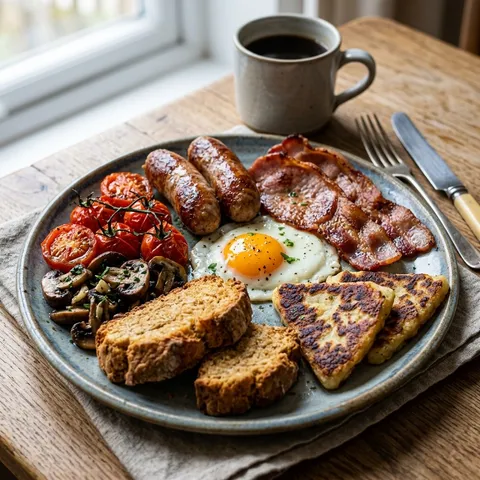
 Ulster Fry
Northern Ireland's legendary fry-up: bacon, sausages, eggs, black pudding, potato bread, and soda bread — fuller and heartier than its English cousin.
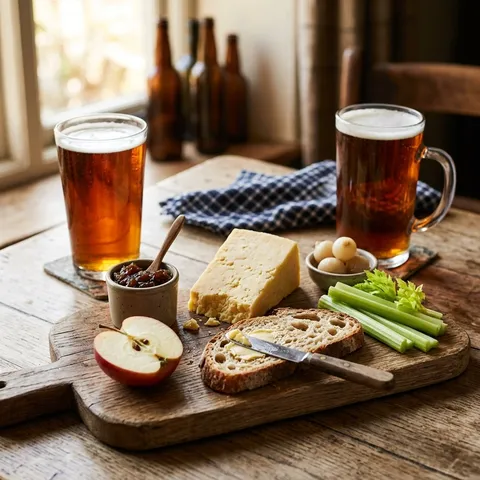 British & Irish Lens Verified Images are for illustrative purposes only, may be inaccurate, and do not guarantee the presence or absence of specific ingredients.
 Ploughman's Lunch
Sharp aged cheddar, crusty bread, tangy Branston pickle, and a boiled egg — a beloved no-cook British lunch that's greater than the sum of its parts.
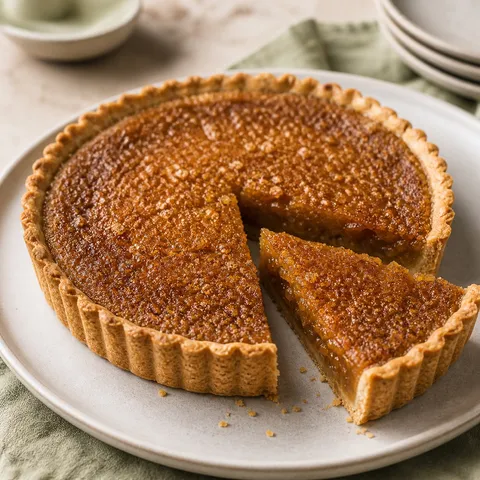 British & Irish Lens Verified Images are for illustrative purposes only, may be inaccurate, and do not guarantee the presence or absence of specific ingredients.
 Treacle Tart
A sweet, sticky tart filled with golden syrup and fresh breadcrumbs, with a gently caramelized top and a hint of lemon — Harry Potter's favorite dessert.