 British & Irish Images are for illustrative purposes only, may be inaccurate, and do not guarantee the presence or absence of specific ingredients.
  Serving Images are for illustrative purposes only, may be inaccurate, and do not guarantee the presence or absence of specific ingredients.
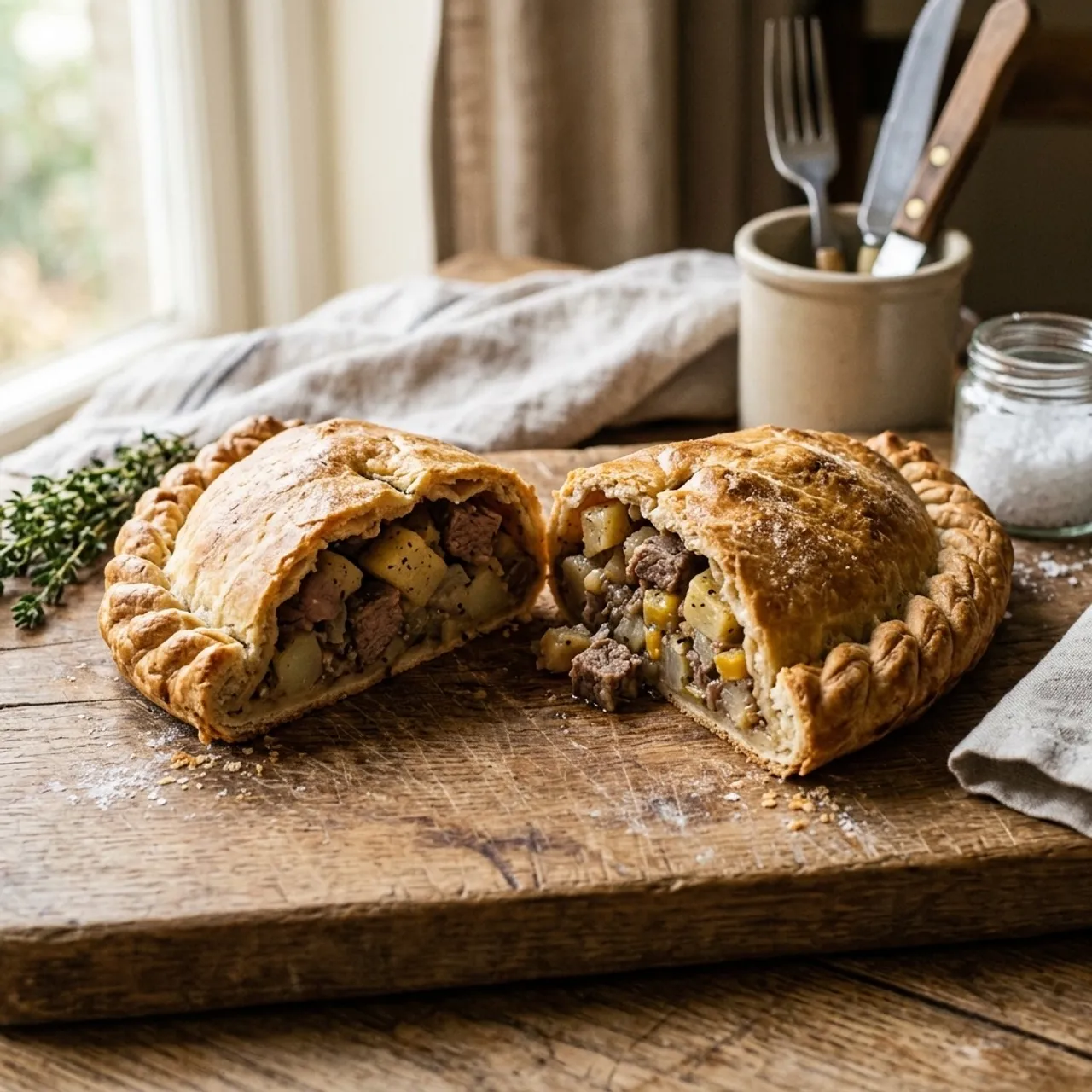
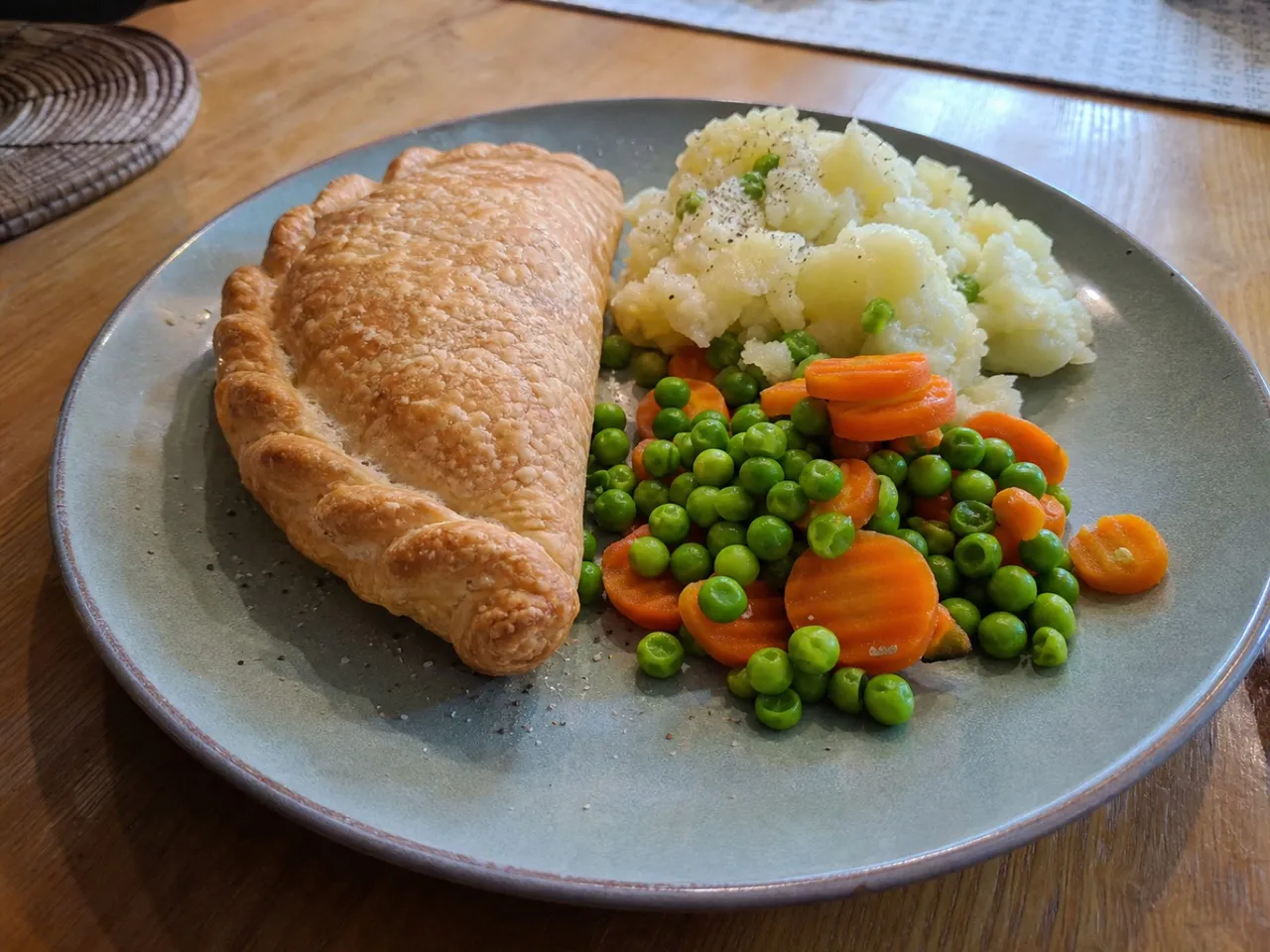
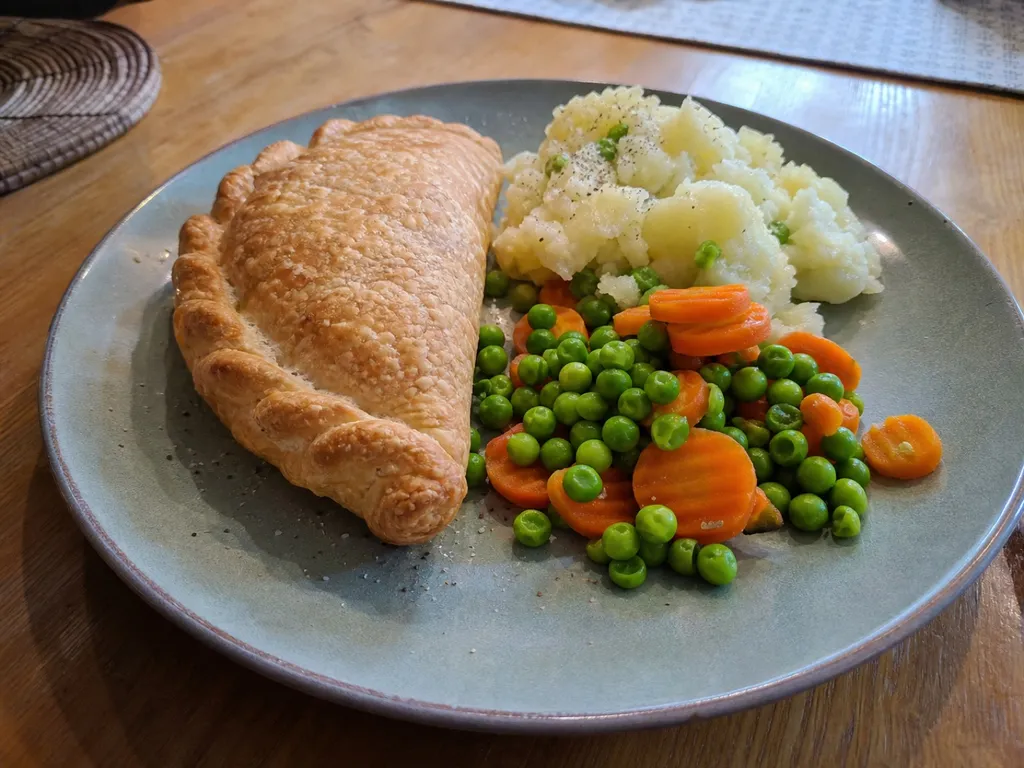
 Cornish Pasty
Crimped shortcrust pastry filled with seasoned beef, potato, swede, and onion — Cornwall's hearty hand-held lunch, perfect for any occasion.
Contains common allergens
In the app, Listahan checks these against your household automatically.
Instructions
6 steps- 1
Make the pastry: Rub the lard and butter into the flour with a pinch of salt until it resembles breadcrumbs. Gradually add the cold water, mixing until a firm dough forms. Knead briefly, wrap in cling film, and chill for 30 minutes.
- 2
Prepare the filling: In a large bowl, combine the diced beef skirt, potato, swede, and onion. Season very generously with black pepper and a good pinch of salt. Do not pre-cook the filling!
- 3
Roll the pastry: Divide the chilled pastry into four equal portions. Roll each out on a floured surface into a circle about 20cm (8 inches) in diameter.
- 4
Fill the pasties: Place a quarter of the raw filling onto one half of each pastry circle, leaving a 2cm border around the edge.
- 5
Crimp and seal: Brush the edges with beaten egg. Fold the pastry over the filling to form a semi-circle. Crimp the edges tightly together to seal in the juices.
- 6
Bake: Brush the tops of the pasties with the remaining beaten egg and cut a small slit in the top of each. Bake at 200°C (400°F) for 20 minutes, then lower the heat to 160°C (320°F) and bake for another 30-40 minutes until golden and the filling is tender.
 Images are for illustrative purposes only, may be inaccurate, and do not guarantee the presence or absence of specific ingredients.
 Listahan Family Score™
65/100
Works for many families
Score reflects how well this recipe fits a typical busy household. In the app, your Family Score is personalized to your household's allergens, kids, and pantry.
Nutrition
per serving1265
Calories
42 g
Protein
110 g
Carbs
71 g
Fat
Estimated per serving. Actual values depend on the brands and portions you use.
Listahan cooking guide
Chef notes & practical guide
Technique notes, ingredient swaps, serve-alongside ideas, storage guidance, and equipment for this recipe.
Cultural context
The Cornish pasty was the daily lunch of Cornish tin miners from at least the 17th century, designed as a portable, self-contained meal that survived a journey down the mine and could be eaten without cutlery. The thick crimped edge served as a handle that miners, whose hands were often contaminated with arsenic from the ore, would discard rather than eat. Each miner's wife crimped the pastry differently so her husband could identify his own pasty in the dark. The dish received European Protected Geographical Indication status in 2011, meaning only pasties made in Cornwall can legally be called Cornish.
Listahan note
This version uses raw vegetables and raw beef inside the raw pastry — the traditional approach — so everything steams together and the pastry absorbs all the meat juices.
Technique cues
- Use raw, not pre-cooked, filling: the raw meat and vegetables steam inside the sealed pastry during baking, releasing juices that keep the filling moist and flavor the pastry from the inside.
- Cut the vegetables — particularly the potato and turnip — into thin slices rather than chunks so they cook through at the same rate as the beef in the relatively short baking time.
- Crimp the pastry along the top, not the side, in the traditional Cornish style: fold one half over the other and twist the edge in a series of overlapping folds to seal securely against steam pressure.
Kitchen flow
- Parallel prep
- Make and chill the pastry the night before; slice all filling ingredients the morning of baking so assembly takes under 15 minutes.
- Make-ahead
- Unbaked pasties can be assembled, wrapped individually, and frozen for up to 3 months; bake straight from frozen at 350 degrees F for 55-60 minutes.
- Leftover move
- Cold pasties travel extremely well and are traditional as packed lunches; reheat in a 350 degree F oven for 15 minutes or enjoy at room temperature.
- Cleanup rhythm
- Line the baking sheet with parchment before assembly begins so any drips are contained and cleanup is a single sheet to discard.
Ingredient brief
Role, handling, and swap guidance for each key ingredient.
beef skirt or chuck steak
main protein
Purpose: Skirt steak is the traditional Cornish choice — it has enough fat and connective tissue to stay moist and tender during baking without pre-cooking.
Handling: Cut into 1/2-inch dice against the grain; do not use pre-ground beef, which turns grainy and dry.
Adaptation: Chuck steak cut the same way is a widely available and equally good substitute.
swede (rutabaga)
traditional vegetable component
Purpose: Swede adds a slightly sweet, earthy flavor distinct from potato and is considered non-negotiable in an authentic Cornish pasty.
Handling: Peel and slice thinly — about 1/8 inch — so it cooks through during baking.
Adaptation: Turnip is a closer substitute than parsnip if swede is unavailable; both add similar sweetness.
waxy potatoes
starchy base
Purpose: Waxy varieties hold their shape during baking and do not turn to mush the way floury potatoes would inside a sealed pastry.
Handling: Peel and slice into thin rounds, similar thickness to the swede so both cook at the same rate.
Adaptation: Yukon Gold works well; avoid russets which will break down into the filling.
shortcrust pastry
casing and crust
Purpose: A sturdy shortcrust — made with a higher flour-to-fat ratio than a typical pie crust — is essential so the pastry holds its shape and does not crack under the weight of the filling.
Handling: Make with strong bread flour rather than plain flour for extra structure; chill thoroughly before rolling.
Adaptation: Store-bought shortcrust pastry saves significant time and bakes well.
onion
aromatic and moisture source
Purpose: Raw onion placed directly in the filling releases moisture as it cooks, which keeps the filling from drying out and adds sweetness.
Handling: Slice thinly rather than dicing so it distributes evenly through the filling.
Adaptation: Shallots provide a milder, sweeter flavor.
Technique notes
- Layer the filling in the correct order — potato first, then swede, then onion, then beef — so each layer steams the one above it and the meat juices drip down through the vegetables.
- Season each layer separately as you build the filling; seasoning only the surface means the interior will be bland.
- Brush the finished pasties with egg wash twice — once before baking and once at 15 minutes in — for a deep golden glaze that also seals any small gaps in the crimp.
Ingredient swaps
- Vegetarian direction
- Omit the beef and add extra swede, a handful of cooked lentils, and a teaspoon of Marmite for savory depth.
- Gluten-free direction
- Use a gluten-free shortcrust pastry blend; it is slightly more fragile so handle the pastry cold and chill the assembled pasties before baking.
- Weeknight shortcut
- Use store-bought shortcrust pastry sheets; the filling prep is the real time investment, not the pastry.
Serve alongside
- Green salad with cider vinegar dressing
- Pickled beets
- Apple chutney
- Cornish ale
- Cold apple cider
Serving suggestions only — check pairings for your household's allergens.
Storage & reheating
- Baked pasties keep refrigerated for up to 3 days wrapped in foil; reheat in a 350 degree F oven for 15 minutes.
- Unbaked assembled pasties freeze well for up to 3 months; no need to thaw before baking.
Equipment
- Rolling pin for an even pastry thickness of about 1/4 inch
- Wide dinner plate or bowl as a pastry-cutting guide for uniform circles
- Pastry brush for egg wash
- Parchment-lined baking sheet
Make this household-aware
Listahan Pro checks this recipe against your household's allergens, finds pantry-aware swaps, builds the shopping list, and helps you plan the week around it.
Plan it in Listahan
Add Cornish Pasty to your week, check it against your household's allergens, and build the shopping list automatically.
More British & Irish recipes
 British & Irish Lens Verified Images are for illustrative purposes only, may be inaccurate, and do not guarantee the presence or absence of specific ingredients.
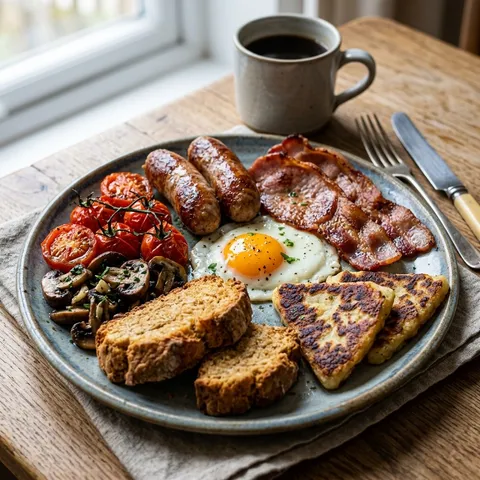
 Ulster Fry
Northern Ireland's legendary fry-up: bacon, sausages, eggs, black pudding, potato bread, and soda bread — fuller and heartier than its English cousin.
 British & Irish Lens Verified Images are for illustrative purposes only, may be inaccurate, and do not guarantee the presence or absence of specific ingredients.
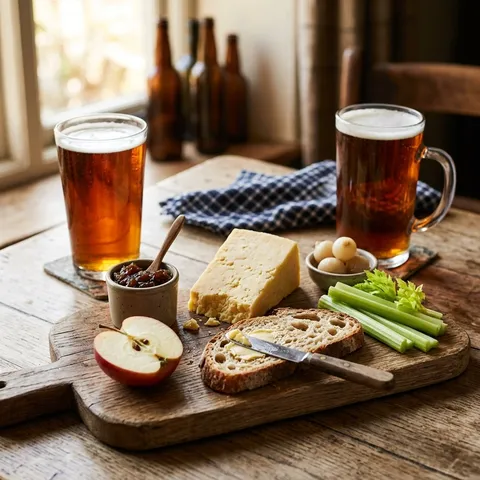
 Ploughman's Lunch
Sharp aged cheddar, crusty bread, tangy Branston pickle, and a boiled egg — a beloved no-cook British lunch that's greater than the sum of its parts.
 British & Irish Lens Verified Images are for illustrative purposes only, may be inaccurate, and do not guarantee the presence or absence of specific ingredients.
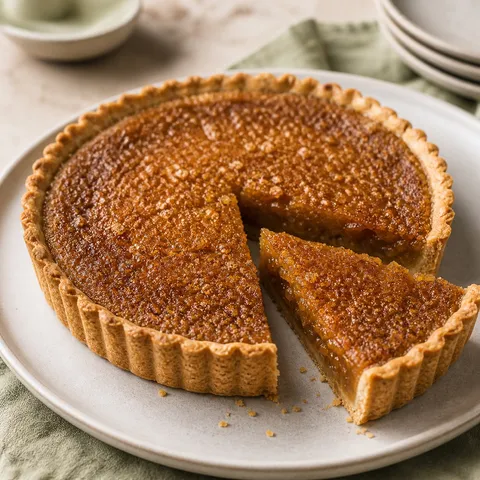
 Treacle Tart
A sweet, sticky tart filled with golden syrup and fresh breadcrumbs, with a gently caramelized top and a hint of lemon — Harry Potter's favorite dessert.