 British & Irish Images are for illustrative purposes only, may be inaccurate, and do not guarantee the presence or absence of specific ingredients.
 Crumpets
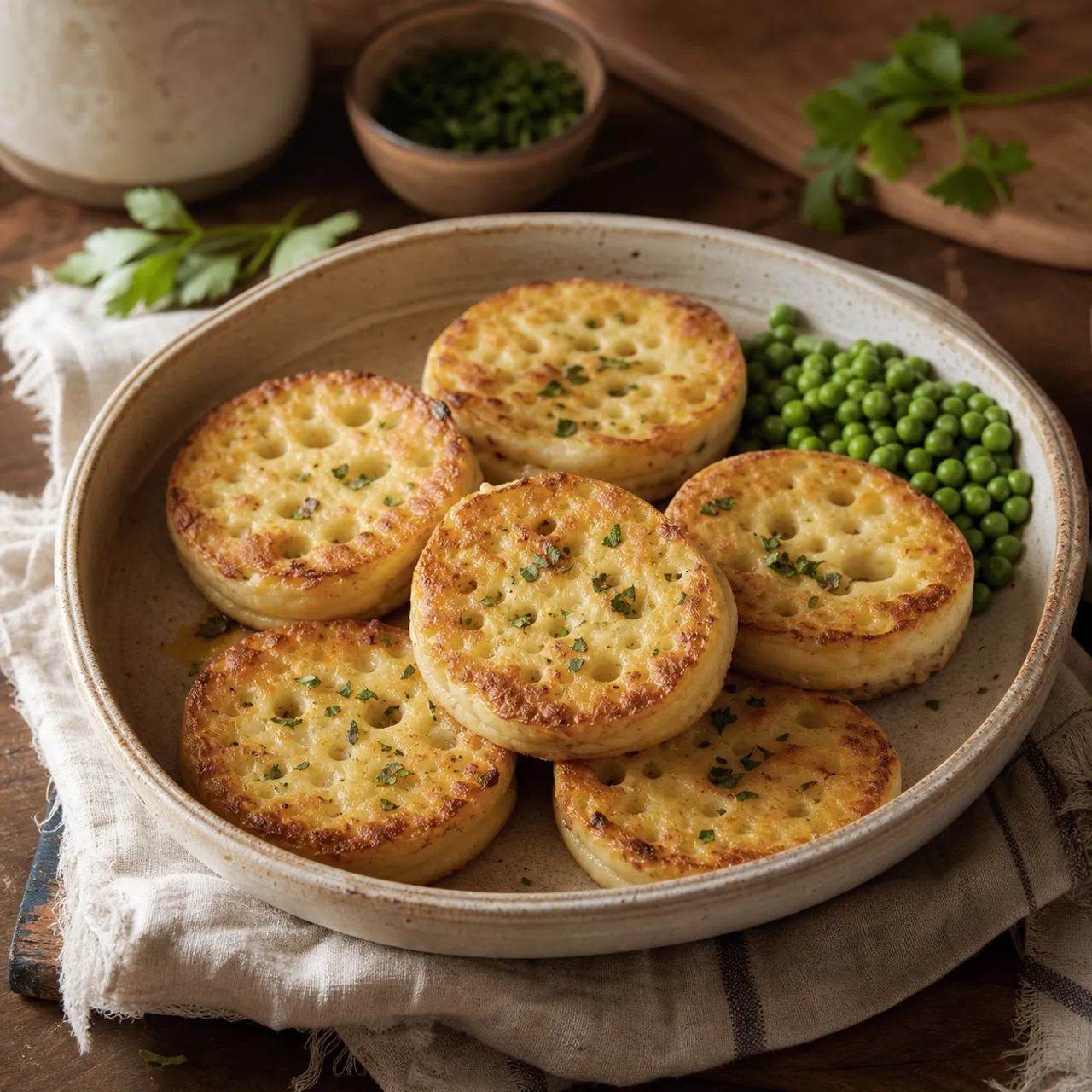
Soft, spongy griddle cakes riddled with holes that catch melting butter, a beloved British teatime staple.
Contains common allergens
In the app, Listahan checks these against your household automatically.
Instructions
6 steps- 1
Whisk the sugar and yeast into the warm milk and let it stand for 5 to 10 minutes until foamy, confirming the yeast is active.
- 2
Combine the flour and salt in a large bowl, pour in the yeast mixture and warm water, and beat vigorously with a whisk for 2 minutes until you have a smooth, thick, pourable batter.
- 3
Cover the bowl and leave it in a warm place for 1 hour until the surface is covered in bubbles and the batter has risen and looks foamy.
- 4
Dissolve the baking soda in 1 tablespoon of warm water, stir it gently into the rested batter, and let it sit for 5 minutes to activate.
- 5
Heat a greased griddle or skillet over medium-low heat and grease the insides of metal crumpet rings or egg rings, then place them on the surface and spoon batter into each about two-thirds full.
- 6
Cook for 8 to 10 minutes until the tops are set and covered in burst holes, then lift off the rings, flip the crumpets, and cook 2 minutes more until lightly golden; serve toasted with plenty of butter.
Listahan Family Score™
69/100
Works for many families
Score reflects how well this recipe fits a typical busy household. In the app, your Family Score is personalized to your household's allergens, kids, and pantry.
Nutrition
per serving270
Calories
8 g
Protein
51 g
Carbs
3 g
Fat
Estimated per serving. Actual values depend on the brands and portions you use.
Listahan cooking guide
Chef notes & practical guide
Technique notes, ingredient swaps, serve-alongside ideas, storage guidance, and equipment for this recipe.
Cultural context
Crumpets are tied to British tea tables, but they come from a practical griddle-cake tradition rather than a fancy bakery one. The ringed, holey version home cooks know today depends on a loose yeast batter and a slow griddle, which is what gives butter a place to sink in instead of sliding off.
Listahan note
This version keeps the batter simple and puts the focus on fermentation, ring height, and gentle heat. The goal is a crumpet that sets through without browning too fast, with open holes on top and a soft, springy middle.
Technique cues
- The batter should be thick enough to pour slowly, not thin like crepe batter. If it runs under the rings, the griddle is too hot, the rings are not greased enough, or the batter is too loose.
- Medium-low heat matters because the tops need time to dry and bubble before the bottoms overbrown. A pale gold base with a set, holey top is better than a crisp bottom and raw center.
- Do not fill the rings to the top. Two-thirds full leaves room for lift and keeps the crumpets from puffing into heavy, domed cakes.
Kitchen flow
- Parallel prep
- While the batter rests, set out the rings, warm the griddle, and clear space for cooling so the cooking stage can move steadily.
- Make-ahead
- Cook the crumpets fully, cool them, and toast them later; they are often better after a second heat because the surface crisps while the middle stays soft.
- Leftover move
- Split or toast leftover crumpets and top with butter and jam, sharp cheddar, or a fried egg for a quick breakfast.
- Cleanup rhythm
- Wipe the rings between batches while they are still warm, then soak the bowl once the batter is poured so dried flour paste does not cling.
Ingredient brief
Role, handling, and swap guidance for each key ingredient.
All-purpose flour
Structure base
Purpose: It gives crumpets enough body to hold their shape while staying tender and sponge-like.
Handling: Whisk it well with the salt before adding liquids so the batter smooths out quickly.
Adaptation: Bread flour makes a chewier crumpet; use it only if you like a firmer bite.
Active dry yeast
Primary leavener
Purpose: Yeast builds the first rise and gives the crumpets their mild bready flavor.
Handling: Bloom it in the warm milk with sugar until foamy before mixing the batter.
Adaptation: Instant yeast can be mixed directly with the flour, but the foamy bloom step is still useful for checking activity.
Warm milk (110 F)
Tenderizing liquid
Purpose: Milk softens the crumb and adds a little richness to a very plain batter.
Handling: Warm it gently; milk that feels hot rather than warm can weaken the yeast.
Adaptation: Use more warm water for a leaner crumpet with less tenderness and a slightly plainer flavor.
Baking soda
Second lift
Purpose: It helps open the bubbles after the yeast rest, giving the top its crumpet-like holes.
Handling: Dissolve it in warm water before stirring it in so it spreads evenly without streaks.
Adaptation: There is not a clean one-for-one replacement here; skipping it usually gives fewer open holes.
Butter
Grease and finishing fat
Purpose: Butter keeps the rings from sticking and is the classic finish because it melts into the holes.
Handling: Grease both the skillet and the inside walls of the rings before each batch.
Adaptation: Neutral oil works for greasing the pan, but butter gives a richer finish at the table.
Technique notes
- Beat the batter vigorously at the start. That short whisking builds enough structure for the bubbles to rise through instead of collapsing flat.
- Wait until the top looks mostly dry before removing the rings. If the sides slump when lifted, give the next batch another minute before flipping.
- Flip only briefly. The second side is just to set and lightly color the top, not to create an even pancake-style crust.
Ingredient swaps
- Milk swap
- Use warm water in place of the milk for a leaner batter; the crumpets will be a little less tender and less rounded in flavor.
- Richer finish
- Toast finished crumpets, then spread butter while they are hot so it sinks into the holes instead of sitting on the surface.
- No rings backup
- Use greased wide-mouth canning bands or sturdy metal egg rings; free-form batter will spread and cook more like small pancakes.
Serve alongside
- Soft scrambled eggs
- Raspberry jam and clotted cream
- Smoked salmon with cucumber
- Cheddar and Branston pickle
- English breakfast tea
- Earl Grey tea
- Milky black tea
Serving suggestions only — check pairings for your household's allergens.
Storage & reheating
- Refrigerate cooled crumpets in a sealed container for up to 3 days.
- Reheat in a toaster or dry skillet until the surface is crisp and the center is warm.
- Freeze in a single layer, then bag; toast from frozen or thaw briefly before toasting.
Equipment
- Large mixing bowl
- Whisk
- Flat griddle or heavy skillet
- Metal crumpet rings or egg rings
Make this household-aware
Listahan Pro checks this recipe against your household's allergens, finds pantry-aware swaps, builds the shopping list, and helps you plan the week around it.
Plan it in Listahan
Add Crumpets to your week, check it against your household's allergens, and build the shopping list automatically.
More British & Irish recipes
 British & Irish Lens Verified Images are for illustrative purposes only, may be inaccurate, and do not guarantee the presence or absence of specific ingredients.
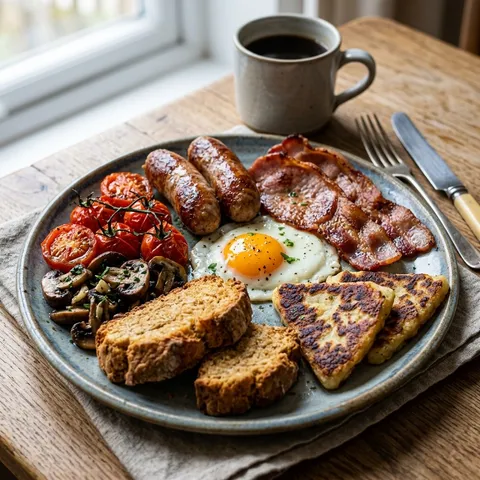
 Ulster Fry
Northern Ireland's legendary fry-up: bacon, sausages, eggs, black pudding, potato bread, and soda bread — fuller and heartier than its English cousin.
 British & Irish Lens Verified Images are for illustrative purposes only, may be inaccurate, and do not guarantee the presence or absence of specific ingredients.
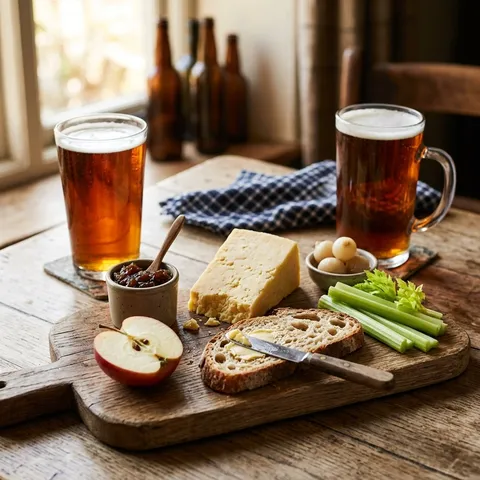
 Ploughman's Lunch
Sharp aged cheddar, crusty bread, tangy Branston pickle, and a boiled egg — a beloved no-cook British lunch that's greater than the sum of its parts.
 British & Irish Lens Verified Images are for illustrative purposes only, may be inaccurate, and do not guarantee the presence or absence of specific ingredients.
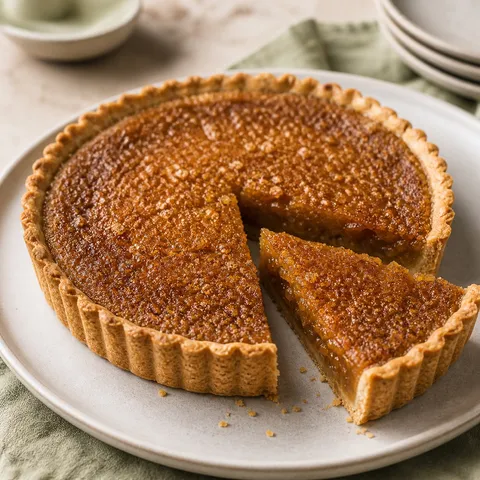
 Treacle Tart
A sweet, sticky tart filled with golden syrup and fresh breadcrumbs, with a gently caramelized top and a hint of lemon — Harry Potter's favorite dessert.