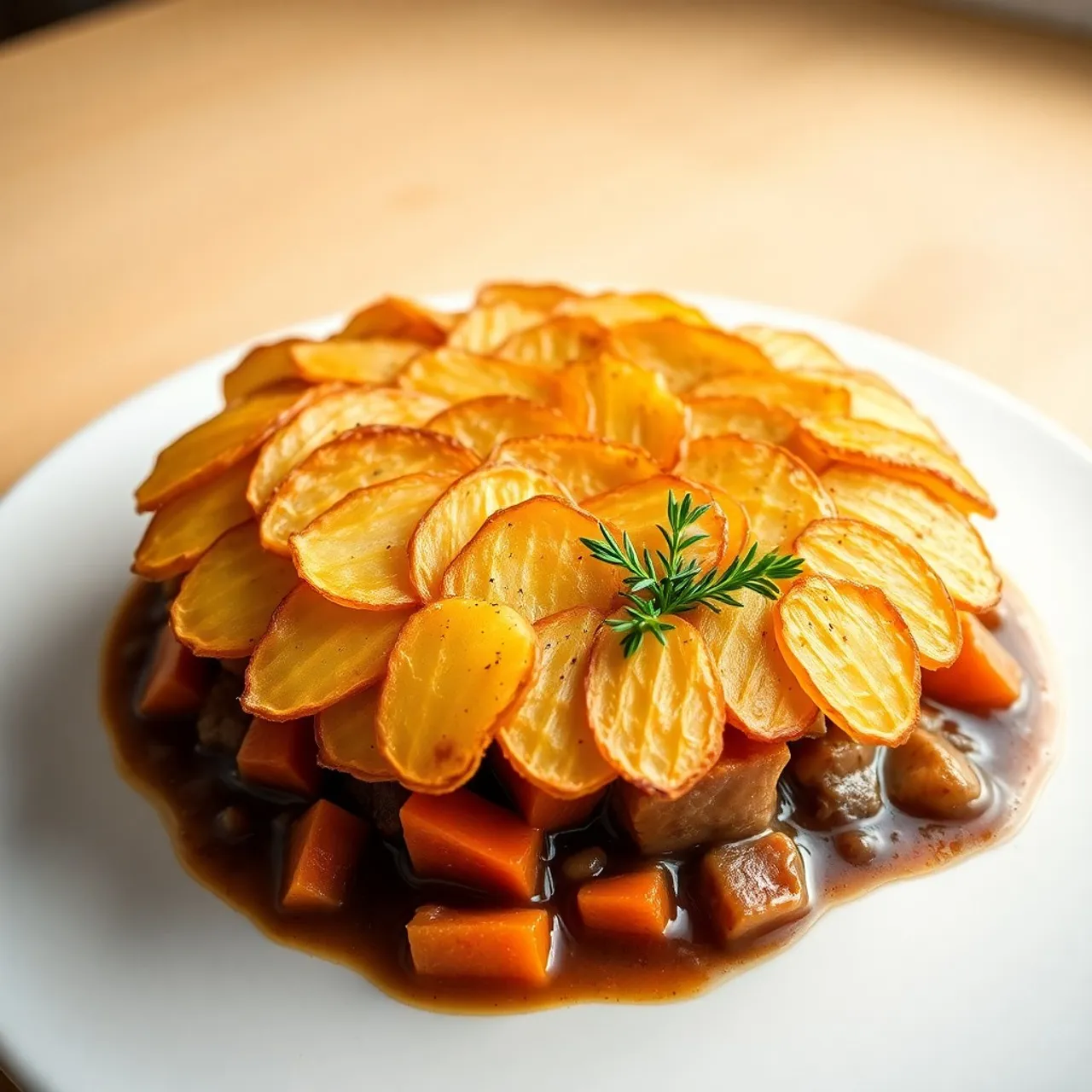
 British & Irish Images are for illustrative purposes only, may be inaccurate, and do not guarantee the presence or absence of specific ingredients.
 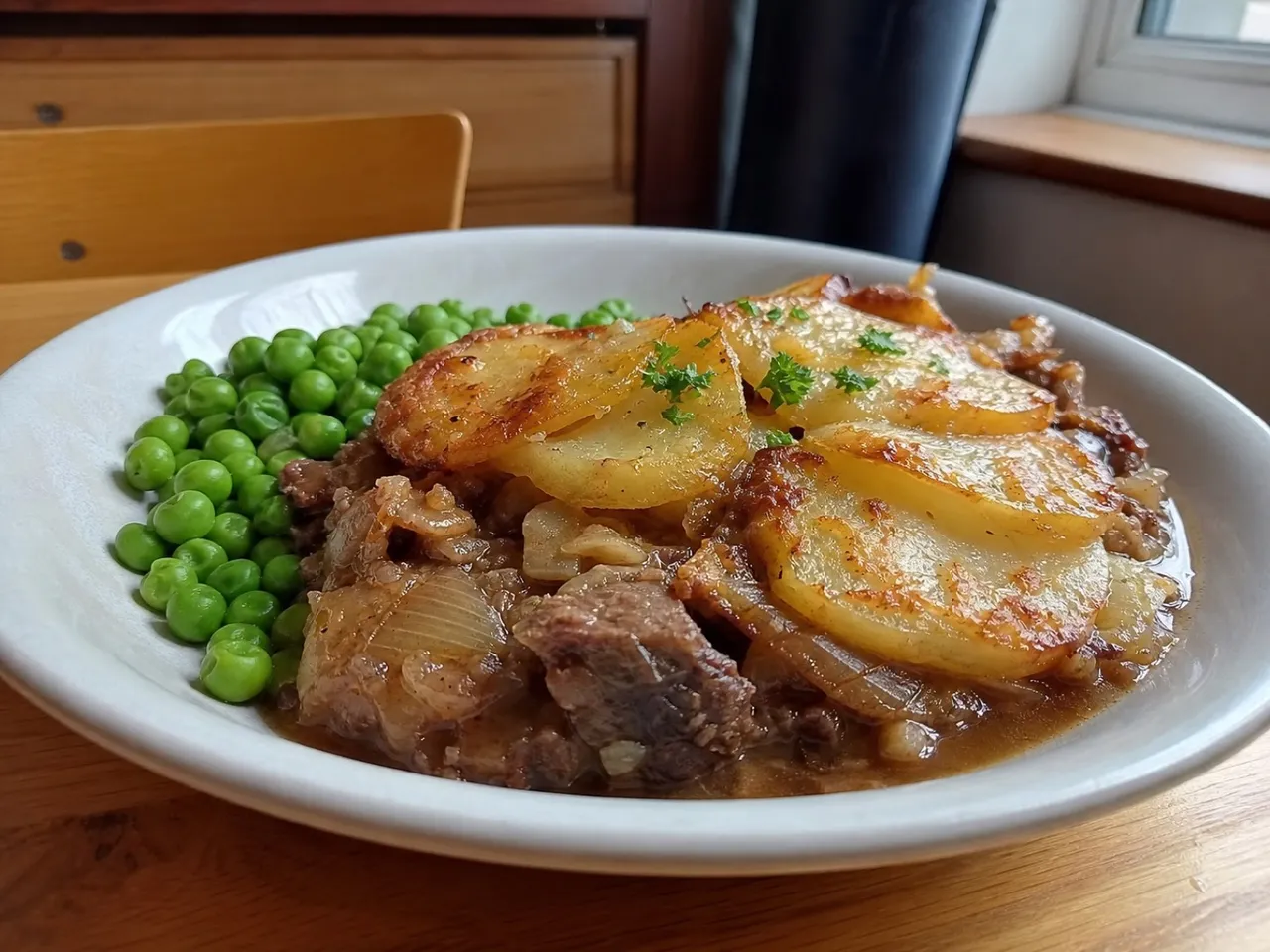 Serving Images are for illustrative purposes only, may be inaccurate, and do not guarantee the presence or absence of specific ingredients.
 Lancashire Hotpot
Layers of tender lamb, sweet onions, and thin-sliced potato, slow-baked until the top is crisp and the filling is gloriously rich and aromatic.
Contains common allergens
In the app, Listahan checks these against your household automatically.
Good to know
- One-pot
- Crispy
Matched from this dish's own ingredients and timing. Browse more: one-pot dinnerscrispy recipes
Instructions
6 steps- 1
Brown the lamb: Preheat oven to 170°C (340°F). In a large flameproof casserole dish, heat a little oil over medium-high heat and brown the diced lamb in batches. Remove and set aside.
- 2
Sauté the vegetables: In the same dish, lower the heat and fry the sliced onions and carrots for 5-8 minutes until softened.
- 3
Make the gravy base: Stir the flour into the vegetables and cook for 1 minute. Gradually pour in the lamb stock, stirring constantly until smooth. Return the lamb to the pot, add the fresh thyme, and season with salt and pepper.
- 4
Layer the potatoes: Arrange the thinly sliced potatoes in overlapping layers over the top of the lamb and vegetable stew, completely covering the meat.
- 5
Bake covered: Brush the top layer of potatoes with half of the melted butter. Cover the casserole dish with a tight-fitting lid or foil and bake in the oven for 1.5 hours.
- 6
Crisp the top: Remove the lid or foil, brush the potatoes with the remaining melted butter, and increase the oven temperature to 200°C (400°F). Bake for a further 30 minutes until the potatoes are crisp and deeply golden brown.
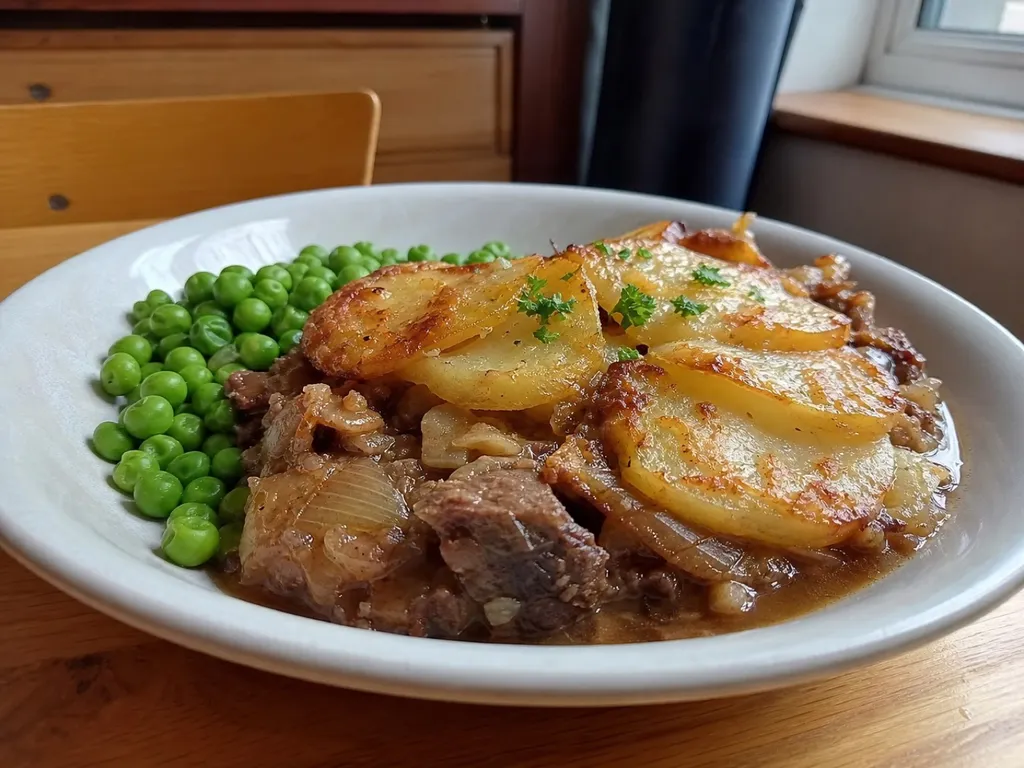 Images are for illustrative purposes only, may be inaccurate, and do not guarantee the presence or absence of specific ingredients.
 Listahan Family Score™
66/100
Works for many families
Score reflects how well this recipe fits a typical busy household. In the app, your Family Score is personalized to your household's allergens, kids, and pantry.
Nutrition
per serving465
Calories
32 g
Protein
25 g
Carbs
26 g
Fat
Estimated per serving. Actual values depend on the brands and portions you use.
Listahan cooking guide
Chef notes & practical guide
Technique notes, ingredient swaps, serve-alongside ideas, storage guidance, and equipment for this recipe.
Cultural context
Lancashire Hotpot emerged from the textile mill towns of northwest England in the 19th century, where it was designed to cook slowly and unattended while the entire family worked through a long mill shift. The deep, lidded pot — the hotpot itself — allowed it to braise for hours without drying out, and the thinly sliced potato topping absorbed the lamb juices from below while forming a crisp, golden crust on top. It is considered the defining dish of Lancashire, distinct from the similar but differently constructed Irish stew, and debates over its exact recipe — oysters in some older versions, kidney in others — continue among locals.
Listahan note
This version keeps the method strict: raw lamb, raw vegetables, stock, and thinly sliced potato arranged in overlapping layers on top so the surface crisps while everything below braises slowly.
Technique cues
- Brown the lamb in batches without crowding before layering; skipping this step loses all the caramelized flavor that forms the base of the cooking liquid.
- Slice the potato topping as thin and even as possible — about 1/8 inch — so each slice cooks through at the same rate and the surface layer crisps while inner layers stay soft and absorbent.
- Remove the lid for the final 20 minutes of cooking to drive off the steam sitting on the potato surface and produce the golden, slightly crisp top that is the defining feature of the dish.
Kitchen flow
- Parallel prep
- Brown the lamb in batches while slicing the onions and potatoes; everything goes in raw at the end of browning so the prep is linear.
- Make-ahead
- Lancashire hotpot is an outstanding make-ahead dish — the flavor improves overnight; reheat covered at 325 degrees F for 30 minutes then uncover for 15 minutes.
- Leftover move
- Leftover hotpot reheats perfectly and is arguably better the next day; portion into individual ramekins and reheat for a neater presentation.
- Cleanup rhythm
- Use a deep casserole dish that can go from oven to table to dishwasher; the only other dirty items are the pan for browning and a cutting board.
Ingredient brief
Role, handling, and swap guidance for each key ingredient.
lamb shoulder or neck chops
main protein
Purpose: Bone-in shoulder or neck has enough fat and collagen to stay moist and become tender during the long, slow braise; leaner cuts dry out.
Handling: Brown hard in batches in a hot pan before layering into the hotpot; season generously with salt and pepper.
Adaptation: Lamb leg is leaner and works if cut into large pieces, though the result is slightly drier than shoulder.
onions
aromatic base
Purpose: Sliced onions layered with the lamb soften into the braising liquid and add sweetness that balances the richness of the lamb.
Handling: Slice into rings rather than dice so they melt into the liquid rather than forming distinct pieces.
Adaptation: Leeks give a more delicate, sweeter flavor and are a common variation.
lamb or beef stock
braising liquid
Purpose: A good stock is the only liquid in the pot; it intensifies during the long cook into a rich, full-bodied sauce.
Handling: Warm before adding so it does not bring the pot temperature down sharply.
Adaptation: Vegetable stock works for a milder result; add a splash of Worcestershire sauce for extra depth.
floury potatoes
topping and partial thickener
Purpose: The potato slices on top absorb steam and braising juices from below, softening on the underside while the exposed top surface crisps.
Handling: Slice uniformly thin on a mandoline if possible and layer in overlapping circles like roof tiles.
Adaptation: Waxy potatoes will not crisp as effectively but hold their shape better and still look beautiful on top.
Worcestershire sauce
depth and umami
Purpose: A small addition adds fermented complexity and savory depth to the braising liquid without a detectable sauce flavor.
Handling: Add directly to the stock before pouring into the pot.
Adaptation: A teaspoon of soy sauce provides similar umami if Worcestershire is unavailable.
Technique notes
- The braising liquid level should reach just below the potato topping — if it covers the potatoes the top layer will steam rather than crisp, and you lose the defining texture contrast.
- Brush the potato topping with melted butter before the final uncovered baking stage; this dramatically accelerates browning and adds richness that the potato absorbs.
- Let the finished hotpot sit for 10 minutes before serving; the liquid redistributes and the potato topping firms up slightly, making it easier to portion cleanly.
Ingredient swaps
- Gluten-free direction
- Lancashire hotpot is naturally gluten-free as long as your Worcestershire sauce brand does not contain barley malt; check the label.
- Dairy-free direction
- Skip the butter on the potato topping and brush with olive oil instead; the browning is equally good.
- Leaner direction
- Use lamb leg rather than shoulder and skim the surface fat from the braising liquid before the final stage.
Serve alongside
- Pickled red cabbage
- Mushy peas
- Buttered green beans
- Ruby ale
- Strong black tea
Serving suggestions only — check pairings for your household's allergens.
Storage & reheating
- Keeps refrigerated for up to 4 days covered; the flavor improves on day 2.
- Freezes well for up to 3 months; thaw overnight in the fridge and reheat covered at 325 degrees F for 30 minutes then uncover for 15 minutes.
Equipment
- Deep lidded casserole or Dutch oven that can go on the stovetop and in the oven
- Mandoline slicer for even, thin potato topping
- Pastry brush for buttering the potato surface
- Wide flat spatula for portioning at the table without disturbing the layers
Make this household-aware
Listahan Pro checks this recipe against your household's allergens, finds pantry-aware swaps, builds the shopping list, and helps you plan the week around it.
Plan it in Listahan
Add Lancashire Hotpot to your week, check it against your household's allergens, and build the shopping list automatically.
More British & Irish recipes
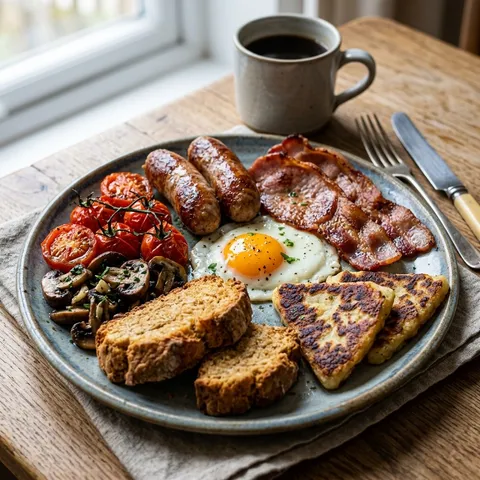 British & Irish Lens Verified Images are for illustrative purposes only, may be inaccurate, and do not guarantee the presence or absence of specific ingredients.
 Ulster Fry
Northern Ireland's legendary fry-up: bacon, sausages, eggs, black pudding, potato bread, and soda bread — fuller and heartier than its English cousin.
 British & Irish Lens Verified Images are for illustrative purposes only, may be inaccurate, and do not guarantee the presence or absence of specific ingredients.
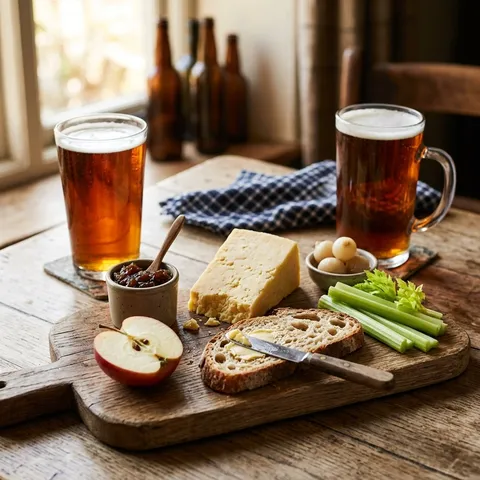
 Ploughman's Lunch
Sharp aged cheddar, crusty bread, tangy Branston pickle, and a boiled egg — a beloved no-cook British lunch that's greater than the sum of its parts.
 British & Irish Lens Verified Images are for illustrative purposes only, may be inaccurate, and do not guarantee the presence or absence of specific ingredients.
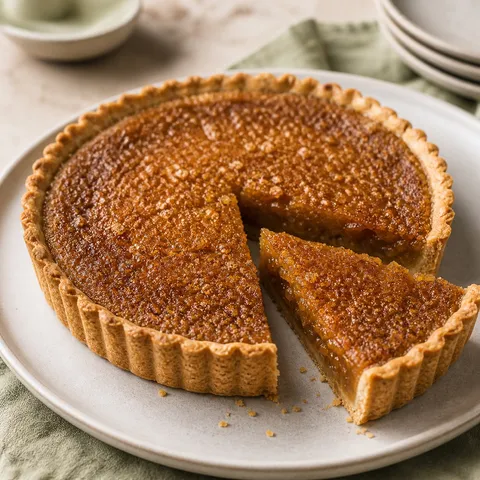
 Treacle Tart
A sweet, sticky tart filled with golden syrup and fresh breadcrumbs, with a gently caramelized top and a hint of lemon — Harry Potter's favorite dessert.