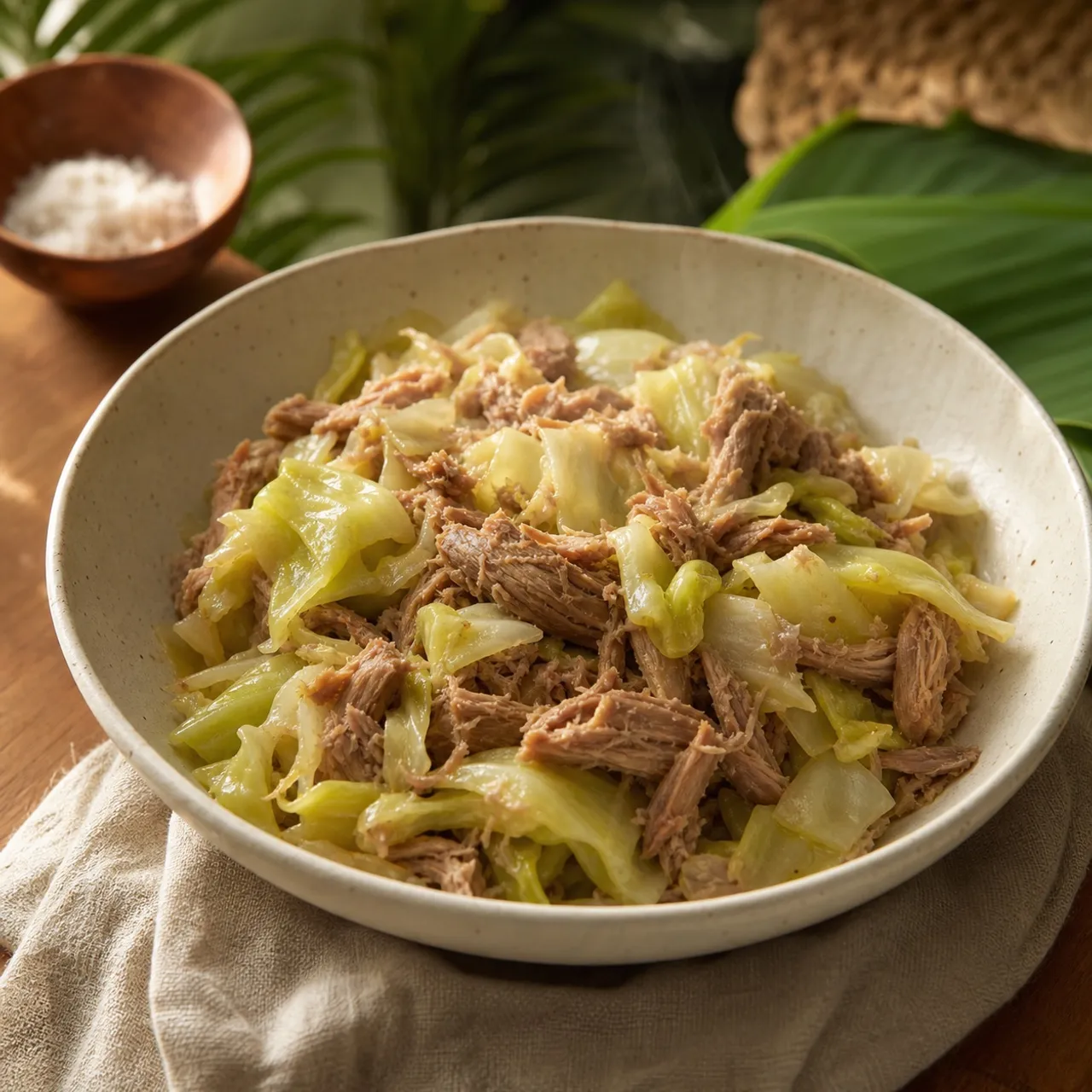
 Hawaiian Images are for illustrative purposes only, may be inaccurate, and do not guarantee the presence or absence of specific ingredients.
 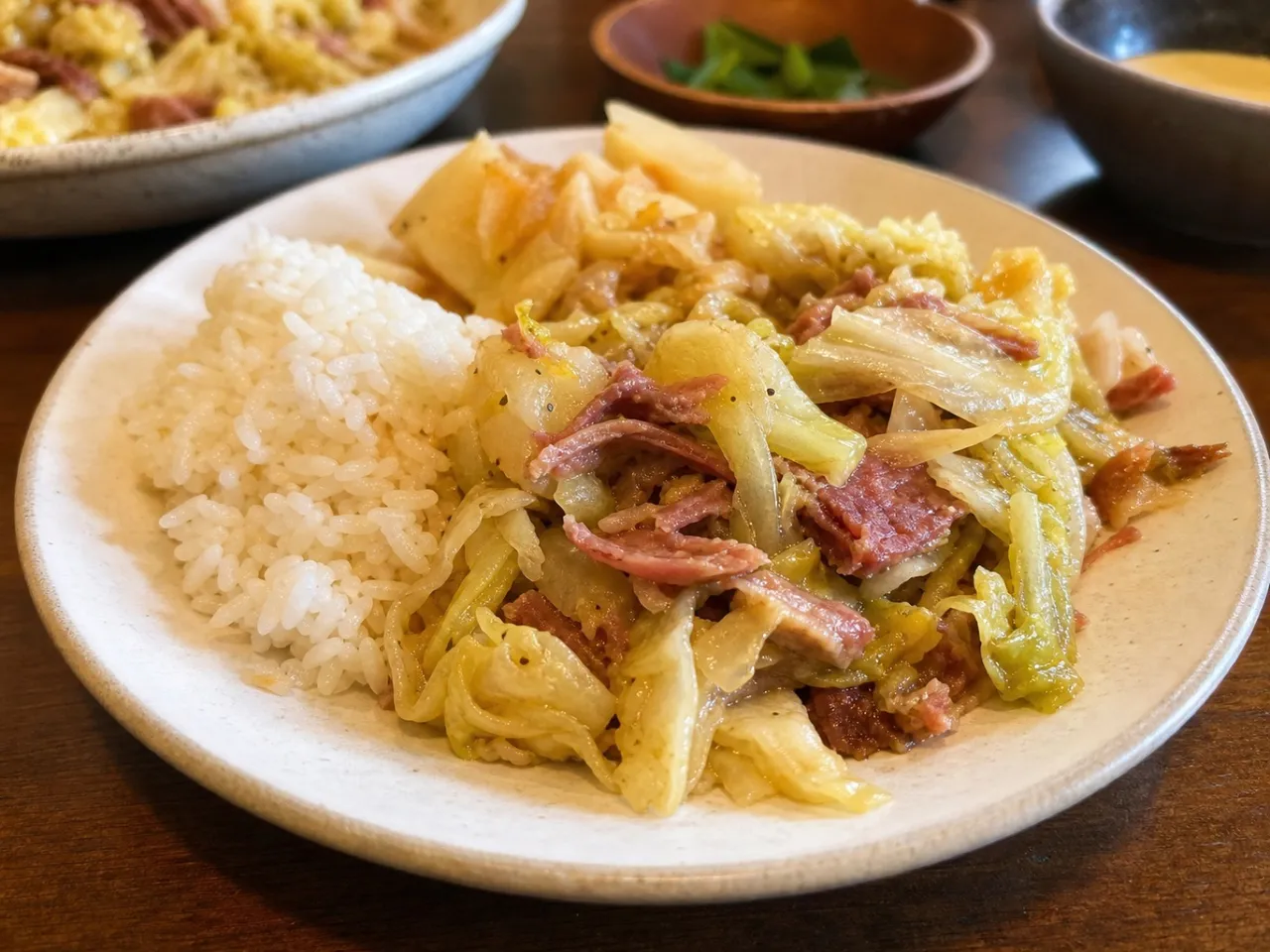 Serving Images are for illustrative purposes only, may be inaccurate, and do not guarantee the presence or absence of specific ingredients.
 Kalua Cabbage
Smoky shredded kalua pork tossed with wilted cabbage for a savory, comforting side that stretches the luau's centerpiece.
No common allergens detected
Based on this recipe's ingredient list. Always verify with your own brands and labels.
Good to know
- Ready in under 30 minutes
Matched from this dish's own ingredients and timing. Browse more: 30-minute meals
Instructions
6 steps- 1
Heat the vegetable oil in a large wok or deep skillet over medium-high heat until it shimmers.
- 2
Add the shredded kalua pork and stir-fry for 2 to 3 minutes to render its fat and crisp the edges slightly.
- 3
Add the chopped cabbage in batches, tossing constantly so it begins to wilt and pick up the smoky pork flavor.
- 4
Pour in the water or broth, cover, and steam for 4 to 5 minutes until the cabbage is tender but still has a little bite.
- 5
Uncover and stir-fry another 2 minutes to cook off excess liquid, then season with the Hawaiian sea salt and black pepper to taste.
- 6
Serve hot as a side dish alongside rice, adjusting the salt carefully since the kalua pork is already seasoned.
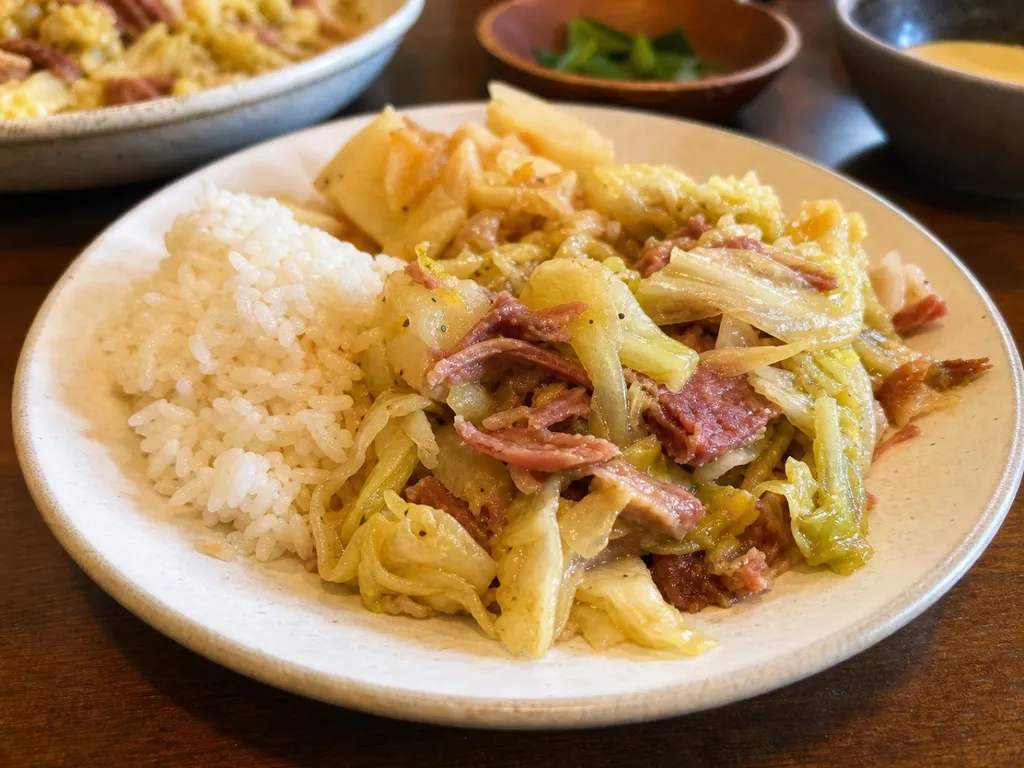 Images are for illustrative purposes only, may be inaccurate, and do not guarantee the presence or absence of specific ingredients.
 Listahan Family Score™
78/100
Good fit for most families
Score reflects how well this recipe fits a typical busy household. In the app, your Family Score is personalized to your household's allergens, kids, and pantry.
Nutrition
per serving225
Calories
22 g
Protein
0 g
Carbs
15 g
Fat
Estimated per serving. Actual values depend on the brands and portions you use.
Listahan cooking guide
Chef notes & practical guide
Technique notes, ingredient swaps, serve-alongside ideas, storage guidance, and equipment for this recipe.
Cultural context
Kalua cabbage is a practical companion to kalua pork that emerged from the imu (underground oven) tradition of Native Hawaiian cooking. At a traditional luau, whole pigs were slow-roasted in an imu lined with hot lava rocks and banana leaves, and cabbage was layered in alongside the pig to absorb the smoky rendered fat as it cooked. When kalua pork moved from the imu to home kitchens using Dutch ovens and slow cookers, kalua cabbage followed — the cabbage is typically mixed directly with the pulled pork and liquid smoke to create one of the most beloved plate lunch combinations in Hawaii.
Listahan note
This version cooks the cabbage directly with kalua pork drippings and a touch of liquid smoke so it absorbs the full savory-smoky flavor of the imu tradition without needing an actual underground fire.
Technique cues
- Use a large, well-seasoned pan or Dutch oven and add the cabbage while the kalua pork drippings are still hot so the cabbage wilts immediately into the fat rather than steaming in its own moisture.
- Liquid smoke should be added in small amounts — start with 1/4 teaspoon and taste before adding more; it is easy to overdo and difficult to correct once the smokiness becomes harsh.
- Cut the cabbage into rough 2-inch pieces rather than thin shreds; larger pieces hold up better to heat and provide something to chew against the tender pork.
Kitchen flow
- Parallel prep
- Chop the cabbage while the pork rests after cooking; adding the cabbage to still-hot pork drippings immediately means no extra time or heat source is needed.
- Make-ahead
- Kalua cabbage is best made fresh alongside the pork but reheats well; store combined pork and cabbage together and reheat in a covered pan with 2 tablespoons of water over medium heat.
- Leftover move
- Leftover kalua cabbage and pork makes exceptional fried rice — the smoky-salty drippings season the rice without any additional sauce needed.
- Cleanup rhythm
- Cook the cabbage in the same pot used for the pork so it absorbs every bit of the drippings and the pot comes clean easily with the cabbage moisture.
Ingredient brief
Role, handling, and swap guidance for each key ingredient.
green cabbage
main vegetable
Purpose: Green cabbage has the structure to withstand extended cooking without turning to mush and its mild sweetness soaks up the smoky pork fat beautifully.
Handling: Cut into rough 2-inch chunks; remove the core but keep enough of the leaves attached so they hold their shape during cooking.
Adaptation: Napa cabbage cooks faster and produces a softer, more delicate result; it works well if a shorter cook time is preferred.
kalua pork or smoked pulled pork
flavor base and protein addition
Purpose: Mixing shredded kalua pork into the cabbage is traditional and the pork fat and juices season the vegetable without any additional ingredients needed.
Handling: Have the pork warm and pulled before adding the cabbage so the two can finish cooking together and exchange flavors.
Adaptation: Smoked pulled pork from a BBQ restaurant can substitute and produces a nearly identical result.
liquid smoke
smoky depth
Purpose: A few drops of liquid smoke replicate the kiawe-wood smoke of the imu without requiring an outdoor fire, delivering the signature flavor note of traditional kalua cooking.
Handling: Add to the cooking liquid rather than directly to the food so it distributes evenly rather than concentrating in one spot.
Adaptation: Omit for a smoke-free version that still tastes of the braising liquid; smoked salt added at the end is a gentler alternative.
sea salt
seasoning
Purpose: Hawaiian sea salt (alaea red salt if available) adds both seasoning and a mineral earthiness that is native to the kalua tradition.
Handling: Use sparingly — the kalua pork is already salted, so taste before adding any additional salt to the cabbage.
Adaptation: Kosher salt is the direct substitute; smoked salt adds another layer of the desired smokiness.
Technique notes
- For the most authentic flavor, save the liquid rendered from slow-cooked kalua pork in the slow cooker and use it as the cooking liquid for the cabbage — it is more flavorful than any added stock or seasoning.
- The cabbage should be cooked until fully wilted and tender but not falling apart; the ideal texture has slight resistance to the tooth rather than the uniform softness of overcooked braised greens.
- A final splash of apple cider vinegar stirred in off heat brightens the smoky-salty flavor and keeps the dish from tasting heavy.
Ingredient swaps
- Gluten-free direction
- The dish is naturally gluten-free when kalua pork is made without soy sauce; confirm no gluten-containing ingredients were added to the pork marinade.
- Vegetarian direction
- Replace pork drippings with 2 tablespoons of olive oil, omit the pork, and increase the liquid smoke to 1/2 teaspoon; the result is a simple smoked cabbage side dish.
- Lower-sodium direction
- Rinse the kalua pork briefly before mixing with the cabbage to remove some surface salt, and taste at the end before adding any sea salt.
Serve alongside
- Steamed white rice
- Poi
- Hawaiian sweet rolls
- Iced guava juice
- Cold Primo lager
- Unsweetened iced tea with lemon
Serving suggestions only — check pairings for your household's allergens.
Storage & reheating
- Store kalua cabbage and pork together in the refrigerator for up to 5 days in an airtight container. Reheat in a covered pot over medium-low heat with a splash of water to prevent sticking. The dish freezes well for up to 2 months; the cabbage texture softens further after freezing but remains flavorful.
Equipment
- Large Dutch oven or heavy pot that can hold both the pork and cabbage
- Tongs for turning and mixing without breaking up the cabbage too much
- Ladle for skimming and reserving pork drippings
- Sharp knife for cutting cabbage into even-sized chunks
Make this household-aware
Listahan Pro checks this recipe against your household's allergens, finds pantry-aware swaps, builds the shopping list, and helps you plan the week around it.
Plan it in Listahan
Add Kalua Cabbage to your week, check it against your household's allergens, and build the shopping list automatically.
More Hawaiian recipes
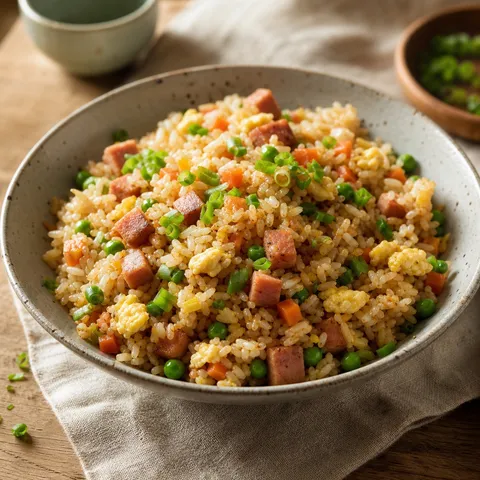 Hawaiian Lens Verified Images are for illustrative purposes only, may be inaccurate, and do not guarantee the presence or absence of specific ingredients.
 Spam Fried Rice
Day-old rice stir-fried with caramelized Spam, egg, soy sauce, and green onion — a quick, satisfying island classic that turns pantry staples into something craveable.
 Hawaiian Lens Verified Images are for illustrative purposes only, may be inaccurate, and do not guarantee the presence or absence of specific ingredients.
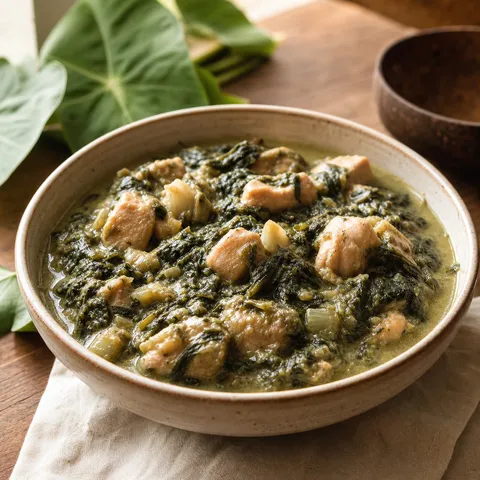
 Chicken Luau
Tender chicken simmered with young taro leaves in coconut milk until velvety and earthy — a quietly comforting Hawaiian stew full of old-fashioned luau warmth.
 Hawaiian Lens Verified Images are for illustrative purposes only, may be inaccurate, and do not guarantee the presence or absence of specific ingredients.
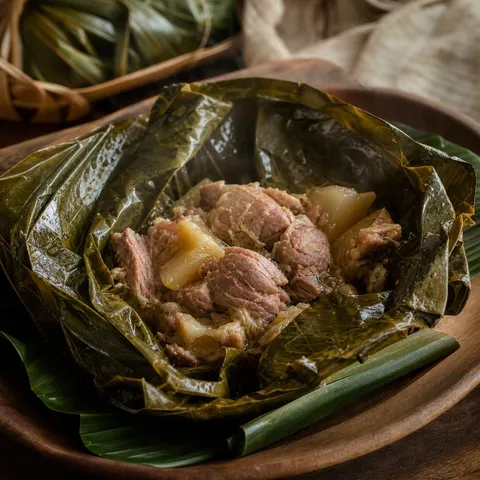
 Lau Lau
Pork shoulder and butterfish bundled in layers of taro leaf and steamed until meltingly tender — earthy, rich, and deeply rooted in Native Hawaiian tradition.