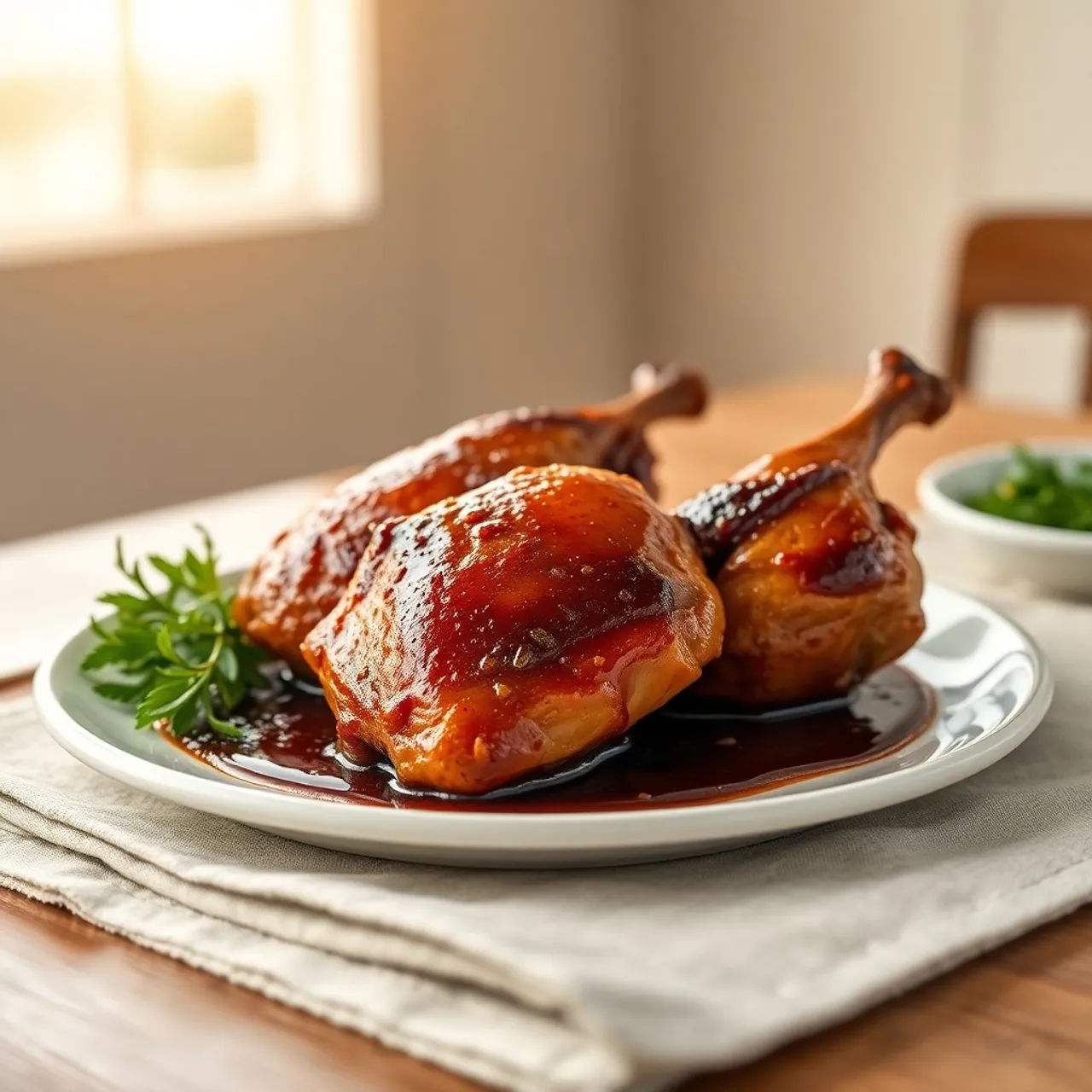
 Hawaiian Images are for illustrative purposes only, may be inaccurate, and do not guarantee the presence or absence of specific ingredients.
 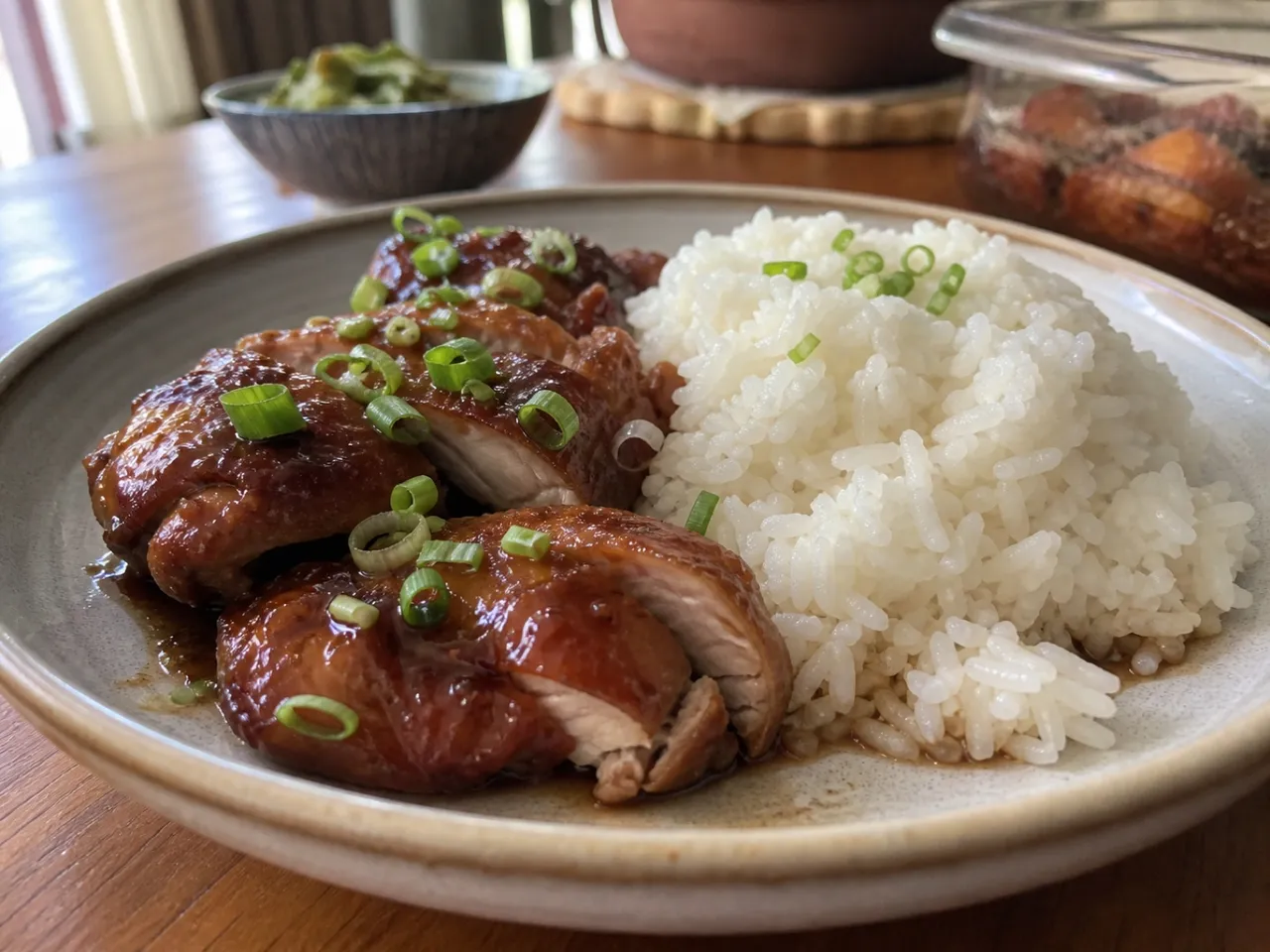 Serving Images are for illustrative purposes only, may be inaccurate, and do not guarantee the presence or absence of specific ingredients.
 Shoyu Chicken
Tender chicken thighs braised low and slow in a glossy soy-ginger glaze that defines the islands' home-cooking comfort food.
Contains common allergens
In the app, Listahan checks these against your household automatically.
Good to know
- One-pot
Matched from this dish's own ingredients and timing. Browse more: one-pot dinners
Instructions
6 steps- 1
In a large heavy pot, combine the soy sauce, water, brown sugar, smashed garlic, sliced ginger, and red pepper flakes, then stir over medium heat until the sugar fully dissolves.
- 2
Nestle the chicken thighs into the liquid in a single layer, skin side up, making sure they are mostly submerged in the braising sauce.
- 3
Bring to a gentle boil, then reduce the heat to low, cover, and simmer for 30 minutes, turning the thighs once halfway through so they color evenly.
- 4
Uncover and continue simmering for 10 to 15 minutes, spooning the sauce over the chicken, until the meat is fork-tender and the liquid has reduced to a thin glaze.
- 5
Skim any excess fat from the surface and check that the chicken reaches an internal temperature of at least 175°F for the most tender thighs.
- 6
Serve the chicken over hot rice with a generous ladle of the shoyu glaze and a sprinkle of sliced green onions.
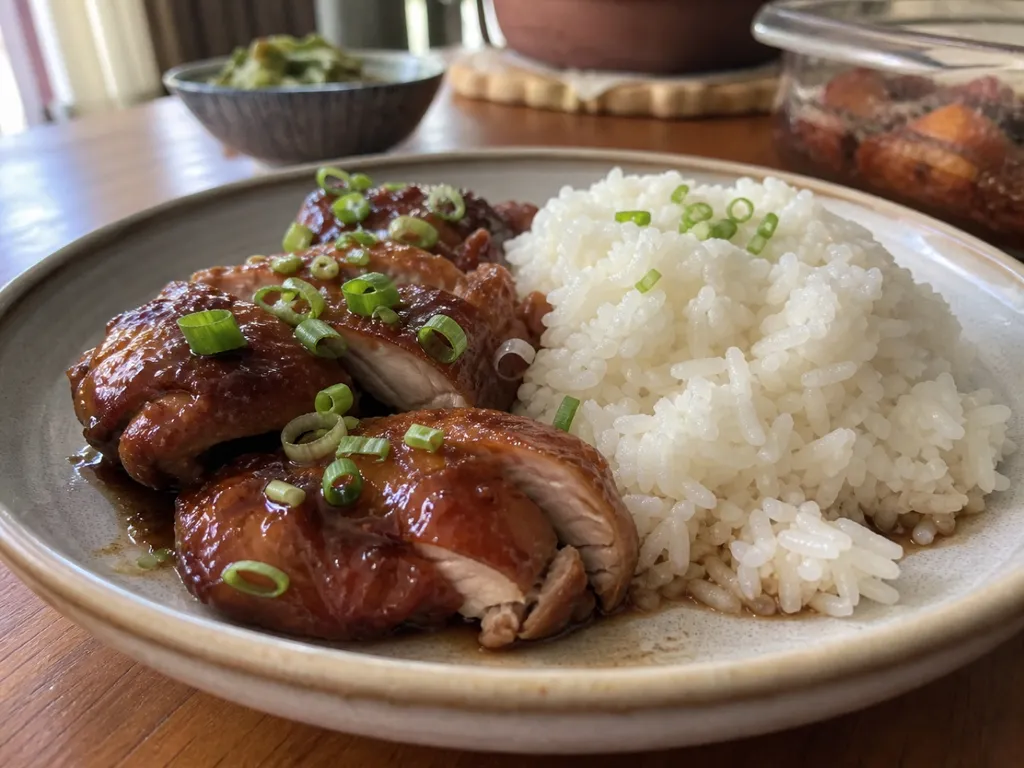 Images are for illustrative purposes only, may be inaccurate, and do not guarantee the presence or absence of specific ingredients.
 Listahan Family Score™
67/100
Works for many families
Score reflects how well this recipe fits a typical busy household. In the app, your Family Score is personalized to your household's allergens, kids, and pantry.
Nutrition
per serving465
Calories
45 g
Protein
23 g
Carbs
22 g
Fat
Estimated per serving. Actual values depend on the brands and portions you use.
Listahan cooking guide
Chef notes & practical guide
Technique notes, ingredient swaps, serve-alongside ideas, storage guidance, and equipment for this recipe.
Cultural context
Shoyu chicken is one of Hawaii's most beloved comfort foods, a direct product of the Japanese plantation worker community that arrived in the 1880s and brought the technique of braising proteins in soy sauce with sugar and ginger. The name itself is Japanese (shoyu means soy sauce), but the dish evolved in the islands into something with its own identity — sweeter and stickier than most Japanese preparations, often cooked bone-in for maximum flavor. It is a fixture of plate lunch counters, church fundraisers, and family Sunday dinners across all islands.
Listahan note
This version cooks the chicken bone-in at a gentle simmer so the braising liquid penetrates deeply and the skin absorbs the sweet-savory glaze without falling off the bone.
Technique cues
- Start the chicken skin-side down in the cold braising liquid and bring everything up to temperature together rather than adding chicken to already-boiling liquid; the gradual heat gives the skin time to release fat and baste itself.
- Keep the simmer gentle — a rolling boil toughens the chicken and clouds the braising liquid; you want just enough heat to see small, lazy bubbles breaking the surface.
- Reduce the braising liquid to a glaze after removing the chicken by raising the heat to medium-high for 5 to 8 minutes; brush it over the chicken just before serving for the lacquered finish that defines the dish.
Kitchen flow
- Parallel prep
- Combine the braising liquid and bring to a simmer while the chicken is drying and resting at room temperature; the whole dish can be in the pot within 10 minutes of starting.
- Make-ahead
- Shoyu chicken is significantly better the next day — braise fully, cool, and refrigerate overnight; the chicken absorbs more flavor and the fat on the surface can be skimmed easily when cold before reheating.
- Leftover move
- Strip meat from leftover bones and return to the reduced braising liquid over rice for a quick donburi-style bowl with a soft-boiled egg on top.
- Cleanup rhythm
- Use a single heavy pot for the entire braise; the reduced glaze cleans up easily while still warm with hot water.
Ingredient brief
Role, handling, and swap guidance for each key ingredient.
chicken thighs (bone-in, skin-on)
main protein
Purpose: Bone-in thighs release collagen into the braising liquid as they cook, enriching the sauce and keeping the meat moist even with extended cooking time.
Handling: Pat dry before adding to the pot; excess moisture dilutes the braising liquid and slows caramelization.
Adaptation: Boneless thighs work but produce a less complex sauce; chicken drumsticks are a budget-friendly alternative with a similar result.
shoyu (soy sauce)
braising liquid base and primary flavor
Purpose: Shoyu is the defining ingredient that gives the dish its name — it provides the salty-savory backbone and the dark mahogany color of the finished chicken.
Handling: Combine with water, sugar, and ginger to make the braising liquid before adding the chicken.
Adaptation: Tamari replaces shoyu for a gluten-free result with no meaningful flavor difference.
brown sugar
sweetener and glaze agent
Purpose: Brown sugar balances the salt of the shoyu and caramelizes during reduction to create the sticky, glossy glaze that distinguishes Hawaiian shoyu chicken from plainer Japanese soy-braised preparations.
Handling: Stir into the cold liquid before heating so it dissolves fully.
Adaptation: White sugar produces a lighter, cleaner sweetness; raw sugar or coconut sugar add a slightly earthy note.
fresh ginger
aromatic and brightness
Purpose: Fresh ginger cuts through the richness of the braising liquid and adds a faint heat that keeps the sweet-savory sauce from tasting flat.
Handling: Slice into coins and add to the liquid; they can be removed before serving or left in if guests are comfortable with fibrous ginger.
Adaptation: Ground ginger can substitute in a pinch (use 1/2 teaspoon per tablespoon of fresh) but lacks the same brightness.
garlic
savory depth
Purpose: Whole smashed garlic cloves infuse the braising liquid gradually and add a mellow, roasted garlic sweetness after long cooking.
Handling: Smash cloves with the flat of a knife and add skin-on; the skins add a faint earthy note and are easy to remove.
Adaptation: No strong substitute — garlic powder can be used but produces a less nuanced result.
Technique notes
- Reserve 1/4 cup of the braising liquid before adding the raw chicken to use as a finishing sauce; the portion that has not touched raw poultry can be drizzled over rice without needing further cooking.
- The chicken should be fully submerged in the braising liquid for even flavor penetration; if your pot is too wide, add a sheet of parchment paper pressed directly onto the surface to keep liquid in contact with all the chicken.
- For a more caramelized exterior, remove braised chicken and place skin-side up under a high broiler for 3 to 5 minutes after the braise — it adds a slightly charred quality that makes the dish feel more like a grilled preparation.
Ingredient swaps
- Gluten-free direction
- Use tamari instead of shoyu; all other ingredients are naturally gluten-free.
- Lower-sodium direction
- Use reduced-sodium shoyu or tamari and dilute with additional water; add a strip of kombu to the braising liquid to add umami depth without more salt.
- Weeknight shortcut
- Use boneless chicken thighs and reduce the braise time to 20 minutes; the sauce reduces in the same pot while the chicken rests for a table-ready result in under 35 minutes total.
Serve alongside
- Steamed white rice
- Hawaiian macaroni salad
- Stir-fried baby bok choy
- Iced green tea
- Cold Kona lager
- Mugicha (barley tea) over ice
Serving suggestions only — check pairings for your household's allergens.
Storage & reheating
- Refrigerate in the braising liquid in an airtight container for up to 5 days — the flavor keeps improving. Reheat gently in a covered pot over medium-low heat for 10 to 15 minutes. Freeze chicken and braising liquid together for up to 3 months; thaw overnight in the refrigerator.
Equipment
- Heavy-bottomed Dutch oven or deep saute pan with a lid
- Ladle for skimming fat from the surface during cooking
- Tongs for turning chicken without piercing the skin
- Instant-read thermometer to confirm 165 degrees F internal temperature
Make this household-aware
Listahan Pro checks this recipe against your household's allergens, finds pantry-aware swaps, builds the shopping list, and helps you plan the week around it.
Plan it in Listahan
Add Shoyu Chicken to your week, check it against your household's allergens, and build the shopping list automatically.
More Hawaiian recipes
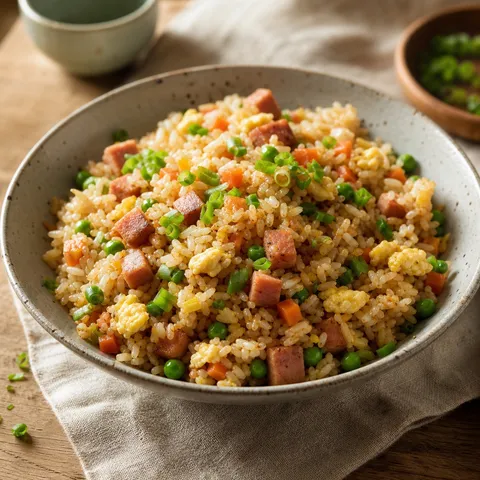 Hawaiian Lens Verified Images are for illustrative purposes only, may be inaccurate, and do not guarantee the presence or absence of specific ingredients.
 Spam Fried Rice
Day-old rice stir-fried with caramelized Spam, egg, soy sauce, and green onion — a quick, satisfying island classic that turns pantry staples into something craveable.
 Hawaiian Lens Verified Images are for illustrative purposes only, may be inaccurate, and do not guarantee the presence or absence of specific ingredients.
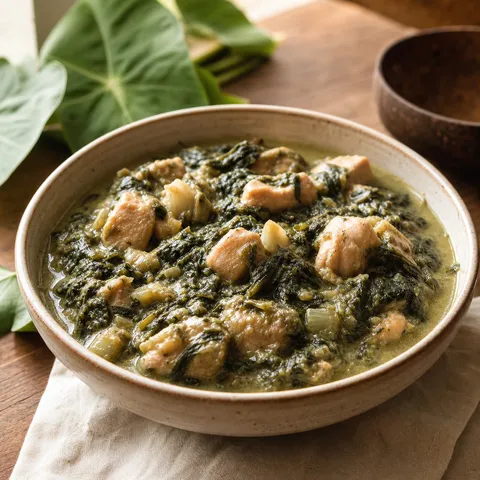
 Chicken Luau
Tender chicken simmered with young taro leaves in coconut milk until velvety and earthy — a quietly comforting Hawaiian stew full of old-fashioned luau warmth.
 Hawaiian Lens Verified Images are for illustrative purposes only, may be inaccurate, and do not guarantee the presence or absence of specific ingredients.
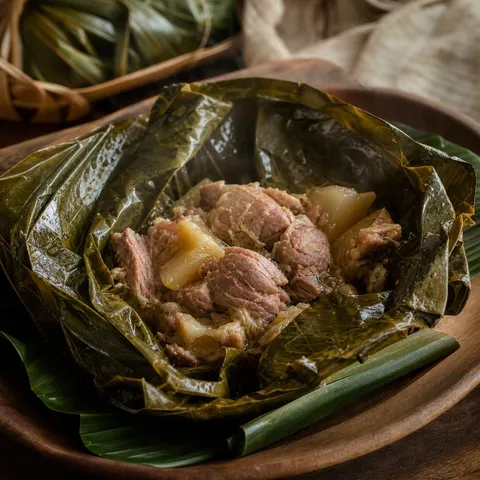
 Lau Lau
Pork shoulder and butterfish bundled in layers of taro leaf and steamed until meltingly tender — earthy, rich, and deeply rooted in Native Hawaiian tradition.