 Hawaiian Images are for illustrative purposes only, may be inaccurate, and do not guarantee the presence or absence of specific ingredients.
  Serving Images are for illustrative purposes only, may be inaccurate, and do not guarantee the presence or absence of specific ingredients.
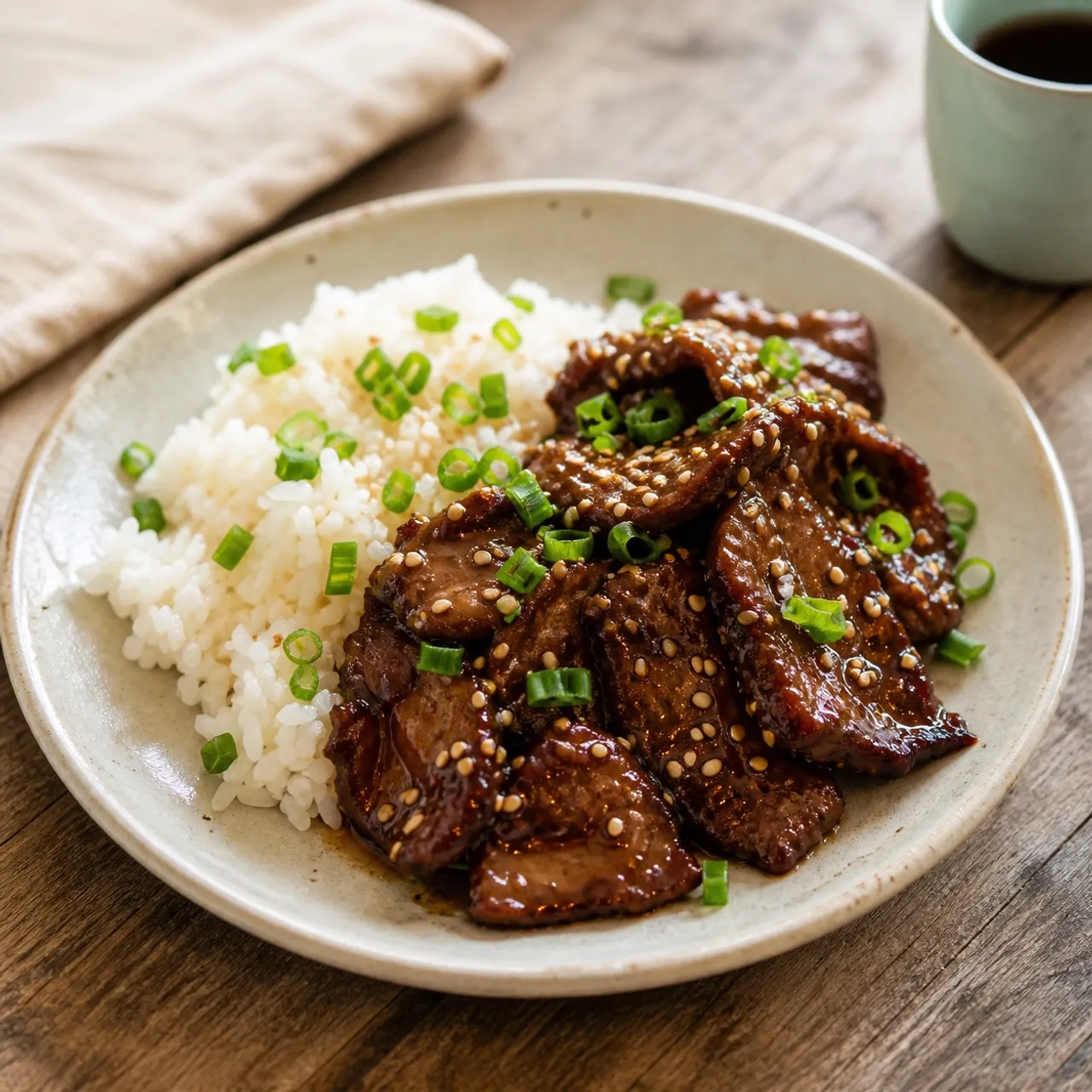
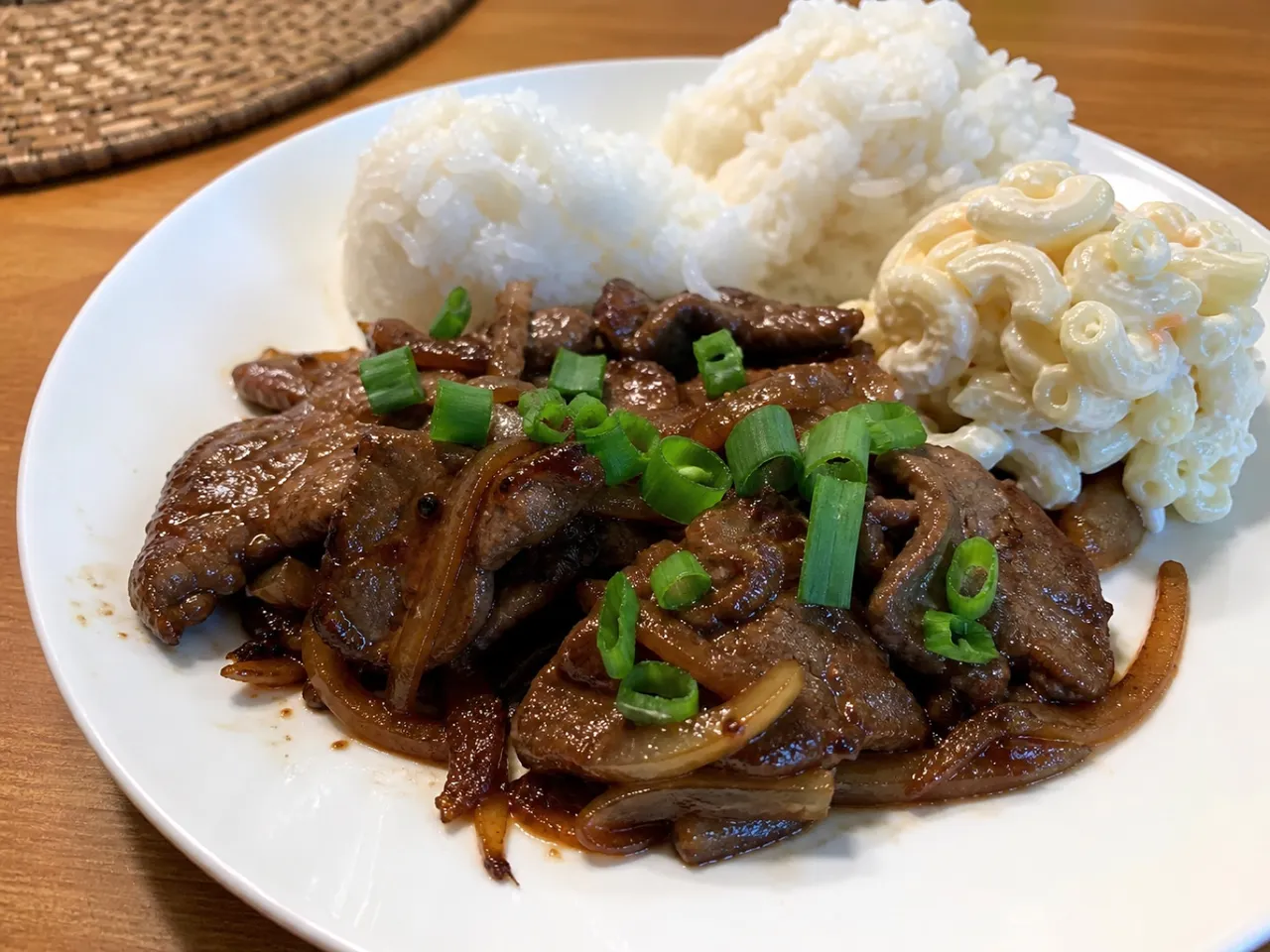
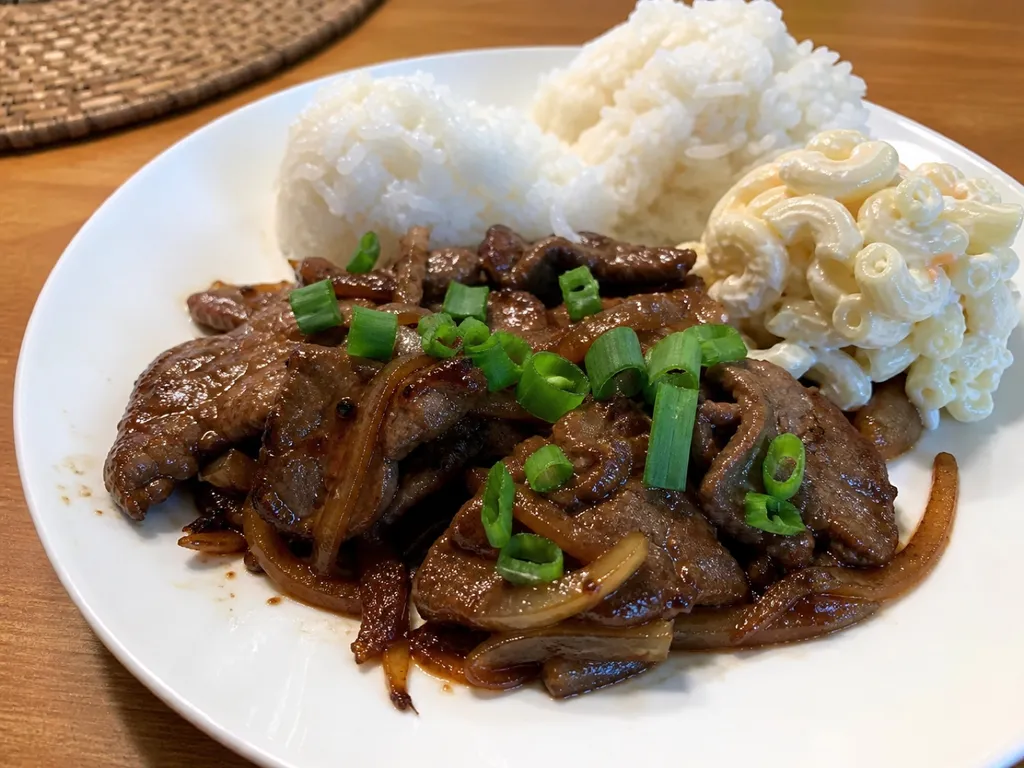
 Teriyaki Beef
Thinly sliced marinated beef grilled until caramelized and smoky, a backbone of the classic Hawaiian barbecue plate.
Contains common allergens
In the app, Listahan checks these against your household automatically.
Instructions
6 steps- 1
Whisk together the soy sauce, brown sugar, mirin, minced garlic, grated ginger, and sesame oil in a bowl until the sugar dissolves into a smooth marinade.
- 2
Add the thinly sliced beef and toss to coat every piece, then cover and refrigerate for at least 2 hours or up to overnight for the deepest flavor.
- 3
Heat a grill or cast-iron griddle to high, around 450°F, and lightly oil the grates so the sugary marinade does not stick.
- 4
Lay the beef slices flat in a single layer and grill for about 2 minutes per side, until the edges char and the meat caramelizes from the brown sugar.
- 5
Work in batches to avoid crowding, which would steam rather than sear the beef, and brush on a little reserved marinade as it cooks.
- 6
Let the beef rest for 5 minutes, then slice any larger pieces and serve over rice with macaroni salad for a true plate lunch.
 Images are for illustrative purposes only, may be inaccurate, and do not guarantee the presence or absence of specific ingredients.
 Listahan Family Score™
65/100
Works for many families
Score reflects how well this recipe fits a typical busy household. In the app, your Family Score is personalized to your household's allergens, kids, and pantry.
Nutrition
per serving610
Calories
47 g
Protein
35 g
Carbs
29 g
Fat
Estimated per serving. Actual values depend on the brands and portions you use.
Listahan cooking guide
Chef notes & practical guide
Technique notes, ingredient swaps, serve-alongside ideas, storage guidance, and equipment for this recipe.
Cultural context
Teriyaki beef in Hawaii diverged from its Japanese origin in the plantation era when Japanese immigrants adapted the teriyaki technique to the cuts of beef and cooking conditions available in Hawaii. The result — thin-sliced beef marinated in a sweeter, more garlic-forward teriyaki sauce and grilled or pan-fried rather than broiled — became a staple of the Hawaiian plate lunch and a backyard cookout standard. It is the kind of dish that appears at every school fundraiser, beach party, and family gathering, arguably more Hawaiian in practice than in ancestry.
Listahan note
This version marinates the beef for at least 4 hours to let the sweet-soy sauce penetrate thin slices fully, and cooks over very high heat for the caramelized char that makes the plate lunch version so satisfying.
Technique cues
- Slice beef against the grain and no thicker than 1/4 inch before marinating — thin slices pick up the teriyaki marinade thoroughly and cook in 2 to 3 minutes per side without drying out.
- High heat is essential: a screaming hot cast-iron pan or grill creates the Maillard caramelization on the sugar-rich marinade that gives the beef its lacquered, slightly charred exterior.
- Do not overcrowd the pan — beef laid in overlapping pieces will steam in its own released liquid instead of searing, and the marinade will never caramelize.
Kitchen flow
- Parallel prep
- Mix the marinade and slice the beef at the same time, then combine immediately; the marinade does its best work while the beef is thinnest and most absorbent.
- Make-ahead
- Marinate the beef up to 24 hours in the refrigerator; beyond 24 hours the texture can become slightly mushy from the soy salt drawing out moisture. Cook from refrigerator-cold or let rest 15 minutes at room temperature.
- Leftover move
- Slice leftover teriyaki beef thin and layer in a sandwich with white rice, pickled ginger, and shredded cabbage for a fast banh mi-inspired Hawaii-style roll.
- Cleanup rhythm
- The sugar in the marinade will char and stick to the pan; deglaze immediately after cooking with 2 tablespoons of water while the pan is still hot to release the fond for a fast pan sauce.
Ingredient brief
Role, handling, and swap guidance for each key ingredient.
beef short ribs or flank steak
main protein
Purpose: Short ribs have enough marbling to stay juicy and flavorful after a quick high-heat cook; flank steak is the leaner alternative with a cleaner beef flavor.
Handling: Freeze the beef for 20 minutes before slicing to firm it up and make thin, even cuts easier without a professional slicer.
Adaptation: Beef chuck, thinly sliced, is a budget-friendly option that becomes tender with a longer marinade of 8 or more hours.
soy sauce
marinade base
Purpose: Soy sauce provides the salt, the umami foundation, and the dark color that defines teriyaki — it also acts as a mild tenderizer over a long marinade.
Handling: Combine with sugar, garlic, and ginger in the correct ratio before adding the beef; the ratio should be approximately 3 parts soy to 1 part sugar.
Adaptation: Tamari for a gluten-free marinade with the same depth of flavor.
sugar
sweetness and caramelization
Purpose: Sugar balances the soy saltiness and, critically, is responsible for the caramelized char on the exterior of the beef when it hits a hot surface.
Handling: White sugar is traditional; it dissolves cleanly and caramelizes predictably at high heat.
Adaptation: Brown sugar adds a molasses note that some prefer; pineapple juice adds sweetness and mild tenderizing from bromelain.
garlic
aromatic backbone
Purpose: Fresh garlic is more prominent in Hawaiian teriyaki than in Japanese versions, giving the marinade a savory punch that balances the sweetness.
Handling: Mince or grate finely so it distributes evenly throughout the marinade and doesn't leave large pieces that burn on the hot grill.
Adaptation: Garlic powder at 1/2 teaspoon per clove is a workable substitute but lacks freshness.
fresh ginger
aromatic brightness
Purpose: Ginger adds a slight spice and brightness that keeps the sweet-soy marinade from tasting flat.
Handling: Grate on a microplane for maximum surface area and flavor extraction into the marinade.
Adaptation: Ground ginger (1/4 teaspoon per teaspoon of fresh) works but is less vibrant.
Technique notes
- Pat the marinated beef slices dry with a paper towel immediately before hitting the pan — surface moisture prevents searing and instead produces steam that boils the beef rather than caramelizes it.
- Cook in 2 batches maximum in a standard 12-inch pan; working in batches allows the pan to recover temperature between additions and every slice can make contact with the hot surface.
- Reserve a few tablespoons of unused (never-touched-raw-meat) marinade to brush over the cooked beef or drizzle over the rice — it is instant sauce without additional cooking.
Ingredient swaps
- Gluten-free direction
- Replace soy sauce with tamari; all other marinade ingredients are naturally gluten-free.
- Lower-sodium direction
- Use reduced-sodium soy sauce or tamari and add a splash of pineapple juice to maintain sweetness while reducing overall salt.
- Weeknight shortcut
- Buy pre-sliced beef bulgogi-cut from a Korean grocery store — the pre-cut thickness is ideal for teriyaki and eliminates the freezing-and-slicing step.
Serve alongside
- Two-scoop white rice
- Hawaiian macaroni salad
- Shredded cabbage with sesame dressing
- Cold Asahi or Kirin beer
- Iced barley tea
- Pineapple juice over ice
Serving suggestions only — check pairings for your household's allergens.
Storage & reheating
- Cooked teriyaki beef keeps in the refrigerator for up to 4 days in an airtight container. Reheat in a dry skillet over medium-high heat for 1 to 2 minutes per side to re-caramelize the exterior. Freeze uncooked marinated beef for up to 2 months; thaw in the refrigerator and cook from cold.
Equipment
- Cast-iron skillet or heavy grill pan for the high heat needed to caramelize the marinade
- Microplane grater for ginger
- Paper towels for patting beef dry before searing
- Tongs for turning slices without tearing
Make this household-aware
Listahan Pro checks this recipe against your household's allergens, finds pantry-aware swaps, builds the shopping list, and helps you plan the week around it.
Plan it in Listahan
Add Teriyaki Beef to your week, check it against your household's allergens, and build the shopping list automatically.
More Hawaiian recipes
 Hawaiian Lens Verified Images are for illustrative purposes only, may be inaccurate, and do not guarantee the presence or absence of specific ingredients.
 Spam Fried Rice
Day-old rice stir-fried with caramelized Spam, egg, soy sauce, and green onion — a quick, satisfying island classic that turns pantry staples into something craveable.
 Hawaiian Lens Verified Images are for illustrative purposes only, may be inaccurate, and do not guarantee the presence or absence of specific ingredients.
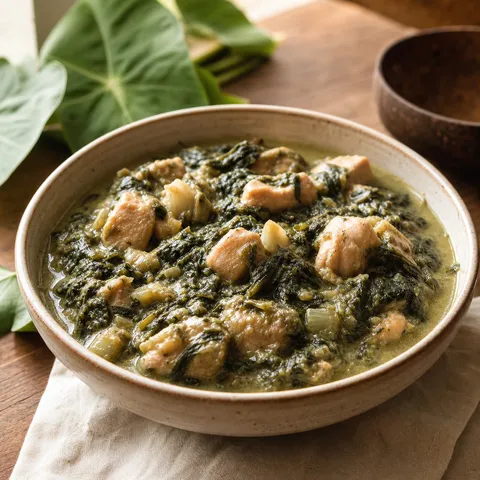
 Chicken Luau
Tender chicken simmered with young taro leaves in coconut milk until velvety and earthy — a quietly comforting Hawaiian stew full of old-fashioned luau warmth.
 Hawaiian Lens Verified Images are for illustrative purposes only, may be inaccurate, and do not guarantee the presence or absence of specific ingredients.
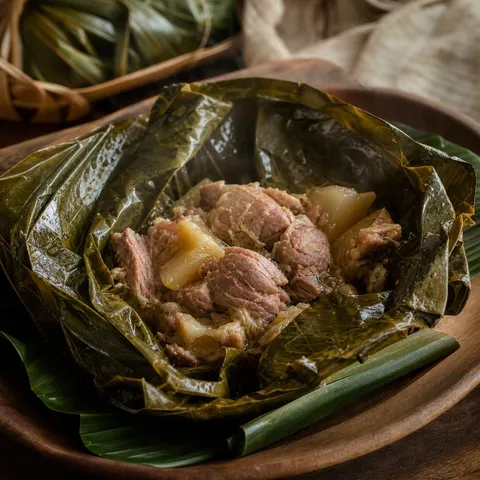
 Lau Lau
Pork shoulder and butterfish bundled in layers of taro leaf and steamed until meltingly tender — earthy, rich, and deeply rooted in Native Hawaiian tradition.