 Sauces & Dressings Images are for illustrative purposes only, may be inaccurate, and do not guarantee the presence or absence of specific ingredients.
  Serving Images are for illustrative purposes only, may be inaccurate, and do not guarantee the presence or absence of specific ingredients.
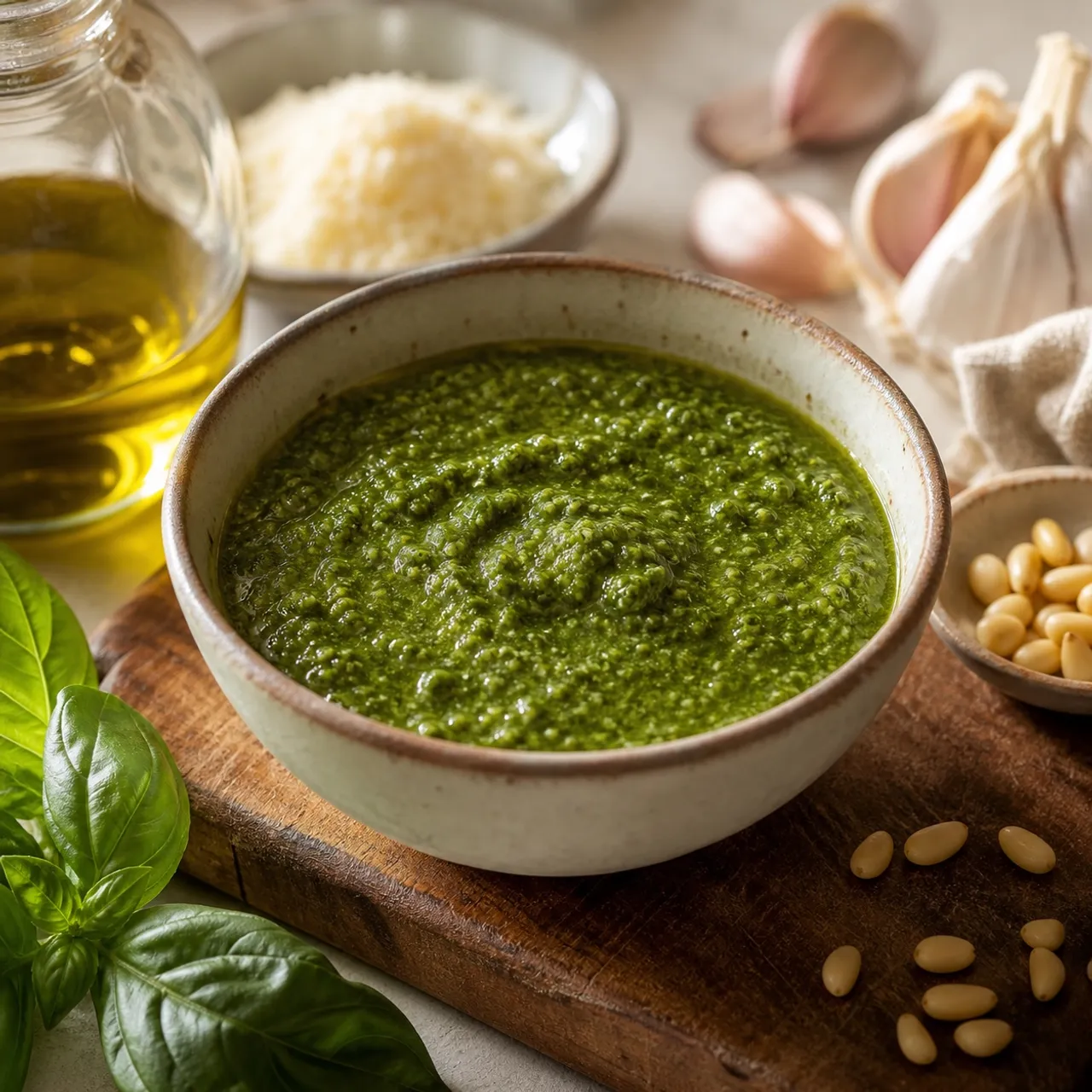
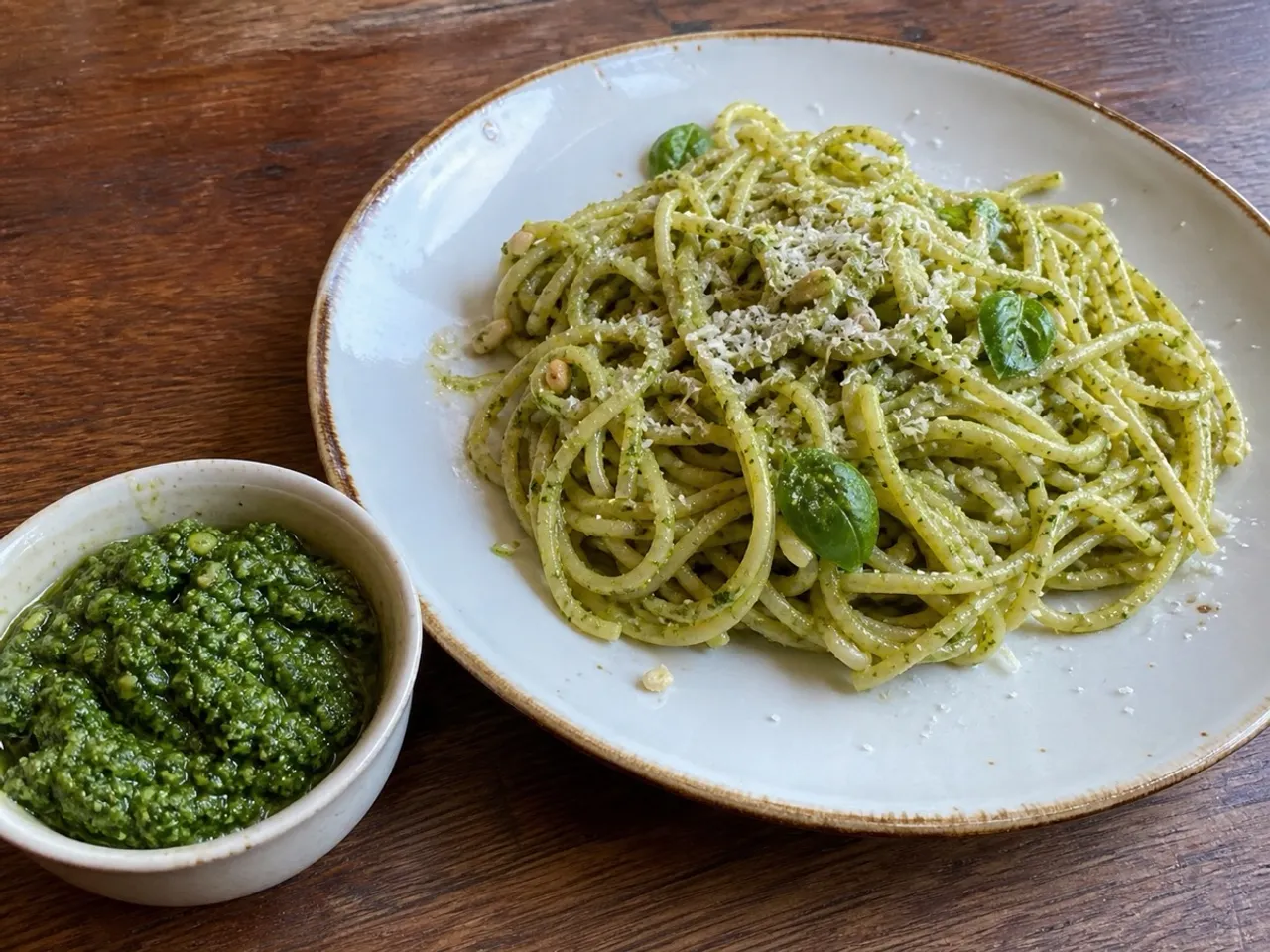
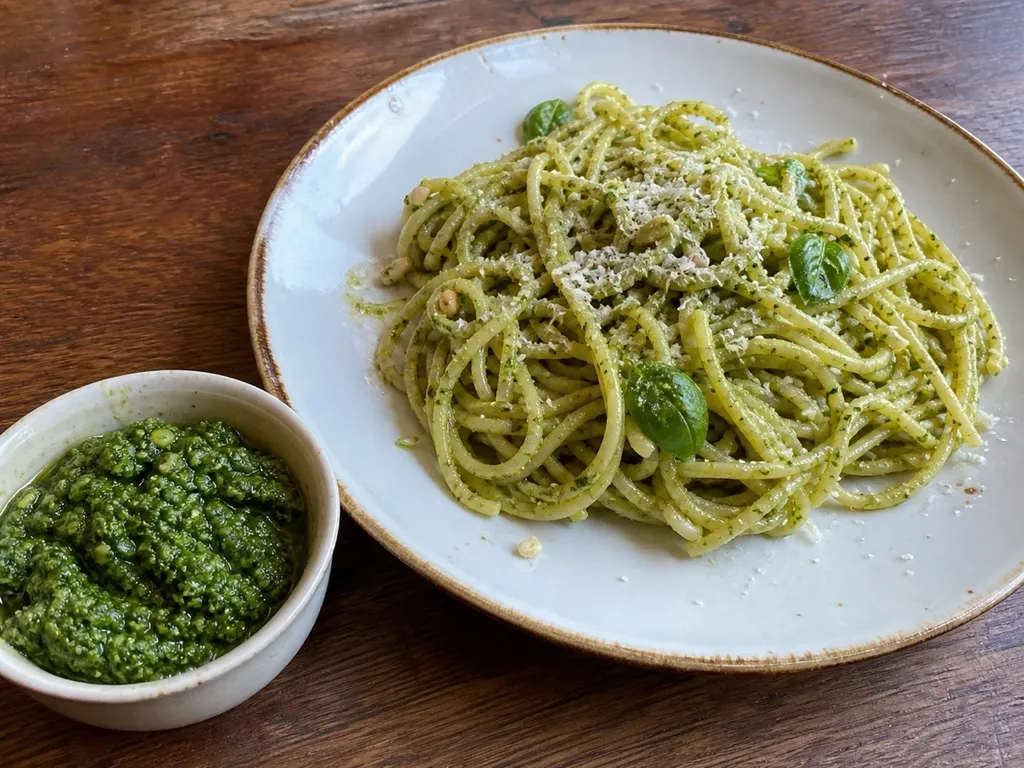
 Classic Basil Pesto
A vibrant, fragrant blend of fresh basil, toasted pine nuts, garlic, and Parmesan that turns any pasta, sandwich, or grilled vegetable into something special.
Contains common allergens
In the app, Listahan checks these against your household automatically.
Good to know
- Ready in under 30 minutes
Matched from this dish's own ingredients and timing. Browse more: 30-minute meals
Instructions
5 steps- 1
Toast the pine nuts in a dry skillet over medium heat, stirring constantly for 3 to 4 minutes until golden and fragrant; watch closely, as they burn quickly. Transfer to a plate and let cool for 5 minutes.
- 2
Add the cooled pine nuts, garlic, and basil to a food processor. Pulse 8 to 10 times until coarsely chopped, scraping down the sides as needed.
- 3
With the processor running, drizzle in the olive oil in a steady stream until the mixture forms a loose, spoonable paste, about 30 seconds.
- 4
Add the Parmesan, salt, pepper, and lemon juice, then pulse just 2 or 3 times to combine; do not over-process, or the pesto will turn pasty and lose its bright color.
- 5
Taste and adjust salt and lemon. Use immediately, or transfer to a jar and float a thin layer of olive oil on top to keep it green; refrigerate up to 5 days.
 Images are for illustrative purposes only, may be inaccurate, and do not guarantee the presence or absence of specific ingredients.
 Listahan Family Score™
75/100
Good fit for most families
Score reflects how well this recipe fits a typical busy household. In the app, your Family Score is personalized to your household's allergens, kids, and pantry.
Nutrition
per serving190
Calories
4 g
Protein
2 g
Carbs
19 g
Fat
Estimated per serving. Actual values depend on the brands and portions you use.
Listahan cooking guide
Chef notes & practical guide
Technique notes, ingredient swaps, serve-alongside ideas, storage guidance, and equipment for this recipe.
Cultural context
Pesto comes from Liguria in northwestern Italy, and its name comes from 'pestare,' meaning to pound or crush, referring to the traditional method of grinding basil, garlic, and pine nuts together in a mortar and pestle rather than a food processor. Genoa's specific variety of small-leafed basil is traditionally credited for the sauce's bright, slightly sweet flavor.
Listahan note
This version blends the basil, pine nuts, and garlic before slowly streaming in the olive oil, since adding the oil gradually rather than all at once helps it emulsify into the paste smoothly instead of separating into an oily, watery mixture.
Technique cues
- Toast the pine nuts lightly in a dry pan before blending, which deepens their flavor considerably compared to using them raw straight from the bag.
- Blend the basil, garlic, and pine nuts first with a small amount of the oil, pulsing rather than running the blender continuously, which keeps the basil from overheating and turning dull from friction.
- Stream in the remaining olive oil slowly while blending or processing, allowing it to emulsify into the paste gradually rather than pouring it all in at once.
- Add the grated Parmesan by hand at the end, stirring it in rather than blending it, since blending hard cheese too long can make the pesto gummy instead of staying loose and spoonable.
Kitchen flow
- Parallel prep
- Start Classic Basil Pesto first if it takes longer than the main dish, and use the wait to prep other sides. This one leans on the basil leaves. Plan around the toast; that's the slow part.
- Make-ahead
- Most of Classic Basil Pesto can be prepped ahead; finish the last step just before serving so texture and temperature stay right. This one leans on the basil leaves. The toast step is what sets the pace here.
- Leftover move
- Fold leftover Classic Basil Pesto into a grain bowl or omelet the next day rather than reheating it plain. This one leans on the basil leaves. Plan around the toast; that's the slow part.
- Cleanup rhythm
- Clean the prep bowls for Classic Basil Pesto while the main dish finishes cooking, so nothing's left stacked at the end of the meal. This one leans on the basil leaves. The toast step is what sets the pace here.
Ingredient brief
Role, handling, and swap guidance for each key ingredient.
3 cups fresh basil leaves, packed
Flavor support
Purpose: cups fresh basil leaves, packed supports the balance of Classic Basil Pesto and should taste integrated.
Handling: Prep before heat is high so the cooking step can move without rushing.
Adaptation: Use the closest fresh equivalent and expect a modest shift in flavor or texture.
1/3 cup pine nuts
Flavor support
Purpose: cup pine nuts supports the balance of Classic Basil Pesto and should taste integrated.
Handling: Prep before heat is high so the cooking step can move without rushing.
Adaptation: Use verified safe seeds or omit the crunch when peanut or tree-nut safety matters.
3 cloves garlic, peeled
Aromatic base
Purpose: cloves garlic, peeled creates the savory foundation before stronger ingredients are added.
Handling: Wash, trim, and cut evenly so the pieces cook at the same pace.
Adaptation: Use the closest fresh equivalent and expect a modest shift in flavor or texture.
1/2 cup grated Parmesan cheese
Main protein or body
Purpose: cup grated Parmesan cheese gives Classic Basil Pesto its main substance and carries the seasoning.
Handling: Prep before heat is high so the cooking step can move without rushing.
Adaptation: Use unsweetened dairy-free alternatives only where they still provide enough fat and body.
1/2 cup extra-virgin olive oil
Richness and texture
Purpose: cup extra-virgin olive oil rounds the texture and helps the dish feel complete.
Handling: Prep before heat is high so the cooking step can move without rushing.
Adaptation: Use the closest fresh equivalent and expect a modest shift in flavor or texture.
Technique notes
- Press a layer of plastic wrap directly onto the surface of the pesto before refrigerating, or top it with a thin layer of olive oil, since exposure to air turns the basil dark within hours.
- Toss pesto with hot pasta off the heat rather than cooking it in the pot, since direct heat dulls the basil's color and can make the sauce taste bitter.
- Pesto freezes well in small portions, ideally without the cheese mixed in yet, with the Parmesan stirred in fresh after thawing for the best texture and flavor.
Ingredient swaps
- Dairy-free direction
- Wherever dairy shows up here, a neutral dairy-free butter or oil and a full-fat plant milk (oat or coconut work best for body) is the straightforward stand-in. This one leans on the basil leaves.
- Nut-aware direction
- Leave off any nut topping — toasted seeds give a similar crunch without the risk. This one leans on the basil leaves.
- Lower-sodium direction
- Hold back roughly a third of the salt at first; taste once everything else has had time to come together. This one leans on the basil leaves.
- Weeknight shortcut
- For a faster version, prep the longest-cooking component a day ahead so the night-of cook is mostly assembly and finishing. This one leans on the basil leaves.
Serve alongside
- Fresh fruit
- Cucumber slices
- Plain rice crackers
- Cold water
- Sparkling water
Serving suggestions only — check pairings for your household's allergens.
Storage & reheating
- Refrigerate covered for up to 3 days when the drink is brewed, blended, or mixed ahead.
- Stir or shake before serving over fresh ice.
- Do not freeze unless the recipe is meant to become pops or granita.
Equipment
- Pitcher or blender
- Measuring cup
- Long spoon
Make this household-aware
Listahan Pro checks this recipe against your household's allergens, finds pantry-aware swaps, builds the shopping list, and helps you plan the week around it.
Plan it in Listahan
Add Classic Basil Pesto to your week, check it against your household's allergens, and build the shopping list automatically.
More Sauces & Dressings recipes
 Sauces & Dressings Lens Verified Images are for illustrative purposes only, may be inaccurate, and do not guarantee the presence or absence of specific ingredients.
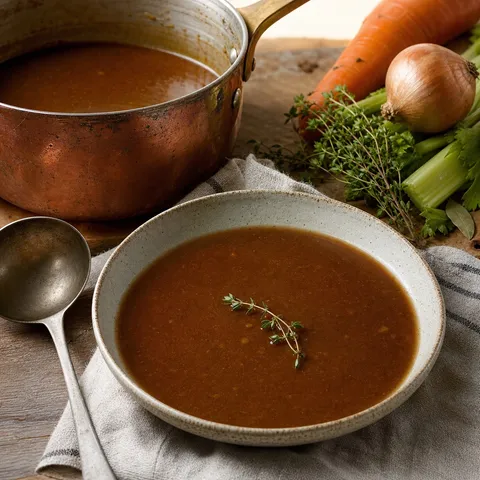
 Espagnole Sauce
A deep brown mother sauce of dark roux, mirepoix, and beef stock that forms the foundation for demi-glace and rich meat sauces.
 Sauces & Dressings Lens Verified Images are for illustrative purposes only, may be inaccurate, and do not guarantee the presence or absence of specific ingredients.
 Hollandaise Sauce
A silky, buttery emulsion brightened with lemon that crowns eggs Benedict, asparagus, and poached fish in golden luxury.
 Sauces & Dressings Lens Verified Images are for illustrative purposes only, may be inaccurate, and do not guarantee the presence or absence of specific ingredients.
 Peanut Satay Sauce
A rich, creamy Southeast Asian dipping sauce of peanut butter, coconut milk, and soy with a sweet-spicy lime finish for grilled skewers.