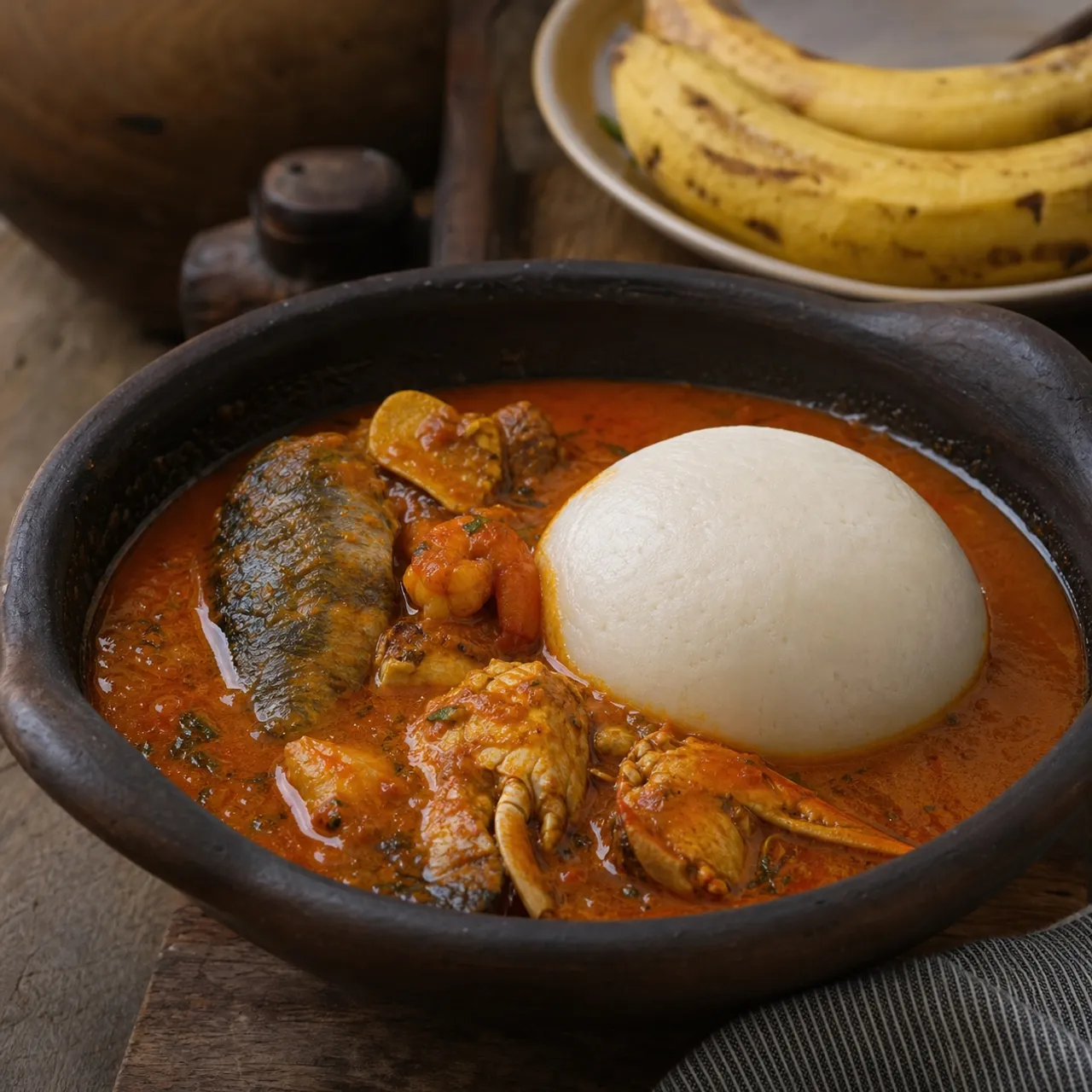
 West African Images are for illustrative purposes only, may be inaccurate, and do not guarantee the presence or absence of specific ingredients.
 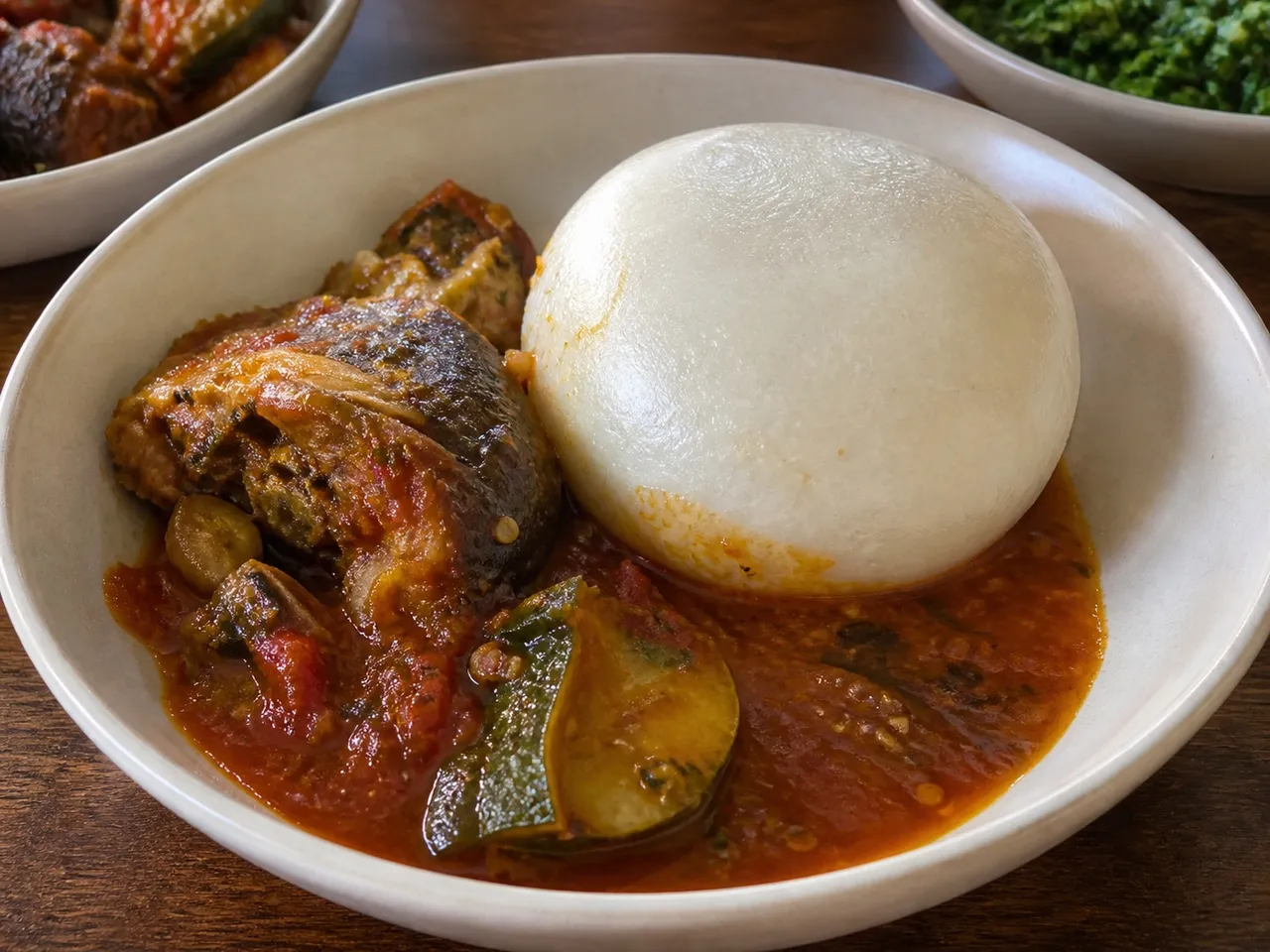 Serving Images are for illustrative purposes only, may be inaccurate, and do not guarantee the presence or absence of specific ingredients.
 Banku
A smooth, slightly tangy Ghanaian dough of fermented corn and cassava, cooked to a stretchy consistency — the perfect partner for okra stew or grilled tilapia.
Contains common allergens
In the app, Listahan checks these against your household automatically.
Good to know
- One-pot
Matched from this dish's own ingredients and timing. Browse more: one-pot dinners
Instructions
5 steps- 1
Mix the Dough: In a large, heavy-bottomed pot, combine the fermented corn dough and cassava dough. Add a little warm water and use your hands to mix and knead until you have a smooth, lump-free slurry.
- 2
Cook on Low Heat: Place the pot over medium-low heat. Add the salt. Begin stirring continuously with a strong wooden spoon or banku stick (banku 'ta').
- 3
Knead and Turn: As the mixture heats up, it will begin to thicken and form lumps. You must quickly and vigorously stir, mash, and turn the dough against the side of the pot to smooth it out. This requires significant arm strength.
- 4
Steam: Once it forms a cohesive, stiff dough, add 1/2 cup of hot water around the edges, cover the pot tightly, and let it steam on low heat for 10 minutes to ensure the starch is fully cooked.
- 5
Shape: Uncover, give it one final vigorous stir to incorporate any remaining water. Using a wet bowl, scoop portions of the hot dough and toss it around the bowl to form smooth, round balls. Serve with soup or grilled tilapia.
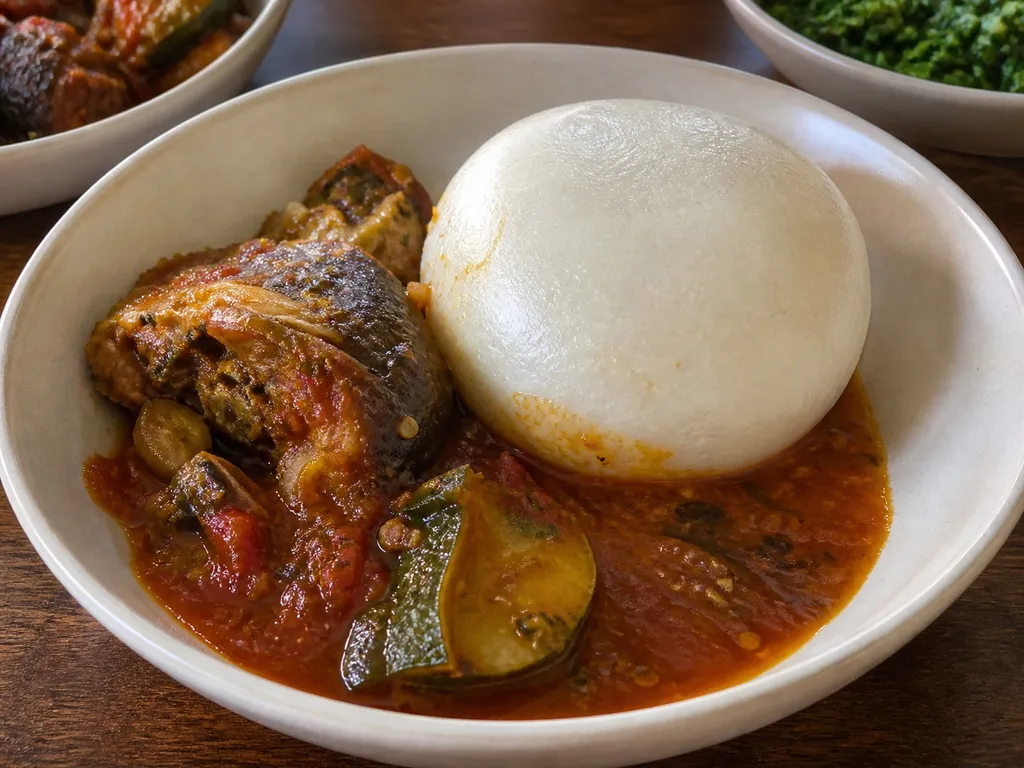 Images are for illustrative purposes only, may be inaccurate, and do not guarantee the presence or absence of specific ingredients.
 Listahan Family Score™
70/100
Good fit for most families
Score reflects how well this recipe fits a typical busy household. In the app, your Family Score is personalized to your household's allergens, kids, and pantry.
Nutrition
per serving445
Calories
13 g
Protein
94 g
Carbs
3 g
Fat
Estimated per serving. Actual values depend on the brands and portions you use.
Listahan cooking guide
Chef notes & practical guide
Technique notes, ingredient swaps, serve-alongside ideas, storage guidance, and equipment for this recipe.
Cultural context
Banku is a staple of southern Ghana, especially among the Ewe and Ga peoples, made by fermenting corn dough with a smaller portion of cassava dough and cooking it down into a smooth, slightly sour ball. The fermentation is what sets it apart from neighboring stiff porridges like kenkey or fufu, giving banku its signature tang. It is traditionally eaten by hand with okra stew, grilled tilapia, or a fiery pepper sauce.
Listahan note
This version balances corn and cassava dough at roughly three to one and leans on a day or two of fermentation so the sourness is present but gentle. It is built to pair with a saucy stew rather than to stand alone.
Technique cues
- Let the corn and cassava dough ferment at room temperature for a day or two before cooking so the lactic tang develops; rushing it leaves the banku flat and starchy.
- Stir constantly with a sturdy wooden spatula as the dough thickens, pressing it against the side of the pot to break up lumps before they set.
- Cook past the point where it looks done; banku should be glossy and pull cleanly from the pot, which means the raw starch has fully gelatinized.
Kitchen flow
- Parallel prep
- Start your okra stew or pepper sauce simmering while the banku cooks, since both want to be hot at the same moment.
- Make-ahead
- Ferment the corn dough days in advance and refrigerate; the actual cooking takes only fifteen to twenty minutes.
- Leftover move
- Wrap cooled banku tightly and steam or microwave with a splash of water the next day to soften it back up.
- Cleanup rhythm
- Fill the cooking pot with hot water immediately after scooping the banku out, since dried corn starch is stubborn once it sets.
Ingredient brief
Role, handling, and swap guidance for each key ingredient.
fermented corn dough
fermented starch base
Purpose: The corn provides the bulk and the sour flavor that defines banku once it has fermented.
Handling: Soak and grind dried corn into a dough, then cover and ferment one to three days until it smells pleasantly sour.
Adaptation: Pre-packaged fermented corn dough from an African grocer skips the multi-day soak and grind.
cassava dough
smoothing starch
Purpose: A smaller portion of cassava gives banku its stretch and silky finish without overpowering the corn sourness.
Handling: Grate fresh cassava and squeeze out excess liquid, or use ready-made cassava dough mixed in at about one part to three parts corn.
Adaptation: Plain cassava flour slaked with water works if fresh cassava dough is unavailable.
water
cooking medium
Purpose: Water is whisked into the dough to loosen it before heat turns the mixture into a cohesive ball.
Handling: Add gradually while stirring so the dough never seizes into dry clumps.
Adaptation: No substitute; the ratio of water to dough controls the final softness.
salt
seasoning
Purpose: A measured amount of salt keeps the sour corn from tasting one-note and seasons the whole ball.
Handling: Dissolve into the water before combining with the dough for even distribution.
Adaptation: Leave it out only if your accompanying stew is very heavily salted.
Technique notes
- Wet your hands or the serving bowl before shaping the cooked dough into balls so it releases cleanly instead of sticking.
- Adjust the corn-to-cassava ratio toward more cassava for a softer, stretchier banku and toward more corn for a firmer, tangier one.
- Keep the heat at a steady medium; too high scorches the bottom before the center cooks through.
Ingredient swaps
- Gluten-free direction
- Banku is naturally gluten-free since it relies on corn and cassava, so it suits households avoiding wheat.
- Lower-sodium direction
- Cut the salt in the dough and let a vibrant pepper sauce carry the seasoning instead.
- Weeknight shortcut
- Buy ready-fermented corn and cassava dough so the only task left is the stovetop cook.
Serve alongside
- Okra stew with smoked fish
- Grilled tilapia
- Shito pepper sauce
- Fresh pepper and onion relish
- Chilled sobolo (hibiscus drink)
- Cold ginger beer
- Plain water to offset the heat
Serving suggestions only — check pairings for your household's allergens.
Storage & reheating
- Refrigerate cooled banku wrapped airtight for up to three days. Reheat by steaming or microwaving with a splash of water until soft, since it firms up considerably when cold. It does not freeze well, as the texture turns grainy on thawing.
Equipment
- Heavy-bottomed pot
- Sturdy wooden spatula or banku ta
- Bowl of water for shaping
- Whisk for loosening the dough
Make this household-aware
Listahan Pro checks this recipe against your household's allergens, finds pantry-aware swaps, builds the shopping list, and helps you plan the week around it.
Plan it in Listahan
Add Banku to your week, check it against your household's allergens, and build the shopping list automatically.
More West African recipes
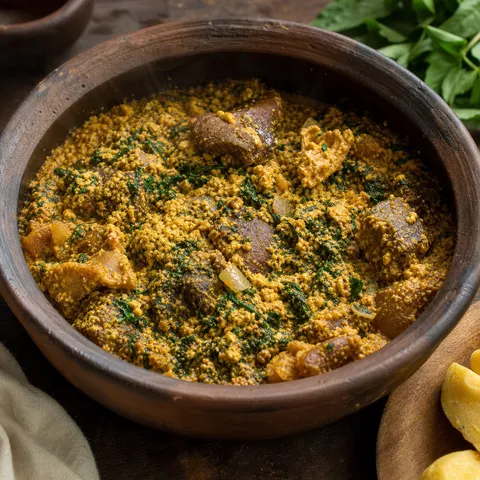 West African Lens Verified Images are for illustrative purposes only, may be inaccurate, and do not guarantee the presence or absence of specific ingredients.
 Egusi Soup
Ground melon seeds simmered with palm oil, leafy greens, and bold spices into a rich, nutty stew that's a cornerstone of Nigerian home cooking.
 West African Lens Verified Images are for illustrative purposes only, may be inaccurate, and do not guarantee the presence or absence of specific ingredients.
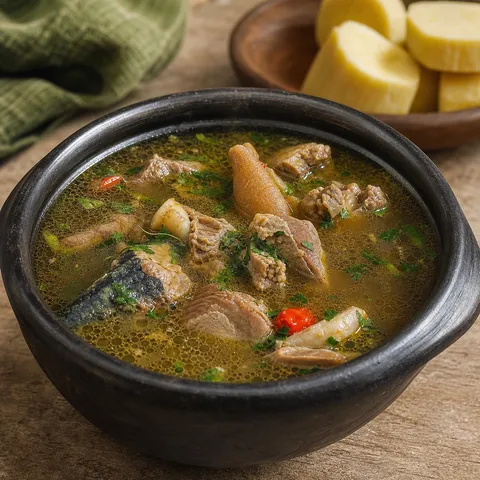
 Pepper Soup
A piercingly spiced, crystal-clear broth simmered with goat meat or catfish and a blend of earthy Nigerian spices — warming, restorative, and intensely aromatic.
 West African Lens Verified Images are for illustrative purposes only, may be inaccurate, and do not guarantee the presence or absence of specific ingredients.
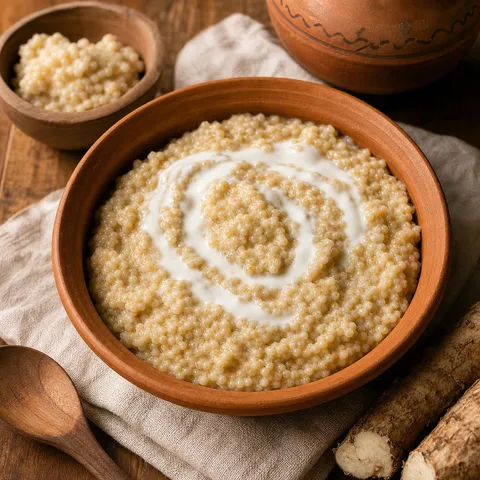
 Thiakry
Senegal's dreamy dessert — fine millet couscous blended with creamy yogurt, coconut, and vanilla into a sweet, cooling pudding perfect for celebrating special occasions.