 West African Images are for illustrative purposes only, may be inaccurate, and do not guarantee the presence or absence of specific ingredients.
  Serving Images are for illustrative purposes only, may be inaccurate, and do not guarantee the presence or absence of specific ingredients.
 Pounded Yam
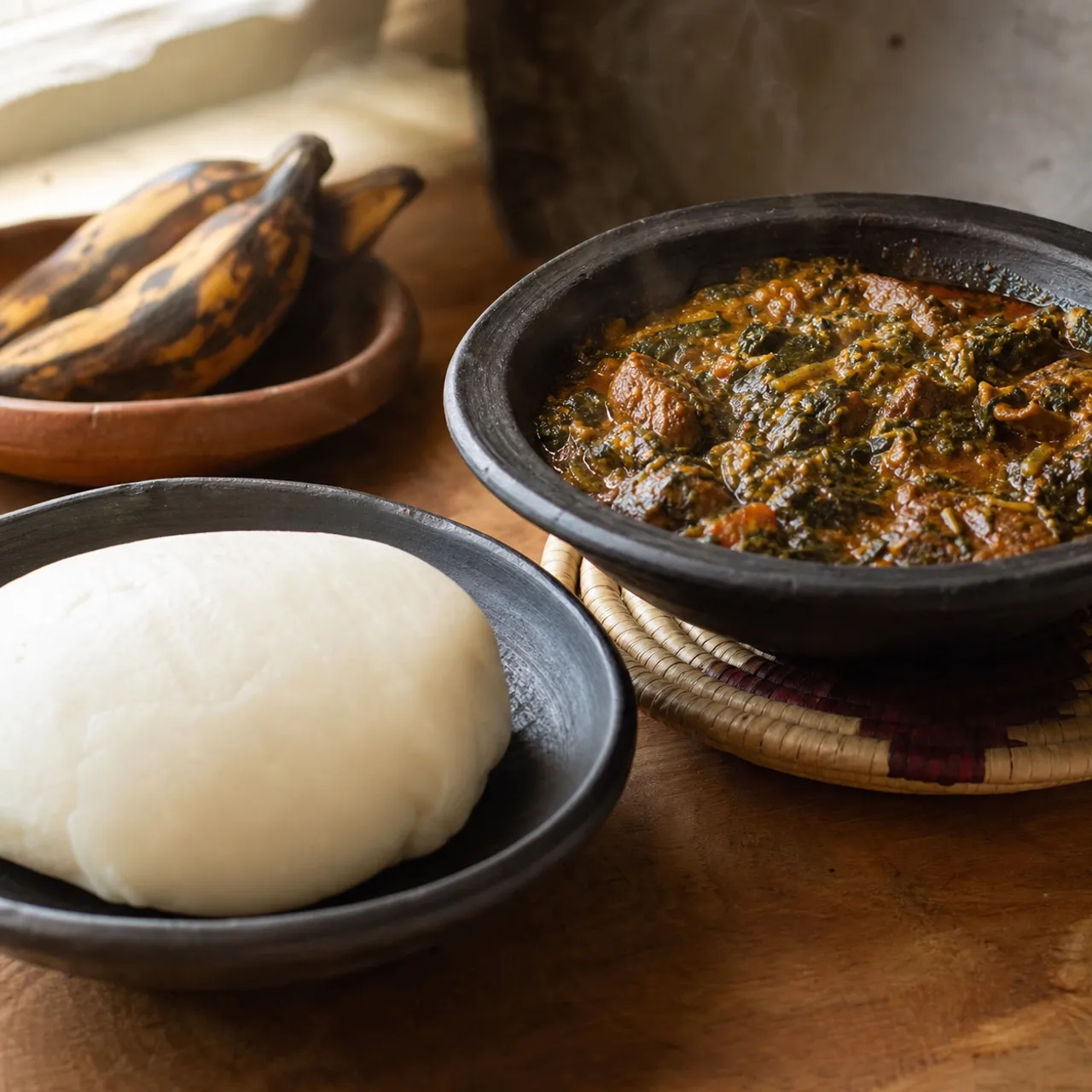
Silky, stretchy, and pillowy-soft, this hand-pounded West African staple is the perfect vehicle for scooping up rich, hearty soups and stews.
No common allergens detected
Based on this recipe's ingredient list. Always verify with your own brands and labels.
Good to know
- Ready in under 30 minutes
Matched from this dish's own ingredients and timing. Browse more: 30-minute meals
Instructions
5 steps- 1
Prep the Yam: Peel the yam, taking care to remove all the rough skin. Cut the peeled yam into thick, even discs and rinse thoroughly.
- 2
Boil: Place the yam slices in a deep pot and cover with water. Boil over medium-high heat for 15-20 minutes, or until the yam is very soft and easily pierced with a fork.
- 3
First Pound: Transfer the hot yam chunks immediately into a traditional mortar (or a stand mixer with a dough hook). Begin pounding or mixing while the yam is still steaming hot.
- 4
Smooth and Stretch: Pound rhythmically until all lumps disappear and the yam transforms into a smooth, stretchy, elastic dough. If it's too stiff, add a splash of the hot yam water and pound until the texture is perfect.
- 5
Serve: Mold the pounded yam into a smooth dome and serve immediately alongside a rich soup like Egusi or Efo Riro.
 Images are for illustrative purposes only, may be inaccurate, and do not guarantee the presence or absence of specific ingredients.
 Listahan Family Score™
75/100
Good fit for most families
Score reflects how well this recipe fits a typical busy household. In the app, your Family Score is personalized to your household's allergens, kids, and pantry.
Nutrition
per serving0
Calories
0 g
Protein
0 g
Carbs
0 g
Fat
Estimated per serving. Actual values depend on the brands and portions you use.
Listahan cooking guide
Chef notes & practical guide
Technique notes, ingredient swaps, serve-alongside ideas, storage guidance, and equipment for this recipe.
Cultural context
Pounded yam, known as iyan in Yoruba, is a smooth, stretchy staple across Nigeria and much of West Africa, traditionally made by boiling white yam and pounding it in a wooden mortar until it turns into a glossy, elastic dough. It is a swallow, eaten by pinching off a piece and using it to scoop up soups like egusi or efo riro rather than chewed on its own. The labor of pounding once made it a dish reserved for special occasions, though yam flour and food processors now bring it to everyday tables.
Listahan note
This version uses real white yam pounded or blended to the proper stretchy texture rather than instant flour, and treats it as the vehicle for a soup rather than a standalone dish.
Technique cues
- Boil the yam in well-salted water until a knife slides through with no resistance, since underdone yam will leave hard lumps that no amount of pounding fixes.
- Pound or process the yam while it is still very hot, because it loses its stretch and turns grainy as it cools.
- Add the hot cooking water a spoonful at a time while working the yam so you reach a smooth, elastic dough without making it gluey.
Kitchen flow
- Parallel prep
- Cook the soup you plan to serve with it while the yam boils, so both finish hot at the same time.
- Make-ahead
- Pounded yam is best fresh, but you can boil and chunk the yam ahead and pound it just before serving while reheated and hot.
- Leftover move
- Wrap cold pounded yam tightly, then steam or microwave it with a splash of water to bring back some of the stretch for the next meal.
- Cleanup rhythm
- Rinse the mortar or processor bowl immediately, since dried yam dough sets hard and is far harder to scrub off later.
Ingredient brief
Role, handling, and swap guidance for each key ingredient.
white yam
the entire dish
Purpose: True white yam has the starch content and neutral flavor that produce the signature smooth, stretchy swallow.
Handling: Peel thickly, cut into chunks, and rinse, then boil in salted water until fork-tender.
Adaptation: Yam flour (elubo or pounded yam flour) is the common modern shortcut, mixed with boiling water instead of boiled.
water
cooking medium and texture control
Purpose: Yam absorbs water as it cooks and a little reserved hot water adjusts the final dough to the right pliable texture.
Handling: Reserve some of the starchy cooking liquid before draining to work into the yam.
Adaptation: No real swap; the reserved cooking water is best for keeping the flavor clean.
salt
seasoning of the boil
Purpose: Salting the boiling water seasons the yam from the inside since pounded yam carries no other seasoning.
Handling: Add to the boiling water, not to the finished dough.
Adaptation: None needed; this is the one essential seasoning.
ripe plantain (optional)
softener and stretch
Purpose: A boiled plantain pounded in with the yam makes the swallow softer and slightly sweet, a common modern touch.
Handling: Boil alongside the yam and pound in while hot.
Adaptation: Boiled potato for a neutral softener, or leave out for a pure yam version.
Technique notes
- Work the yam in short bursts in a food processor rather than one long run, which keeps it from overheating the motor and turning pasty.
- Wet your hands and the serving spoon with water before shaping the smooth ball so the dough releases cleanly.
- Aim for a texture that holds its shape but stretches when pulled; too stiff and it crumbles, too soft and it cannot scoop soup.
Ingredient swaps
- Weeknight shortcut
- Use pounded yam flour whisked into boiling water and stirred hard for a few minutes to mimic the texture in a fraction of the time.
- Lighter direction
- Stretch the yam with a portion of boiled plantain for a softer, slightly sweeter swallow.
Serve alongside
- egusi soup with assorted meat
- efo riro spinach stew
- ogbono draw soup
- pepper soup
- chilled palm wine
- hibiscus tea (zobo)
- cold water as is traditional alongside soup
Serving suggestions only — check pairings for your household's allergens.
Storage & reheating
- Keep wrapped tightly and refrigerated for up to two days, as it firms up quickly. Reheat by steaming or microwaving with a little water to restore some softness. Pounded yam does not freeze well, so make only what you will eat fresh.
Equipment
- large pot for boiling
- food processor or traditional mortar and pestle
- sturdy wooden spoon
- bowl of water for wetting hands
Make this household-aware
Listahan Pro checks this recipe against your household's allergens, finds pantry-aware swaps, builds the shopping list, and helps you plan the week around it.
Plan it in Listahan
Add Pounded Yam to your week, check it against your household's allergens, and build the shopping list automatically.
More West African recipes
 West African Lens Verified Images are for illustrative purposes only, may be inaccurate, and do not guarantee the presence or absence of specific ingredients.
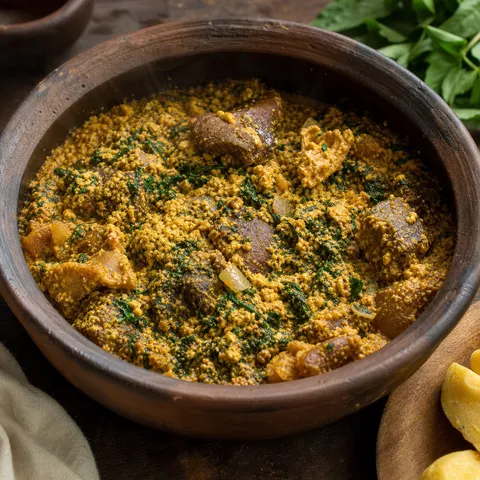
 Egusi Soup
Ground melon seeds simmered with palm oil, leafy greens, and bold spices into a rich, nutty stew that's a cornerstone of Nigerian home cooking.
 West African Lens Verified Images are for illustrative purposes only, may be inaccurate, and do not guarantee the presence or absence of specific ingredients.
 Banku
A smooth, slightly tangy Ghanaian dough of fermented corn and cassava, cooked to a stretchy consistency — the perfect partner for okra stew or grilled tilapia.
 West African Lens Verified Images are for illustrative purposes only, may be inaccurate, and do not guarantee the presence or absence of specific ingredients.
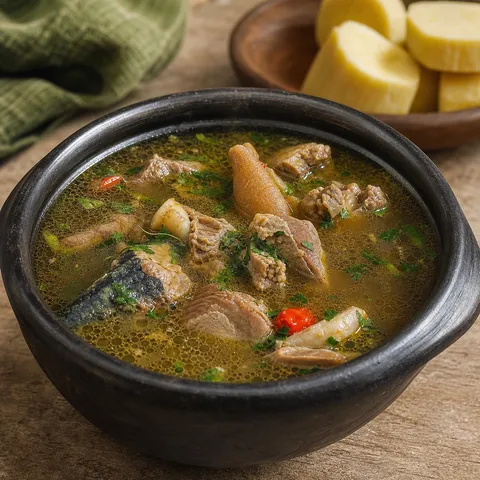
 Pepper Soup
A piercingly spiced, crystal-clear broth simmered with goat meat or catfish and a blend of earthy Nigerian spices — warming, restorative, and intensely aromatic.