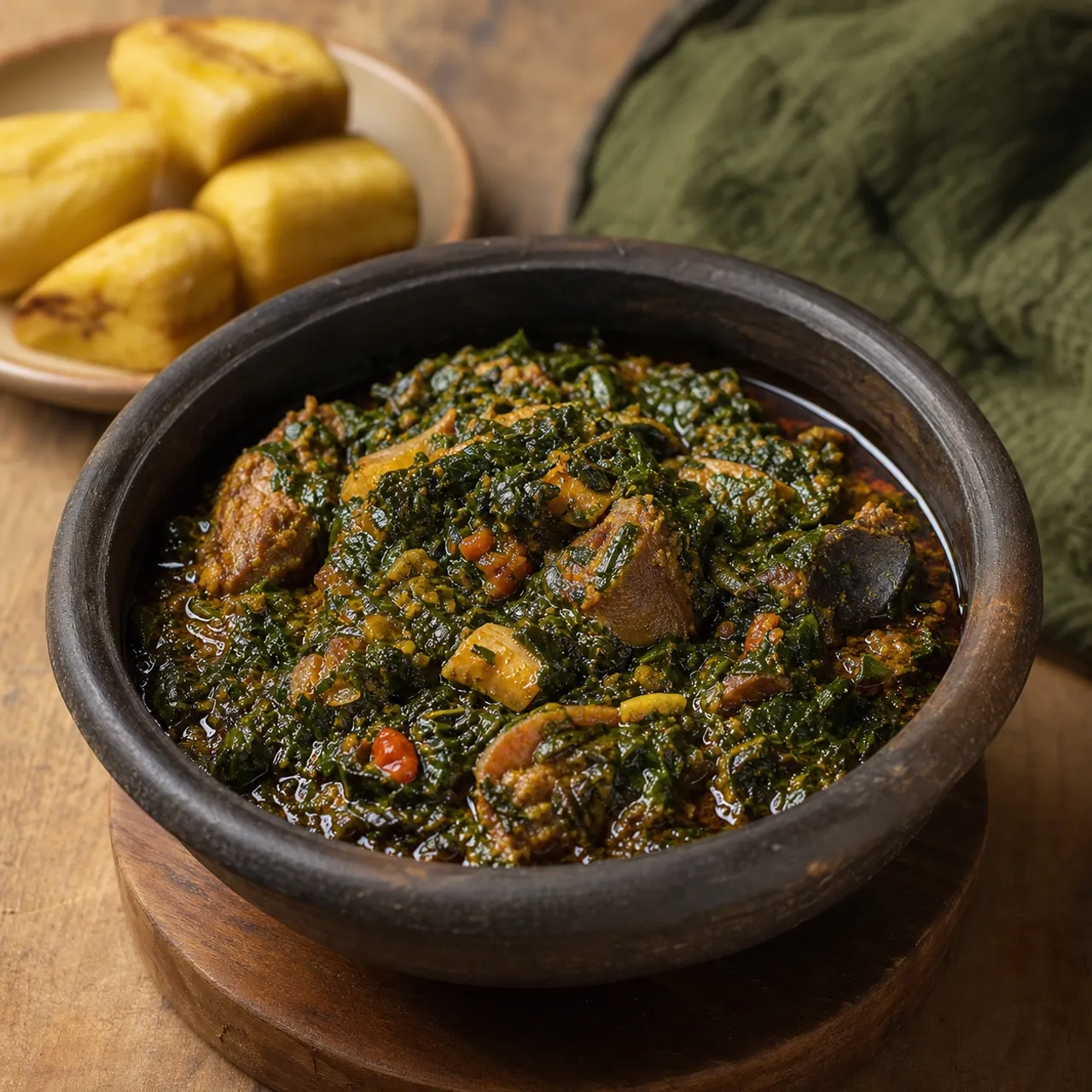
 West African Images are for illustrative purposes only, may be inaccurate, and do not guarantee the presence or absence of specific ingredients.
 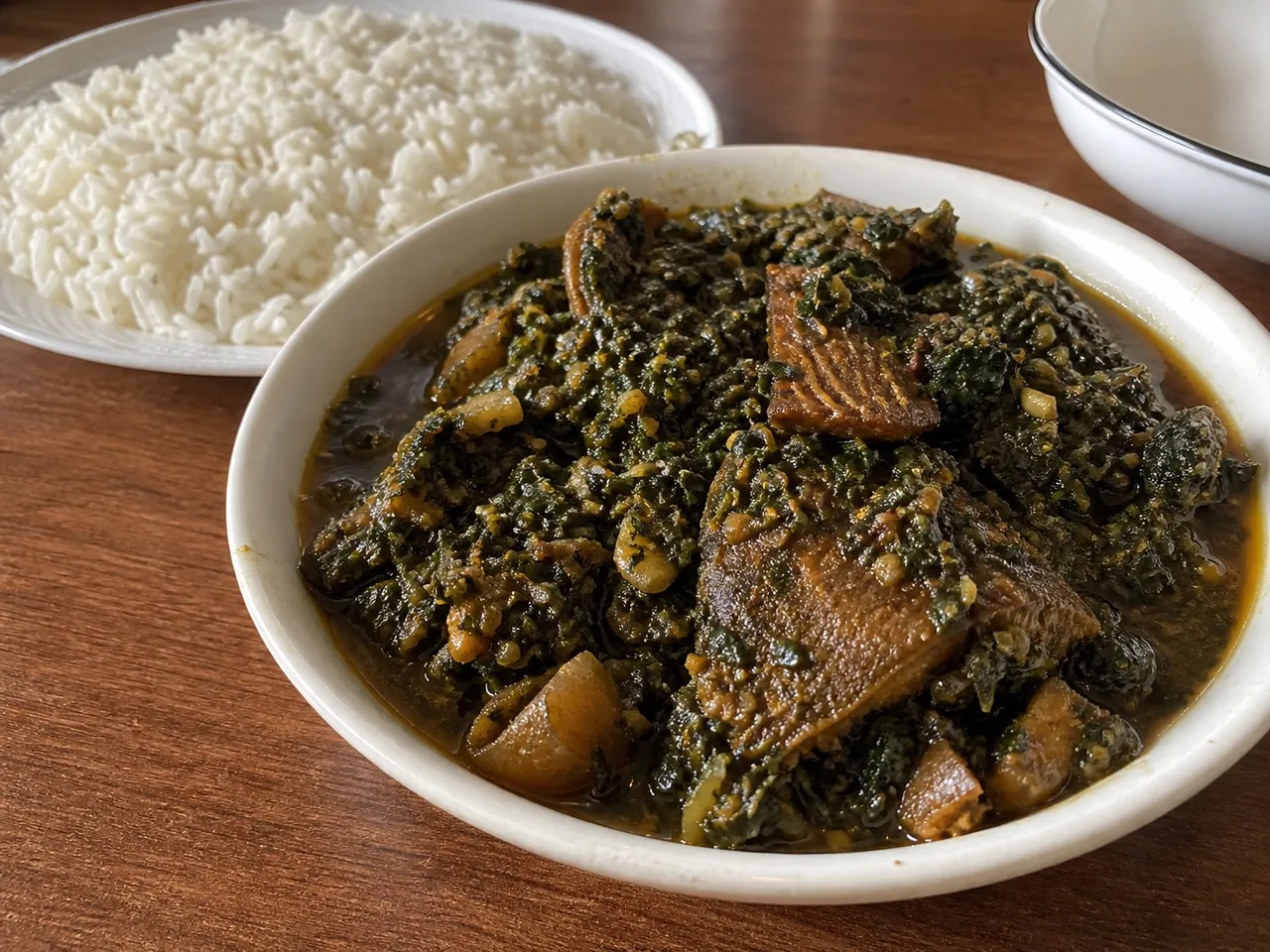 Serving Images are for illustrative purposes only, may be inaccurate, and do not guarantee the presence or absence of specific ingredients.
 Edikaikong Soup
Calabar's prized dark-green vegetable soup, brimming with waterleaf, fluted pumpkin, periwinkles, and smoked fish in a luscious palm oil base.
Contains common allergens
In the app, Listahan checks these against your household automatically.
Good to know
- One-pot
Matched from this dish's own ingredients and timing. Browse more: one-pot dinners
Instructions
5 steps- 1
Cook the Meat: Boil the assorted meat with chopped onions and bouillon until very tender. Ensure there is very little stock left in the pot (about 1/4 cup) because this soup should not be watery.
- 2
Add Oil and Spices: Pour the palm oil into the pot with the meat. Add the chopped scotch bonnet peppers, crayfish, and periwinkles. Let it boil vigorously for 5-7 minutes.
- 3
Wilt the Waterleaf: Add the chopped waterleaf to the pot. Stir well and cook for 3-5 minutes. The waterleaf will release its own juices, creating the liquid base for the soup.
- 4
Add the Ugu: Fold in the chopped Ugu (fluted pumpkin leaves). Stir thoroughly to combine the greens with the rich meat and oil mixture.
- 5
Final Simmer: Simmer uncovered for exactly 3-5 minutes. You want the leaves to cook but remain vibrant green and slightly crunchy. Remove from heat immediately.
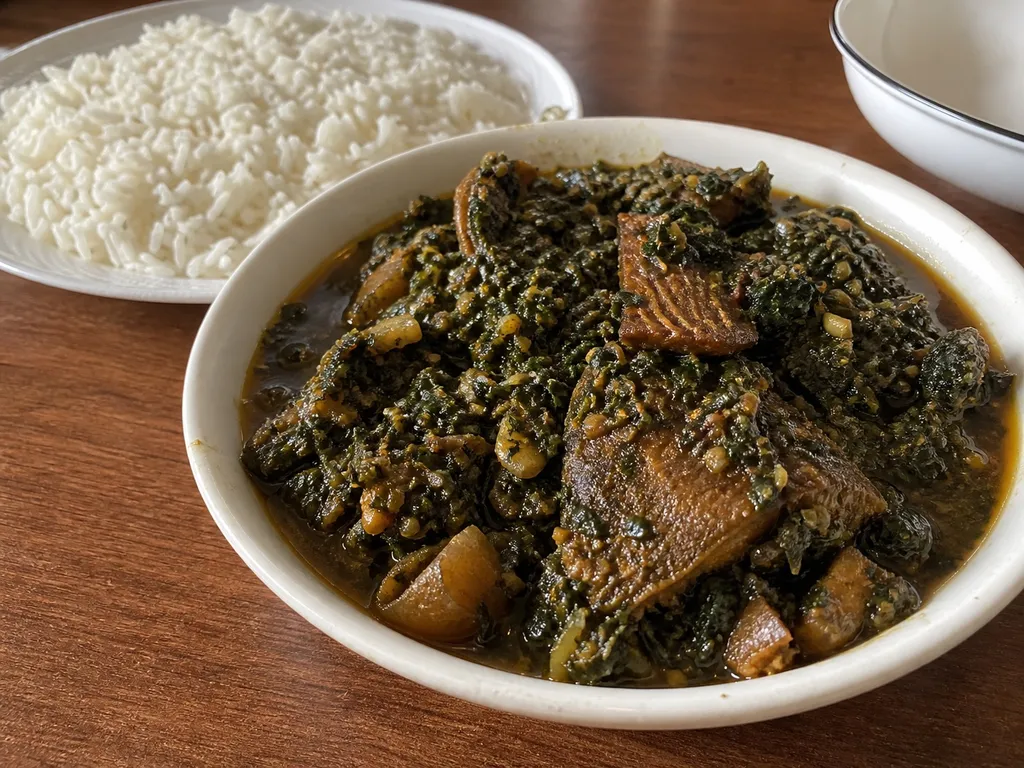 Images are for illustrative purposes only, may be inaccurate, and do not guarantee the presence or absence of specific ingredients.
 Listahan Family Score™
62/100
Works for many families
Score reflects how well this recipe fits a typical busy household. In the app, your Family Score is personalized to your household's allergens, kids, and pantry.
Nutrition
per serving810
Calories
34 g
Protein
3 g
Carbs
75 g
Fat
Estimated per serving. Actual values depend on the brands and portions you use.
Listahan cooking guide
Chef notes & practical guide
Technique notes, ingredient swaps, serve-alongside ideas, storage guidance, and equipment for this recipe.
Cultural context
Edikaikong soup comes from Calabar in southeastern Nigeria, where it's built on ugu, fluted pumpkin leaves, and waterleaf, both leafy vegetables central to Efik and Ibibio cooking. Its name is a direct reference to the region it comes from, and it's traditionally served thick, with very little standing liquid, unlike a typical Western soup.
Listahan note
This version cooks the meat down until barely any stock remains before the vegetables ever go in, since a soup this thick depends on the waterleaf's own released liquid to become the broth rather than a separately added stock.
Technique cues
- Boiling the assorted meat down until only about a quarter cup of stock remains is deliberate — this soup depends on staying thick rather than swimming in liquid.
- The waterleaf releases its own juices once it's added and stirred, and that release is what forms the soup's liquid base rather than any added stock.
- Adding the ugu only after the waterleaf has wilted keeps the sturdier fluted pumpkin leaves from overcooking into a dull, dark green by the time everything else is ready.
- A short final simmer of just three to five minutes keeps the greens vibrant and slightly crunchy rather than cooking all the texture out of them.
Kitchen flow
- Parallel prep
- Prep any side dishes while Edikaikong Soup finishes with the scotch bonnet peppers — the hands-off cook time is the window to use. Plan around the simmer; that's the slow part.
- Make-ahead
- Edikaikong Soup reheats well, so cooking it a day ahead and finishing it just before serving is a reasonable way to spread out the work. This one leans on the scotch bonnet peppers. The simmer step is what sets the pace here.
- Leftover move
- Leftover Edikaikong Soup reheats well covered on the stove or in the oven with a splash of liquid; avoid the microwave, which can dry out a dish reheated this way faster than a covered, gentler reheat. This one leans on the scotch bonnet peppers. Everything else is quick — the simmer is the one step that takes real time.
- Cleanup rhythm
- Deglaze the pan used for Edikaikong Soup with a splash of water or broth right after cooking — it lifts the browned bits before they dry on and saves scrubbing later. This one leans on the scotch bonnet peppers. The simmer step is what sets the pace here.
Ingredient brief
Role, handling, and swap guidance for each key ingredient.
4 bunches Ugu chopped
Flavor support
Purpose: bunches Ugu chopped supports the balance of Edikaikong Soup and should taste integrated.
Handling: Prep before heat is high so the cooking step can move without rushing.
Adaptation: Use the closest fresh equivalent and expect a modest shift in flavor or texture.
2 bunches Waterleaf chopped
Flavor support
Purpose: bunches Waterleaf chopped supports the balance of Edikaikong Soup and should taste integrated.
Handling: Prep before heat is high so the cooking step can move without rushing.
Adaptation: Use the closest fresh equivalent and expect a modest shift in flavor or texture.
500g assorted meat
Flavor support
Purpose: g assorted meat supports the balance of Edikaikong Soup and should taste integrated.
Handling: Prep before heat is high so the cooking step can move without rushing.
Adaptation: Use the closest fresh equivalent and expect a modest shift in flavor or texture.
1 cup palm oil
Richness and texture
Purpose: cup palm oil rounds the texture and helps the dish feel complete.
Handling: Prep before heat is high so the cooking step can move without rushing.
Adaptation: Use the closest fresh equivalent and expect a modest shift in flavor or texture.
1 cup periwinkles
Flavor support
Purpose: cup periwinkles supports the balance of Edikaikong Soup and should taste integrated.
Handling: Prep before heat is high so the cooking step can move without rushing.
Adaptation: Use the closest fresh equivalent and expect a modest shift in flavor or texture.
Technique notes
- Don't rush the initial meat-boiling stage — reducing the stock down properly sets up the soup's thick texture from the very start.
- Serve with a stiff swallow like fufu or pounded yam, since the soup's thickness is built to be scooped rather than spooned over rice.
- This soup keeps and reheats well over several days, and many households consider it better on the second or third day.
Ingredient swaps
- Seafood-aware direction
- Use a vegetarian fish-sauce alternative or extra soy sauce and a pinch of dried seaweed for umami to avoid fish or shellfish while keeping the same savory backbone. This one leans on the scotch bonnet peppers.
- Lower-sodium direction
- Salt in stages instead of all at once, tasting as you go — you'll likely need less than the full amount. This one leans on the scotch bonnet peppers.
- Weeknight shortcut
- For a faster version, prep the longest-cooking component a day ahead so the night-of cook is mostly assembly and finishing. This one leans on the scotch bonnet peppers.
Serve alongside
- Steamed rice
- Cucumber salad
- Roasted vegetables
- Pickled vegetables
- Iced tea
- Sparkling water with citrus
Serving suggestions only — check pairings for your household's allergens.
Storage & reheating
- Refrigerate in a sealed container for up to 4 days.
- Reheat gently with a splash of water, broth, milk, or sauce as appropriate.
- Freeze up to 2 months when the texture is braised, baked, or stew-like.
Equipment
- Dutch oven or soup pot
- Wooden spoon
- Ladle
Make this household-aware
Listahan Pro checks this recipe against your household's allergens, finds pantry-aware swaps, builds the shopping list, and helps you plan the week around it.
Plan it in Listahan
Add Edikaikong Soup to your week, check it against your household's allergens, and build the shopping list automatically.
More West African recipes
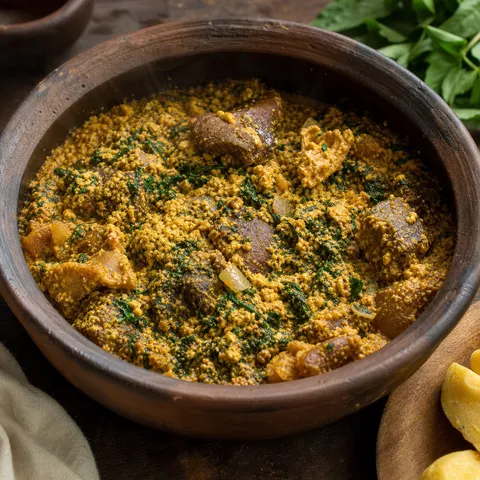 West African Lens Verified Images are for illustrative purposes only, may be inaccurate, and do not guarantee the presence or absence of specific ingredients.
 Egusi Soup
Ground melon seeds simmered with palm oil, leafy greens, and bold spices into a rich, nutty stew that's a cornerstone of Nigerian home cooking.
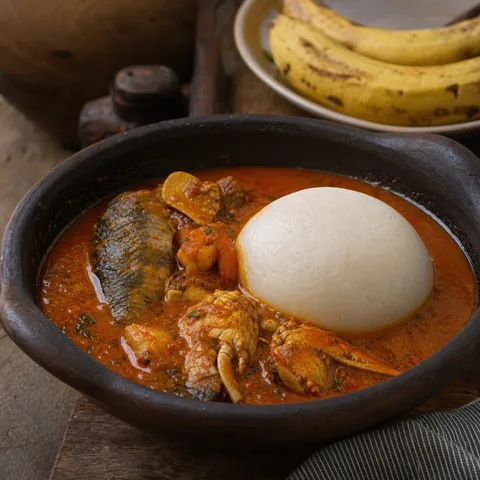 West African Lens Verified Images are for illustrative purposes only, may be inaccurate, and do not guarantee the presence or absence of specific ingredients.
 Banku
A smooth, slightly tangy Ghanaian dough of fermented corn and cassava, cooked to a stretchy consistency — the perfect partner for okra stew or grilled tilapia.
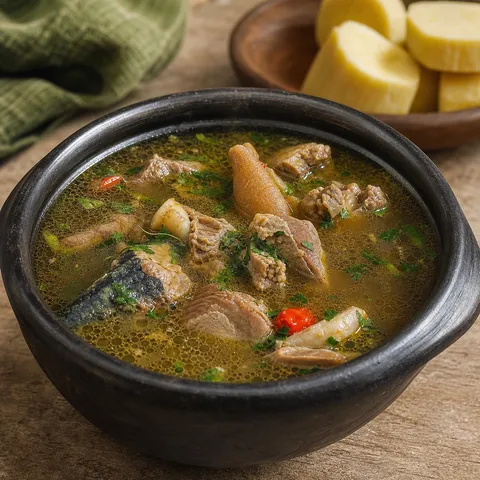 West African Lens Verified Images are for illustrative purposes only, may be inaccurate, and do not guarantee the presence or absence of specific ingredients.
 Pepper Soup
A piercingly spiced, crystal-clear broth simmered with goat meat or catfish and a blend of earthy Nigerian spices — warming, restorative, and intensely aromatic.