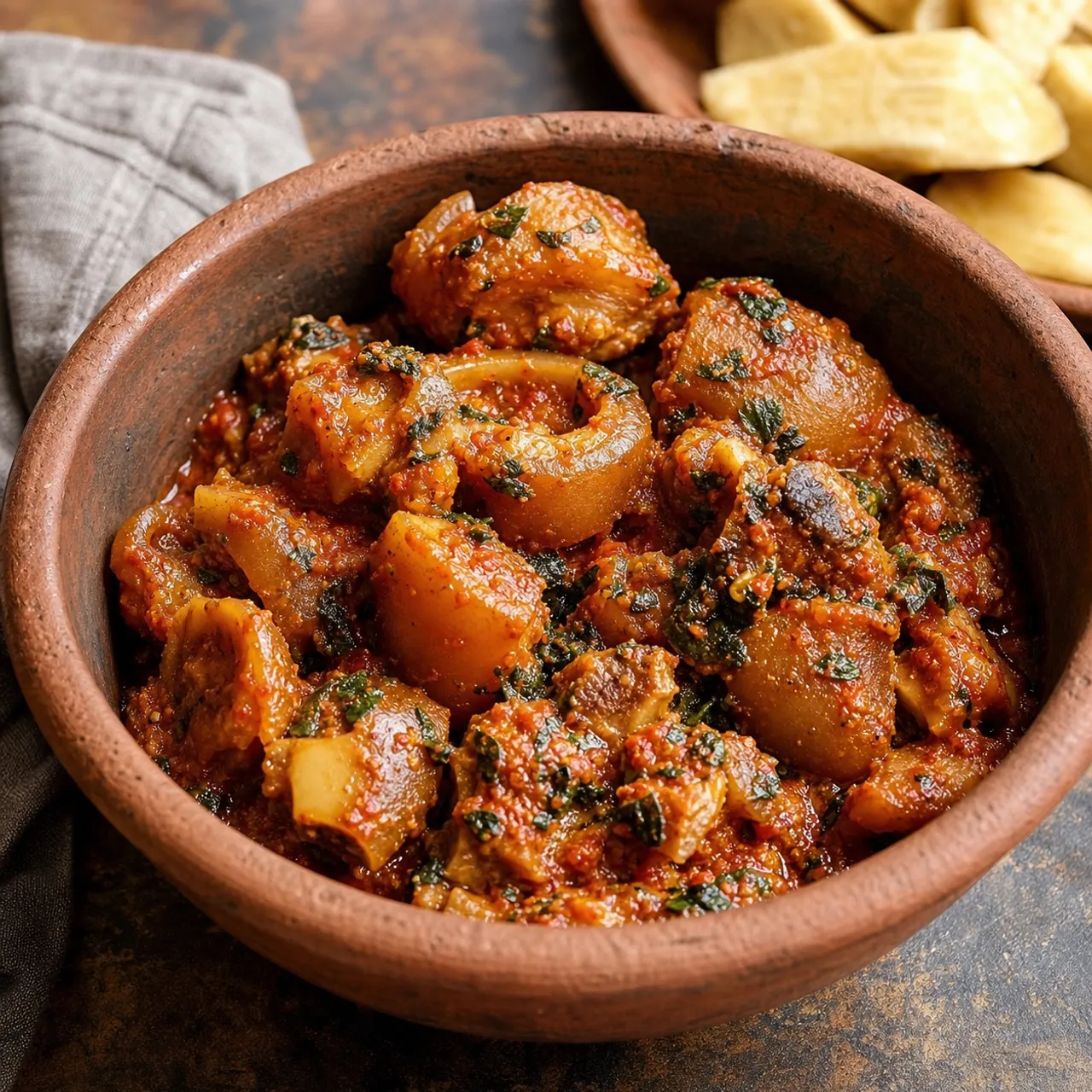
 West African Images are for illustrative purposes only, may be inaccurate, and do not guarantee the presence or absence of specific ingredients.
 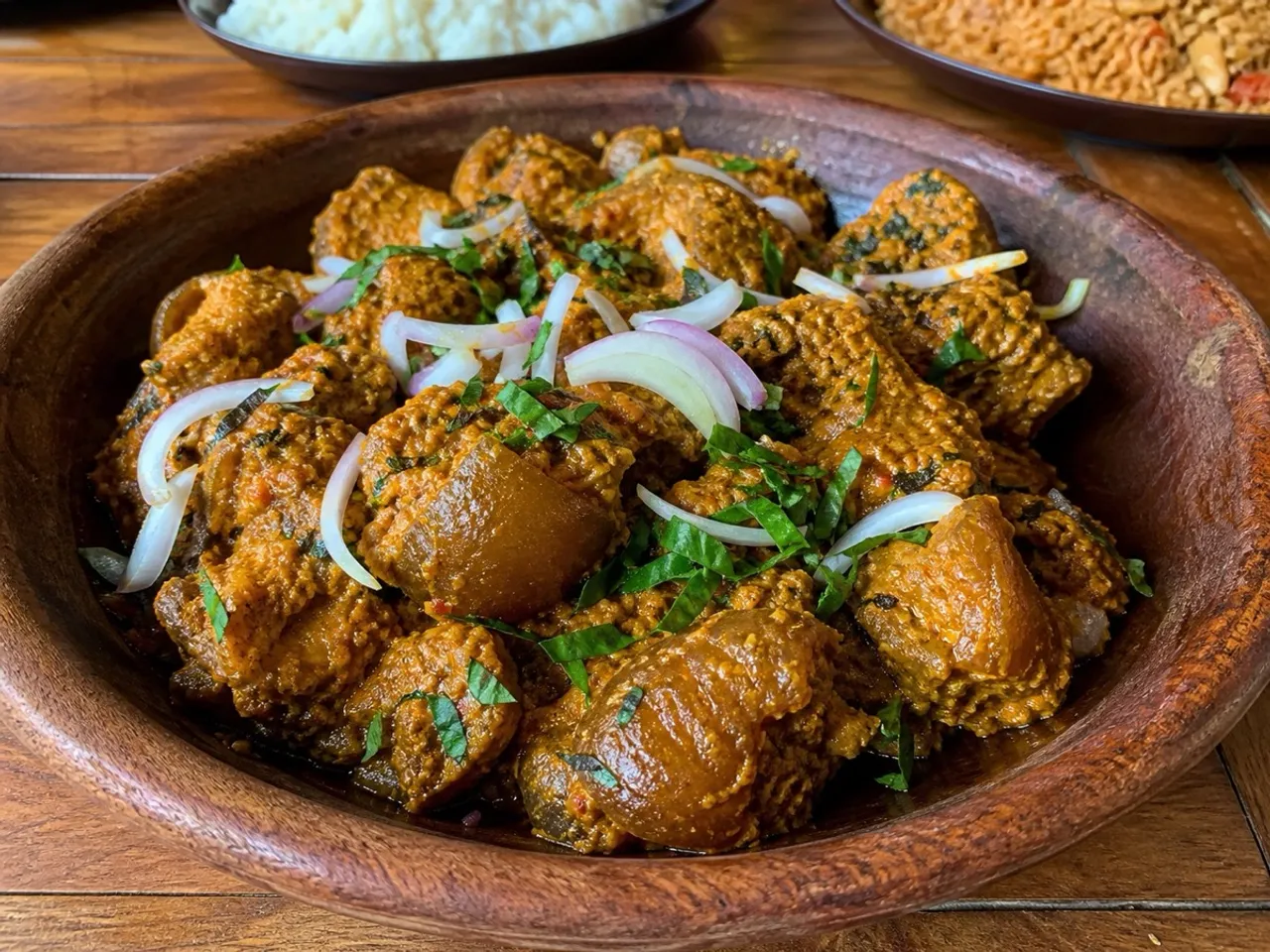 Serving Images are for illustrative purposes only, may be inaccurate, and do not guarantee the presence or absence of specific ingredients.
 Nkwobi
Cow foot slow-cooked until fall-off-the-bone tender, then tossed in a spiced, tangy ugba palm paste — a bold, festive Nigerian delicacy loved at late-night gatherings.
Contains common allergens
In the app, Listahan checks these against your household automatically.
Instructions
5 steps- 1
Tenderize the Cow Foot: Wash the cow foot thoroughly. Boil it in a pressure cooker with onions and bouillon cubes for 45-60 minutes until it is extremely tender and the gelatinous skin is soft. Reserve just a tiny bit of the stock.
- 2
Dissolve Potash: Dissolve the potash in a few tablespoons of water and strain the liquid, discarding the gritty residue.
- 3
Make the Ncha Base: In a large, heavy bowl, pour in the palm oil. Slowly stir in the potash liquid. The oil will immediately curdle, thicken, and turn a bright yellowish-orange color.
- 4
Mix Spices: Into this thick emulsion, stir in the ground crayfish, roasted and ground Ehuru, blended scotch bonnet, and a little of the rich meat stock. Mix well to form a spicy, creamy paste.
- 5
Combine: Toss the hot, cooked cow foot pieces into the paste until every piece is generously coated. Garnish with the finely chopped Utazi leaves and thinly sliced raw onions. Serve in a traditional wooden bowl.
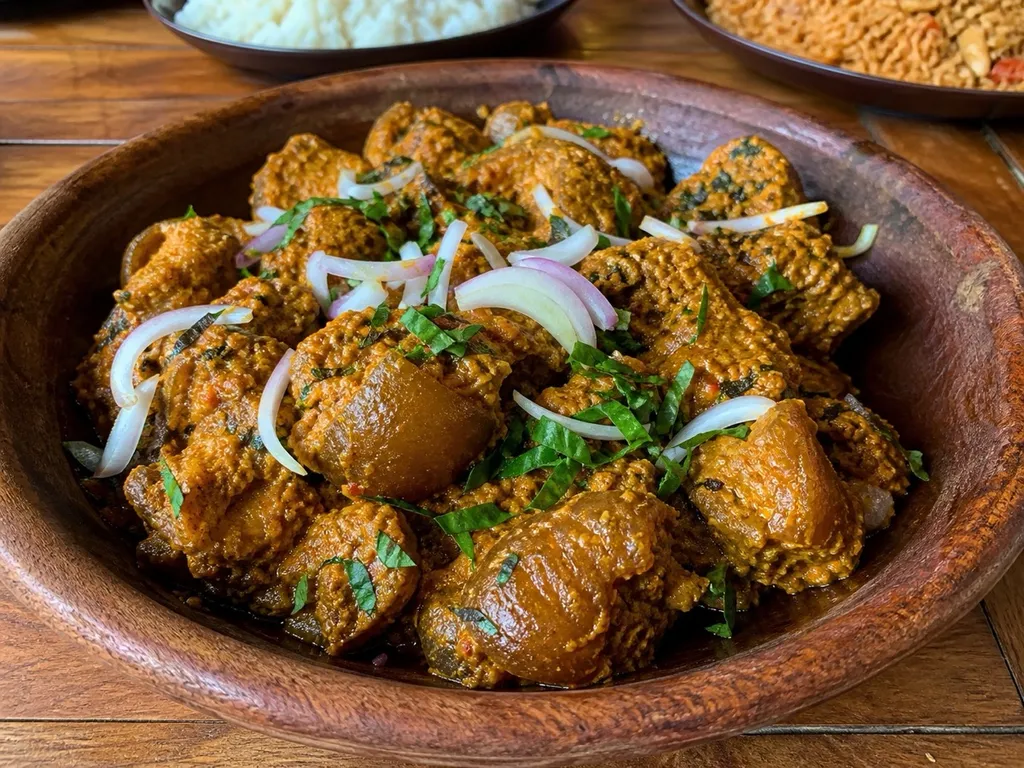 Images are for illustrative purposes only, may be inaccurate, and do not guarantee the presence or absence of specific ingredients.
 Listahan Family Score™
60/100
Works for many families
Score reflects how well this recipe fits a typical busy household. In the app, your Family Score is personalized to your household's allergens, kids, and pantry.
Nutrition
per serving245
Calories
1 g
Protein
0 g
Carbs
27 g
Fat
Estimated per serving. Actual values depend on the brands and portions you use.
Listahan cooking guide
Chef notes & practical guide
Technique notes, ingredient swaps, serve-alongside ideas, storage guidance, and equipment for this recipe.
Cultural context
Nkwobi is an Igbo delicacy of tender cow foot dressed in a thick, spiced palm-oil sauce, served warm in a wooden mortar as a beloved bar and celebration food in southeastern Nigeria. Its defining trick is ngu, a potash or food-grade alkaline solution, whipped into the palm oil until it turns into a creamy yellow paste that coats the meat. Eaten with cold drinks among friends, it is as much a social ritual as a dish.
Listahan note
This version simmers cow foot until gelatinous and tender, then binds it in the emulsified palm-oil paste with utazi and plenty of pepper. It is a rich, special-occasion plate meant to be shared.
Technique cues
- Simmer the cow foot long and low until it is fall-apart tender and richly gelatinous; undercooked, it is rubbery and the dish fails.
- Whip the palm oil with a small amount of dissolved potash solution until it thickens into a pale yellow paste, which is the technique that makes nkwobi nkwobi.
- Add the bitter utazi and ground pepper off direct heat so their aromatics stay bright in the warm, not boiling, sauce.
Kitchen flow
- Parallel prep
- While the cow foot simmers for an hour or more, dissolve the potash and slice the utazi so the finishing goes quickly.
- Make-ahead
- Cook and refrigerate the cow foot a day ahead; reheat and emulsify the palm-oil paste fresh just before serving.
- Leftover move
- Warm leftovers gently and tuck the spiced meat into soft bread, or serve again over a bed of greens.
- Cleanup rhythm
- Wipe the palm-oil bowl with paper towel before washing, since the emulsified oil clings to everything it touches.
Ingredient brief
Role, handling, and swap guidance for each key ingredient.
cow foot
gelatinous protein
Purpose: Cow foot delivers the tender, collagen-rich bite that makes nkwobi luxurious.
Handling: Clean thoroughly and simmer with seasoning until very soft, reserving some stock.
Adaptation: Cow tripe (shaki) or oxtail gives a similar rich, chewy character.
palm oil
emulsified sauce base
Purpose: Palm oil is whipped with alkaline potash into the thick yellow paste that coats every piece of meat.
Handling: Combine with the strained potash solution and stir vigorously until it pales and thickens.
Adaptation: There is no real substitute; the palm oil's color and emulsifying behavior are essential.
potash (akanwu)
emulsifier
Purpose: Dissolved food-grade potash is what thickens the palm oil into a creamy paste, a defining step.
Handling: Dissolve a small amount in water, let it settle, and use only the clear liquid in tiny quantity.
Adaptation: A pinch of baking soda dissolved in water mimics the alkaline effect, used sparingly.
utazi leaves
bitter garnish
Purpose: Thinly sliced bitter utazi cuts the richness and is traditional to the garnish.
Handling: Slice very thin and scatter over the finished dish, tasting to avoid over-bittering.
Adaptation: Bitterleaf, well washed, can substitute.
ground crayfish
umami seasoning
Purpose: Dried ground crayfish deepens the savory flavor that the palm-oil paste carries.
Handling: Stir into the warm sauce along with ground pepper.
Adaptation: Dried fish or bouillon adds comparable savoriness.
Technique notes
- Use only a tiny amount of potash or baking soda; too much turns the sauce soapy and unpleasant.
- Serve nkwobi warm rather than hot, since the emulsified palm-oil paste is at its best just above room temperature.
- Reserve some of the cow foot cooking stock to loosen the sauce to a luscious, coating consistency.
Ingredient swaps
- Shellfish-free direction
- Replace ground crayfish with dried fish or savory bouillon to keep umami without shellfish.
- Alternative cut
- Swap cow foot for oxtail or tripe if you prefer a more familiar cut with similar richness.
- Lower-heat direction
- Reduce the ground pepper and serve extra chili on the side so guests can adjust their own heat.
Serve alongside
- Soft agege bread
- Fried plantain
- Boiled white yam
- Sliced raw onion
- Cold palm wine
- Chilled stout or malt
- Cold beer
Serving suggestions only — check pairings for your household's allergens.
Storage & reheating
- Refrigerate nkwobi in an airtight container for up to three days. Reheat gently over low heat with a little reserved stock to loosen the sauce, avoiding a hard boil that breaks the emulsion. It is best eaten fresh and is not ideal for freezing, as the palm-oil paste separates.
Equipment
- Heavy pot or pressure cooker for the cow foot
- Wooden mortar or serving bowl
- Whisk or spoon for emulsifying the palm oil
- Sharp knife for slicing utazi
Make this household-aware
Listahan Pro checks this recipe against your household's allergens, finds pantry-aware swaps, builds the shopping list, and helps you plan the week around it.
Plan it in Listahan
Add Nkwobi to your week, check it against your household's allergens, and build the shopping list automatically.
More West African recipes
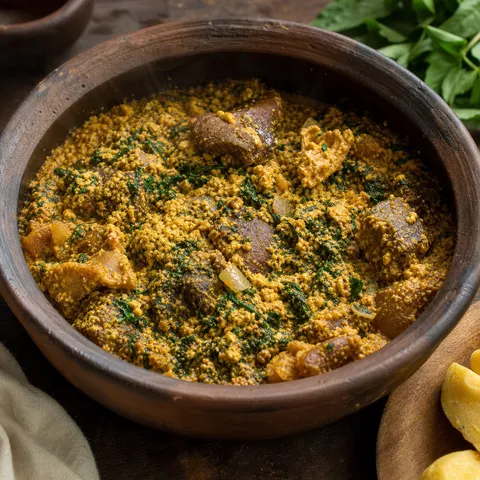 West African Lens Verified Images are for illustrative purposes only, may be inaccurate, and do not guarantee the presence or absence of specific ingredients.
 Egusi Soup
Ground melon seeds simmered with palm oil, leafy greens, and bold spices into a rich, nutty stew that's a cornerstone of Nigerian home cooking.
 West African Lens Verified Images are for illustrative purposes only, may be inaccurate, and do not guarantee the presence or absence of specific ingredients.
 Banku
A smooth, slightly tangy Ghanaian dough of fermented corn and cassava, cooked to a stretchy consistency — the perfect partner for okra stew or grilled tilapia.
 West African Lens Verified Images are for illustrative purposes only, may be inaccurate, and do not guarantee the presence or absence of specific ingredients.
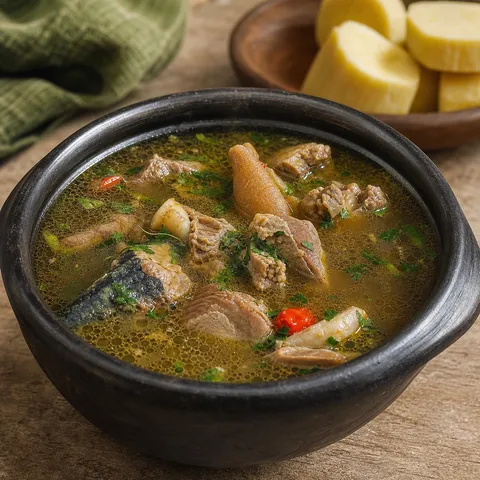
 Pepper Soup
A piercingly spiced, crystal-clear broth simmered with goat meat or catfish and a blend of earthy Nigerian spices — warming, restorative, and intensely aromatic.