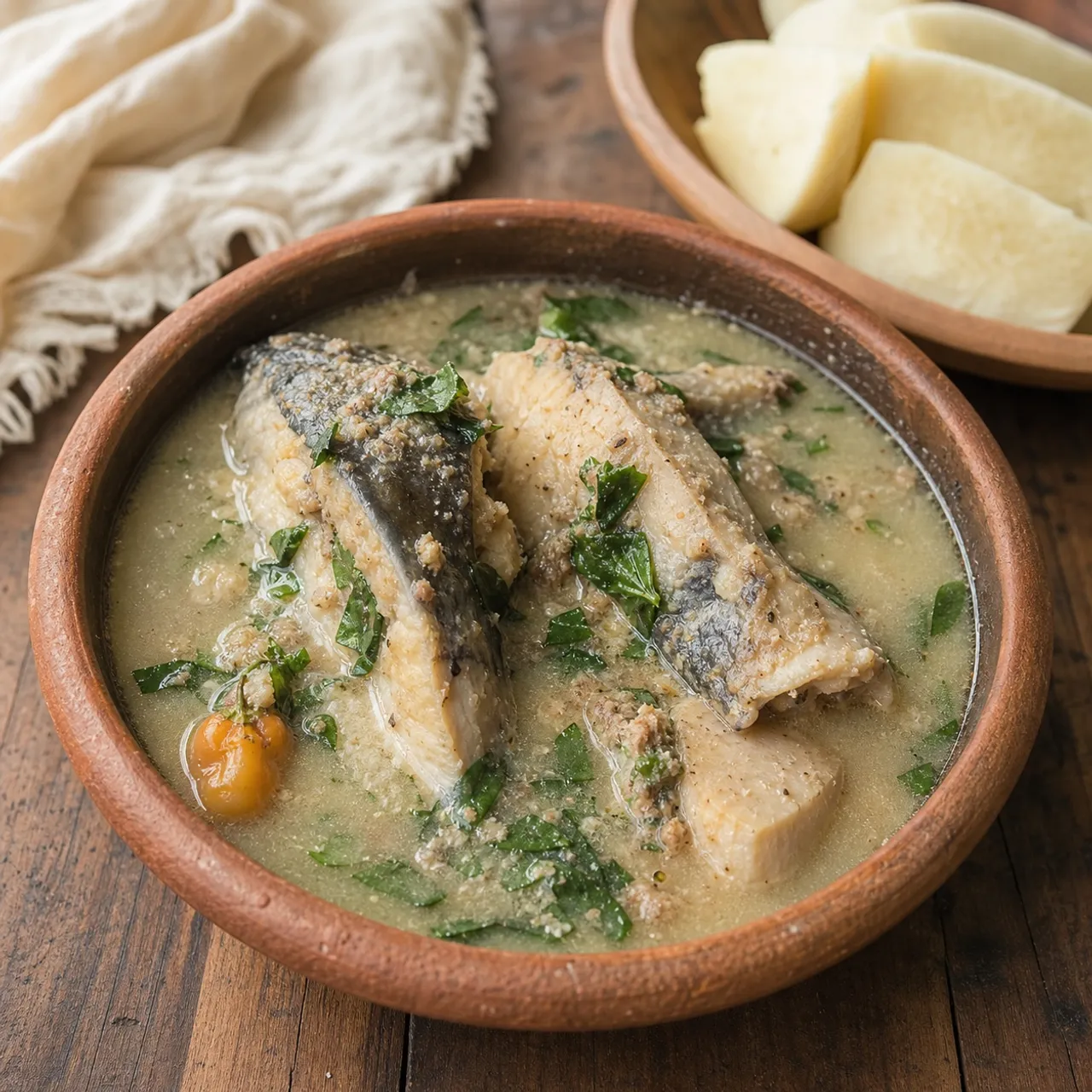
 West African Images are for illustrative purposes only, may be inaccurate, and do not guarantee the presence or absence of specific ingredients.
 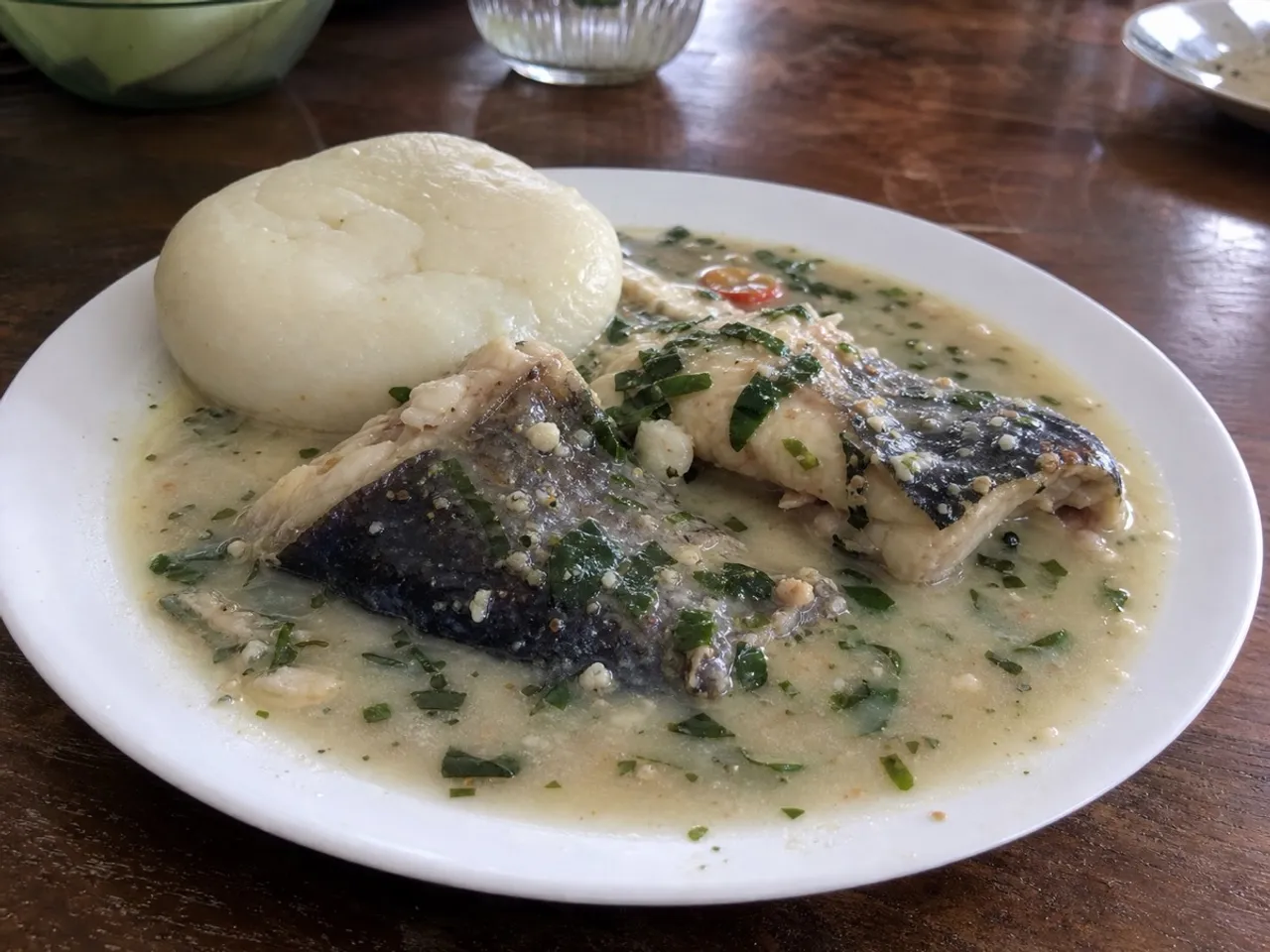 Serving Images are for illustrative purposes only, may be inaccurate, and do not guarantee the presence or absence of specific ingredients.
 Ofe Nsala
Eastern Nigeria's elegant white soup — no palm oil, just the pure, clean broth of catfish, utazi leaves, and pounded yam as thickener, with layers of subtle heat.
Contains common allergens
In the app, Listahan checks these against your household automatically.
Instructions
5 steps- 1
Boil the Yam: Place the slices of white yam in a small pot of water and boil until completely soft. Remove, pound in a mortar until smooth, and set aside (this is your thickener).
- 2
Make the Broth: In a separate pot, add 4 cups of water, the ground Nsala spice mix, crayfish, blended scotch bonnet, and bouillon. Bring to a rapid boil.
- 3
Cook the Fish: Gently place the cleaned catfish pieces into the boiling spicy broth. Reduce heat to a simmer and cook for 10 minutes until the fish is mostly cooked through.
- 4
Thicken the Soup: Drop small lumps of the pounded yam paste into the simmering soup. As the yam dissolves, the soup will transform from a watery broth to a slightly viscous, rich white soup.
- 5
Add Utazi: Add the chopped fresh Utazi leaves (use sparingly as they are quite bitter) for the signature herbal finish. Simmer for 3 minutes and serve immediately with pounded yam.
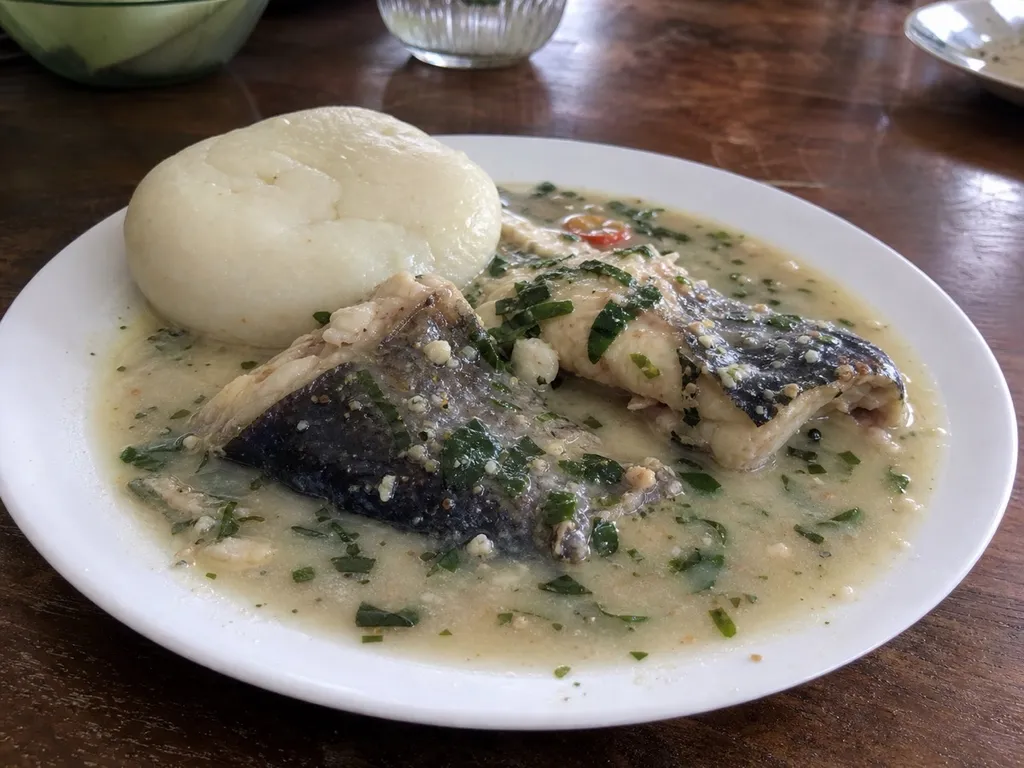 Images are for illustrative purposes only, may be inaccurate, and do not guarantee the presence or absence of specific ingredients.
 Listahan Family Score™
56/100
Works for many families
Score reflects how well this recipe fits a typical busy household. In the app, your Family Score is personalized to your household's allergens, kids, and pantry.
Nutrition
per serving10
Calories
1 g
Protein
1 g
Carbs
0 g
Fat
Estimated per serving. Actual values depend on the brands and portions you use.
Listahan cooking guide
Chef notes & practical guide
Technique notes, ingredient swaps, serve-alongside ideas, storage guidance, and equipment for this recipe.
Cultural context
Ofe Nsala, also called white soup, comes from the Igbo people of southeastern Nigeria and is notable for being one of the few major Igbo soups made without palm oil or leafy greens. Its pale color and clean, peppery broth made it a dish reserved for special occasions and for nursing mothers, prized as both restorative and celebratory. The body comes not from oil but from ground or pounded yam stirred in to thicken the soup.
Listahan note
This version keeps the broth pale and aromatic the way Nsala should be, thickening with yam rather than oil and leaning on uziza and utazi for the herbal bite that defines it. It is built around catfish or chicken simmered until the broth tastes deep.
Technique cues
- Thicken with small balls of pounded or blended yam added gradually, letting each addition melt before judging whether the soup needs more, so it never turns gluey.
- Toast and grind the seeds and aromatics together; their fragrance is the whole identity of this oil-free soup, so do not let them sit raw.
- Add bitter utazi leaves near the end and taste as you go, since a little gives a pleasant edge but too much turns the broth harsh.
Kitchen flow
- Parallel prep
- Boil the yam for thickening while the fish or meat simmers, so both are ready to combine at the same time.
- Make-ahead
- The yam thickener and aromatic blend can be prepped a day ahead and refrigerated, leaving only the simmer for service.
- Leftover move
- Reheat gently with a splash of water or stock, since the yam thickener firms up considerably once cold.
- Cleanup rhythm
- Rinse the pot promptly because the yam thickener clings to the bottom as it cools and sets.
Ingredient brief
Role, handling, and swap guidance for each key ingredient.
catfish
centerpiece protein
Purpose: Fresh catfish gives Nsala its traditional silky body and a broth that tastes clean and deep.
Handling: Clean and cut into thick steaks, then simmer gently so the pieces hold together.
Adaptation: Bone-in chicken or goat makes a heartier version when catfish is unavailable.
yam
oil-free thickener
Purpose: Boiled and pounded yam is what gives this white soup its signature body without any palm oil.
Handling: Boil until very soft, pound or blend smooth, then drop in small portions to dissolve.
Adaptation: Yam flour or even instant potato flakes can thicken in a pinch, though true yam is best.
uziza seeds
peppery aromatic
Purpose: Ground uziza seeds give Nsala its characteristic warm, peppery fragrance.
Handling: Toast lightly and grind fresh just before adding to release the aroma.
Adaptation: A mix of black peppercorns and a pinch of grains of selim approximates the warmth.
utazi leaves
bitter herbal note
Purpose: A small amount of bitter utazi balances the richness and is traditional to the soup's flavor.
Handling: Slice very thinly and add near the end, tasting to avoid over-bittering.
Adaptation: Bitterleaf, well washed to reduce bitterness, can substitute.
ground crayfish
umami seasoning
Purpose: Dried ground crayfish deepens the savory base that the absence of oil might otherwise leave thin.
Handling: Grind to a powder and stir in during simmering.
Adaptation: A little fish sauce or extra dried fish adds comparable depth.
Technique notes
- Keep the soup at a gentle simmer rather than a hard boil so delicate catfish does not break apart.
- Add the yam in stages and stop the moment the soup coats a spoon; it continues to thicken slightly off the heat.
- Balance the bitter utazi against the peppery uziza by tasting together, since the two define the soup's character.
Ingredient swaps
- Poultry direction
- Use bone-in chicken instead of catfish for a milder, family-friendly version that still tastes rich.
- Shellfish-free direction
- Replace ground crayfish with extra dried fish or a splash of fish sauce to keep the umami without shellfish.
- Lower-sodium direction
- Build flavor with the toasted aromatics and crayfish first, then add salt only at the end to taste.
Serve alongside
- Pounded yam (iyan)
- Garri (eba)
- Boiled white rice
- Steamed plantain
- Palm wine
- Chilled zobo
- Cold water with the peppery broth
Serving suggestions only — check pairings for your household's allergens.
Storage & reheating
- Refrigerate Nsala in an airtight container for up to three days. Reheat gently over low heat with a little added water or stock, since the yam thickener stiffens when chilled. It can be frozen for up to a month, though the thickener may need loosening on thaw.
Equipment
- Heavy soup pot
- Spice grinder for seeds and crayfish
- Mortar and pestle or blender for the yam
- Fine knife for slicing utazi
Make this household-aware
Listahan Pro checks this recipe against your household's allergens, finds pantry-aware swaps, builds the shopping list, and helps you plan the week around it.
Plan it in Listahan
Add Ofe Nsala to your week, check it against your household's allergens, and build the shopping list automatically.
More West African recipes
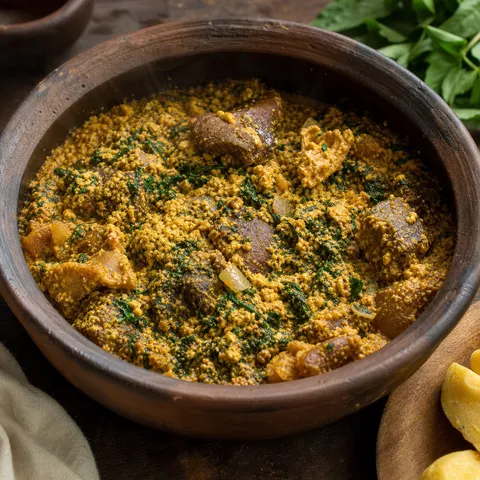 West African Lens Verified Images are for illustrative purposes only, may be inaccurate, and do not guarantee the presence or absence of specific ingredients.
 Egusi Soup
Ground melon seeds simmered with palm oil, leafy greens, and bold spices into a rich, nutty stew that's a cornerstone of Nigerian home cooking.
 West African Lens Verified Images are for illustrative purposes only, may be inaccurate, and do not guarantee the presence or absence of specific ingredients.
 Banku
A smooth, slightly tangy Ghanaian dough of fermented corn and cassava, cooked to a stretchy consistency — the perfect partner for okra stew or grilled tilapia.
 West African Lens Verified Images are for illustrative purposes only, may be inaccurate, and do not guarantee the presence or absence of specific ingredients.
 Pepper Soup
A piercingly spiced, crystal-clear broth simmered with goat meat or catfish and a blend of earthy Nigerian spices — warming, restorative, and intensely aromatic.