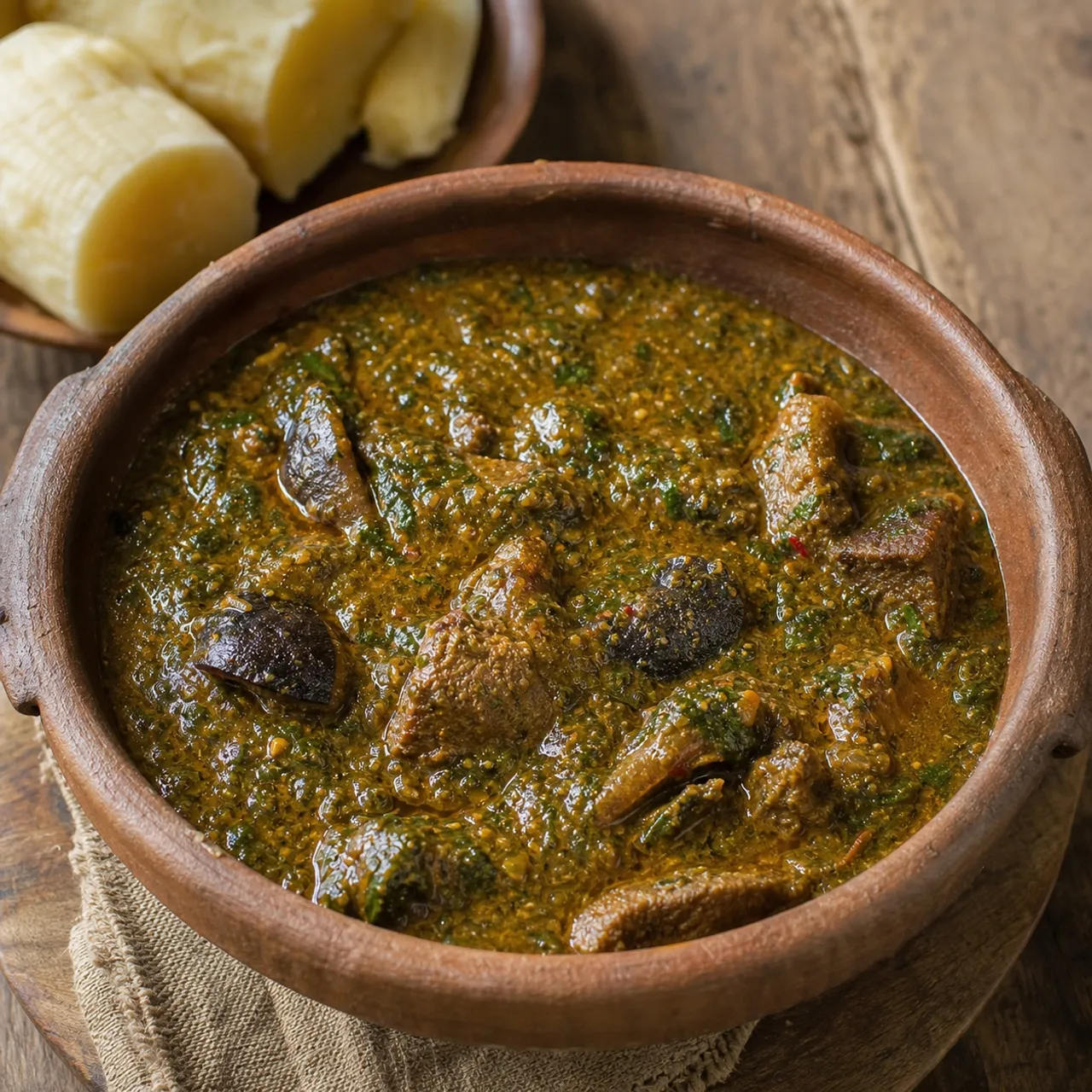
 West African Images are for illustrative purposes only, may be inaccurate, and do not guarantee the presence or absence of specific ingredients.
 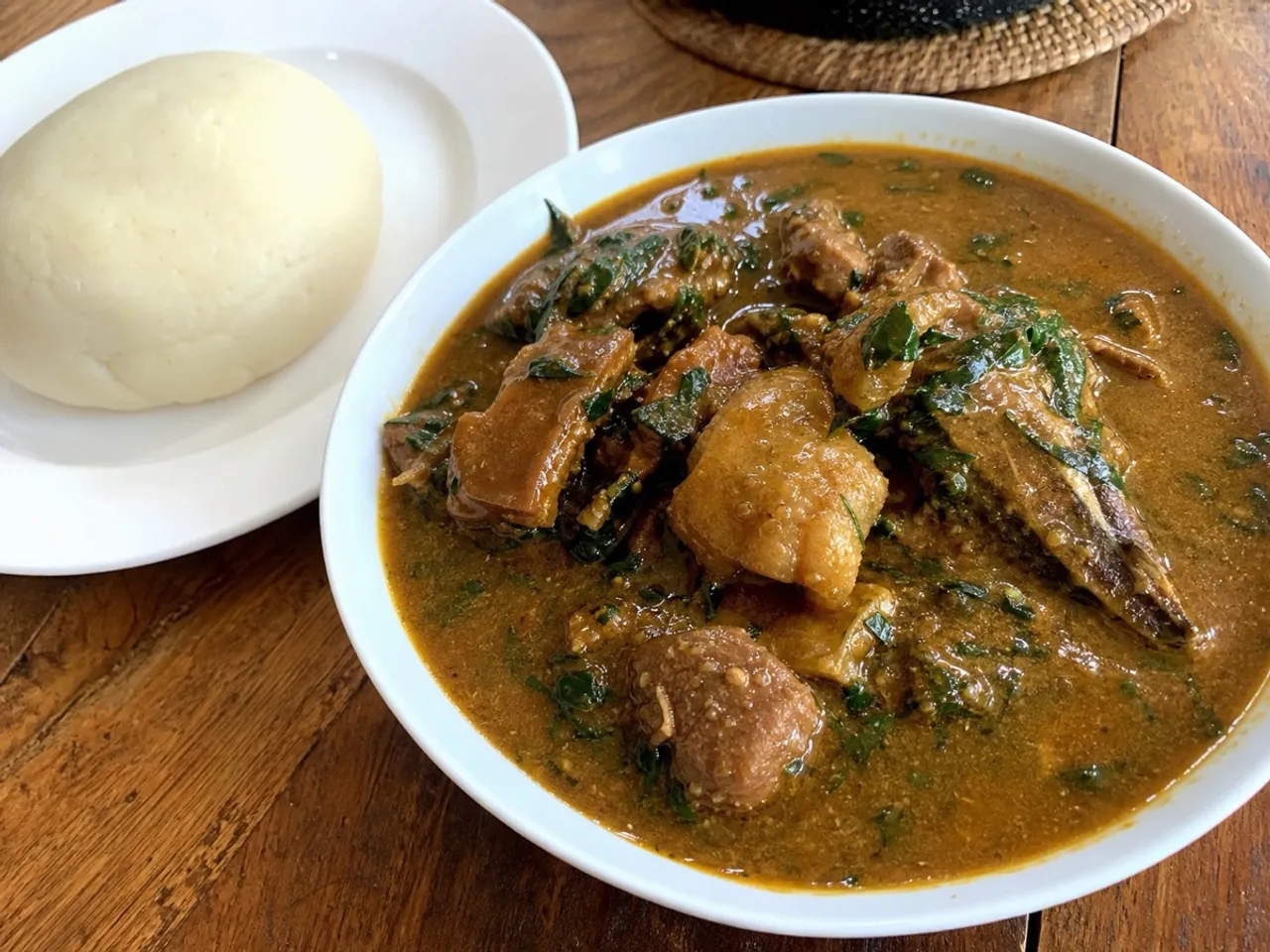 Serving Images are for illustrative purposes only, may be inaccurate, and do not guarantee the presence or absence of specific ingredients.
 Ogbono Soup
Wild mango seeds ground into a silky, mucilaginous draw soup with a deep, nutty flavor — perfect for wrapping around fufu and packed with meat and crayfish.
Contains common allergens
In the app, Listahan checks these against your household automatically.
Instructions
5 steps- 1
Prepare the Stock: Boil the assorted meat with onions and bouillon until tender. Soak the dry fish in hot water, debone, and add to the cooked meat. You need about 3 cups of rich stock.
- 2
Melt the Ogbono: In a separate dry pot, heat the palm oil on very low heat. Turn off the heat and stir in the ground Ogbono seeds. Use a spoon to press out any lumps until it dissolves completely into a smooth, thick paste.
- 3
Combine and Draw: Turn the heat back on to low. Slowly pour the hot meat stock into the Ogbono paste, stirring continuously. The mixture will immediately begin to thicken and become viscous (draw).
- 4
Simmer with Spices: Add the cooked meat, dry fish, crayfish, and locust beans. Simmer uncovered on low heat for 20 minutes, stirring occasionally to prevent burning at the bottom.
- 5
Add Greens: Turn off the heat, stir in the chopped spinach, and let the residual heat wilt the leaves for 2 minutes. Serve hot.
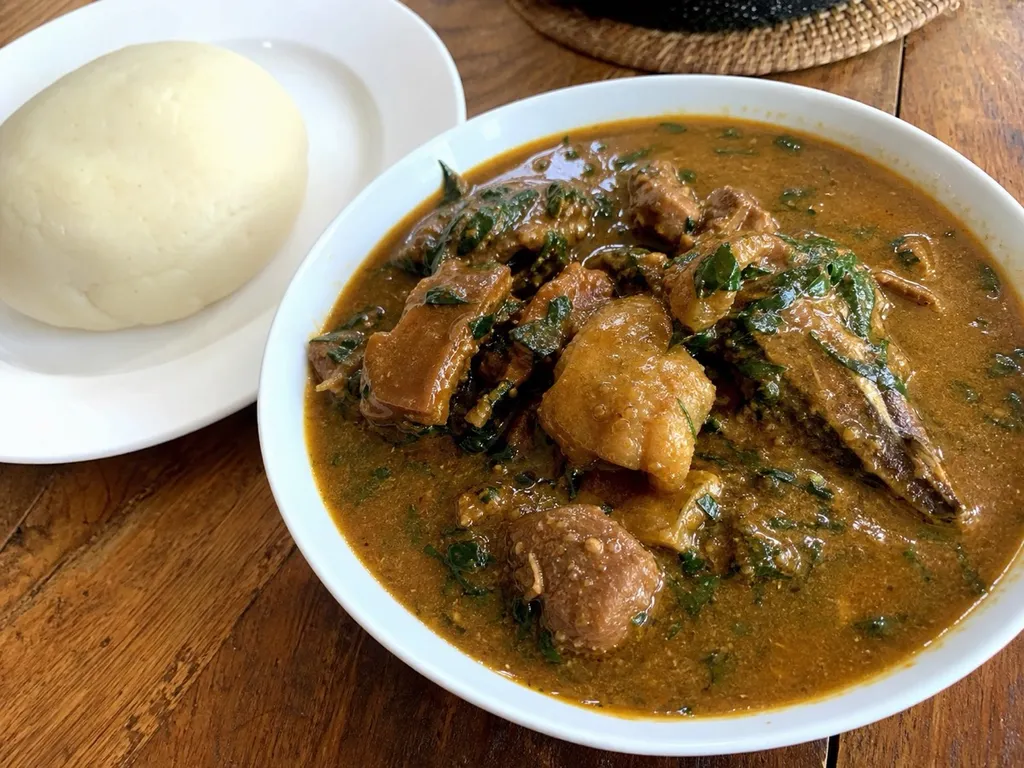 Images are for illustrative purposes only, may be inaccurate, and do not guarantee the presence or absence of specific ingredients.
 Listahan Family Score™
65/100
Works for many families
Score reflects how well this recipe fits a typical busy household. In the app, your Family Score is personalized to your household's allergens, kids, and pantry.
Nutrition
per serving750
Calories
45 g
Protein
1 g
Carbs
63 g
Fat
Estimated per serving. Actual values depend on the brands and portions you use.
Listahan cooking guide
Chef notes & practical guide
Technique notes, ingredient swaps, serve-alongside ideas, storage guidance, and equipment for this recipe.
Cultural context
Ogbono soup is a Nigerian draw soup, named for the way ground ogbono seeds, from the wild African mango tree, thicken the broth into a distinctly viscous, stretchy texture as it cooks, a defining trait shared with other West African draw soups such as okra soup.
Listahan note
This version melts the ogbono paste into warmed palm oil off the heat first, before any stock is added, since introducing the paste directly to hot liquid tends to leave lumps that don't fully smooth out.
Technique cues
- Ground ogbono seeds are stirred into palm oil that's been heated then removed from direct heat, pressing out lumps with a spoon until the mixture turns into a smooth, thick paste before any stock is added.
- Pouring the hot stock into the ogbono paste slowly, while stirring continuously, is what triggers the soup's characteristic thickening, or drawing, into a stretchy, viscous texture.
- The soup needs a slow simmer once combined, stirring occasionally to keep the thickened base from scorching against the bottom of the pot.
- Chopped spinach or bitterleaf goes in at the very end, off the heat, wilting from the soup's residual warmth rather than being simmered into the base.
Kitchen flow
- Parallel prep
- Prep any side dishes while Ogbono Soup finishes with the assorted meat and dry fish — the hands-off cook time is the window to use. Plan around the simmer; that's the slow part.
- Make-ahead
- Ogbono Soup reheats well, so cooking it a day ahead and finishing it just before serving is a reasonable way to spread out the work. This one leans on the assorted meat and dry fish. Plan around the simmer; that's the slow part.
- Leftover move
- Leftover Ogbono Soup reheats well covered on the stove or in the oven with a splash of liquid; avoid the microwave, which tends to toughen the assorted meat and dry fish on a fast reheat. Everything else is quick — the simmer is the one step that takes real time.
- Cleanup rhythm
- Deglaze the pan used for Ogbono Soup with a splash of water or broth right after cooking — it lifts the browned bits before they dry on and saves scrubbing later. This one leans on the assorted meat and dry fish. Plan around the simmer; that's the slow part.
Ingredient brief
Role, handling, and swap guidance for each key ingredient.
1/2 cup ground Ogbono seeds
Flavor support
Purpose: cup ground Ogbono seeds supports the balance of Ogbono Soup and should taste integrated.
Handling: Prep before heat is high so the cooking step can move without rushing.
Adaptation: Use the closest fresh equivalent and expect a modest shift in flavor or texture.
500g assorted meat and dry fish
Main protein or body
Purpose: g assorted meat and dry fish gives Ogbono Soup its main substance and carries the seasoning.
Handling: Pat dry, cut evenly, and season before cooking so browning or sauce coverage is consistent.
Adaptation: Use a non-seafood protein only with adjusted seasoning and cooking time.
1/2 cup palm oil
Richness and texture
Purpose: cup palm oil rounds the texture and helps the dish feel complete.
Handling: Prep before heat is high so the cooking step can move without rushing.
Adaptation: Use the closest fresh equivalent and expect a modest shift in flavor or texture.
2 tbsp crayfish
Main protein or body
Purpose: tbsp crayfish gives Ogbono Soup its main substance and carries the seasoning.
Handling: Pat dry, cut evenly, and season before cooking so browning or sauce coverage is consistent.
Adaptation: Use a non-seafood protein only with adjusted seasoning and cooking time.
1 tsp locust beans
Main protein or body
Purpose: tsp locust beans gives Ogbono Soup its main substance and carries the seasoning.
Handling: Rinse, soak, whisk, or separate as the recipe requires so the texture stays clean.
Adaptation: Use the closest fresh equivalent and expect a modest shift in flavor or texture.
Technique notes
- Ogbono soup is traditionally eaten with fufu or a similar swallow, using the dough to scoop rather than eating the soup with a spoon.
- The soup's stretchy, viscous texture is the point rather than a flaw, and thinning it with extra liquid works against what makes the dish recognizable.
- Dried fish should be deboned carefully before it goes into the pot, since small bones are easy to miss once the fish softens in the broth.
Ingredient swaps
- Seafood-aware direction
- Replace the assorted meat and dry fish with a vegetarian fish-sauce alternative or extra soy sauce and a pinch of dried seaweed for umami to keep the savory depth without any fish or shellfish. This one leans on the Ogbono seeds.
- Lower-sodium direction
- Cut the salt by about a third and taste before adding more — most of the dish's flavor comes from the other ingredients, not the salt itself. This one leans on the Ogbono seeds.
- Weeknight shortcut
- For a faster version, prep the longest-cooking component a day ahead so the night-of cook is mostly assembly and finishing. This one leans on the Ogbono seeds.
Serve alongside
- Steamed rice
- Cucumber salad
- Roasted vegetables
- Pickled vegetables
- Iced tea
- Sparkling water with citrus
Serving suggestions only — check pairings for your household's allergens.
Storage & reheating
- Refrigerate in a sealed container for up to 4 days.
- Reheat gently with a splash of water, broth, milk, or sauce as appropriate.
- Freeze up to 2 months when the texture is braised, baked, or stew-like.
Equipment
- Dutch oven or soup pot
- Wooden spoon
- Ladle
Make this household-aware
Listahan Pro checks this recipe against your household's allergens, finds pantry-aware swaps, builds the shopping list, and helps you plan the week around it.
Plan it in Listahan
Add Ogbono Soup to your week, check it against your household's allergens, and build the shopping list automatically.
More West African recipes
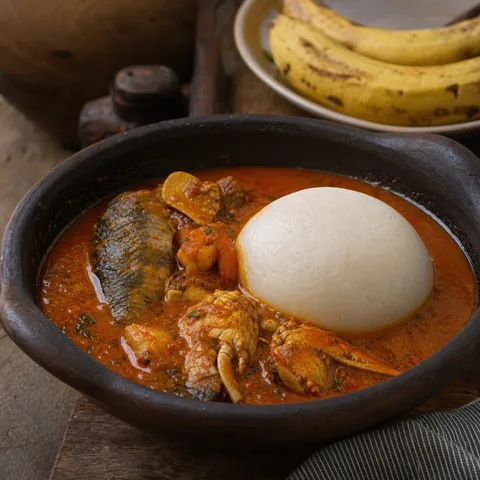
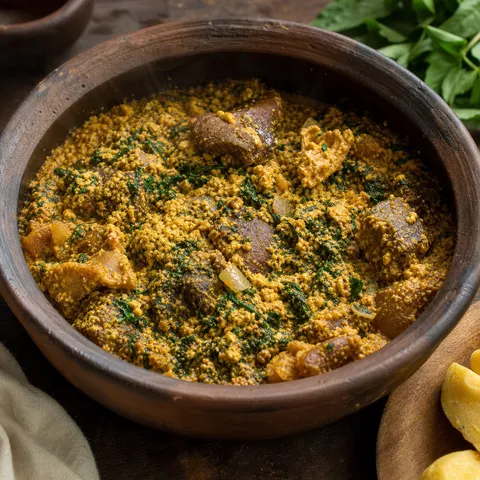 West African Lens Verified Images are for illustrative purposes only, may be inaccurate, and do not guarantee the presence or absence of specific ingredients.
 Egusi Soup
Ground melon seeds simmered with palm oil, leafy greens, and bold spices into a rich, nutty stew that's a cornerstone of Nigerian home cooking.
 West African Lens Verified Images are for illustrative purposes only, may be inaccurate, and do not guarantee the presence or absence of specific ingredients.
 Banku
A smooth, slightly tangy Ghanaian dough of fermented corn and cassava, cooked to a stretchy consistency — the perfect partner for okra stew or grilled tilapia.
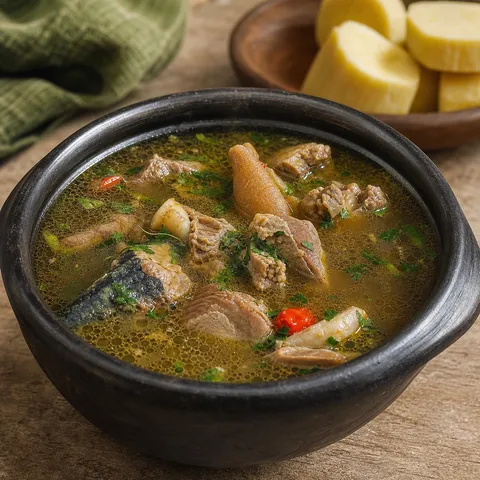 West African Lens Verified Images are for illustrative purposes only, may be inaccurate, and do not guarantee the presence or absence of specific ingredients.
 Pepper Soup
A piercingly spiced, crystal-clear broth simmered with goat meat or catfish and a blend of earthy Nigerian spices — warming, restorative, and intensely aromatic.