 Cajun & Creole Images are for illustrative purposes only, may be inaccurate, and do not guarantee the presence or absence of specific ingredients.
  Serving Images are for illustrative purposes only, may be inaccurate, and do not guarantee the presence or absence of specific ingredients.
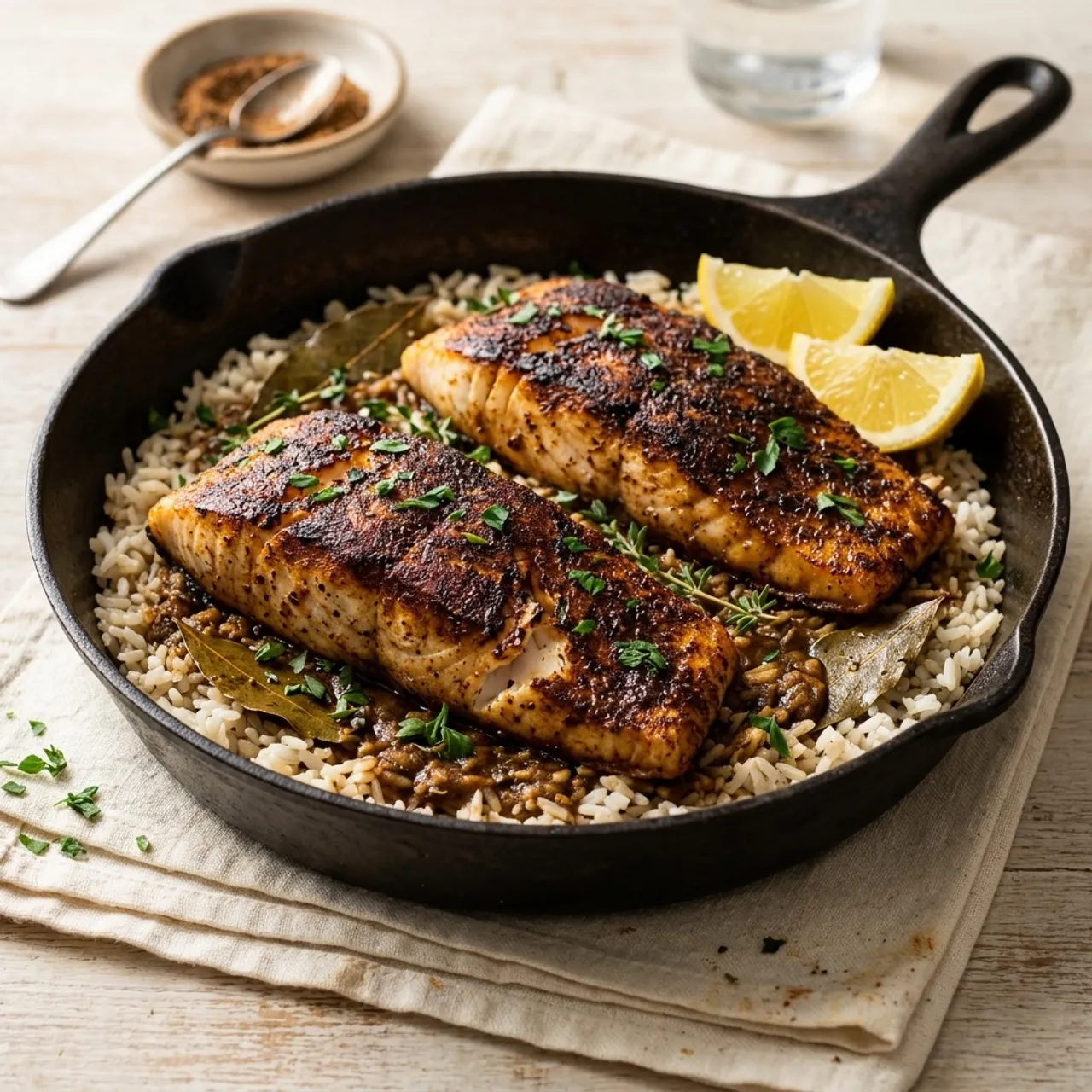
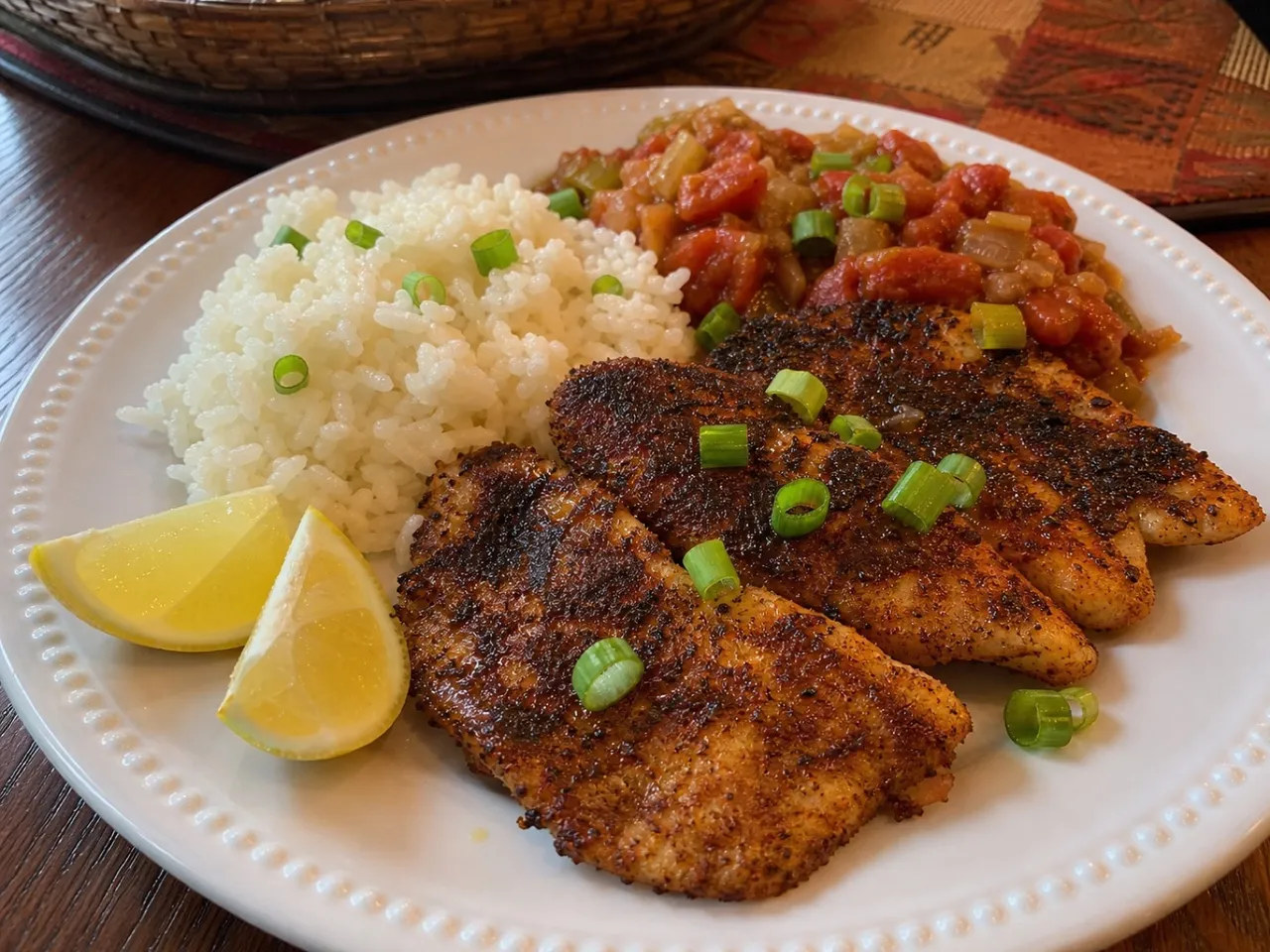
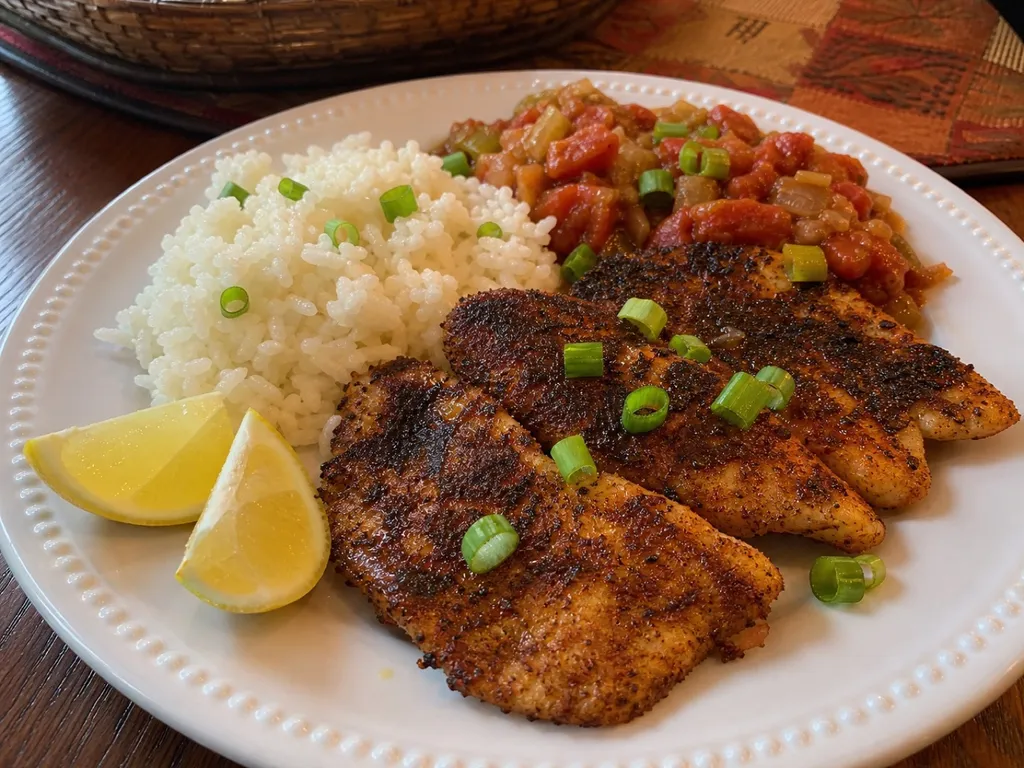
 Blackened Redfish
Chef Paul Prudhomme's iconic creation — redfish coated in a fiery spice blend and seared in a scorching cast iron until a bold, charred crust locks in the juices.
Contains common allergens
In the app, Listahan checks these against your household automatically.
Good to know
- Ready in under 30 minutes
Matched from this dish's own ingredients and timing. Browse more: 30-minute meals
Instructions
6 steps- 1
Heat a large cast-iron skillet outdoors or in a very well-ventilated kitchen over high heat until it is white-hot and smoking (about 10 minutes).
- 2
Dip each fish fillet entirely into the melted butter, ensuring it is well-coated.
- 3
Generously sprinkle the blackening spice blend on both sides of the buttered fish, pressing it lightly into the flesh.
- 4
Carefully place the fillets into the smoking hot dry skillet. Pour 1 teaspoon of melted butter over each fillet; be prepared for dramatic smoke and flames.
- 5
Cook undisturbed for 2-3 minutes until a thick, black crust forms on the bottom.
- 6
Carefully flip the fillets and cook for 2 more minutes. Serve immediately with a squeeze of fresh lemon juice.
 Images are for illustrative purposes only, may be inaccurate, and do not guarantee the presence or absence of specific ingredients.
 Listahan Family Score™
63/100
Works for many families
Score reflects how well this recipe fits a typical busy household. In the app, your Family Score is personalized to your household's allergens, kids, and pantry.
Nutrition
per serving245
Calories
1 g
Protein
3 g
Carbs
27 g
Fat
Estimated per serving. Actual values depend on the brands and portions you use.
Listahan cooking guide
Chef notes & practical guide
Technique notes, ingredient swaps, serve-alongside ideas, storage guidance, and equipment for this recipe.
Cultural context
Blackened redfish was invented — not simply evolved — by New Orleans chef Paul Prudhomme at his restaurant K-Paul's Louisiana Kitchen in the early 1980s. The technique of pressing spice-coated fish into a screaming-hot cast iron skillet created a dish so popular it briefly caused a crisis: redfish populations in the Gulf were depleted from overfishing within a few years, leading Louisiana to ban commercial harvesting of the species in 1987. The dish is now a symbol of both Louisiana culinary creativity and the unintended consequences of a viral food trend.
Listahan note
This version presses the spice mixture firmly onto both sides of the fish before it goes into the pan and uses clarified butter to achieve the genuine seared-crust that defines blackening without burning the milk solids.
Technique cues
- The skillet must be preheated over high heat for at least 5 minutes until it is visibly smoking — a pan that is not hot enough will steam the fish instead of blackening it.
- Use clarified butter or ghee rather than whole butter to baste the fish during cooking; the milk solids in whole butter will burn and turn acrid at the temperatures required.
- Blackening generates significant smoke — cook outdoors on a side burner, or under a powerful range hood with all windows open; this is not an apartment dish without serious ventilation.
Kitchen flow
- Parallel prep
- Mix the blackening spice blend and pat the fillets dry while the cast iron skillet preheats — the preheat takes longer than the prep.
- Make-ahead
- The spice blend can be made weeks ahead and stored in a jar; coat the fish no more than 30 minutes before cooking or the salt in the seasoning will start to draw moisture.
- Leftover move
- Flake cold blackened redfish over a romaine salad with Creole remoulade and pickled red onion for a bold lunch the next day.
- Cleanup rhythm
- Allow the cast iron to cool before cleaning; pour a small amount of kosher salt in the hot pan and scrub with a paper towel to remove the spice crust residue without stripping the seasoning.
Ingredient brief
Role, handling, and swap guidance for each key ingredient.
redfish fillets
the traditional main protein
Purpose: Redfish has a firm, meaty texture and a mild, slightly sweet flavor that stands up to the intense spice crust without being overwhelmed.
Handling: Pat completely dry; any surface moisture will cause the spice crust to steam rather than sear.
Adaptation: Catfish, drum, or mahi-mahi blacken well; salmon is richly flavored enough to hold the strong spice crust.
Cajun blackening spice blend
crust and primary flavor
Purpose: A combination of cayenne, paprika, black pepper, garlic powder, and dried herbs forms the charred, peppery crust that gives the technique its name.
Handling: Press the spice mixture firmly and evenly onto both sides of the dry fillet so it adheres as a thick coat.
Adaptation: Make your own with equal parts smoked paprika, garlic powder, cayenne, onion powder, dried thyme, and black pepper.
clarified butter
cooking and basting fat
Purpose: Clarified butter has a much higher smoke point than whole butter, allowing you to reach blackening temperatures without producing an acrid, burnt flavor.
Handling: Melt whole butter slowly and skim off the foam; the clear golden liquid underneath is the clarified fraction.
Adaptation: Ghee is a shelf-stable form of clarified butter and works identically; avocado oil is a neutral alternative.
lemon
finishing acid
Purpose: A squeeze of fresh lemon at the table cuts through the intense spice crust and the fat, brightening the overall flavor without diluting the heat.
Handling: Halve and char cut-side down in the hot skillet for 30 seconds after the fish is removed; charred lemon juice is sweeter and less sharp.
Adaptation: A splash of white wine vinegar works in a pinch; lime adds a different citrus note that pairs well with the Cajun spice profile.
Technique notes
- The fish should cook no more than 2 to 3 minutes per side on a properly heated skillet — if it takes longer, the pan was not hot enough and the crust will be gray and greasy rather than charred and crisp.
- Rest the fish for 2 minutes before plating; this allows the spice crust to set and firm up so it does not fall away when cut.
- Serving with a squeeze of lemon right before eating is not garnish — the acid cuts through the intense spice and fat, and without it the dish can feel one-dimensional.
Ingredient swaps
- Lower-heat direction
- Reduce the cayenne in the blackening spice to 1 teaspoon per 4 servings and substitute sweet smoked paprika for the remainder; the crust will be deep red rather than charred-dark.
- Allergen note — fin fish substitution
- For those avoiding fin fish, thick-cut king oyster mushroom caps pressed into the spice crust and blackened the same way produce a remarkable plant-based result.
- Weeknight shortcut
- Use a premade Cajun blackening seasoning from the spice aisle; Zatarain's and Tony Chachere's both produce an authentic result without mixing from scratch.
Serve alongside
- Dirty rice
- Creole coleslaw with cane vinegar dressing
- Corn maque choux
- Pinot Gris or dry Riesling to cool the spice
- Abita Amber lager
Serving suggestions only — check pairings for your household's allergens.
Storage & reheating
- Blackened redfish is best eaten immediately after cooking while the crust is still crisp. Leftovers can be refrigerated for up to 2 days but the crust will soften; reheat in a dry skillet over medium-high heat for 90 seconds per side to restore some texture. Do not microwave — it turns the crust to paste.
Equipment
- 10 to 12-inch cast iron skillet (essential — no substitute)
- Splatter screen
- Metal spatula
- Kitchen or exhaust fan capable of heavy use
Make this household-aware
Listahan Pro checks this recipe against your household's allergens, finds pantry-aware swaps, builds the shopping list, and helps you plan the week around it.
Plan it in Listahan
Add Blackened Redfish to your week, check it against your household's allergens, and build the shopping list automatically.
More Cajun & Creole recipes
 Cajun & Creole Lens Verified Images are for illustrative purposes only, may be inaccurate, and do not guarantee the presence or absence of specific ingredients.
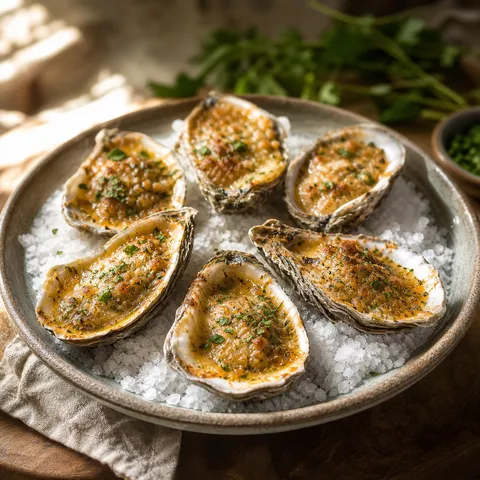
 Oysters Bienville
A classic New Orleans baked oyster dish crowned with a rich shrimp-and-mushroom cream sauce, browned to perfection on the half shell.
 Cajun & Creole Lens Verified Images are for illustrative purposes only, may be inaccurate, and do not guarantee the presence or absence of specific ingredients.
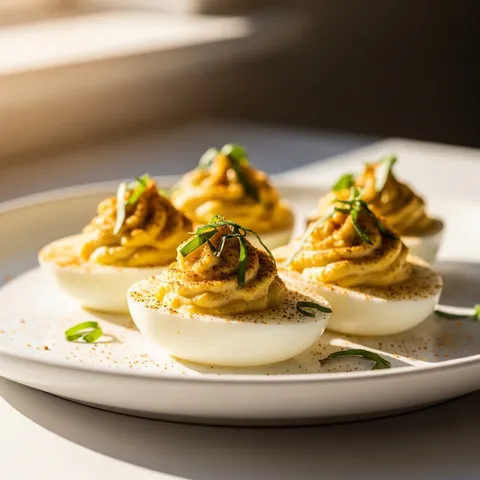
 Cajun Deviled Eggs
Classic deviled eggs with a Louisiana twist — creamy yolk filling spiked with hot sauce, Creole mustard, and cayenne, topped with a sprinkle of smoked paprika.
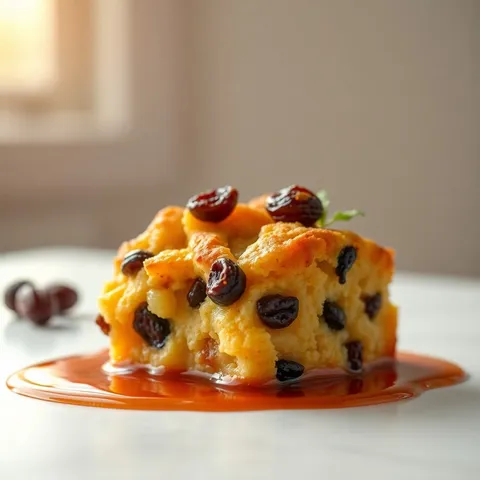 Cajun & Creole Lens Verified Images are for illustrative purposes only, may be inaccurate, and do not guarantee the presence or absence of specific ingredients.
 Creole Bread Pudding
Day-old French bread soaked in a rich custard of cream, eggs, and vanilla, baked golden, then drowned in a warm bourbon-laced whiskey sauce.