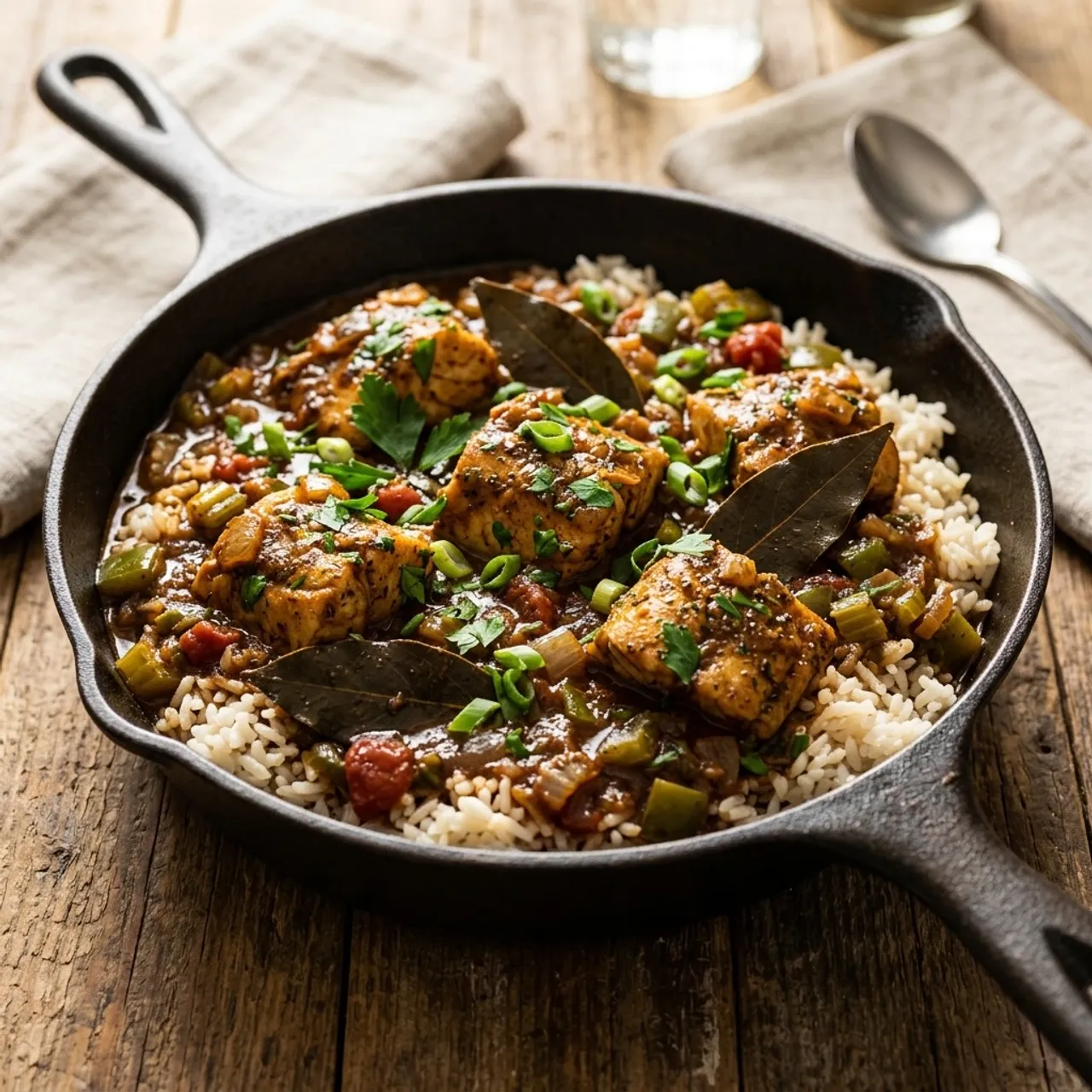
 Cajun & Creole Images are for illustrative purposes only, may be inaccurate, and do not guarantee the presence or absence of specific ingredients.
 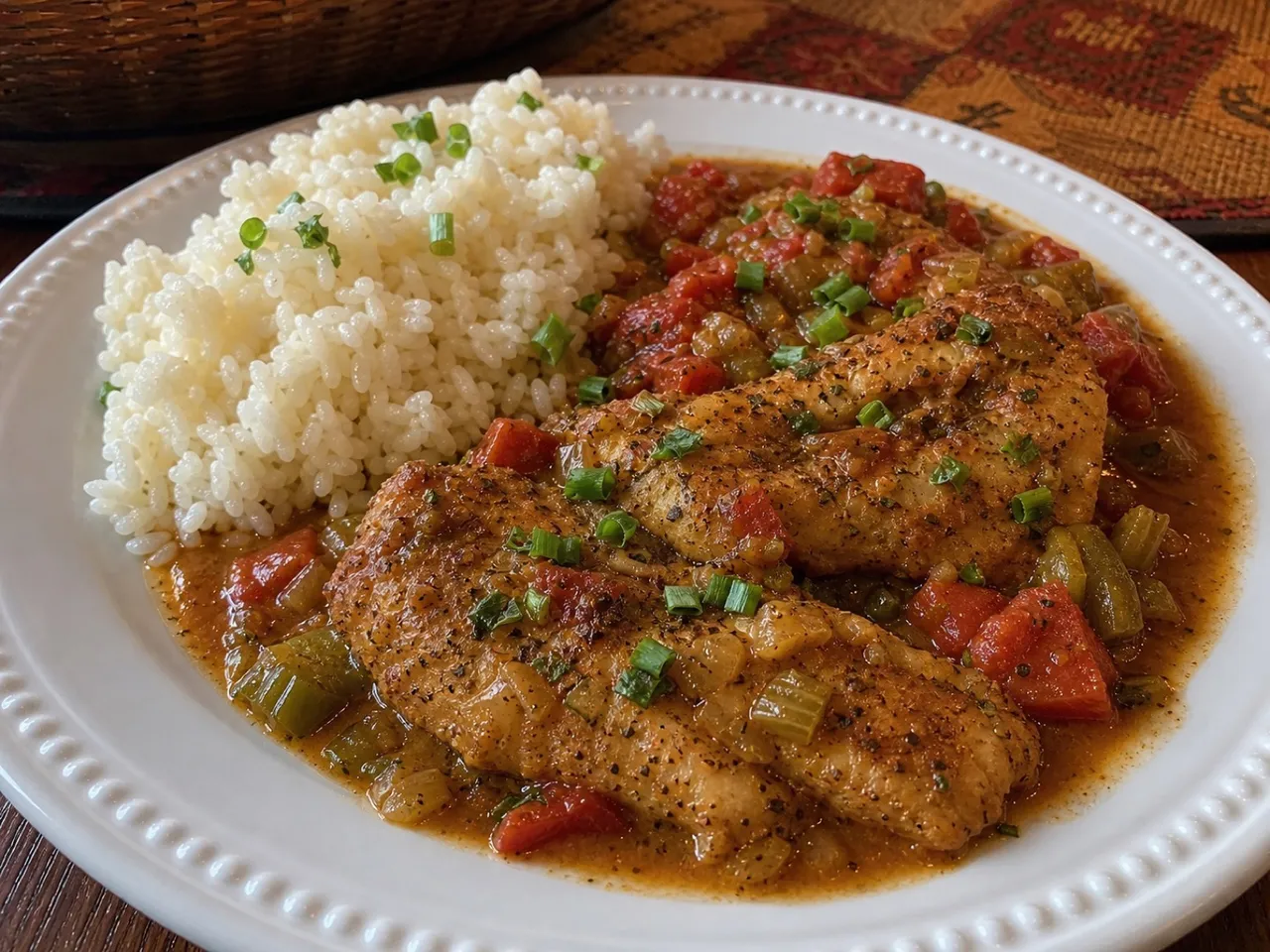 Serving Images are for illustrative purposes only, may be inaccurate, and do not guarantee the presence or absence of specific ingredients.
 Cajun Catfish Courtbouillon
Catfish fillets simmered in a robust Cajun tomato-and-roux gravy with onions, peppers, and bay leaf — deeply flavored and poured over rice like a stew.
Contains common allergens
In the app, Listahan checks these against your household automatically.
Good to know
- One-pot
Matched from this dish's own ingredients and timing. Browse more: one-pot dinners
Instructions
6 steps- 1
Heat oil in a heavy Dutch oven. Whisk in the flour and cook over medium heat, stirring constantly, until the roux turns a medium peanut-butter color.
- 2
Add the diced onion, bell pepper, and celery. Cook until softened, about 5 minutes.
- 3
Stir in the diced tomatoes, fish stock, cayenne pepper, and bay leaves. Bring the mixture to a rapid simmer.
- 4
Reduce heat, cover partially, and let the sauce simmer gently for 30-40 minutes to develop a deep, rich flavor.
- 5
Gently nestle the chunks of catfish into the simmering sauce. Do not stir vigorously, or the fish will break apart.
- 6
Poach the fish for 8-10 minutes until opaque and flaky. Serve in shallow bowls over rice.
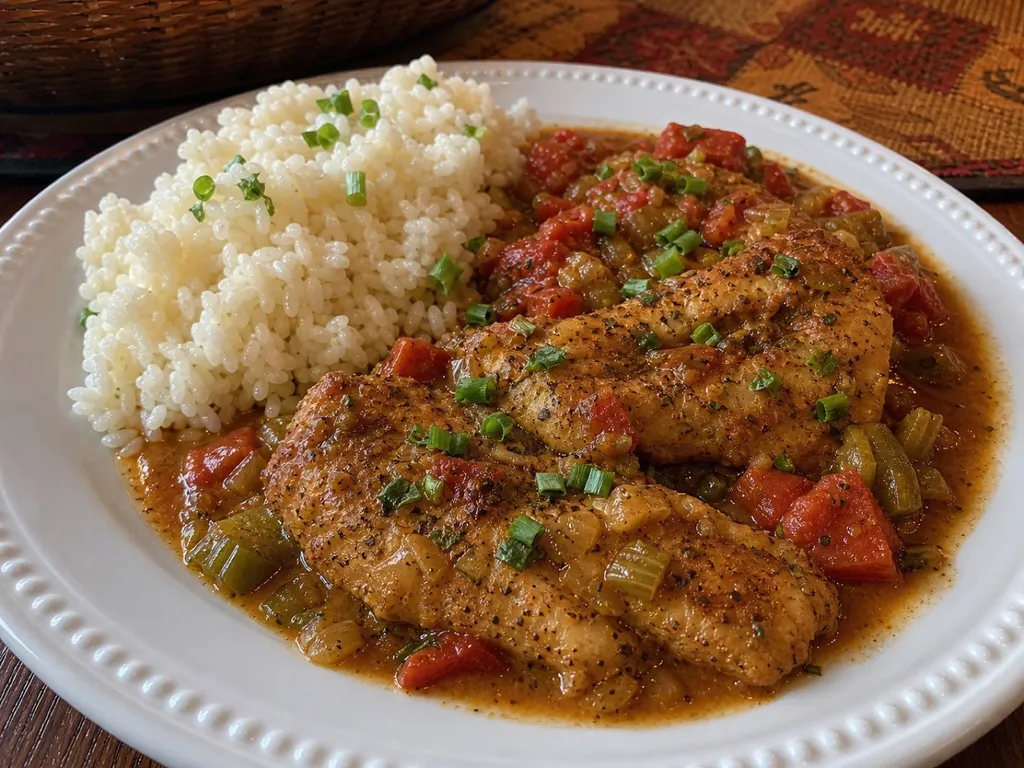 Images are for illustrative purposes only, may be inaccurate, and do not guarantee the presence or absence of specific ingredients.
 Listahan Family Score™
59/100
Works for many families
Score reflects how well this recipe fits a typical busy household. In the app, your Family Score is personalized to your household's allergens, kids, and pantry.
Nutrition
per serving140
Calories
1 g
Protein
4 g
Carbs
14 g
Fat
Estimated per serving. Actual values depend on the brands and portions you use.
Listahan cooking guide
Chef notes & practical guide
Technique notes, ingredient swaps, serve-alongside ideas, storage guidance, and equipment for this recipe.
Cultural context
Courtbouillon (pronounced 'coo-bee-YAWN' in Louisiana) bears no resemblance to the French poaching liquid it is named after. Cajun courtbouillon is a rich, tomato-based stew built on a dark roux, the holy trinity, and firm freshwater fish — catfish being the most traditional choice given its abundance in the bayous of south Louisiana. It is considered one of the oldest Cajun dishes, predating much of the Creole culinary canon, and was historically reserved for Fridays in Catholic households.
Listahan note
This version builds a proper dark roux as the foundation and lets the tomato-based sauce simmer long enough to lose its raw edge before the catfish is added, so the fish stays tender and the sauce tastes fully developed.
Technique cues
- Cook the roux over medium heat, stirring constantly, until it reaches the color of dark chocolate — this takes 20 to 30 minutes and is what gives the dish its deep, nutty backbone.
- Add the tomatoes and wine to the roux and let the mixture simmer for at least 15 minutes before adding the fish so the sauce integrates and the acidity mellows.
- Slide catfish fillets into the simmering sauce gently and do not stir again — the fish will break apart if agitated, so let it poach undisturbed until just cooked through.
Kitchen flow
- Parallel prep
- Dice the trinity and measure out spices while the roux cooks; both tasks can be done during the 25 minutes of constant stirring.
- Make-ahead
- The tomato-roux sauce base can be made 2 days ahead and refrigerated; reheat it, adjust seasoning, then add fresh catfish when ready to serve.
- Leftover move
- Flake leftover catfish into the remaining sauce and serve over grits the next morning for a hearty bayou-style breakfast.
- Cleanup rhythm
- Fill the roux pot with hot water immediately after serving to loosen the stuck-on base; heavy cast iron or enameled pots clean much easier when soaked while warm.
Ingredient brief
Role, handling, and swap guidance for each key ingredient.
catfish fillets
main protein
Purpose: Catfish has a firm texture that holds up to long simmering better than more delicate fish, and its mild flavor absorbs the spiced tomato sauce readily.
Handling: Pat dry and season with Cajun spice on both sides before sliding into the sauce.
Adaptation: Redfish, drum, or striped bass are traditional alternatives; cod works for a milder result.
all-purpose flour and vegetable oil
dark roux base
Purpose: Equal parts flour and oil cooked to a near-black stage create the thickening agent and the dish's defining nutty, roasted flavor.
Handling: Combine flour and oil in a heavy-bottomed pot and stir constantly over medium heat until deep mahogany.
Adaptation: Butter can replace oil but burns more easily at the high temperatures needed for a dark roux.
onion, celery, and green bell pepper
the holy trinity
Purpose: This three-vegetable base is the aromatic foundation of virtually all Cajun cooking, providing sweetness, earthiness, and mild pepper flavor.
Handling: Dice all three to a uniform small dice so they soften evenly when added to the roux.
Adaptation: No good substitute for the trinity — omitting any one component noticeably changes the flavor profile.
crushed tomatoes
sauce body
Purpose: Tomatoes add acidity and body to balance the richness of the roux and round out the spiced Cajun seasonings.
Handling: Add directly from the can; break up any large pieces with a spoon as the sauce simmers.
Adaptation: Fresh Roma tomatoes, peeled and chopped, provide a brighter flavor in season.
dry white wine
deglazing liquid and acidity
Purpose: Wine lifts the fond from the pot after the trinity is softened and adds a layer of acidity that balances the roux's heaviness.
Handling: Pour in and scrape the bottom of the pot vigorously right after the trinity softens.
Adaptation: Low-sodium chicken stock plus a squeeze of lemon works in place of wine.
Technique notes
- A dark roux that smells burnt tastes burnt — if you see black specks or smell scorched flour, start over; the dish hinges on getting to mahogany without crossing into charred.
- Season the dish in layers — add Cajun spice to the roux, again to the sauce, and finally to the fish before it goes in, building complexity at each stage.
- A heavy enameled Dutch oven distributes heat most evenly for the long roux process and transitions seamlessly to the oven if you prefer to finish the courtbouillon braised rather than stovetop.
Ingredient swaps
- Gluten-free direction
- Use a 1:1 ratio of sweet rice flour to oil for the roux; it darkens and behaves nearly identically to all-purpose flour.
- Lower-sodium direction
- Use no-salt-added canned tomatoes and a salt-free Cajun blend, then add salt to taste at the end rather than throughout cooking.
- Weeknight shortcut
- Substitute a store-bought jarred dark roux (available at many supermarkets) to cut cooking time by 30 minutes without sacrificing the essential flavor.
Serve alongside
- Long-grain white rice to absorb the sauce
- Jalapeno skillet cornbread
- Steamed okra
- Sauvignon Blanc
- Barq's root beer over ice for a non-alcoholic Louisiana classic
Serving suggestions only — check pairings for your household's allergens.
Storage & reheating
- Refrigerate in an airtight container for up to 3 days; the sauce actually deepens in flavor overnight. Reheat gently over low heat with a splash of water or stock to loosen, being careful not to break up the fish further. The stew can be frozen without the fish for up to 3 months.
Equipment
- Heavy-bottomed Dutch oven or enameled cast iron pot
- Wooden flat-edged spoon for constant roux stirring
- Fish spatula for sliding fillets into the sauce without breaking them
- Ladle for serving over rice
Make this household-aware
Listahan Pro checks this recipe against your household's allergens, finds pantry-aware swaps, builds the shopping list, and helps you plan the week around it.
Plan it in Listahan
Add Cajun Catfish Courtbouillon to your week, check it against your household's allergens, and build the shopping list automatically.
More Cajun & Creole recipes
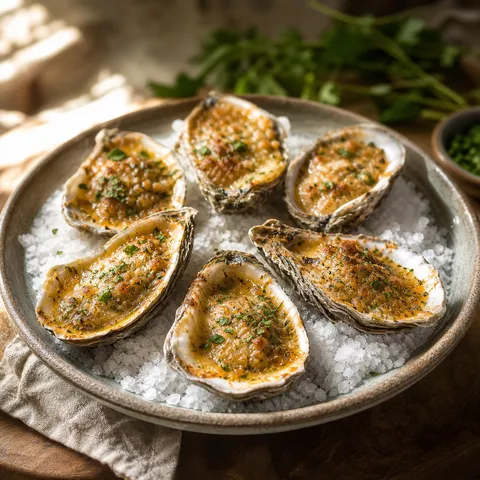 Cajun & Creole Lens Verified Images are for illustrative purposes only, may be inaccurate, and do not guarantee the presence or absence of specific ingredients.
 Oysters Bienville
A classic New Orleans baked oyster dish crowned with a rich shrimp-and-mushroom cream sauce, browned to perfection on the half shell.
 Cajun & Creole Lens Verified Images are for illustrative purposes only, may be inaccurate, and do not guarantee the presence or absence of specific ingredients.
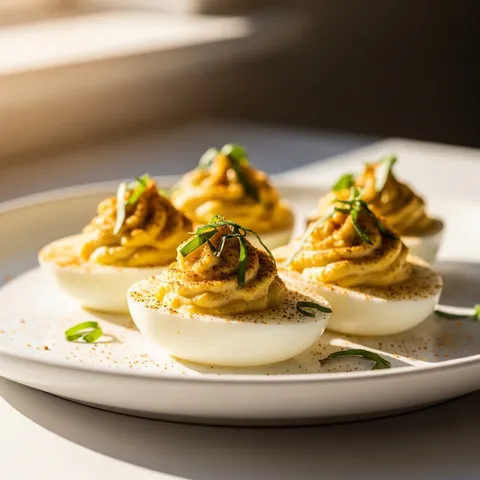
 Cajun Deviled Eggs
Classic deviled eggs with a Louisiana twist — creamy yolk filling spiked with hot sauce, Creole mustard, and cayenne, topped with a sprinkle of smoked paprika.
 Cajun & Creole Lens Verified Images are for illustrative purposes only, may be inaccurate, and do not guarantee the presence or absence of specific ingredients.
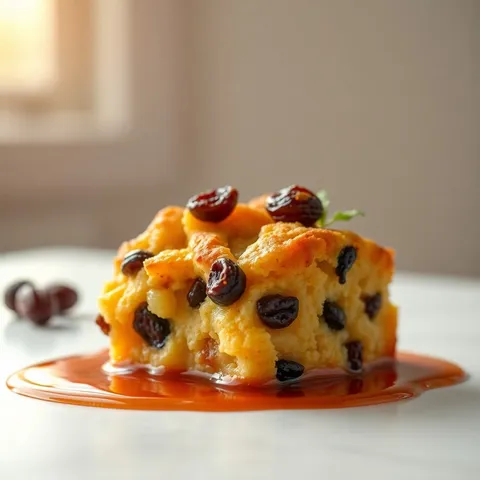
 Creole Bread Pudding
Day-old French bread soaked in a rich custard of cream, eggs, and vanilla, baked golden, then drowned in a warm bourbon-laced whiskey sauce.