 Cajun & Creole Images are for illustrative purposes only, may be inaccurate, and do not guarantee the presence or absence of specific ingredients.
  Serving Images are for illustrative purposes only, may be inaccurate, and do not guarantee the presence or absence of specific ingredients.
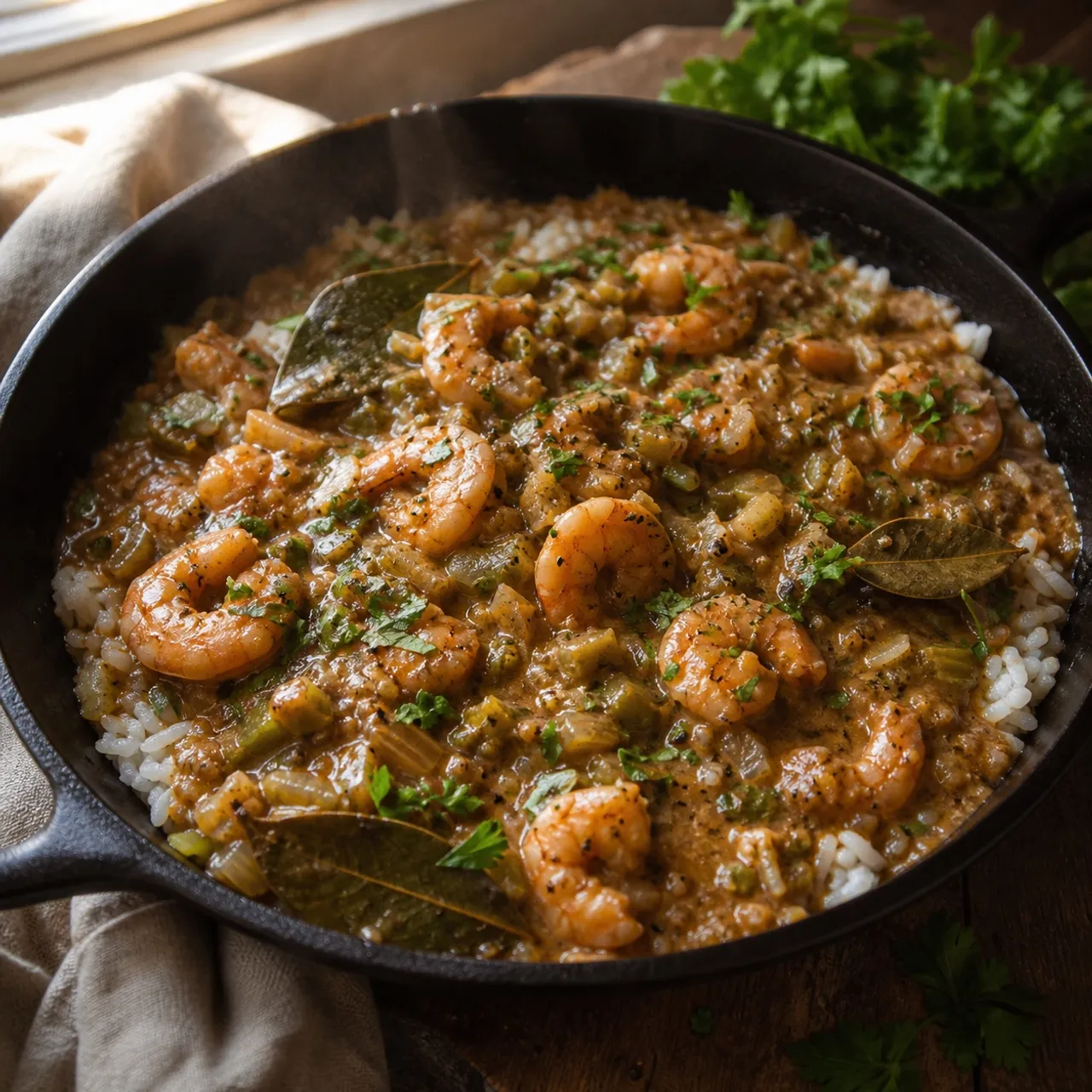
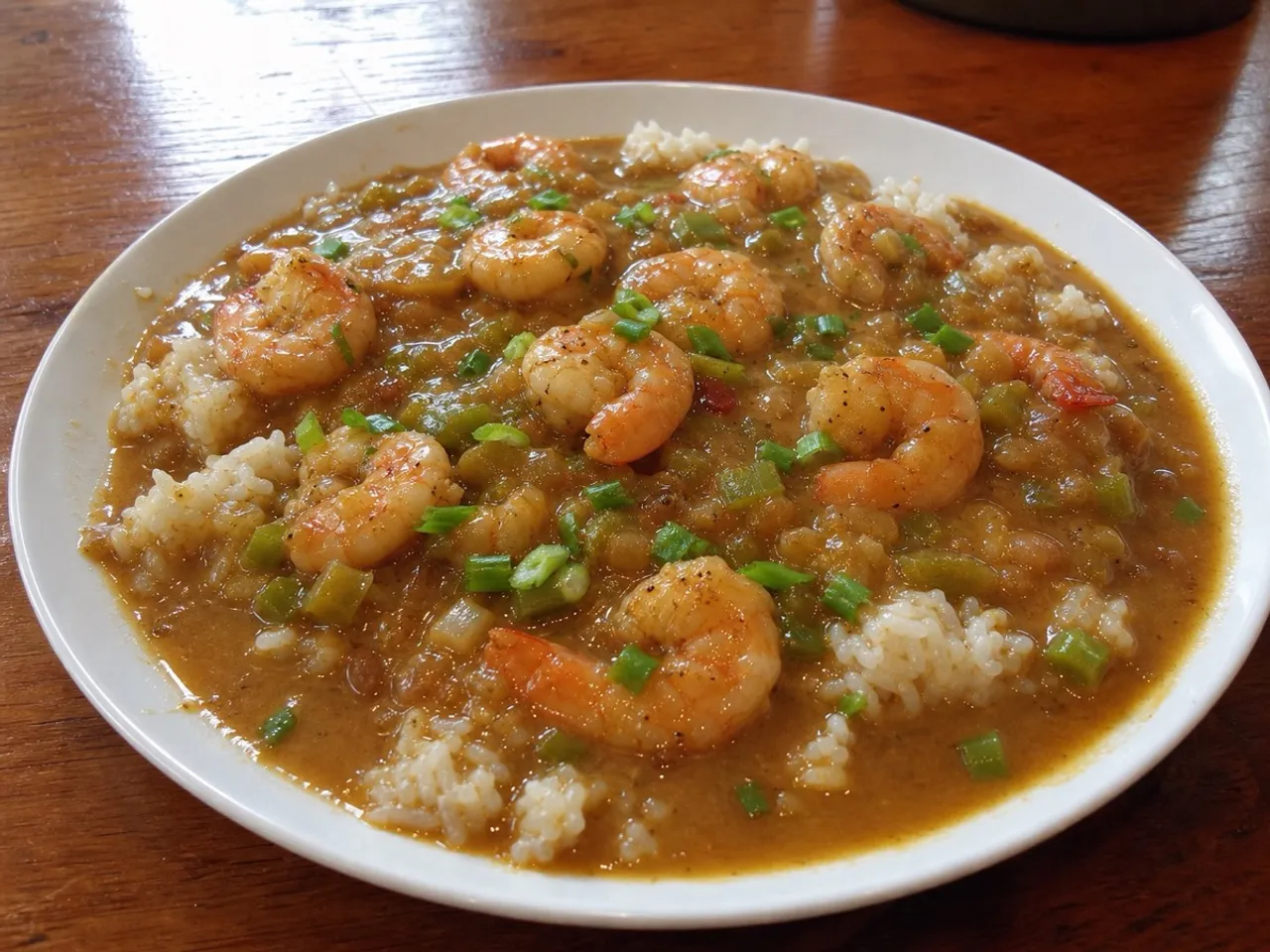
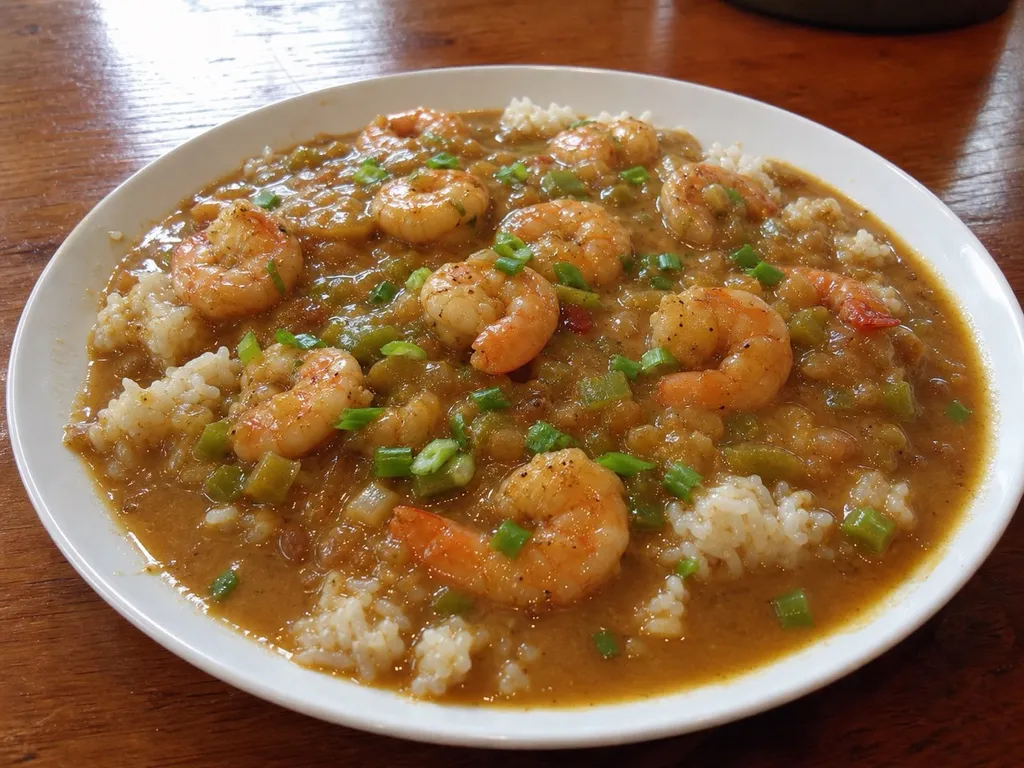
 Shrimp Étouffée
Plump Gulf shrimp smothered in a rich, butter-based roux gravy loaded with the Cajun holy trinity and ladled over steamed rice.
Contains common allergens
In the app, Listahan checks these against your household automatically.
Instructions
6 steps- 1
Melt the 1/2 cup butter in a large heavy skillet over medium heat, then whisk in the 1/3 cup flour to form a roux, stirring constantly for 8 to 10 minutes until it turns a peanut-butter brown.
- 2
Add the diced onion, bell pepper, and celery to the roux and cook, stirring often, for about 6 minutes until softened and fragrant, then stir in the minced garlic for the final minute.
- 3
Slowly pour in the 2 cups stock while whisking to prevent lumps, then add the 2 tsp Cajun seasoning and bring the mixture to a gentle simmer.
- 4
Let the sauce simmer uncovered for 10 to 12 minutes, stirring occasionally, until it thickens to a velvety gravy that coats the back of a spoon.
- 5
Stir in the shrimp and cook for 4 to 5 minutes, just until they turn pink and opaque and curl into a C-shape; avoid overcooking to keep them tender.
- 6
Taste and adjust seasoning, fold in most of the sliced green onions, and serve the étouffée over mounds of hot white rice, garnishing with the remaining green onions.
 Images are for illustrative purposes only, may be inaccurate, and do not guarantee the presence or absence of specific ingredients.
 Listahan Family Score™
58/100
Works for many families
Score reflects how well this recipe fits a typical busy household. In the app, your Family Score is personalized to your household's allergens, kids, and pantry.
Nutrition
per serving615
Calories
63 g
Protein
15 g
Carbs
34 g
Fat
Estimated per serving. Actual values depend on the brands and portions you use.
Listahan cooking guide
Chef notes & practical guide
Technique notes, ingredient swaps, serve-alongside ideas, storage guidance, and equipment for this recipe.
Cultural context
Étouffée, French for smothered, comes out of Louisiana Cajun country, where a roux-based gravy stretched a small amount of shrimp or crawfish into a filling dinner over rice. It sits alongside gumbo and jambalaya as one of the three defining dishes of the region's home cooking.
Listahan note
This version cooks the roux to a medium peanut-butter brown rather than a dark gumbo-style roux, so the sauce stays rich and thick without turning bitter or overpowering the shrimp.
Technique cues
- Whisk the roux constantly and never walk away from the pot — a moment of inattention can scorch it and force you to start over.
- Add the trinity of onion, celery, and bell pepper as soon as the roux hits its target color; the vegetables' moisture stops the cooking immediately.
- Add the shrimp only in the final few minutes; they cook fast and turn rubbery if simmered in the gravy too long.
Kitchen flow
- Parallel prep
- Dice the trinity vegetables before starting the roux, since the roux needs constant attention once it begins.
- Make-ahead
- The roux and vegetable base can be made a day ahead and reheated; add the shrimp fresh just before serving.
- Leftover move
- Reheat leftover étouffée gently and serve over a fresh batch of rice for an easy next-day dinner.
- Cleanup rhythm
- One heavy skillet handles the whole dish — a well-seasoned pan makes the roux easier to manage and easier to clean.
Ingredient brief
Role, handling, and swap guidance for each key ingredient.
Medium shrimp
Main protein
Purpose: Their sweetness is the whole point of the dish and needs to stay tender against the rich gravy.
Handling: Peel and devein, and pat dry before adding to the pot.
Adaptation: Crawfish tail meat is the traditional alternative, giving the dish a slightly sweeter, more delicate flavor.
Butter and flour roux
Sauce base
Purpose: A properly cooked roux is what gives étouffée its signature thick, velvety gravy.
Handling: Whisk constantly over medium heat for 8 to 10 minutes until it reaches a medium brown color.
Adaptation: There is no real substitute for a proper roux in this dish; it defines the texture.
Onion, bell pepper, and celery
Aromatic trinity
Purpose: This classic Cajun trio is the vegetable backbone of nearly every Louisiana braise, étouffée included.
Handling: Dice finely and add to the hot roux immediately to stop it from cooking further.
Adaptation: There is no substitute that preserves the dish's identity, though the ratio can be adjusted to taste.
Cajun seasoning
Spice blend
Purpose: Delivers the peppery, herby heat that defines Louisiana home cooking.
Handling: Add with the stock so the spices bloom and distribute through the gravy.
Adaptation: A homemade blend of paprika, cayenne, garlic powder, and dried thyme and oregano works if a pre-made blend is not available.
Technique notes
- Use a heavy-bottomed skillet for the roux; a thin pan heats unevenly and makes scorching far more likely.
- Do not rush the roux by raising the heat — a roux cooked too fast burns before it develops real color and flavor.
- Taste and adjust the Cajun seasoning at the end rather than all at once at the start, since flavors concentrate as the gravy thickens.
Ingredient swaps
- Shellfish-free direction
- This dish is defined by shrimp or crawfish and cannot be made shellfish-free; a chicken étouffée using the same roux and trinity base is a well-known regional alternative.
- Gluten-free direction
- A gluten-free flour blend can be used for the roux, though the texture and browning behave slightly differently than wheat flour.
- Dairy-free direction
- Use a neutral oil in place of butter for the roux for a dairy-free version.
Serve alongside
- Steamed white rice
- Cornbread
- Simple green salad
- Crisp Sauvignon Blanc
- Sweet iced tea
- Light lager
Serving suggestions only — check pairings for your household's allergens.
Storage & reheating
- Refrigerate leftover étouffée in a sealed container for up to 3 days.
- Reheat gently on the stovetop over low heat, stirring often, since the roux-based gravy can scorch if reheated too fast.
- Freeze for up to 2 months; thaw overnight in the fridge and reheat slowly, adding a splash of stock if the gravy has thickened too much.
Equipment
- Heavy skillet or Dutch oven
- Whisk
- Wooden spoon
Make this household-aware
Listahan Pro checks this recipe against your household's allergens, finds pantry-aware swaps, builds the shopping list, and helps you plan the week around it.
Plan it in Listahan
Add Shrimp Étouffée to your week, check it against your household's allergens, and build the shopping list automatically.
More Cajun & Creole recipes
 Cajun & Creole Lens Verified Images are for illustrative purposes only, may be inaccurate, and do not guarantee the presence or absence of specific ingredients.
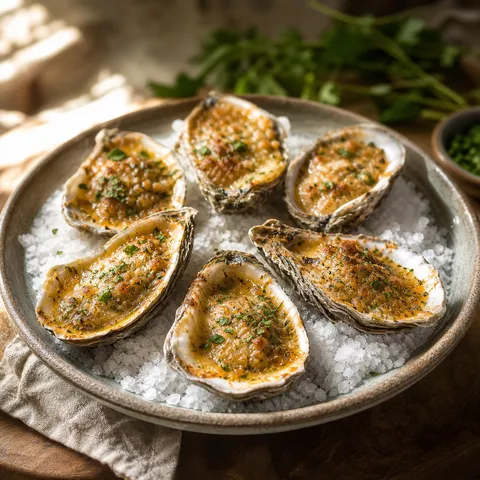
 Oysters Bienville
A classic New Orleans baked oyster dish crowned with a rich shrimp-and-mushroom cream sauce, browned to perfection on the half shell.
 Cajun & Creole Lens Verified Images are for illustrative purposes only, may be inaccurate, and do not guarantee the presence or absence of specific ingredients.
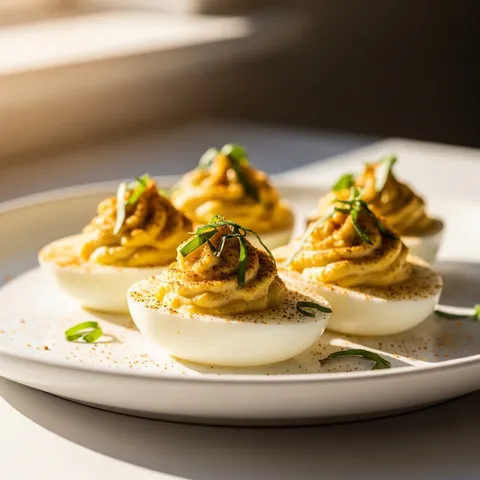
 Cajun Deviled Eggs
Classic deviled eggs with a Louisiana twist — creamy yolk filling spiked with hot sauce, Creole mustard, and cayenne, topped with a sprinkle of smoked paprika.
 Cajun & Creole Lens Verified Images are for illustrative purposes only, may be inaccurate, and do not guarantee the presence or absence of specific ingredients.
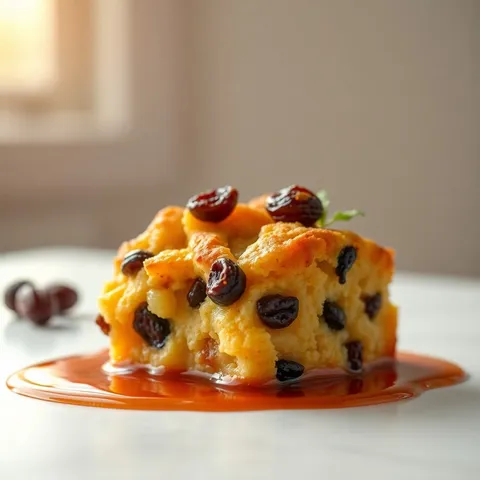
 Creole Bread Pudding
Day-old French bread soaked in a rich custard of cream, eggs, and vanilla, baked golden, then drowned in a warm bourbon-laced whiskey sauce.