 Caribbean Images are for illustrative purposes only, may be inaccurate, and do not guarantee the presence or absence of specific ingredients.
  Serving Images are for illustrative purposes only, may be inaccurate, and do not guarantee the presence or absence of specific ingredients.
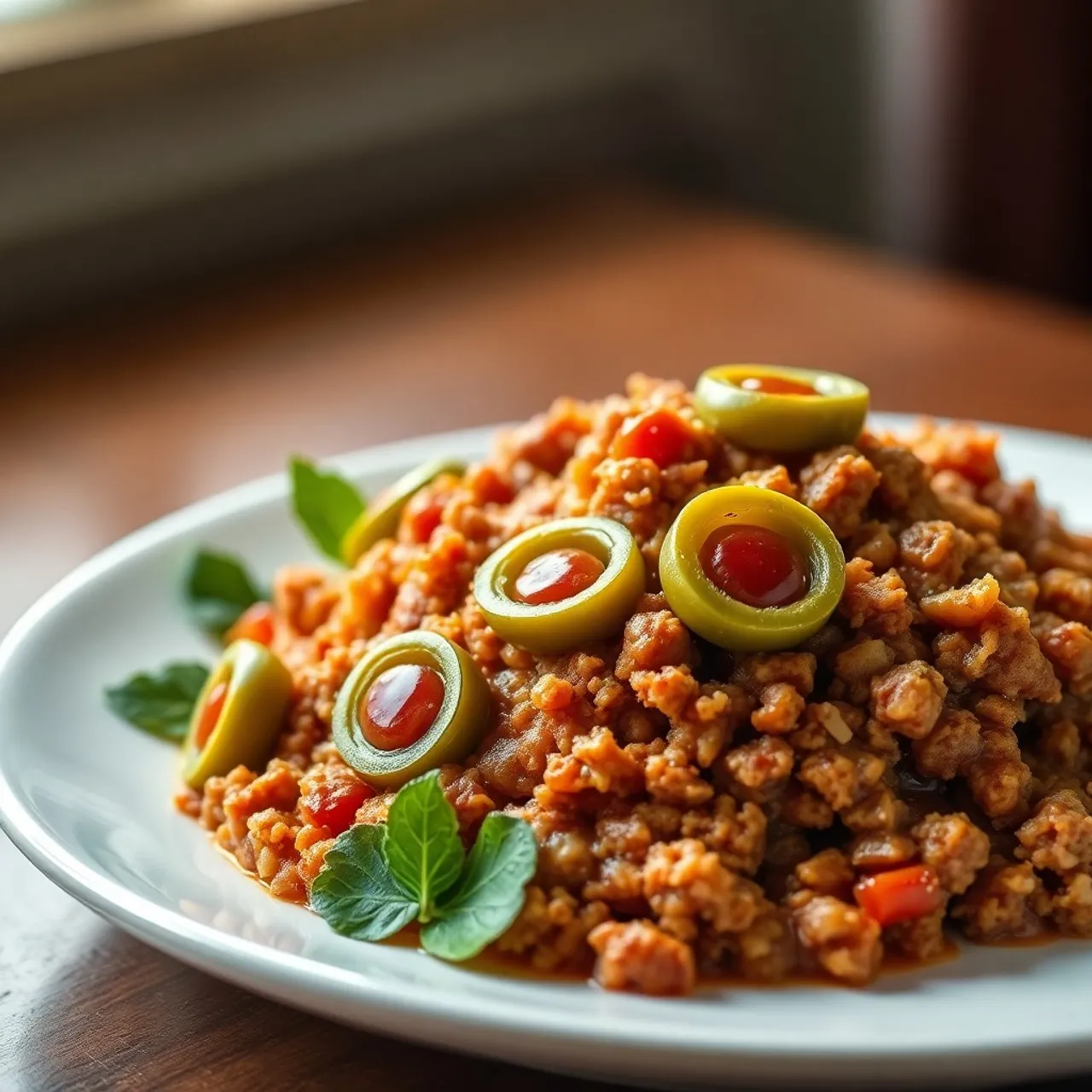
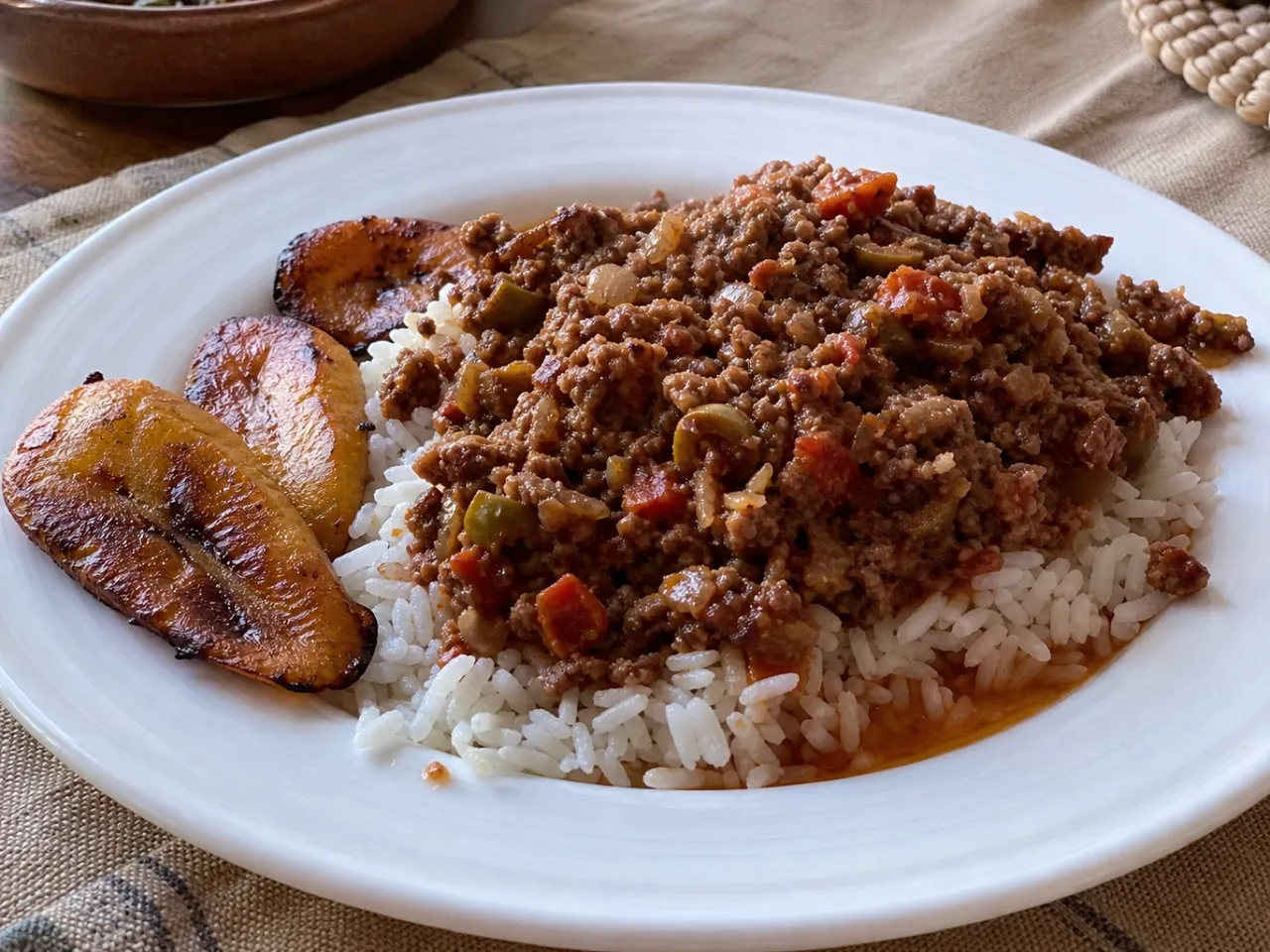
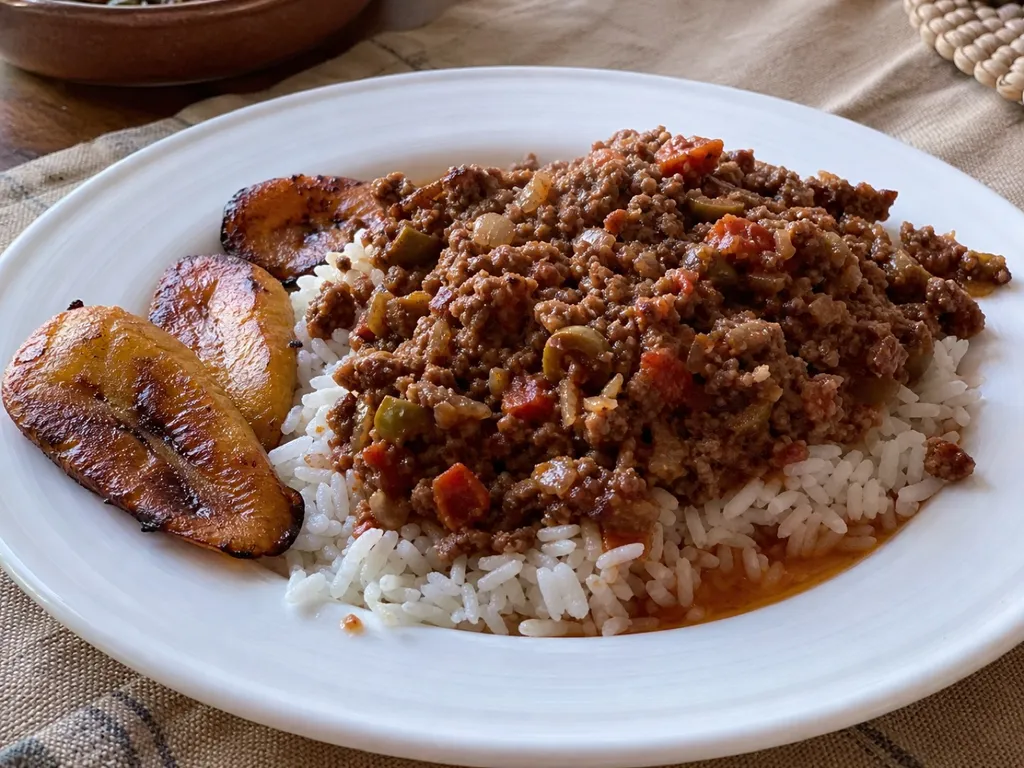
 Cuban Picadillo
A savory-sweet Cuban ground beef hash simmered with olives, raisins, and tomatoes, served over white rice.
No common allergens detected
Based on this recipe's ingredient list. Always verify with your own brands and labels.
Instructions
5 steps- 1
Heat the olive oil in a large skillet over medium heat, then add the onion, bell pepper, and garlic and sauté for 5 to 6 minutes until softened and fragrant.
- 2
Add the ground beef and cook for 7 to 8 minutes, breaking it apart with a spoon, until fully browned with no pink remaining; drain excess fat if needed.
- 3
Stir in the cumin and oregano, cooking for 1 minute to bloom the spices, then pour in the white wine and let it reduce by half over 2 minutes.
- 4
Add the tomato sauce, olives, and raisins, then reduce the heat to low and simmer uncovered for 15 minutes, stirring occasionally, until the mixture thickens and the flavors meld.
- 5
Season with salt and black pepper to taste and serve hot over fluffy white rice with a side of sweet fried plantains.
 Images are for illustrative purposes only, may be inaccurate, and do not guarantee the presence or absence of specific ingredients.
 Listahan Family Score™
70/100
Good fit for most families
Score reflects how well this recipe fits a typical busy household. In the app, your Family Score is personalized to your household's allergens, kids, and pantry.
Nutrition
per serving565
Calories
45 g
Protein
15 g
Carbs
34 g
Fat
Estimated per serving. Actual values depend on the brands and portions you use.
Listahan cooking guide
Chef notes & practical guide
Technique notes, ingredient swaps, serve-alongside ideas, storage guidance, and equipment for this recipe.
Cultural context
Picadillo is the everyday ground-beef hash of Cuban home kitchens, where the sofrito base of onion, pepper, and garlic meets the island's love of sweet-salty contrast in olives and raisins. The dish traveled with Spanish colonists across Latin America, but the Cuban version is defined by that olive-and-raisin pairing and a splash of dry wine, served as the heart of a plate with rice and plantains.
Listahan note
This version blooms the cumin and oregano in the rendered beef fat before the wine goes in, so the spice flavor is built into the meat rather than floating in the sauce. It keeps the simmer uncovered for 15 minutes so the tomato sauce reduces into a clingy glaze instead of a soup.
Technique cues
- Softening the onion, pepper, and garlic for a full 5 to 6 minutes before the beef goes in builds the sofrito foundation; rushing this step leaves a raw allium bite under everything.
- Adding the cumin and oregano to the browned beef and cooking them for a minute toasts the spices in fat, which deepens their flavor far more than stirring them into liquid.
- Reducing the white wine by half before the tomato sauce goes in cooks off the alcohol's sharpness while leaving behind acidity that balances the raisins' sweetness.
Kitchen flow
- Parallel prep
- Dice the onion and pepper and start the rice while the sofrito softens so both finish together.
- Make-ahead
- The whole picadillo can be cooked a day ahead; the olive and raisin flavors deepen overnight.
- Leftover move
- Fold cold leftovers into beaten egg for a picadillo tortilla or stuff into empanada dough.
- Cleanup rhythm
- Deglazing with the wine loosens the fond, so the skillet wipes clean with one soak.
Ingredient brief
Role, handling, and swap guidance for each key ingredient.
ground beef (80/20)
Main protein
Purpose: The 20 percent fat carries the spice bloom and keeps the hash moist through the uncovered simmer.
Handling: Break it into small crumbles as it browns so every bit gets surface contact and color.
Adaptation: Ground turkey works but is leaner, so add a tablespoon of oil and watch for dryness.
pimiento-stuffed green olives
Salty accent
Purpose: The briny olives are the signature savory counterpoint to the raisins and the dish's identity marker.
Handling: Slice them so the brine distributes evenly rather than landing in salty pockets.
Adaptation: Castelvetrano olives plus a spoon of the brine give the same salt-acid hit with milder bitterness.
raisins
Sweet accent
Purpose: They plump in the tomato simmer and provide the sweet half of the classic Cuban sweet-salty balance.
Handling: Stir them in with the tomato sauce so they soften over the full 15 minutes.
Adaptation: Chopped dried currants or golden raisins work; currants are smaller and spread more evenly.
tomato sauce
Braising base
Purpose: It binds the beef and aromatics into a cohesive sauce and reduces to a glaze that coats rice.
Handling: Add it after the wine reduces so it concentrates rather than dilutes.
Adaptation: Crushed tomatoes work but are chunkier; simmer a few minutes longer to break them down.
dry white wine
Deglazing acid
Purpose: It lifts the browned fond off the skillet and adds acidity that keeps the rich beef from feeling heavy.
Handling: Pour it in right after the spices bloom and scrape the pan bottom as it reduces.
Adaptation: Dry sherry or a splash of chicken broth with a squeeze of lime covers the same job.
Technique notes
- Drain the rendered fat after browning only if it pools more than a tablespoon; a little fat carries the bloomed spices.
- Taste for salt at the very end because the olives release brine throughout the simmer and over-salting early is easy.
- If the sauce tightens too far before serving, loosen it with a splash of the rice cooking water rather than more wine.
Ingredient swaps
- Weeknight shortcut
- Use a jarred sofrito base in place of fresh onion, pepper, and garlic to skip the 6-minute saute.
- Lower-sodium direction
- Rinse the olives and use no-salt-added tomato sauce; you lose some brine punch but control the salt.
- Leaner direction
- Swap to 90/10 beef and add a teaspoon of oil; the hash is lighter but needs closer watching to stay moist.
Serve alongside
- Fluffy white rice
- Sweet fried plantains (platanos maduros)
- Black beans
- Sliced avocado with lime
- Cuban-style cafe con leche
- Light lager
- Sparkling limeade
Serving suggestions only — check pairings for your household's allergens.
Storage & reheating
- Refrigerate in an airtight container for up to 4 days; the flavor improves by day two.
- Reheat gently in a skillet with a splash of water to loosen the reduced sauce.
- Freeze for up to 3 months and thaw overnight in the fridge before reheating.
Equipment
- Large skillet
- Wooden spoon for breaking up the beef
- Fine knife for finely dicing the sofrito
- Fat-skimming spoon
Make this household-aware
Listahan Pro checks this recipe against your household's allergens, finds pantry-aware swaps, builds the shopping list, and helps you plan the week around it.
Plan it in Listahan
Add Cuban Picadillo to your week, check it against your household's allergens, and build the shopping list automatically.
More Caribbean recipes
 Caribbean Lens Verified Images are for illustrative purposes only, may be inaccurate, and do not guarantee the presence or absence of specific ingredients.
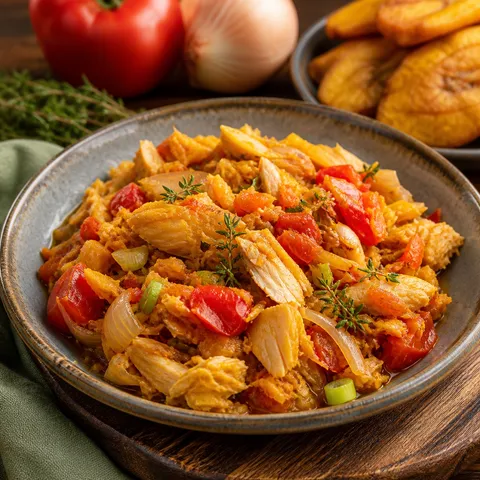
 Saltfish Buljol
A Trinidadian salt cod salad flaked and tossed with tomatoes, onions, and oil, a no-cook Caribbean breakfast staple.
 Caribbean Lens Verified Images are for illustrative purposes only, may be inaccurate, and do not guarantee the presence or absence of specific ingredients.
 Tostones
Twice-fried green plantain slices, smashed flat and salted, a crispy Caribbean side.
 Caribbean Lens Verified Images are for illustrative purposes only, may be inaccurate, and do not guarantee the presence or absence of specific ingredients.
 Stamp and Go
Crispy Jamaican saltfish fritters seasoned with Scotch bonnet and scallion, named for their grab-and-go convenience.