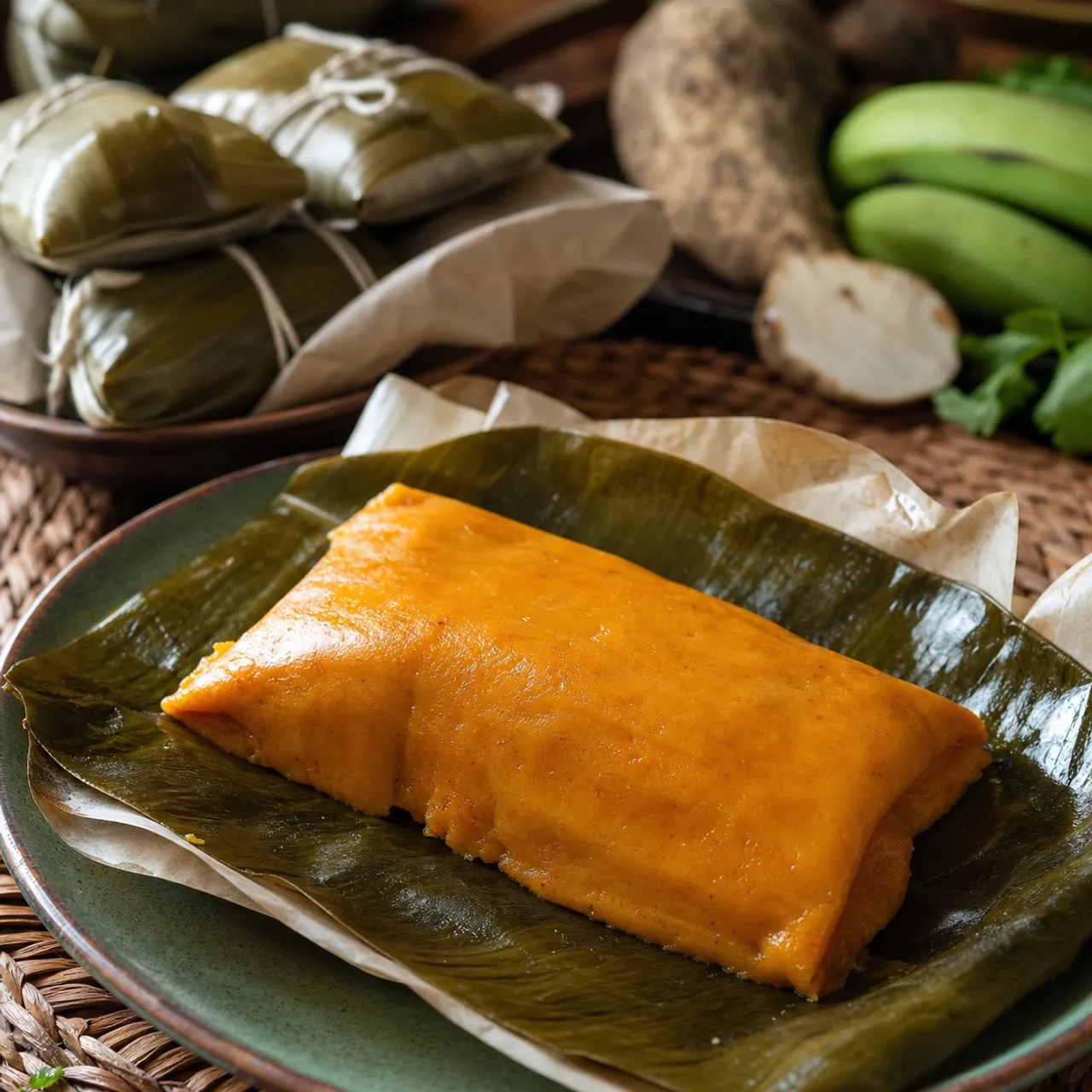
 Caribbean Images are for illustrative purposes only, may be inaccurate, and do not guarantee the presence or absence of specific ingredients.
 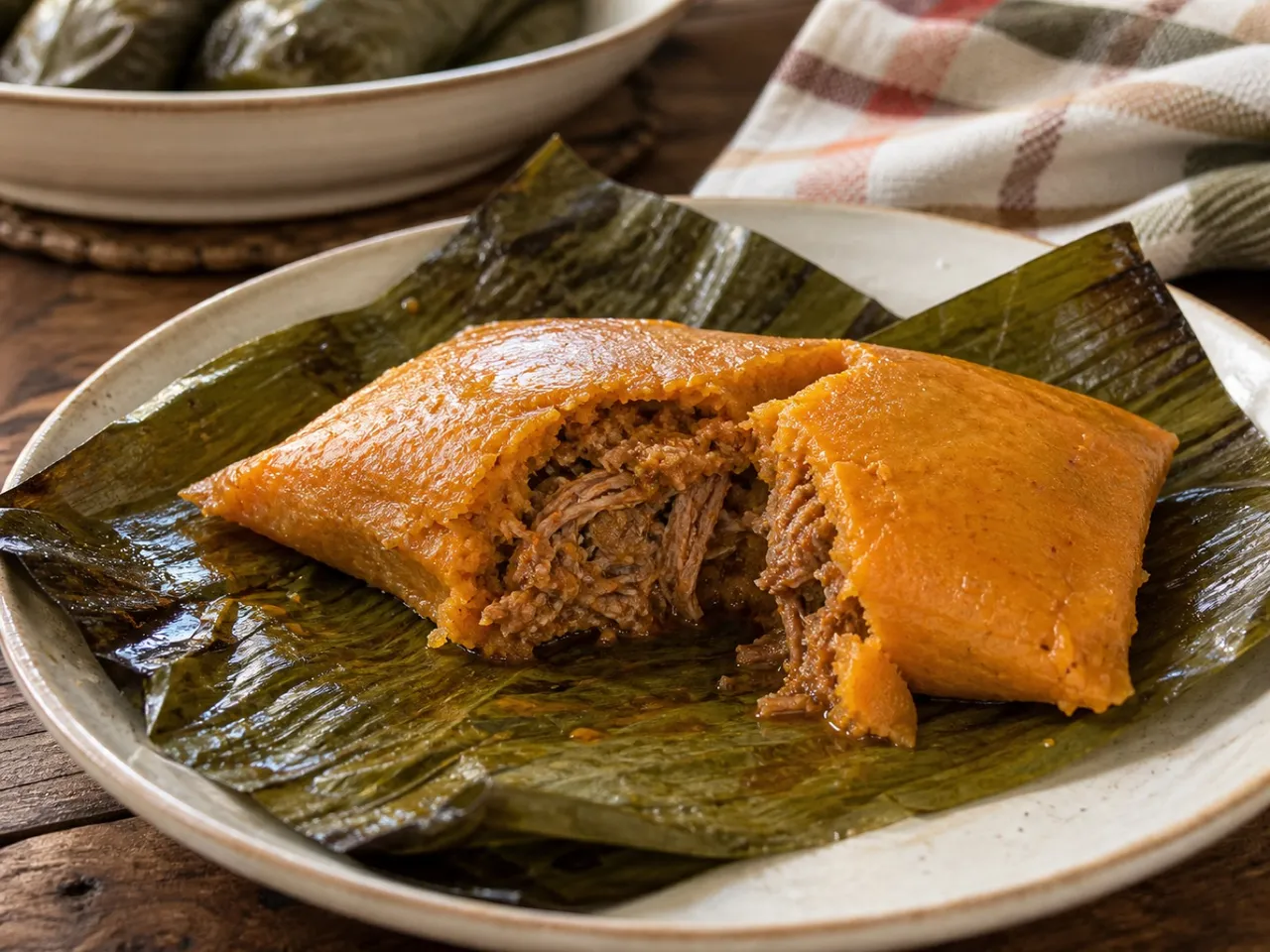 Serving Images are for illustrative purposes only, may be inaccurate, and do not guarantee the presence or absence of specific ingredients.
 Pasteles
A Puerto Rican tamale-like dish of grated green banana, plantain, and yautía masa filled with achiote-seasoned pork and sofrito, wrapped in banana leaves and boiled.
No common allergens detected
Based on this recipe's ingredient list. Always verify with your own brands and labels.
Instructions
5 steps- 1
Prepare the meat filling: Sauté the diced pork in achiote oil. Add the sofrito and olives. Add 1/2 cup of water, cover, and simmer for 45 minutes until the pork is very tender and the liquid has reduced to a thick sauce.
- 2
Make the masa: Peel and finely grate the green bananas, plantains, and yautía (using a food processor or box grater). Stir in the achiote oil and a pinch of salt until the masa is smooth, pasty, and orange.
- 3
Prepare the leaves: Clean the banana leaves and briefly pass them over an open flame to soften them so they don't tear. Cut into 8x10 inch rectangles.
- 4
Assemble: Place a piece of parchment paper down, top with a banana leaf. Brush the leaf with a little achiote oil. Spread 3 tbsp of masa into a rectangle. Place 2 tbsp of meat filling in the center.
- 5
Wrap and boil: Fold the leaf over to encase the meat in masa. Fold the parchment tightly around it and tie securely with kitchen string. Boil the pasteles in salted water for 1 hour. Drain and serve hot.
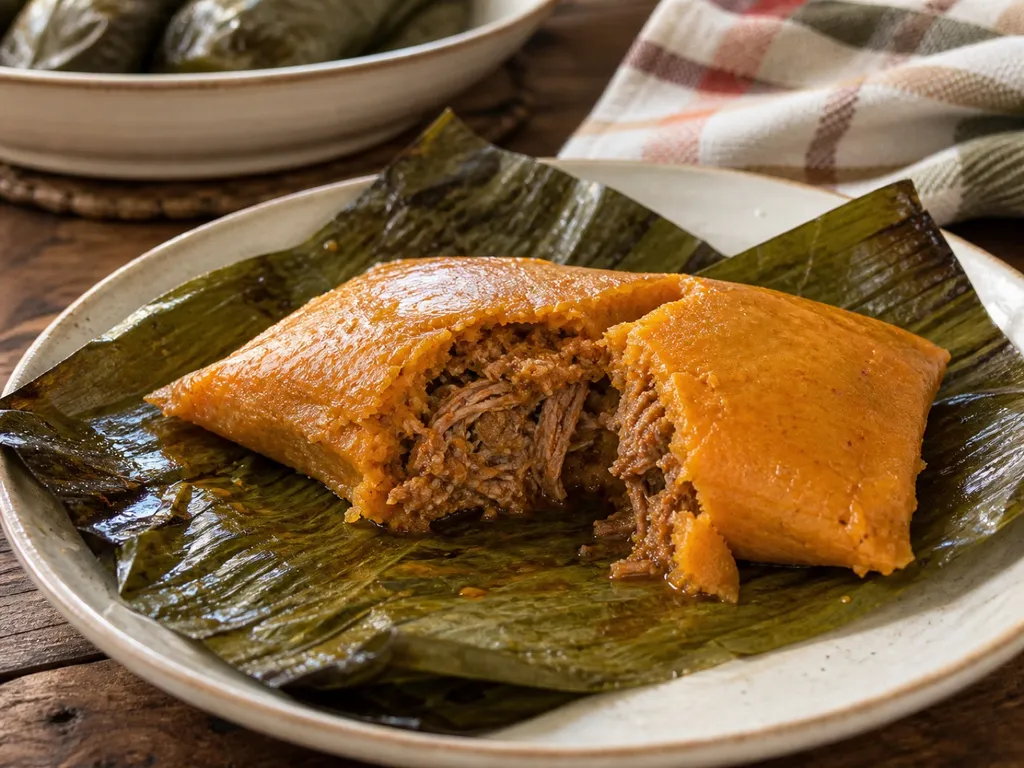 Images are for illustrative purposes only, may be inaccurate, and do not guarantee the presence or absence of specific ingredients.
 Listahan Family Score™
69/100
Works for many families
Score reflects how well this recipe fits a typical busy household. In the app, your Family Score is personalized to your household's allergens, kids, and pantry.
Nutrition
per serving170
Calories
7 g
Protein
30 g
Carbs
4 g
Fat
Estimated per serving. Actual values depend on the brands and portions you use.
Listahan cooking guide
Chef notes & practical guide
Technique notes, ingredient swaps, serve-alongside ideas, storage guidance, and equipment for this recipe.
Cultural context
Puerto Rican pasteles are a labor-intensive holiday dish, a masa of grated green bananas, plantains, and root vegetables wrapped around seasoned pork and boiled inside banana leaves. They are the centerpiece of a Puerto Rican Christmas, traditionally made in a family assembly line over many hours. The achiote-stained masa and the leaf wrapping set them apart from the corn-based tamales of the mainland.
Listahan note
This version softens the banana leaves over an open flame before wrapping, because that quick pass makes them pliable enough to fold tightly without tearing and lets them seal the masa around the meat.
Technique cues
- Searing the pork and reducing its liquid to a thick sauce before assembly means the filling is fully cooked and concentrated, so the boil only has to set the masa.
- Passing the banana leaves over a flame relaxes their fibers so they bend without splitting, which is what lets you wrap a watertight package.
- Brushing achiote oil onto the leaf before spreading the masa keeps the masa from sticking and lends the signature orange stain and color.
Kitchen flow
- Parallel prep
- Simmer the pork filling while you grate the masa, since both take time and can run side by side.
- Make-ahead
- Assembled, wrapped pasteles freeze raw beautifully, which is exactly how families batch them for the holidays.
- Leftover move
- Pan-crisp an unwrapped boiled pastel in a little oil so the edges firm up for the next day.
- Cleanup rhythm
- Set up an assembly line with leaves, masa, and filling staged so the sticky steps stay contained to one zone.
Ingredient brief
Role, handling, and swap guidance for each key ingredient.
green bananas
Masa base
Purpose: Underripe and starchy, they grate into the firm, neutral dough that holds the pastel together when boiled.
Handling: Peel under running water and grate finely; ripe bananas turn the masa sweet and slack, so keep them green.
Adaptation: Extra green plantain can replace some of the bananas for a firmer, slightly more robust masa.
yautia
Masa binder
Purpose: This taro root gives the masa its characteristic smooth, slightly sticky body that the bananas alone lack.
Handling: Peel and grate it finely along with the bananas and plantains so the masa is uniform.
Adaptation: Malanga or even a little grated potato approximates the binding starch if yautia is unavailable.
diced pork shoulder
Filling protein
Purpose: Its fat and connective tissue break down into a rich, tender filling over the simmer.
Handling: Dice small and simmer in sofrito until very tender so each pastel gets a moist, flavorful center.
Adaptation: Chicken thigh works for a lighter filling but needs less simmering to avoid drying out.
sofrito
Flavor base
Purpose: This blended aromatic base of peppers, onion, garlic, and culantro is the foundational seasoning of the filling.
Handling: Cook it with the pork so its raw edge softens into the sauce.
Adaptation: A quick homemade blend of bell pepper, onion, garlic, cilantro, and culantro stands in well.
achiote oil
Color and aroma
Purpose: It stains both masa and filling the warm orange that signals an authentic pastel and adds an earthy note.
Handling: Stir it into the masa and brush it on the leaves for even color throughout.
Adaptation: Annatto seeds steeped in warm oil make it from scratch; a little paprika oil gives color without the same flavor.
Technique notes
- Keep the masa cold and the bananas green; a sweet or warm masa will not set firm in the boil.
- Wrap and tie each parcel tightly so water does not seep in and dilute the masa during the long boil.
- Boil a full hour at a steady simmer; the masa needs that time to firm from paste into a sliceable dough.
Ingredient swaps
- Weeknight shortcut
- Use store-bought frozen masa and prepared sofrito; assembly still takes time but skips the hardest grating.
- Lighter direction
- Swap pork shoulder for chicken thigh; the filling is leaner and cooks faster, though less rich.
- Lower-sodium direction
- Use unsalted boiling water and rely on the sofrito and olives in the filling for seasoning.
Serve alongside
- Arroz con gandules
- Pernil (roast pork)
- Ensalada de coditos (macaroni salad)
- Guineos en escabeche
- Coquito (coconut eggnog)
- Cold Medalla lager
- MaltA (malt soda)
Serving suggestions only — check pairings for your household's allergens.
Storage & reheating
- Refrigerate boiled pasteles in their wrappers for up to 4 days.
- Reheat by boiling the wrapped parcels again for about 15 minutes, or unwrap and steam.
- Freeze raw assembled pasteles for up to 3 months and boil from frozen, adding extra time.
Equipment
- Box grater or food processor
- Large pot for boiling
- Kitchen string
- Heavy skillet for the filling
Make this household-aware
Listahan Pro checks this recipe against your household's allergens, finds pantry-aware swaps, builds the shopping list, and helps you plan the week around it.
Plan it in Listahan
Add Pasteles to your week, check it against your household's allergens, and build the shopping list automatically.
More Caribbean recipes
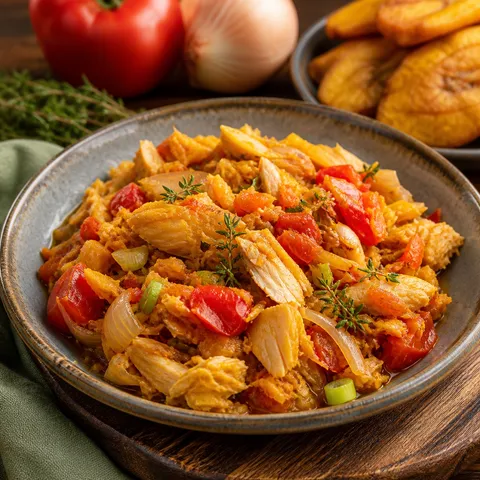 Caribbean Lens Verified Images are for illustrative purposes only, may be inaccurate, and do not guarantee the presence or absence of specific ingredients.
 Saltfish Buljol
A Trinidadian salt cod salad flaked and tossed with tomatoes, onions, and oil, a no-cook Caribbean breakfast staple.
 Caribbean Lens Verified Images are for illustrative purposes only, may be inaccurate, and do not guarantee the presence or absence of specific ingredients.
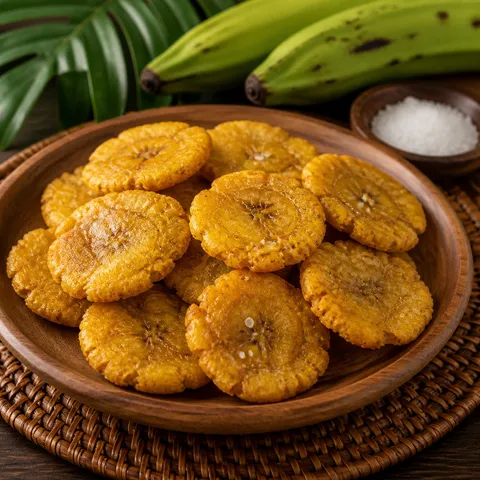
 Tostones
Twice-fried green plantain slices, smashed flat and salted, a crispy Caribbean side.
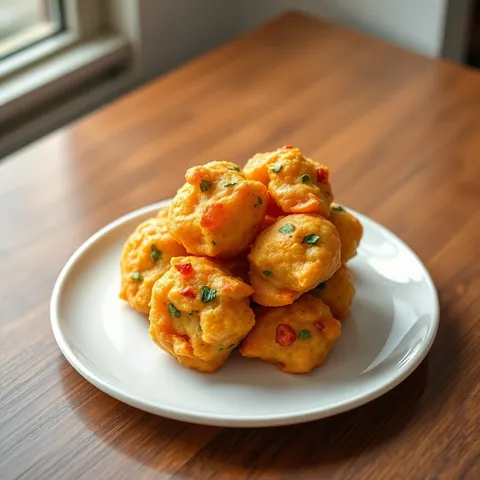 Caribbean Lens Verified Images are for illustrative purposes only, may be inaccurate, and do not guarantee the presence or absence of specific ingredients.
 Stamp and Go
Crispy Jamaican saltfish fritters seasoned with Scotch bonnet and scallion, named for their grab-and-go convenience.