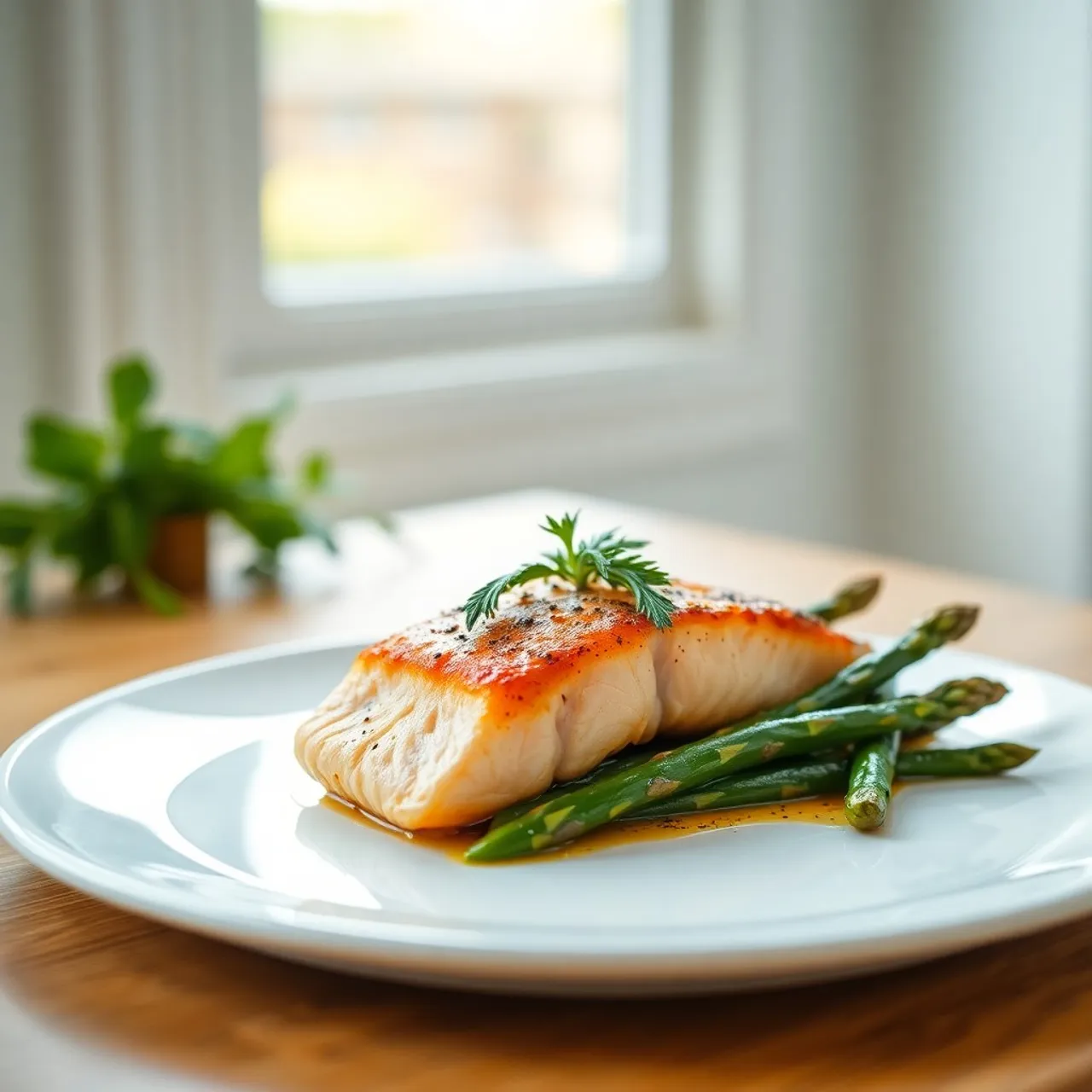
 Keto Images are for illustrative purposes only, may be inaccurate, and do not guarantee the presence or absence of specific ingredients.
 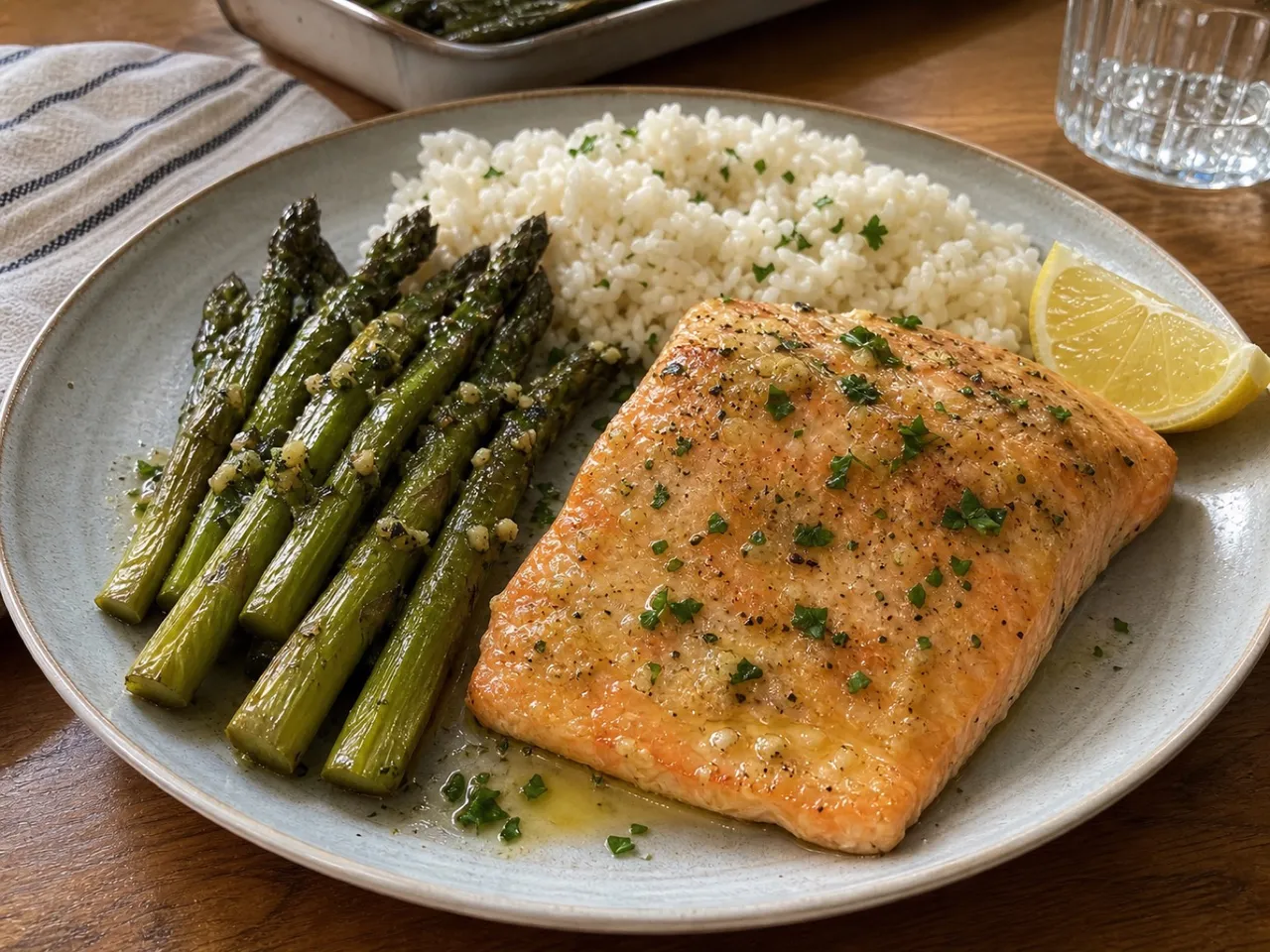 Serving Images are for illustrative purposes only, may be inaccurate, and do not guarantee the presence or absence of specific ingredients.
 Baked Salmon with Asparagus
A quick, healthy, one-pan meal featuring tender baked salmon and roasted asparagus with a hint of lemon.
Contains common allergens
In the app, Listahan checks these against your household automatically.
Good to know
- Ready in under 30 minutes
Matched from this dish's own ingredients and timing. Browse more: 30-minute meals
Instructions
6 steps- 1
Preheat your oven to 400°F (200°C). Line a rimmed baking sheet with parchment paper or aluminum foil for easy cleanup.
- 2
Place the trimmed asparagus on one side of the baking sheet. Drizzle with 1 tablespoon of olive oil, season with salt and pepper, and toss to coat.
- 3
Place the salmon fillets on the other side of the baking sheet. Rub the remaining 1 tablespoon of olive oil over the fillets.
- 4
Season the salmon with salt, pepper, minced garlic, and a sprinkle of dried dill. Place a few lemon slices on top of each fillet.
- 5
Bake for 12-15 minutes, depending on the thickness of the salmon, until the fish flakes easily with a fork and the asparagus is tender.
- 6
Squeeze fresh lemon juice over the entire pan before serving hot.
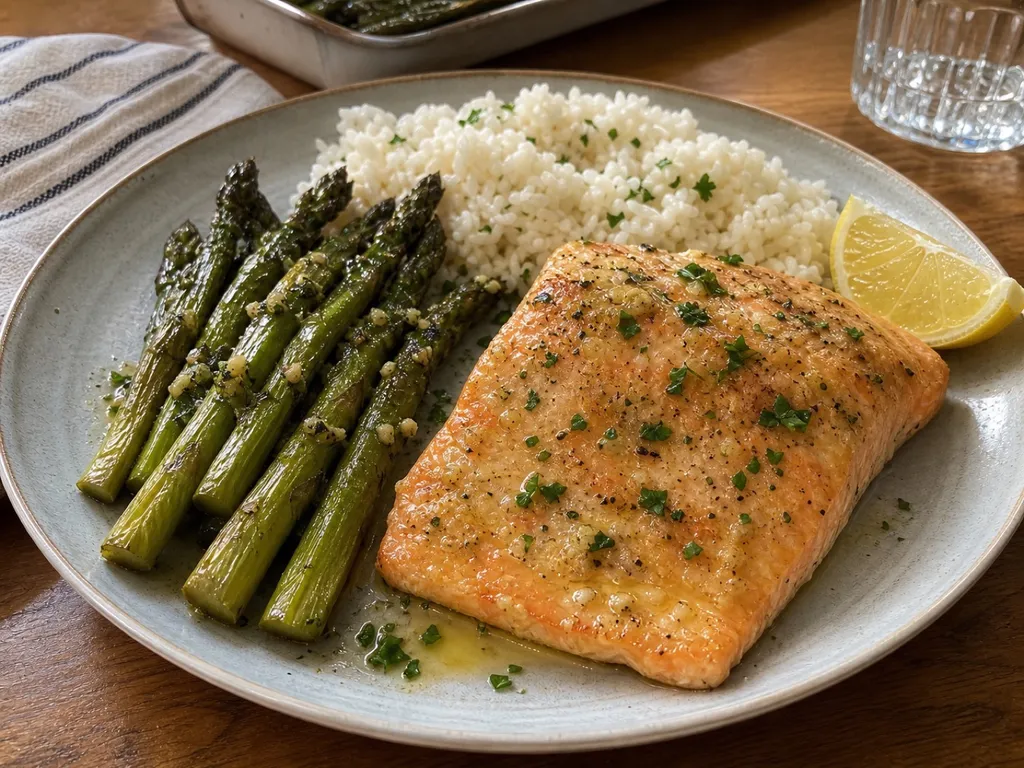 Images are for illustrative purposes only, may be inaccurate, and do not guarantee the presence or absence of specific ingredients.
 Listahan Family Score™
67/100
Works for many families
Score reflects how well this recipe fits a typical busy household. In the app, your Family Score is personalized to your household's allergens, kids, and pantry.
Nutrition
per serving265
Calories
20 g
Protein
6 g
Carbs
18 g
Fat
Estimated per serving. Actual values depend on the brands and portions you use.
Listahan cooking guide
Chef notes & practical guide
Technique notes, ingredient swaps, serve-alongside ideas, storage guidance, and equipment for this recipe.
Cultural context
Sheet pan dinners became a genre unto themselves in American food media in the 2010s as home cooks gravitated toward single-vessel meals that could be assembled quickly and required minimal active cooking. Salmon and asparagus make an intuitive pairing for this format because they cook at roughly the same temperature and time, the asparagus needs the fat dripping from the salmon to roast properly, and both benefit from high oven heat that concentrates flavor. The combination is also inherently aligned with the nutritional logic of keto: fatty fish and a low-carb spring vegetable.
Listahan note
This version uses a two-temperature approach — a blast of high heat to get color on the asparagus and then a reduction for the salmon — to prevent the fish from overcooking before the vegetables are properly roasted.
Technique cues
- Pat the salmon dry and season it at least 5 minutes before it goes into the oven so the salt has time to draw out and then reabsorb any surface moisture, producing a better-seasoned, drier surface for browning.
- Arrange the asparagus so it slightly fans out underneath and around the salmon fillet rather than stacking it in a pile — even distribution ensures everything roasts rather than the bottom layer steaming.
- Pull the salmon from the oven when it flakes easily at the thickest part but still looks slightly translucent at the very center; it will finish cooking from residual heat in the 3 to 4 minutes before serving.
Kitchen flow
- Parallel prep
- While the oven preheats to 425 F, trim the asparagus, season the salmon, and toss everything in oil so the sheet pan goes in the moment the oven is ready.
- Make-ahead
- The salmon and asparagus can be seasoned and arranged on the sheet pan up to 2 hours ahead and refrigerated uncovered; add 2 minutes to the cooking time if going in cold.
- Leftover move
- Flake leftover cold salmon and snap the asparagus into pieces for a quick salad with a lemon vinaigrette and capers the next day.
- Cleanup rhythm
- Line the sheet pan with parchment or foil before cooking so the only washing needed is a quick rinse; the fat from the salmon prevents sticking to parchment without any additional spray.
Ingredient brief
Role, handling, and swap guidance for each key ingredient.
skin-on salmon fillet
protein and fat centerpiece
Purpose: A single large skin-on fillet cooks more evenly than individual portions on a sheet pan and the skin protects the delicate flesh from direct pan heat.
Handling: Score the skin in 2 to 3 places with a sharp knife to prevent curling; bring to room temperature and dry before seasoning.
Adaptation: Arctic char fillets have a similar fat profile and cook identically; swordfish steaks also work but need 2 to 3 more minutes.
asparagus
vegetable and texture contrast
Purpose: Asparagus roasts quickly at high heat and develops a slight char at the tips while the salmon cooks, making them naturally synchronized in a sheet pan format.
Handling: Snap or trim the woody ends and toss with oil, salt, and pepper before arranging around the salmon.
Adaptation: Broccolini or green beans work in the same timing and pair equally well with the salmon.
olive oil
roasting fat
Purpose: A light coating of olive oil on both the salmon and asparagus conducts heat, prevents sticking, and encourages browning.
Handling: Drizzle and toss by hand so the oil coats evenly rather than pooling; use your palm to press the oil into the surface of the salmon.
Adaptation: Avocado oil has a higher smoke point and is a neutral alternative for high-temperature roasting.
lemon
acid and brightness
Purpose: Lemon slices laid over the salmon during roasting infuse gentle citrus flavor as they warm, and the juice squeezed at serving brightens the whole dish.
Handling: Slice thin and lay on top of the salmon for the last half of cooking time so the lemon perfumes the fish without making it steamy.
Adaptation: Orange slices or capers with a squeeze of lemon give a different but equally valid acid note.
garlic
aromatic
Purpose: A few sliced or pressed garlic cloves scattered over the asparagus roast alongside the vegetables and develop a mellow, caramelized sweetness.
Handling: Thin slices roast better than whole cloves in this short cooking window; minced garlic can burn at the edges at high heat.
Adaptation: Garlic powder mixed into the olive oil avoids any risk of burning and distributes flavor evenly.
Technique notes
- For a more complex flavor, brush the salmon with a thin layer of Dijon mustard before the oven and add a handful of fresh dill tucked under the fish — both additions survive oven heat and make a noticeable difference.
- Roasting the asparagus on the outside edges of the pan where the heat is most intense gives the tips a better char while the center of the pan where the salmon sits gets more moderate heat.
- A quick broil for the final 2 minutes adds appealing color to the salmon surface and caramelizes the asparagus tips without significantly increasing the overall cooking time.
Ingredient swaps
- Dairy-free direction
- The base recipe — salmon, asparagus, olive oil, garlic, and lemon — has no dairy ingredient in it.
- Gluten, nut & dairy-free direction
- In its base form, the dish is salmon, asparagus, olive oil, garlic, and lemon — no wheat, tree-nut, or dairy ingredient in it. Salmon itself is a fish, and this recipe doesn't offer a substitute for it.
- Higher-fat direction
- Dot the salmon with small pats of cold butter in the last 3 minutes of roasting for a richer, self-basting finish similar to pan-seared salmon.
Serve alongside
- cauliflower mash with cream cheese
- simple cucumber dill salad
- roasted cherry tomatoes with basil oil
- chilled Sauvignon Blanc
- sparkling water with lemon and fresh mint
Serving suggestions only — check pairings for your household's allergens.
Storage & reheating
- Leftover baked salmon and asparagus keep in the fridge for up to 2 days; store with the asparagus separated from the salmon to prevent the vegetable from making the fish soggy. Reheat in a 275 F oven for 10 minutes or eat cold the next day — the cold salmon is excellent flaked over salad. Do not microwave salmon if possible; reheating breaks down the fat and produces a strong odor.
Equipment
- rimmed sheet pan
- parchment paper or foil for lining
- instant-read thermometer for salmon doneness
Make this household-aware
Listahan Pro checks this recipe against your household's allergens, finds pantry-aware swaps, builds the shopping list, and helps you plan the week around it.
Plan it in Listahan
Add Baked Salmon with Asparagus to your week, check it against your household's allergens, and build the shopping list automatically.
More Keto recipes
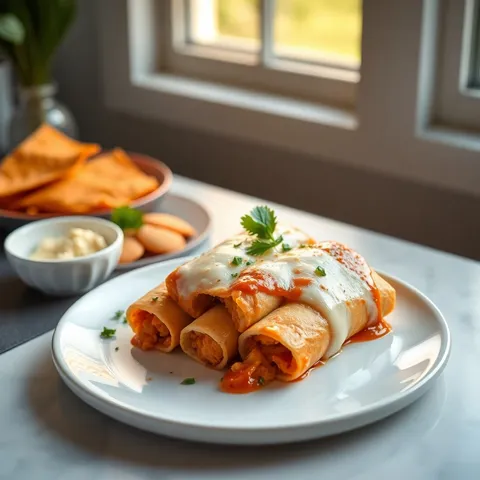 Keto Lens Verified Images are for illustrative purposes only, may be inaccurate, and do not guarantee the presence or absence of specific ingredients.
 Keto Chicken Enchiladas
Savory chicken and cheese rolled in low-carb tortillas, smothered in a rich, mild red enchilada sauce.
 Keto Lens Verified Images are for illustrative purposes only, may be inaccurate, and do not guarantee the presence or absence of specific ingredients.
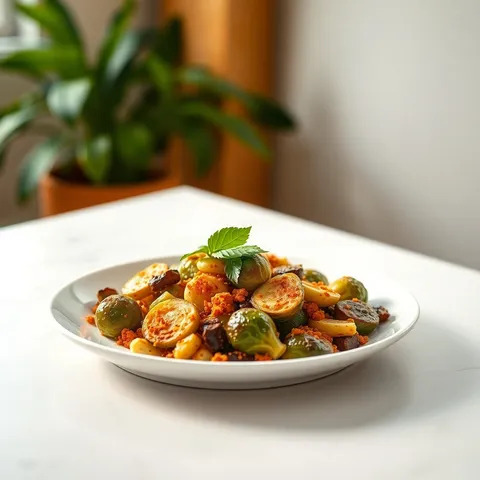
 Brussels Sprouts
Crispy oven-roasted keto Brussels sprouts with garlic and Parmesan — caramelized and golden.
 Keto Lens Verified Images are for illustrative purposes only, may be inaccurate, and do not guarantee the presence or absence of specific ingredients.
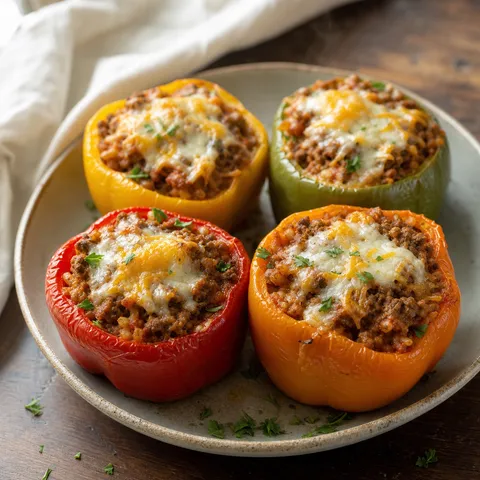
 Low-Carb Stuffed Bell Peppers
Vibrant bell peppers generously stuffed with a savory mixture of ground beef, cauliflower rice, and melted cheese.