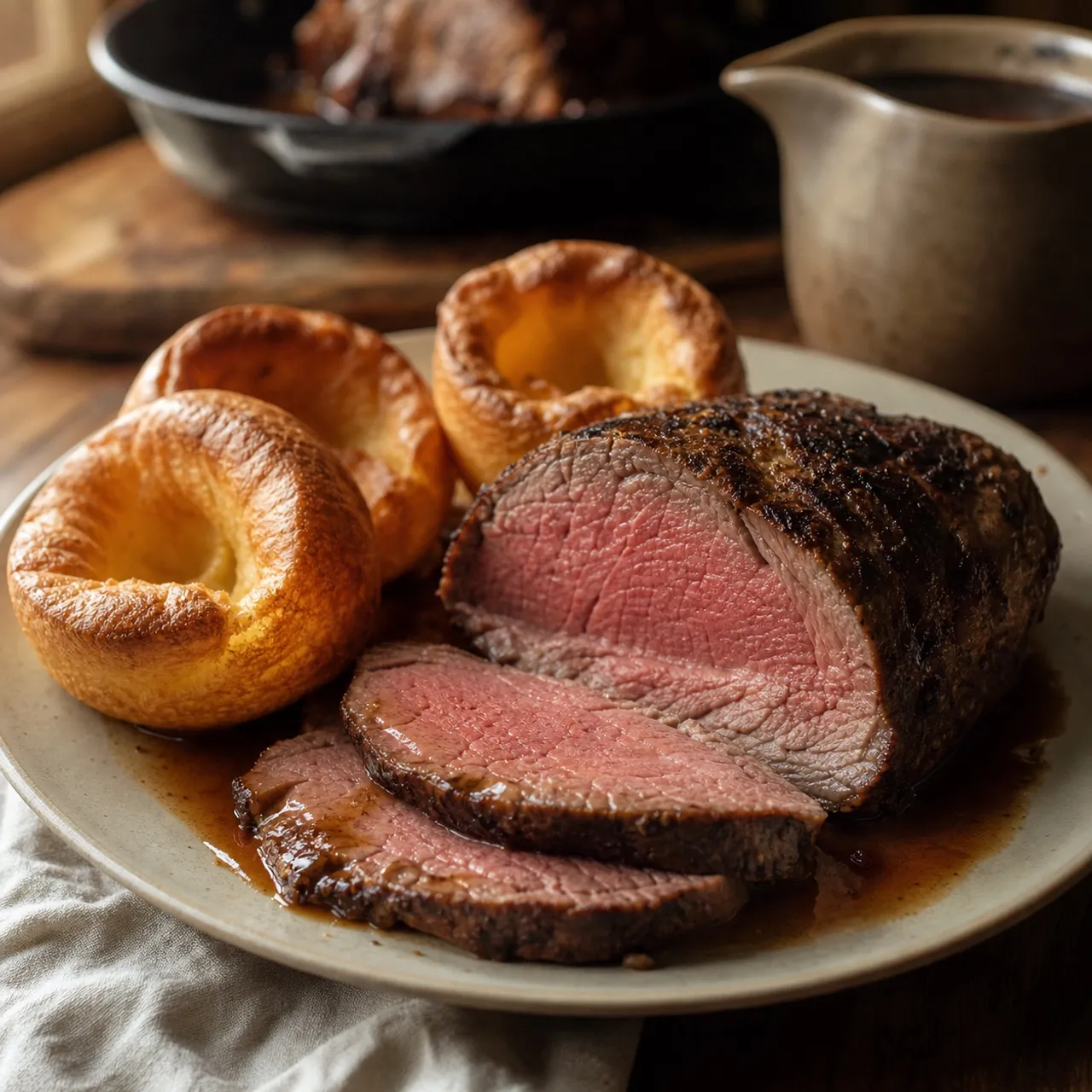
 Meat & Pork Images are for illustrative purposes only, may be inaccurate, and do not guarantee the presence or absence of specific ingredients.
 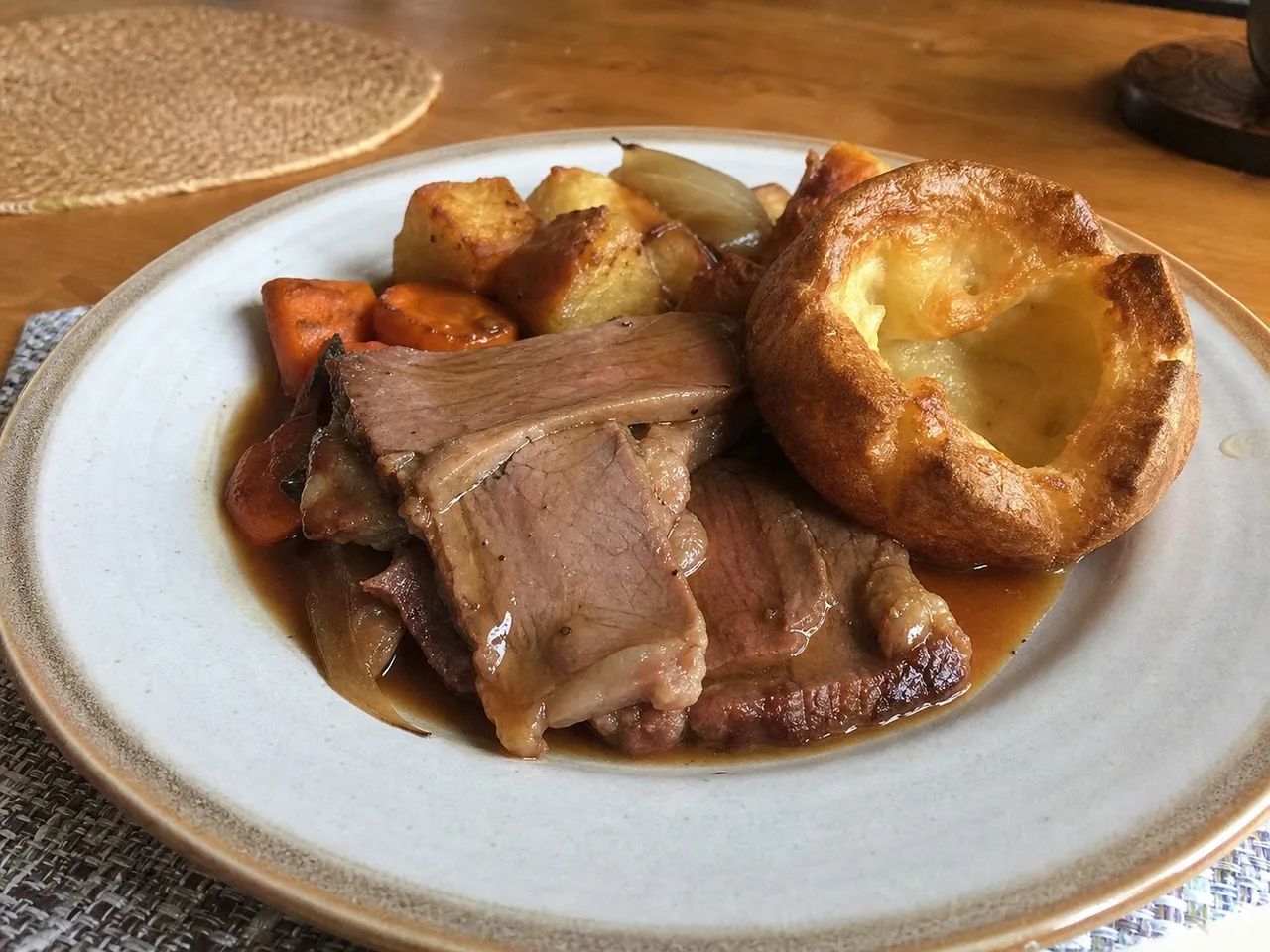 Serving Images are for illustrative purposes only, may be inaccurate, and do not guarantee the presence or absence of specific ingredients.
 Traditional Roast Beef with Yorkshire Pudding
A classic Sunday roast of garlic-rubbed beef with rich pan gravy and golden, puffed Yorkshire puddings.
Contains common allergens
In the app, Listahan checks these against your household automatically.
Instructions
7 steps- 1
Preheat the oven to 180°C (350°F). Rub the outside of the beef all over with the minced garlic and black pepper, then sprinkle with 1 Tbsp flour.
- 2
Place the beef in a roasting dish with melted dripping and roast for about 25 minutes per 500g for medium-rare. Cover loosely with foil and let rest for 15 minutes before carving.
- 3
While the beef rests, make the Yorkshire puddings: place a small piece of dripping in each cup of a deep muffin tin and set in a 220°C (425°F) oven until the fat just begins to smoke.
- 4
In a blender, combine the 2 cups flour, salt, eggs, milk, and cold water and blend until smooth. Pour the batter into the hot tins, filling each about three-quarters full.
- 5
Return the tins immediately to the 220°C oven and bake for 20 to 30 minutes, until the puddings are well risen and golden brown. Do not open the oven during baking or they may collapse.
- 6
For the gravy, set the beef roasting dish over low heat, add the 2 Tbsp flour, and stir until you have a light brown roux. Gradually whisk in the red wine and beef stock, cooking until the gravy thickens; season to taste.
- 7
Carve the beef and serve with the Yorkshire puddings, gravy, and a selection of steamed, simmered, and roasted vegetables.
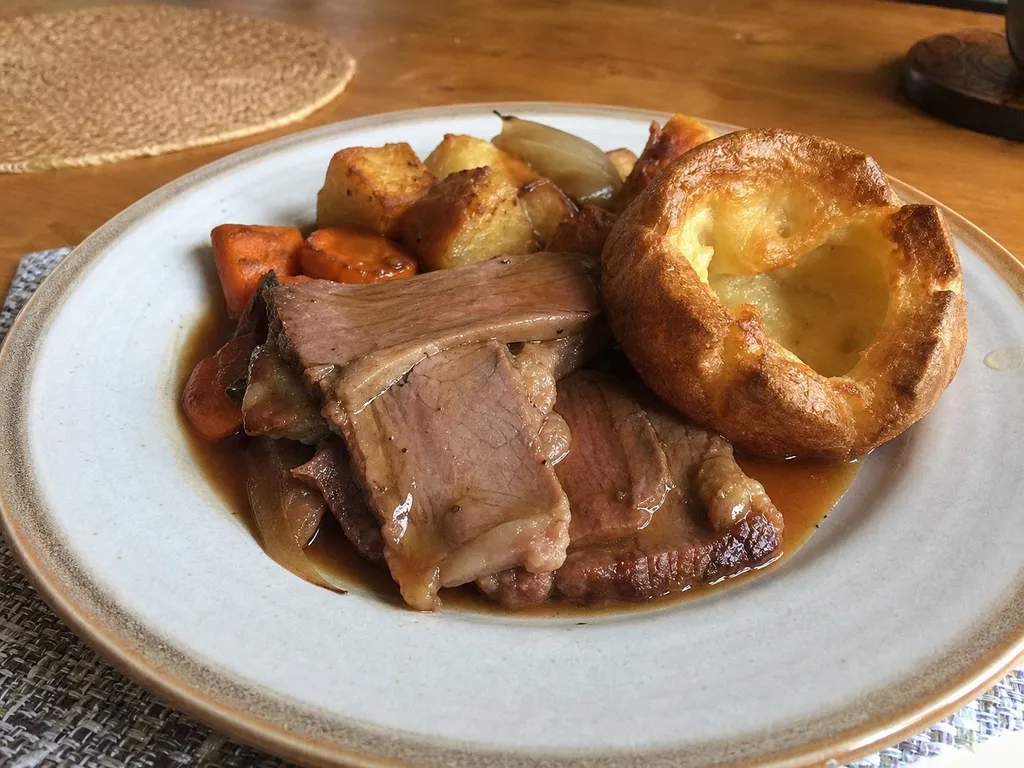 Images are for illustrative purposes only, may be inaccurate, and do not guarantee the presence or absence of specific ingredients.
 Listahan Family Score™
66/100
Works for many families
Score reflects how well this recipe fits a typical busy household. In the app, your Family Score is personalized to your household's allergens, kids, and pantry.
Nutrition
per serving745
Calories
62 g
Protein
39 g
Carbs
35 g
Fat
Estimated per serving. Actual values depend on the brands and portions you use.
Listahan cooking guide
Chef notes & practical guide
Technique notes, ingredient swaps, serve-alongside ideas, storage guidance, and equipment for this recipe.
Cultural context
Roast beef with Yorkshire pudding is the classic British Sunday roast, with the pudding's batter traditionally cooked in the beef's own rendered fat, or dripping, so it puffs up around the flavor the meat leaves behind. The pairing became so standard across England that Sunday roast and this specific combination are often treated as interchangeable.
Listahan note
This version rests the beef well after roasting before carving, using that resting time to get the oven fully hot again for the Yorkshire puddings, since the puddings need a screaming-hot oven and hot fat that the roast itself was still occupying.
Technique cues
- Searing the beef's surface with black pepper and garlic before it goes into the oven builds a crust that seasons the meat and the dripping used later for the puddings.
- Beef dripping needs to be genuinely smoking hot in the pudding tin before the batter goes in — a cool or just-warm fat gives flat, dense puddings instead of tall, hollow ones.
- A high, unopened oven for the first stretch of baking is what lets Yorkshire puddings rise dramatically; opening the door early lets the trapped steam escape and the puddings collapse.
- Whisking flour into the pan drippings after the roast comes out builds the gravy directly from the fond the meat left behind, rather than a separately made sauce.
Kitchen flow
- Parallel prep
- Prep any side dishes while Traditional Roast Beef with Yorkshire Pudding finishes with the rolled roast beef — the hands-off cook time is the window to use. Plan around the bake; that's the slow part.
- Make-ahead
- Traditional Roast Beef with Yorkshire Pudding reheats well, so cooking it a day ahead and finishing it just before serving is a reasonable way to spread out the work. This one leans on the rolled roast beef. Everything else is quick — the bake is the one step that takes real time.
- Leftover move
- Leftover Traditional Roast Beef with Yorkshire Pudding reheats well covered on the stove or in the oven with a splash of liquid; avoid the microwave, which tends to toughen the rolled roast beef on a fast reheat. The bake step is what sets the pace here.
- Cleanup rhythm
- Deglaze the pan used for Traditional Roast Beef with Yorkshire Pudding with a splash of water or broth right after cooking — it lifts the browned bits before they dry on and saves scrubbing later. This one leans on the rolled roast beef. The bake step is what sets the pace here.
Ingredient brief
Role, handling, and swap guidance for each key ingredient.
2 1/2 lb rolled roast beef
Main protein or body
Purpose: 1/2 lb rolled roast beef gives Traditional Roast Beef with Yorkshire Pudding its main substance and carries the seasoning.
Handling: Pat dry, cut evenly, and season before cooking so browning or sauce coverage is consistent.
Adaptation: Use the closest fresh equivalent and expect a modest shift in flavor or texture.
1/4 tsp ground black pepper
Aromatic base
Purpose: tsp ground black pepper creates the savory foundation before stronger ingredients are added.
Handling: Wash, trim, and cut evenly so the pieces cook at the same pace.
Adaptation: Use the closest fresh equivalent and expect a modest shift in flavor or texture.
2 garlic cloves, minced
Aromatic base
Purpose: garlic cloves, minced creates the savory foundation before stronger ingredients are added.
Handling: Wash, trim, and cut evenly so the pieces cook at the same pace.
Adaptation: Use the closest fresh equivalent and expect a modest shift in flavor or texture.
3 Tbsp all-purpose flour
Structural base
Purpose: Tbsp all-purpose flour defines the shape and texture of the dish.
Handling: Measure before heating and break up clumps so the mix distributes evenly.
Adaptation: Use a certified gluten-free alternative when needed and expect a small texture change.
2 Tbsp beef dripping
Main protein or body
Purpose: Tbsp beef dripping gives Traditional Roast Beef with Yorkshire Pudding its main substance and carries the seasoning.
Handling: Pat dry, cut evenly, and season before cooking so browning or sauce coverage is consistent.
Adaptation: Use the closest fresh equivalent and expect a modest shift in flavor or texture.
Technique notes
- Let the beef rest for a full fifteen to twenty minutes before carving — cutting into it too soon lets all the juices run out onto the board instead of staying in the meat.
- Have the pudding batter mixed and resting well before the roast even comes out, since the oven needs to be at its hottest the moment the puddings go in.
- Carve the beef against the grain in thin slices; thick slices cut with the grain turn noticeably chewier for the same roast.
Ingredient swaps
- Gluten-free direction
- Replace the all-purpose flour with a certified gluten-free 1:1 flour blend or gluten-free noodles/breadcrumbs — check that any other packaged ingredients here are labeled gluten-free too. This one leans on the rolled roast beef.
- Dairy-free direction
- Swap the milk for a neutral dairy-free butter or oil and a full-fat plant milk (oat or coconut work best for body) — the texture shifts slightly but the dish holds together. This one leans on the rolled roast beef.
- Egg-aware direction
- Replace the eggs with a flax or chia egg (1 tbsp ground seed + 3 tbsp water, rested 5 minutes) for binding, best when eggs are there for binding rather than structure or rise. This one leans on the rolled roast beef.
- Lower-sodium direction
- Use a low-sodium or no-salt-added version of the beef stock, then season to taste with fresh herbs, citrus, or vinegar at the end instead of more salt. This one leans on the rolled roast beef.
Serve alongside
- Fresh berries
- Citrus fruit salad
- Mint leaves
- Black coffee
- Hot tea
- Sparkling water with lemon
Serving suggestions only — check pairings for your household's allergens.
Storage & reheating
- Store covered for 3 to 4 days, refrigerated when dairy, eggs, custard, or fresh fruit are involved.
- Reheat gently only when warmth improves the texture.
- Freeze sturdy baked portions up to 2 months; avoid freezing delicate fresh toppings.
Equipment
- Mixing bowls
- Baking dish or pan
- Cooling rack
Make this household-aware
Listahan Pro checks this recipe against your household's allergens, finds pantry-aware swaps, builds the shopping list, and helps you plan the week around it.
Plan it in Listahan
Add Traditional Roast Beef with Yorkshire Pudding to your week, check it against your household's allergens, and build the shopping list automatically.
More Meat & Pork recipes
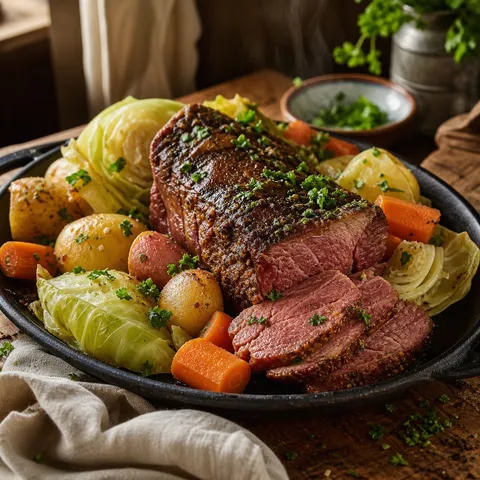 Meat & Pork Lens Verified Images are for illustrative purposes only, may be inaccurate, and do not guarantee the presence or absence of specific ingredients.
 Corned Beef and Cabbage
A classic Irish-American simmer of brined corned beef brisket with cabbage, carrots, and potatoes, served with mustard.
 Meat & Pork Lens Verified Images are for illustrative purposes only, may be inaccurate, and do not guarantee the presence or absence of specific ingredients.
 Swedish Meatballs
Warmly spiced beef and pork meatballs in a velvety sour cream gravy, served over egg noodles with a spoonful of lingonberry jam.
 Meat & Pork Lens Verified Images are for illustrative purposes only, may be inaccurate, and do not guarantee the presence or absence of specific ingredients.
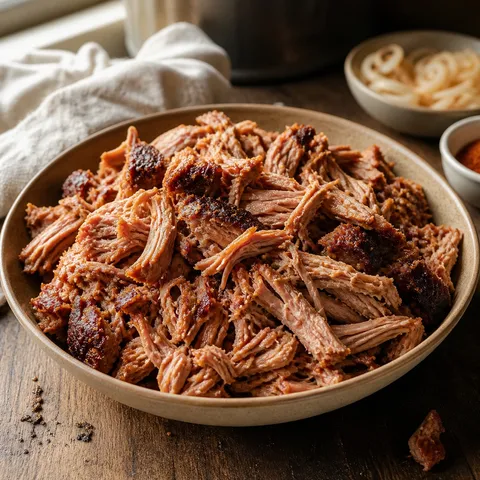
 Slow Cooker Pulled Pork
Fork-tender pork shoulder slow-cooked with a smoky-sweet spice rub until it shreds effortlessly, perfect piled on buns with barbecue sauce.