 Mexican Images are for illustrative purposes only, may be inaccurate, and do not guarantee the presence or absence of specific ingredients.
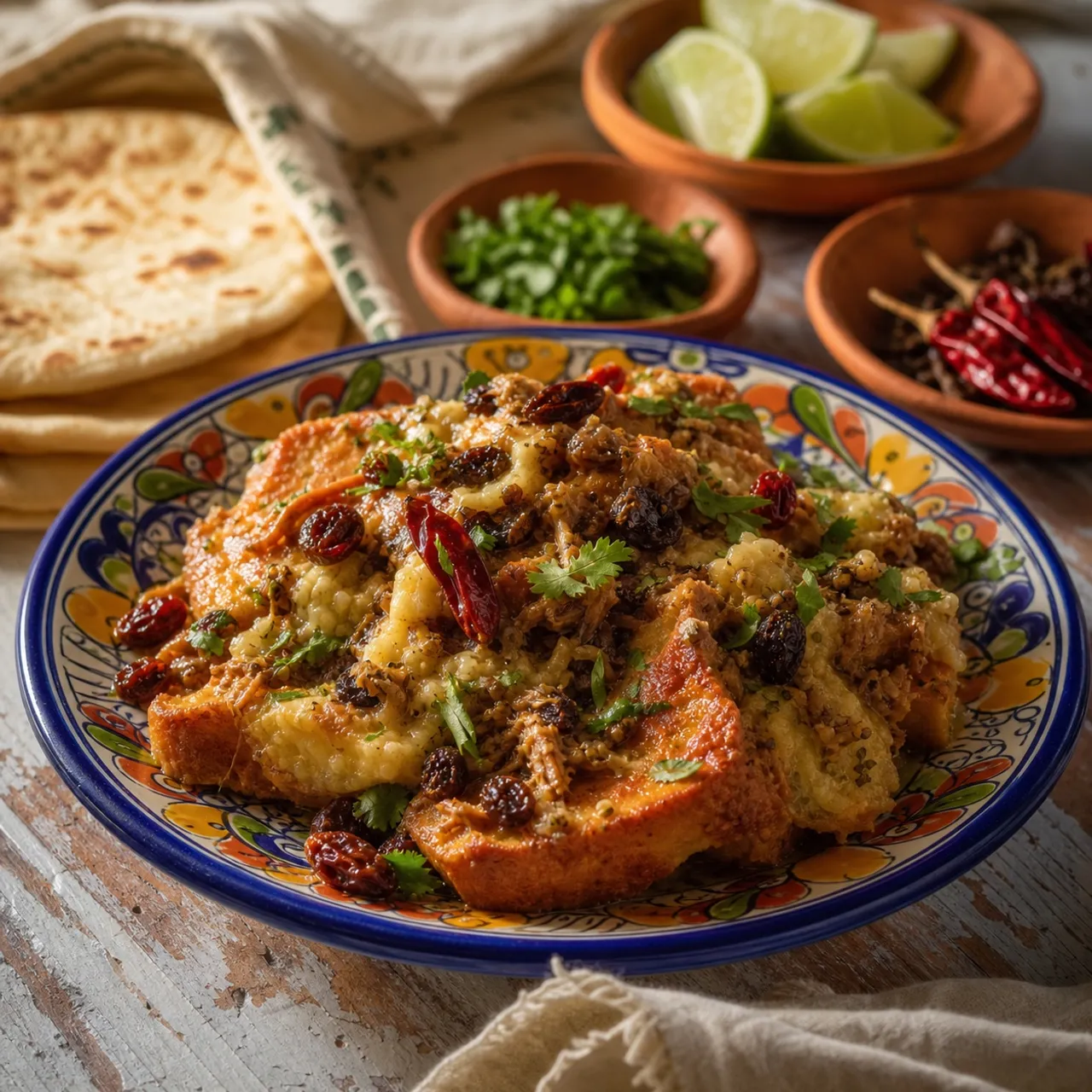
 Capirotada
A traditional Mexican bread pudding soaked in a spiced piloncillo syrup and layered with nuts, raisins, and cheese, served during Lent.
Contains common allergens
In the app, Listahan checks these against your household automatically.
Instructions
6 steps- 1
Toast the baguette slices on a baking sheet at 350°F for about 10 minutes until dry and lightly golden, which helps them absorb the syrup without turning to mush.
- 2
Combine the water, piloncillo, cinnamon sticks, and cloves in a saucepan and simmer for 15 minutes until the sugar dissolves into a fragrant amber syrup, then strain out the spices.
- 3
Layer half the toasted bread in a greased baking dish and scatter over half the raisins, pecans, and cheese.
- 4
Repeat with a second layer of bread, raisins, pecans, and cheese to build the pudding.
- 5
Pour the warm syrup slowly and evenly over the layers, pressing the bread down gently so every piece soaks up the liquid.
- 6
Cover with foil and bake at 350°F for 25 minutes, then uncover for the last 10 minutes until the top is set and the cheese melts; let rest 5 minutes before serving warm.
Listahan Family Score™
72/100
Good fit for most families
Score reflects how well this recipe fits a typical busy household. In the app, your Family Score is personalized to your household's allergens, kids, and pantry.
Nutrition
per serving90
Calories
4 g
Protein
9 g
Carbs
5 g
Fat
Estimated per serving. Actual values depend on the brands and portions you use.
Listahan cooking guide
Chef notes & practical guide
Technique notes, ingredient swaps, serve-alongside ideas, storage guidance, and equipment for this recipe.
Cultural context
Capirotada is closely tied to Lent in many Mexican households, especially as a warm dessert for meatless Fridays and family gatherings. It descends from older Spanish-style bread puddings, but the piloncillo syrup, dried fruit, nuts, and salty cheese give it a distinctly Mexican pantry logic. The details vary by region and family: some versions are dense and custardy, while others keep clearer layers of bread, syrup, fruit, and cheese.
Listahan note
This version keeps the structure simple: toasted baguette, spiced piloncillo syrup, raisins, pecans, and cheese layered into a pudding that is moist but not soggy. The main priority is controlling the bread texture before the syrup goes in.
Technique cues
- Toast the bread until it feels dry at the edges, not just lightly colored. Dry bread drinks in the syrup more evenly and holds its shape after baking.
- Pour the syrup slowly across the whole dish, then press gently instead of stirring. That keeps the layers intact while helping the center pieces soak.
- The cheese should melt into the top and pockets between the bread, not disappear completely. A salty cheese makes the sweet syrup taste more balanced.
Kitchen flow
- Parallel prep
- Toast the baguette while the piloncillo syrup simmers, then grease the baking dish and measure the raisins, pecans, and cheese before layering.
- Make-ahead
- Toast the bread and make the syrup earlier in the day, then warm the syrup again before assembling so it soaks in properly.
- Leftover move
- Spoon leftovers into a small skillet with a splash of water and warm until the syrup loosens, then top with a little extra cheese or toasted pecans.
- Cleanup rhythm
- Rinse the syrup saucepan as soon as it is strained, and soak the baking dish after serving so the sticky edges release easily.
Ingredient brief
Role, handling, and swap guidance for each key ingredient.
French baguette
Bread base
Purpose: A baguette has enough structure to soak up syrup without turning immediately soft and pasty.
Handling: Slice and toast the bread until dry and lightly golden before layering.
Adaptation: Bolillo or day-old crusty white bread gives a closer Mexican bakery feel; soft sandwich bread will make a looser pudding.
Piloncillo
Syrup sweetener
Purpose: Piloncillo gives the soaking syrup a deep brown sugar flavor with a light molasses edge.
Handling: Break up the cones if needed so they dissolve more quickly in the simmering water.
Adaptation: Packed brown sugar works when piloncillo is not available, though the syrup will taste simpler.
Cinnamon sticks and whole cloves
Warm spice base
Purpose: They season the syrup without leaving gritty spice throughout the pudding.
Handling: Simmer them with the piloncillo, then strain them out before pouring the syrup over the bread.
Adaptation: Ground cinnamon can be used in a pinch, but add a small amount and expect speckles in the finished dish.
Raisins
Sweet fruit pockets
Purpose: Raisins plump in the syrup and give the pudding small bursts of concentrated sweetness.
Handling: Scatter them evenly between layers so they do not all settle in one corner.
Adaptation: Chopped dried apricots or prunes change the flavor but keep the same chewy contrast.
Chopped pecans
Crunch and richness
Purpose: Pecans add a toasted, buttery note against the soft bread and syrup.
Handling: Chop them small enough to spread through the layers, but not so fine that they disappear.
Adaptation: Walnuts are common in many versions and give a slightly more bitter, earthy crunch.
Cotija or mild cheddar cheese
Salty finish
Purpose: The cheese gives capirotada its sweet-salty character and keeps the pudding from tasting flat.
Handling: Shred it before layering so it melts into the bread instead of sitting in heavy clumps.
Adaptation: Monterey Jack melts more smoothly; Cotija stays saltier and more crumbly.
Technique notes
- Do not skip straining the syrup. Whole cloves are strong, and biting into one can overpower a serving.
- If the top looks dry after the syrup is poured, press the bread down gently and wait a minute before adding more liquid. The toasted slices need time to absorb.
- Let the baked capirotada rest before serving. The syrup settles back into the bread and the slices hold together better.
Ingredient swaps
- Dairy-free direction
- Leave out the cheese or use a mild plant-based shred; the dish will taste sweeter and less savory, so a small pinch of salt in the syrup helps balance it.
- Nut-free direction
- Skip the pecans and add more raisins or toasted pumpkin seeds if that fits your pantry; the texture shifts from rich crunch to chewy or crisp contrast.
- Weeknight shortcut
- Use packed brown sugar instead of piloncillo and simmer the syrup just until fully dissolved and fragrant.
- Softer pudding path
- Use slightly thicker bread slices and cover the dish for the full bake if you prefer a more spoonable texture.
Serve alongside
- Calabacitas con elote
- Frijoles de la olla
- Nopalitos salad
- Sopa de fideo
- Cafe de olla
- Mexican hot chocolate
- Agua de jamaica
Serving suggestions only — check pairings for your household's allergens.
Storage & reheating
- Refrigerate leftovers in a sealed container so the bread does not dry out and the syrup stays with the pudding.
- Reheat covered in a low oven or gently in the microwave with a small splash of water if the syrup has tightened.
- Freeze individual portions tightly wrapped, then thaw in the refrigerator and reheat covered until warm.
Equipment
- Rimmed baking sheet
- Medium saucepan
- Fine-mesh strainer
- Greased baking dish
Make this household-aware
Listahan Pro checks this recipe against your household's allergens, finds pantry-aware swaps, builds the shopping list, and helps you plan the week around it.
Plan it in Listahan
Add Capirotada to your week, check it against your household's allergens, and build the shopping list automatically.
More Mexican recipes
 Mexican Lens Verified Images are for illustrative purposes only, may be inaccurate, and do not guarantee the presence or absence of specific ingredients.
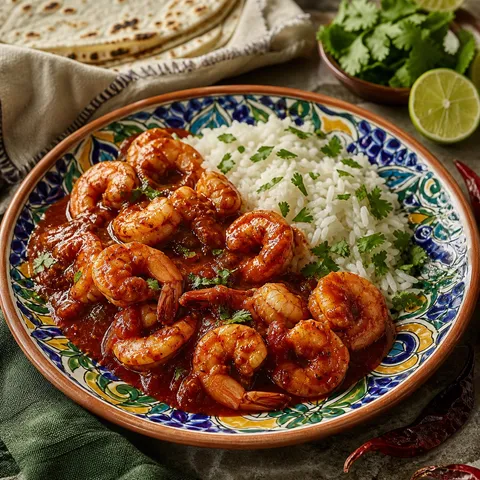
 Camarones a la Diabla
Shrimp simmered in a fiery, smoky red chilli sauce — bold and quick.
 Mexican Lens Verified Images are for illustrative purposes only, may be inaccurate, and do not guarantee the presence or absence of specific ingredients.
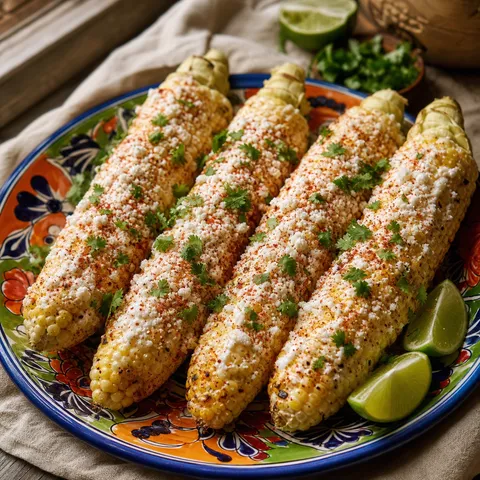
 Elote (Mexican Street Corn)
Corn on the cob coated with mayo, cheese, chili powder, and lime.
 Mexican Lens Verified Images are for illustrative purposes only, may be inaccurate, and do not guarantee the presence or absence of specific ingredients.
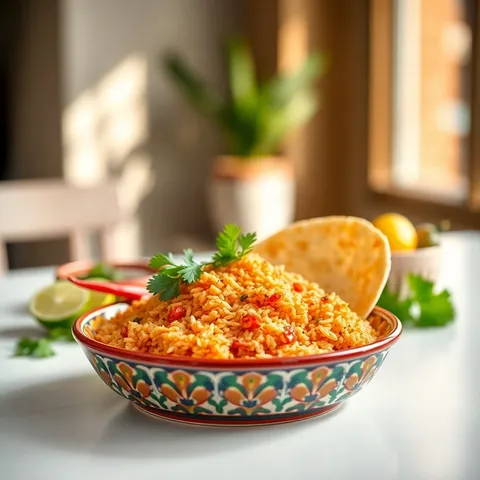
 Arroz Rojo (Mexican Rice)
Fluffy tomato-tinted rice toasted in oil and simmered with aromatics.