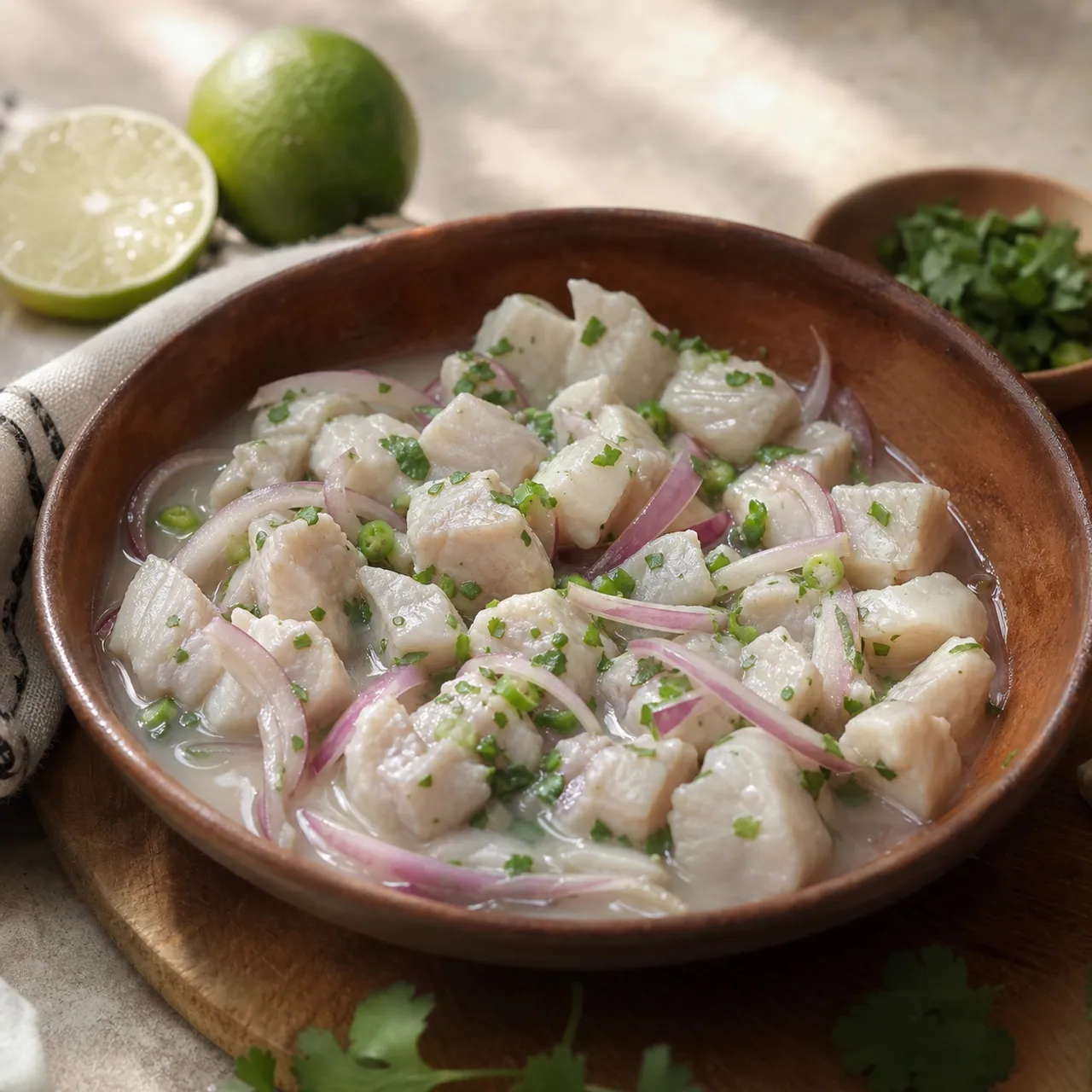
 South American Images are for illustrative purposes only, may be inaccurate, and do not guarantee the presence or absence of specific ingredients.
 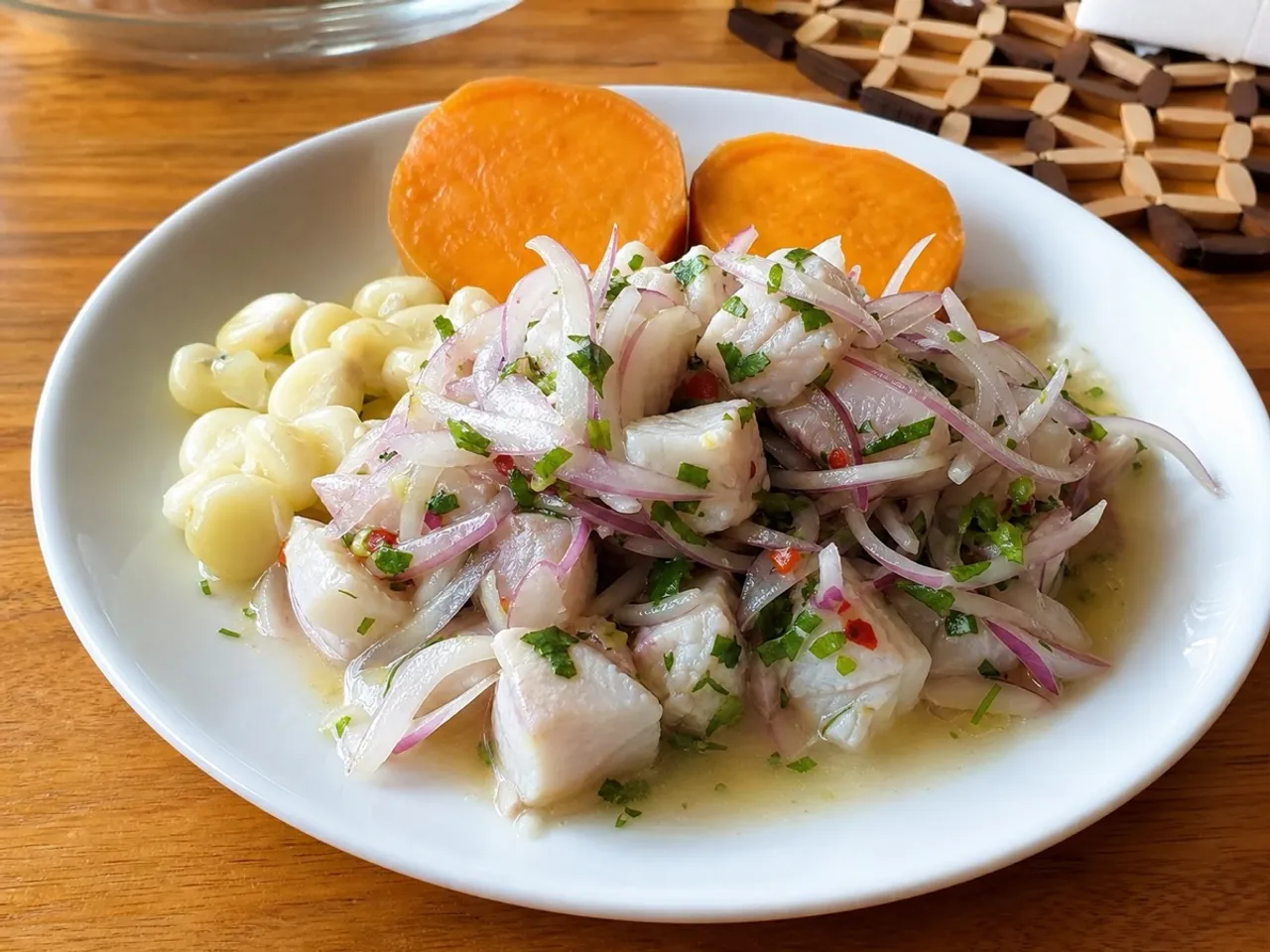 Serving Images are for illustrative purposes only, may be inaccurate, and do not guarantee the presence or absence of specific ingredients.
 Ceviche
Fresh fish cured in bright lime juice with red onion, cilantro, and fiery ají amarillo — Peru's national dish is cool, citrusy, and electric.
Contains common allergens
In the app, Listahan checks these against your household automatically.
Good to know
- Ready in under 30 minutes
Matched from this dish's own ingredients and timing. Browse more: 30-minute meals
Instructions
5 steps- 1
Prepare the fish: Dice the fish into uniform cubes and place them in a glass or ceramic bowl. Season generously with salt and toss to combine.
- 2
Add heat: Stir in the finely chopped ají pepper and let it sit for 1 minute to release its oils and flavors.
- 3
Cure the fish: Pour the fresh lime juice over the fish, ensuring all pieces are submerged. Let it marinate for 5 to 10 minutes until the outside turns opaque white but remains tender.
- 4
Add aromatics: Rinse the sliced red onions in cold water to remove bitterness, then drain and fold them into the fish along with chopped cilantro.
- 5
Serve: Plate immediately alongside boiled sweet potato slices and large-kernel Andean corn.
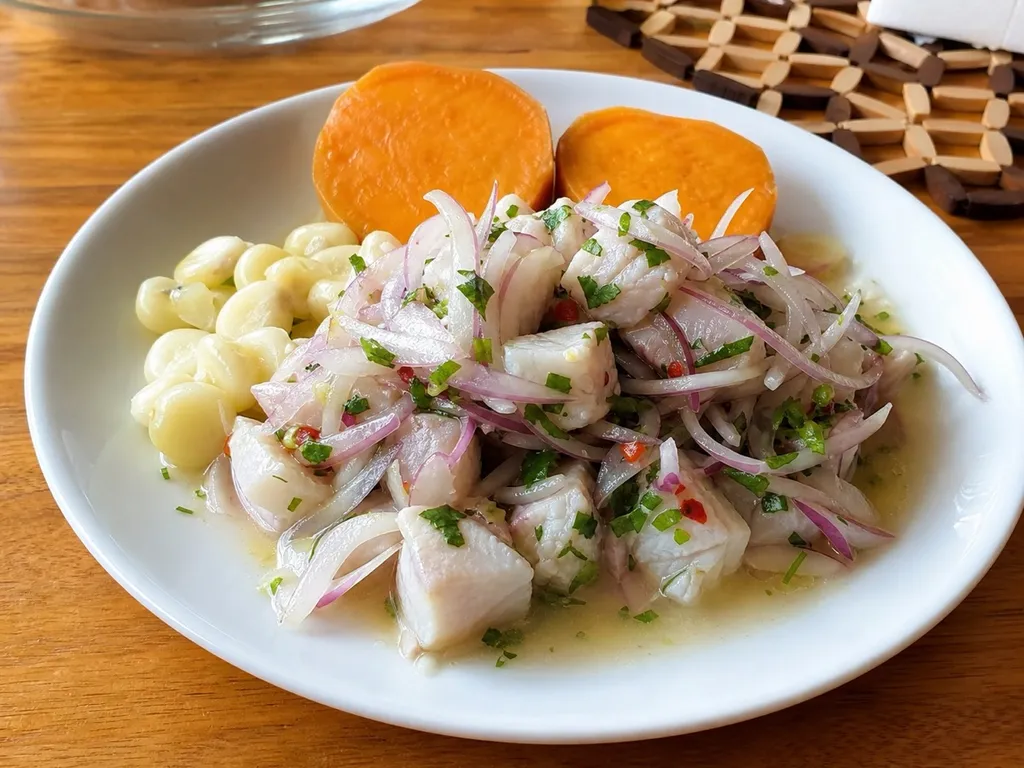 Images are for illustrative purposes only, may be inaccurate, and do not guarantee the presence or absence of specific ingredients.
 Listahan Family Score™
65/100
Works for many families
Score reflects how well this recipe fits a typical busy household. In the app, your Family Score is personalized to your household's allergens, kids, and pantry.
Nutrition
per serving220
Calories
33 g
Protein
10 g
Carbs
6 g
Fat
Estimated per serving. Actual values depend on the brands and portions you use.
Listahan cooking guide
Chef notes & practical guide
Technique notes, ingredient swaps, serve-alongside ideas, storage guidance, and equipment for this recipe.
Cultural context
Ceviche is the national dish of Peru, where raw fish is 'cooked' by the acid in fresh lime juice rather than heat. The technique traces to the country's Pacific coast and was shaped by Indigenous, Spanish, and Japanese immigrant cooks, the last of whom pushed toward the brief, fresh-tasting marinade Peru is known for today. The pooled citrus left behind, called leche de tigre, is treated as a delicacy in its own right.
Listahan note
This version keeps the lime contact short so the fish stays silky rather than chalky, and leans on raw red onion and chile for the bright, punchy edge a good ceviche needs.
Technique cues
- Cut the fish into even half-inch cubes so every piece firms up at the same rate instead of some turning rubbery while others stay raw.
- Toss the fish with the lime only minutes before serving; long soaks past about fifteen minutes overcook the protein and dull the flavor.
- Rinse the sliced red onion in cold water before adding it so it stays crisp and loses the harsh sulfur bite.
Kitchen flow
- Parallel prep
- Slice the onion and chile and squeeze the lime while the fish is still in the fridge, so the only timed step is the quick toss at the end.
- Make-ahead
- Cut the fish and prep the aromatics up to a few hours ahead and keep them cold separately; combine only right before serving.
- Leftover move
- Ceviche does not keep well once dressed, but leftover leche de tigre makes a bracing shot or a base for a seafood soup the next day.
- Cleanup rhythm
- Work over one cutting board for fish and a second for produce, then wash both immediately to keep the kitchen smelling fresh.
Ingredient brief
Role, handling, and swap guidance for each key ingredient.
white fish fillet
the centerpiece protein
Purpose: A firm, lean white fish holds its shape in the acid and carries the citrus and chile cleanly.
Handling: Use the freshest fillet you can find, pat it dry, and cut into even half-inch cubes.
Adaptation: Sea bass, snapper, or sushi-grade tilapia all work; bay scallops or shrimp are a cooked-protein alternative if raw fish is a concern.
lime juice
the acid that cures the fish
Purpose: Fresh lime acidity denatures the protein and gives the dish its signature bright tang.
Handling: Squeeze it fresh just before using and strain out seeds; bottled juice tastes flat.
Adaptation: A blend of lime and a little lemon works in a pinch, though the flavor leans less authentically Peruvian.
red onion
sharp aromatic crunch
Purpose: Thin raw onion adds sweetness and bite that balances the soft fish.
Handling: Slice paper-thin against the grain and rinse in cold water to tame the harshness.
Adaptation: Shallot gives a milder, sweeter result if red onion feels too strong.
aji amarillo or fresh chile
the fruity heat
Purpose: Aji amarillo gives ceviche its characteristic warm, fruity Peruvian heat rather than a flat burn.
Handling: Seed and finely mince, adding gradually so the heat stays in balance.
Adaptation: Habanero or a serrano stands in if aji amarillo paste is unavailable; use a lighter hand.
cilantro
fresh herbal lift
Purpose: Cilantro ties the lime, onion, and chile together with a green, citrusy note.
Handling: Chop just before serving so it stays bright.
Adaptation: For cilantro-averse cooks, a little flat-leaf parsley keeps the freshness without the soapy note some taste.
Technique notes
- Chill the serving bowls so the ceviche stays cold from the first bite to the last on a warm day.
- Taste the leche de tigre and adjust salt and lime before adding the fish; the marinade should already taste balanced on its own.
- Add a starchy partner like boiled sweet potato or corn on the plate to soak up the bright juice and round out the dish.
Ingredient swaps
- Cooked-protein direction
- Use poached shrimp or scallops tossed in the lime dressing for guests uneasy about raw fish.
- Lower-sodium direction
- Lean on extra lime, chile, and cilantro for punch and cut the added salt by half.
- Milder option
- Drop the chile to a pinch and add a little diced mango for a sweet, kid-friendlier bowl.
Serve alongside
- Boiled sweet potato rounds
- Choclo (Peruvian large-kernel corn)
- Crispy plantain chips
- Toasted corn nuts (cancha)
- Pisco sour
- Chilled lager
- Sparkling water with lime
Serving suggestions only — check pairings for your household's allergens.
Storage & reheating
- Ceviche is best eaten within an hour of dressing; the fish keeps firming in the acid and turns chalky if held. Store any undressed fish and the leche de tigre separately in the coldest part of the fridge for up to a day. Do not freeze finished ceviche.
Equipment
- Sharp thin-bladed knife
- Citrus juicer or reamer
- Fine-mesh strainer
- Glass or ceramic mixing bowl
Make this household-aware
Listahan Pro checks this recipe against your household's allergens, finds pantry-aware swaps, builds the shopping list, and helps you plan the week around it.
Plan it in Listahan
Add Ceviche to your week, check it against your household's allergens, and build the shopping list automatically.
More South American recipes
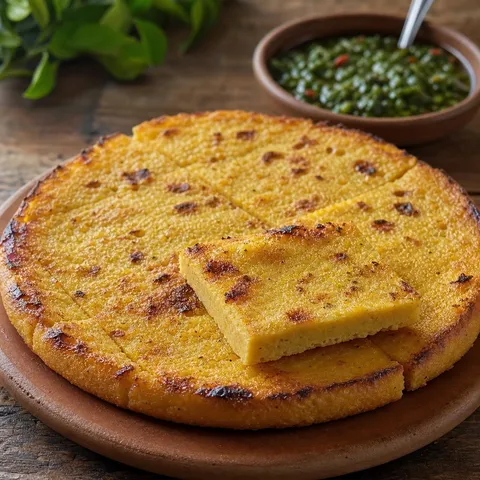 South American Lens Verified Images are for illustrative purposes only, may be inaccurate, and do not guarantee the presence or absence of specific ingredients.
 Fainá
Buenos Aires's thin chickpea flatbread, baked until golden and fragrant — simple, crispy-edged, and traditionally eaten layered right on top of a pizza slice.
 South American Lens Verified Images are for illustrative purposes only, may be inaccurate, and do not guarantee the presence or absence of specific ingredients.
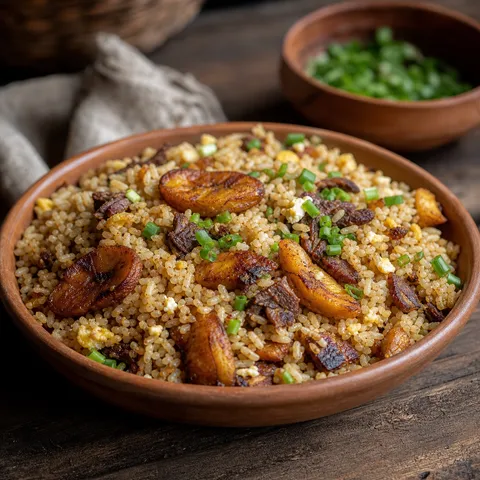
 Majadito
Bolivia's rustic one-pot comfort — dried charque beef simmered down with rice, tomato, and spices into a savory, fragrant dish topped with a fried egg.
 South American Lens Verified Images are for illustrative purposes only, may be inaccurate, and do not guarantee the presence or absence of specific ingredients.
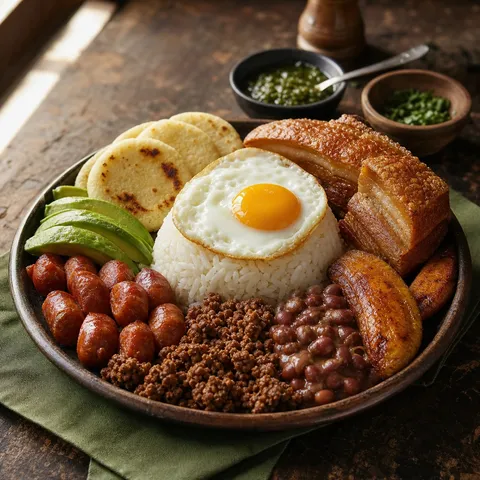
 Bandeja Paisa
Colombia's legendary tray of abundance — red beans, white rice, chicharrón, chorizo, fried egg, plantains, and avocado all piled high for a satisfying feast.