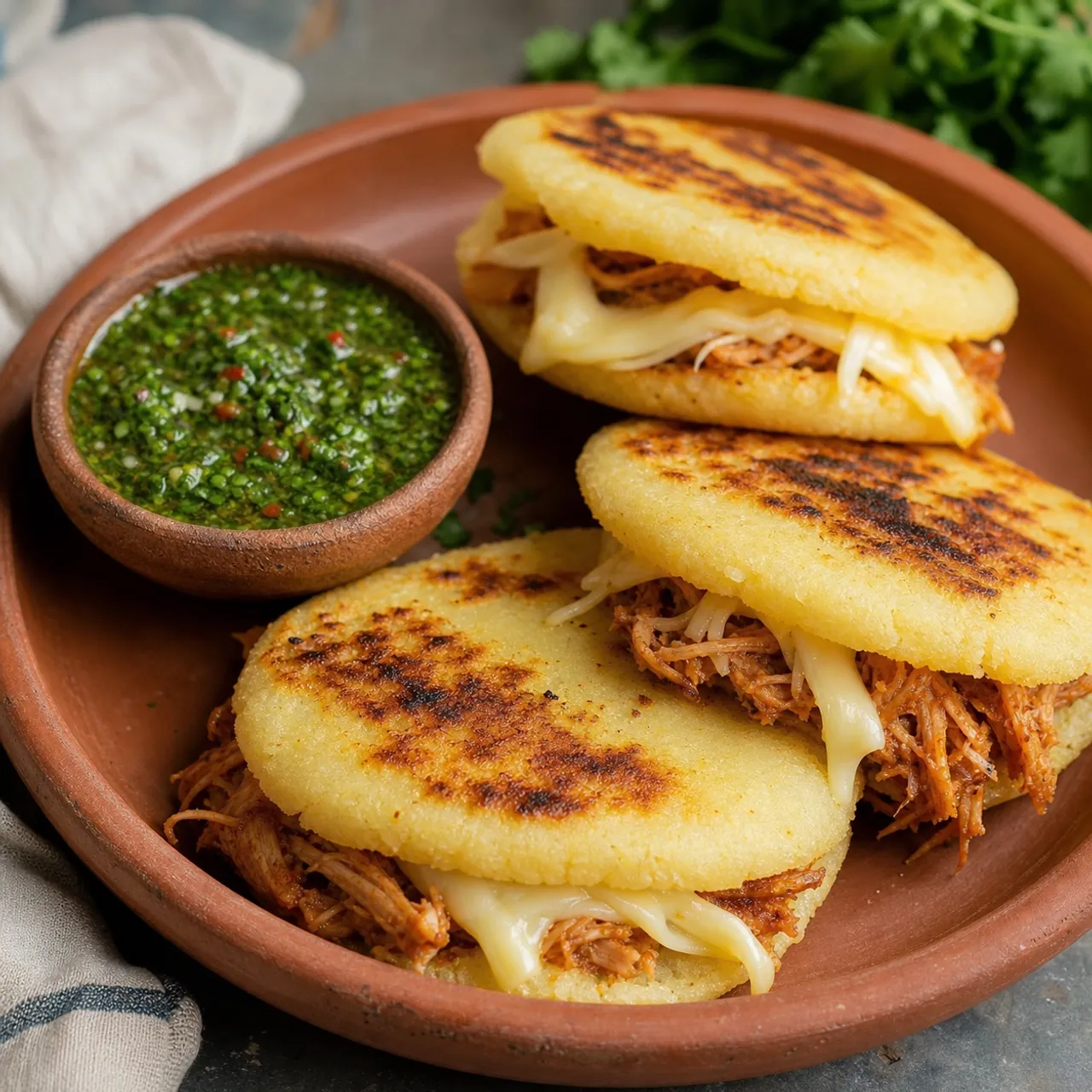
 South American Images are for illustrative purposes only, may be inaccurate, and do not guarantee the presence or absence of specific ingredients.
 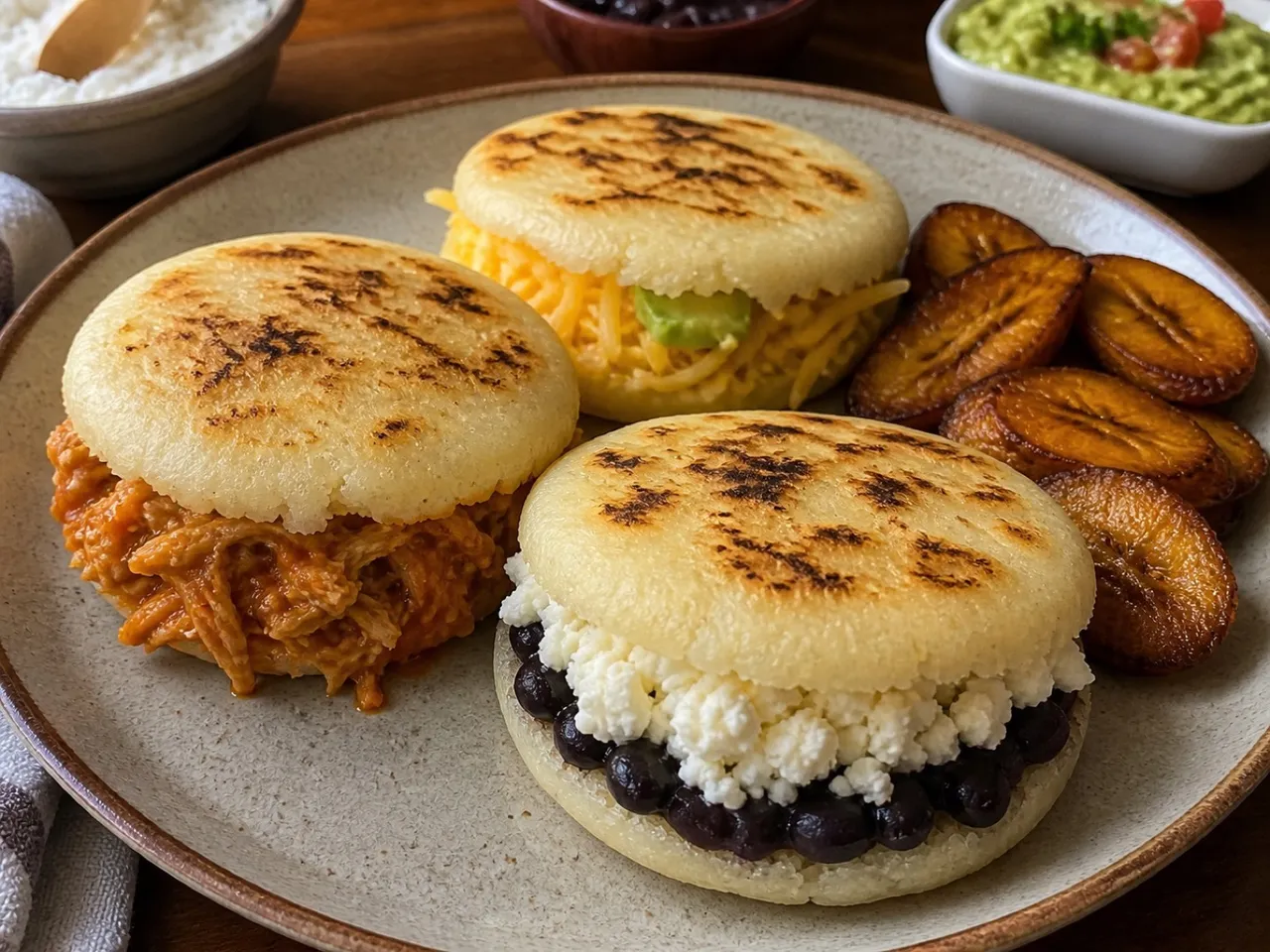 Serving Images are for illustrative purposes only, may be inaccurate, and do not guarantee the presence or absence of specific ingredients.
 Arepas
Thick griddled cornmeal cakes from Venezuela and Colombia — crisp on the outside, pillowy inside, and endlessly versatile stuffed with cheese or pulled pork.
Contains common allergens
In the app, Listahan checks these against your household automatically.
Good to know
- Crispy
- Ready in under 30 minutes
Matched from this dish's own ingredients and timing. Browse more: crispy recipes30-minute meals
Instructions
5 steps- 1
Mix the dough: In a large bowl, whisk together the warm water and salt. Gradually pour in the cornmeal while stirring continuously to prevent lumps.
- 2
Rest the dough: Let the mixture sit for 5 minutes to allow the cornmeal to fully absorb the liquid and hydrate.
- 3
Knead and shape: Knead the dough with your hands for a minute until smooth and pliable. Divide into equal portions and form them into discs about 1/2 inch thick and 4 inches wide.
- 4
Cook the arepas: Heat a lightly oiled skillet or griddle over medium heat. Place the discs on the pan and cook for 5-7 minutes per side.
- 5
Check for doneness: The arepas are ready when a golden-brown crust forms on both sides and they sound hollow when tapped. Split open and serve warm with butter, cheese, or meat.
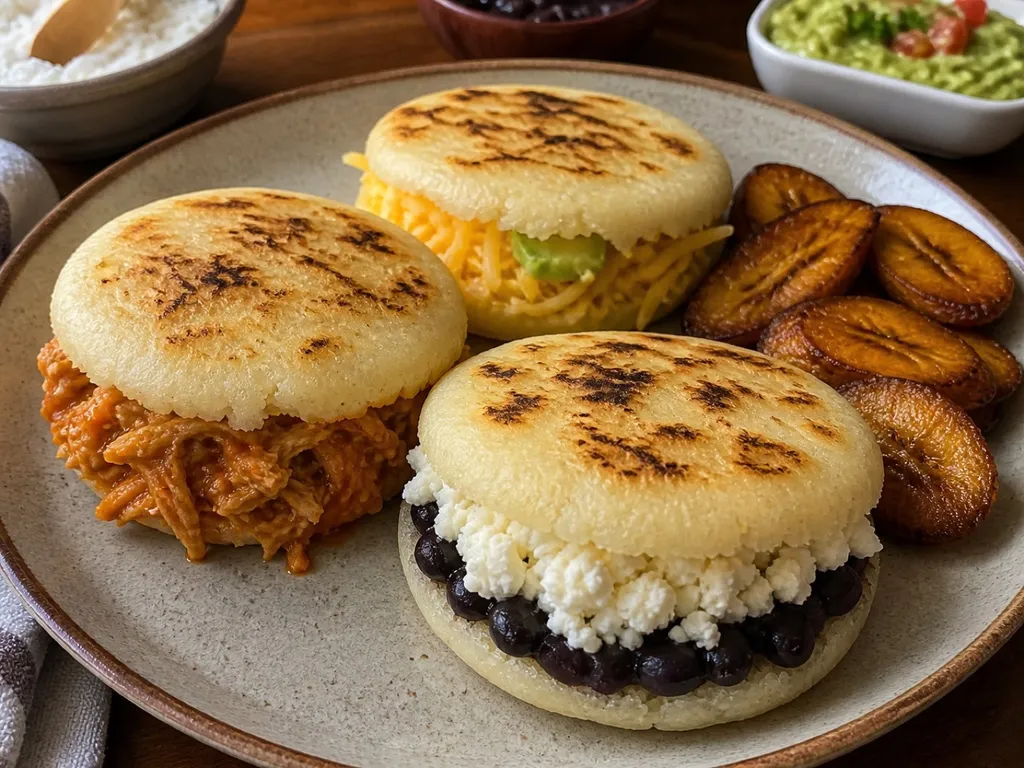 Images are for illustrative purposes only, may be inaccurate, and do not guarantee the presence or absence of specific ingredients.
 Listahan Family Score™
76/100
Good fit for most families
Score reflects how well this recipe fits a typical busy household. In the app, your Family Score is personalized to your household's allergens, kids, and pantry.
Nutrition
per serving255
Calories
5 g
Protein
48 g
Carbs
6 g
Fat
Estimated per serving. Actual values depend on the brands and portions you use.
Listahan cooking guide
Chef notes & practical guide
Technique notes, ingredient swaps, serve-alongside ideas, storage guidance, and equipment for this recipe.
Cultural context
Arepas are a cornmeal flatbread central to both Venezuelan and Colombian tables, with roots in Indigenous maize cooking that predate European contact. The modern version relies on masarepa, a precooked corn flour that turns arepas into a fast, everyday staple eaten at any meal. Venezuelans typically split and stuff them like a pocket, while Colombians more often eat them flat and topped.
Listahan note
This version goes for a crisp golden crust over a soft, steamy interior, using just masarepa, water, and salt so the corn flavor stays clean and the dough is easy to split and fill.
Technique cues
- Let the mixed dough rest a few minutes so the masarepa fully hydrates; this is what keeps it from cracking when you shape the discs.
- Cook over steady medium heat to set a real golden crust before the inside is done, then finish in the oven or covered pan so the center steams through.
- Wet your hands while shaping so the dough patties stay smooth instead of dry and fissured at the edges.
Kitchen flow
- Parallel prep
- Mix and rest the dough first, then shape all the discs while the skillet preheats so they cook in steady batches.
- Make-ahead
- Shaped raw arepas hold in the fridge for a day; cook fresh when you want that crisp crust.
- Leftover move
- Re-crisp cooked arepas in a dry skillet or toaster, then split and stuff with eggs for breakfast or beans for lunch.
- Cleanup rhythm
- Wipe the masarepa bowl while the first batch cooks; a quick rinse before the dough dries saves real scrubbing later.
Ingredient brief
Role, handling, and swap guidance for each key ingredient.
masarepa (precooked corn flour)
the entire structure
Purpose: Precooked corn flour hydrates instantly into a pliable dough and is the one ingredient that makes a real arepa.
Handling: Whisk gradually into warm salted water and let it rest to hydrate.
Adaptation: There is no true substitute; regular cornmeal or masa harina behaves differently, so seek out masarepa (P.A.N. is a common brand).
warm water
the hydrator
Purpose: Warm water helps the masarepa absorb evenly for a smooth, workable dough.
Handling: Add gradually and adjust until the dough is soft but not sticky.
Adaptation: Part milk gives a slightly richer, more tender crumb.
salt
the essential seasoning
Purpose: Plain arepa dough tastes flat without enough salt; it is one of only three core ingredients, so it matters.
Handling: Dissolve it in the water before adding the flour for even seasoning.
Adaptation: None needed; this is a load-bearing ingredient here.
shredded cheese (optional filling)
the classic stuffing
Purpose: Melty cheese inside a hot arepa is the most beloved everyday version across both countries.
Handling: Have it shredded and ready so you can split and fill the arepas while hot.
Adaptation: Black beans, shredded chicken, or avocado make satisfying fillings; a dairy-free cheese works for the melty effect.
Technique notes
- Knock on a cooked arepa; a hollow sound means the inside has steamed through and it is ready to split.
- Finish thicker arepas in a hot oven so the center cooks without the crust burning.
- Split the hot arepa with a knife but stop short of cutting all the way through so the filling stays cradled inside.
Ingredient swaps
- Dairy-free option
- Fill with black beans, avocado, and pico de gallo instead of cheese for a fully dairy-free arepa.
- Weeknight shortcut
- Make small thin arepas that cook faster and serve them flat as a base for quick toppings.
- Higher-protein direction
- Stuff with shredded chicken or a fried egg to turn the arepa into a full meal.
Serve alongside
- Black beans (caraotas)
- Sliced avocado with lime
- Shredded beef (carne mechada)
- Fresh tomato and onion salad
- Papelon con limon (cane sugar limeade)
- Cafe con leche
- Cold hibiscus tea
Serving suggestions only — check pairings for your household's allergens.
Storage & reheating
- Cooked arepas keep in the fridge for up to three days; re-crisp in a dry skillet or toaster oven rather than the microwave, which leaves them gummy. Raw shaped dough can be refrigerated overnight. Cooked arepas freeze well wrapped individually and reheat straight from frozen in a hot oven.
Equipment
- Heavy skillet or griddle
- Mixing bowl
- Sheet pan for oven finishing
- Spatula
Make this household-aware
Listahan Pro checks this recipe against your household's allergens, finds pantry-aware swaps, builds the shopping list, and helps you plan the week around it.
Plan it in Listahan
Add Arepas to your week, check it against your household's allergens, and build the shopping list automatically.
More South American recipes
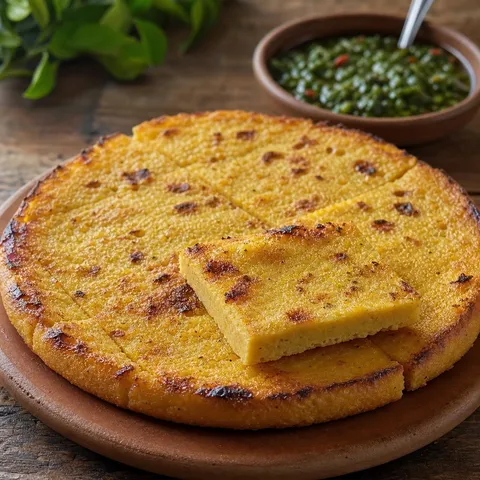 South American Lens Verified Images are for illustrative purposes only, may be inaccurate, and do not guarantee the presence or absence of specific ingredients.
 Fainá
Buenos Aires's thin chickpea flatbread, baked until golden and fragrant — simple, crispy-edged, and traditionally eaten layered right on top of a pizza slice.
 South American Lens Verified Images are for illustrative purposes only, may be inaccurate, and do not guarantee the presence or absence of specific ingredients.
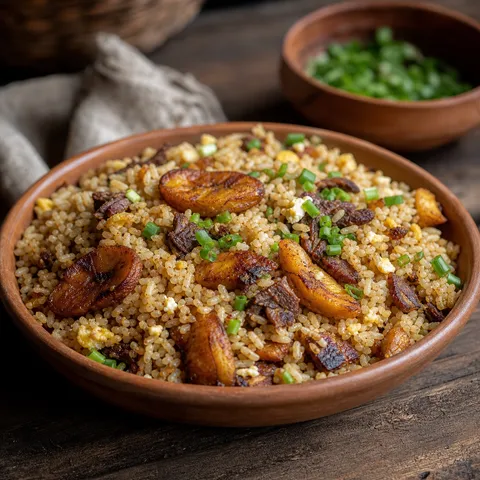
 Majadito
Bolivia's rustic one-pot comfort — dried charque beef simmered down with rice, tomato, and spices into a savory, fragrant dish topped with a fried egg.
 South American Lens Verified Images are for illustrative purposes only, may be inaccurate, and do not guarantee the presence or absence of specific ingredients.
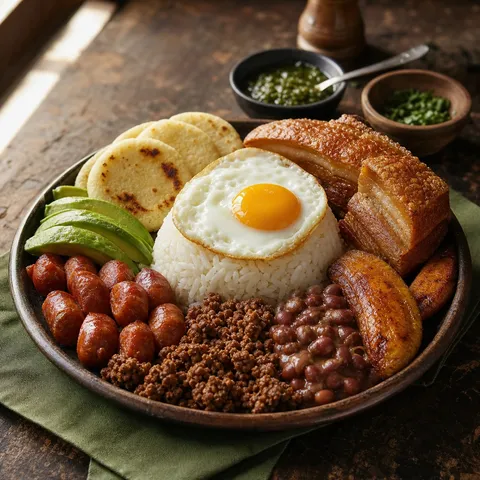
 Bandeja Paisa
Colombia's legendary tray of abundance — red beans, white rice, chicharrón, chorizo, fried egg, plantains, and avocado all piled high for a satisfying feast.