 Food Lens Images are for illustrative purposes only, may be inaccurate, and do not guarantee the presence or absence of specific ingredients.
 Food Lens · Pantry
Salt
Clean, mineral, intensely savory, and flavor-amplifying.
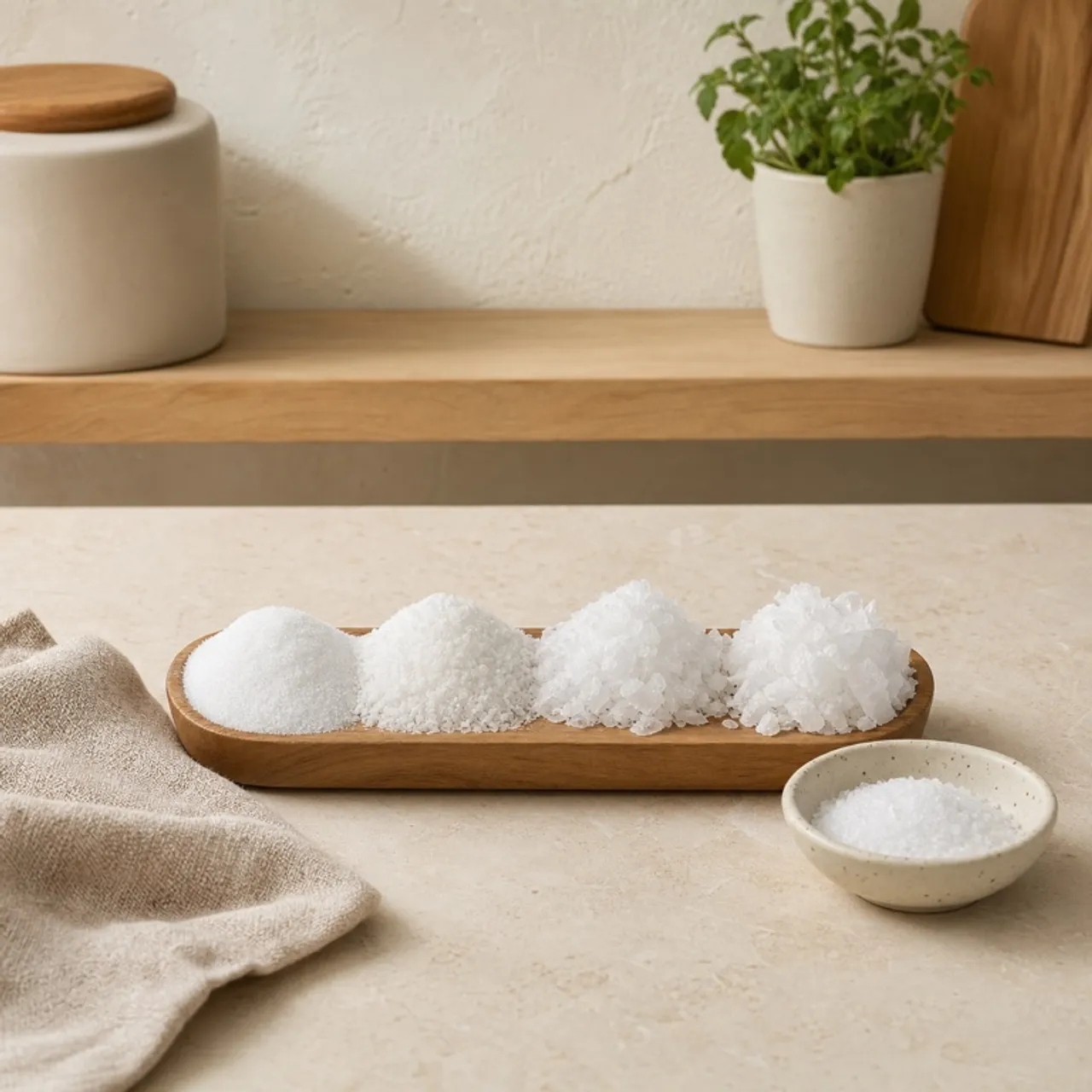
Lens VerifiedSalt sharpens flavor, balances sweetness and bitterness, and helps food taste more like itself. Most cooking salt is sodium chloride, but crystal size changes how salty a pinch feels.
Where it comes from
Salt has preserved food and shaped trade routes for thousands of years. In everyday North American kitchens it shows up as table salt, kosher salt, sea salt, and specialty finishing salts.
Varieties — Table salt, kosher salt, sea salt, flaky finishing salt, and pickling salt differ mostly by crystal size, additives, and texture.
Salt appears in every cooking tradition, from brines and pickles to spice blends, noodle water, and finishing pinches.
In a modern kitchen — For day-to-day cooking, consistency matters more than fanciness: learn the salinity of your usual salt and season gradually.
Buying it
For cooking, keep a plain kosher or fine sea salt for easy seasoning. Iodized table salt is useful when iodine is desired, while flaky salts are best saved for finishing.
Storing it
Keep salt dry in a sealed container. If it clumps, break it up and check for moisture rather than spoilage.
Keeps about 5 years in the pantry.
Out of salt? Good swaps
- Kosher salt — Use by weight when precision matters; flakes vary by brand.
- Sea salt — Works one-for-one by weight in most cooking.
- Soy sauce — Adds salt plus umami in sauces and marinades; contains soy and often wheat.
General cooking guidance — always check the labels on the products you use. Listahan’s allergen checks run automatically when you plan a recipe in the app. Not medical advice.
Recipes that use salt
Common questions about salt
Is salt gluten-free?
Salt is generally gluten-free, but processing and added ingredients vary between brands — check the label if you're cooking for a gluten allergy or coeliac disease.
Is salt vegan?
Salt is generally plant-based and suitable for a vegan diet, but brands differ — confirm on the label.
What can I use instead of salt?
Good swaps include Kosher salt, Sea salt, Soy sauce. Each behaves a little differently — see the swaps above for notes, and always check labels for allergens.
How do I store salt?
Keep salt dry in a sealed container. If it clumps, break it up and check for moisture rather than spoilage. It keeps about 5 years in the pantry.
More pantry
See all


Make salt about your kitchen — with Listahan Pro
Everything above is free, forever. Pro adds the Household Lens — the same food, seen for your family:
-
Checked for each member
Flags salt per person against your household's allergies and school rules — not just a generic "contains" tag.
-
Pantry-aware
Knows whether you already have it, what is running low, and the best swap from what is in your kitchen tonight.
-
What it costs near you
A real price from the Presyo community index, so you can plan the budget — not guess.
-
Your household memory
Who likes it, plus your own private notes — brand, where you keep it, who skips it.
Allergen safety is always free — Pro adds the automation, never the safety.
Cook with salt — safely
Plan a recipe in Listahan and the household allergen check runs automatically — every plan, every swap, every lunchbox. Safety is never paywalled.