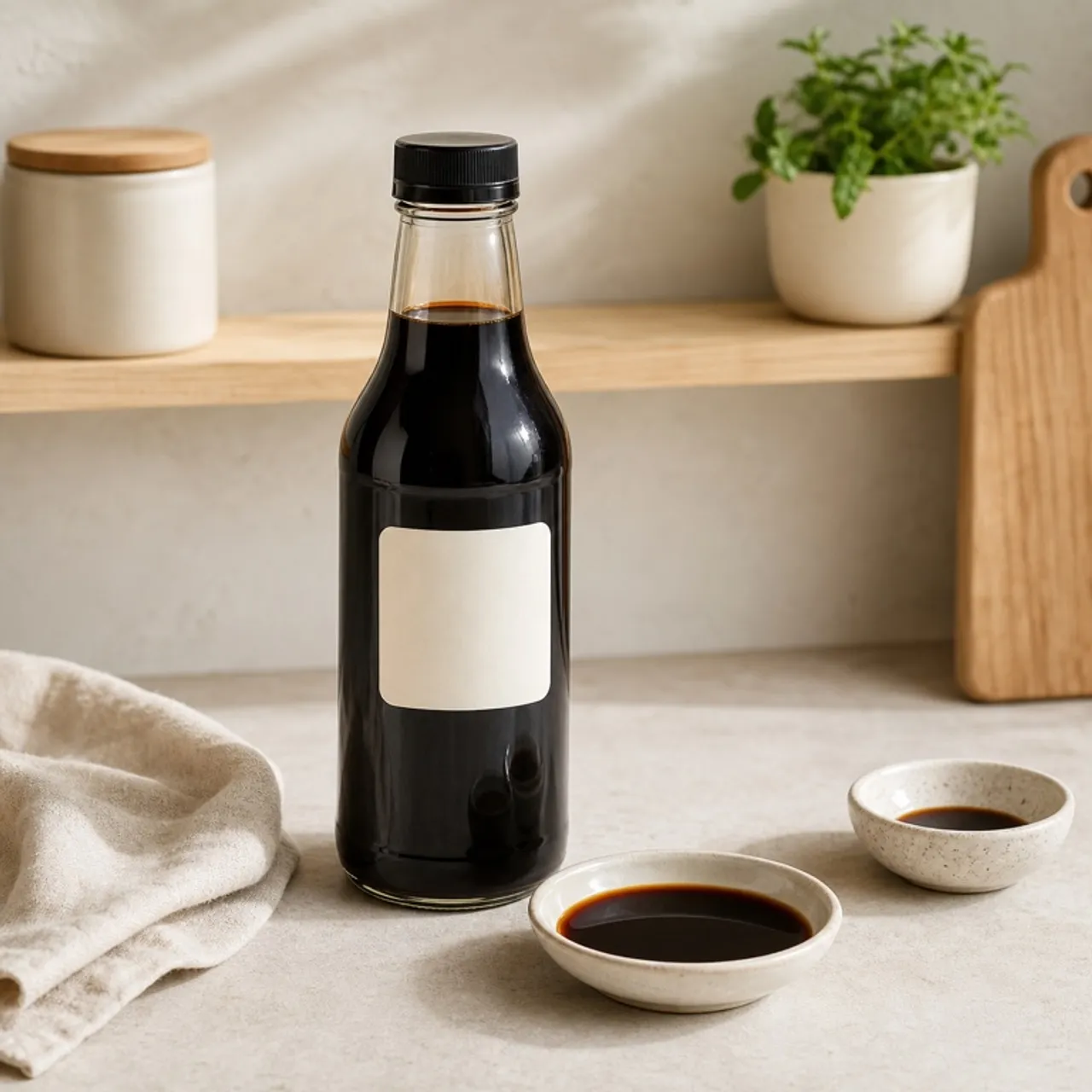
 Food Lens Images are for illustrative purposes only, may be inaccurate, and do not guarantee the presence or absence of specific ingredients.
 Food Lens · Condiments
Soy sauce
Salty, savory, fermented, malty, and umami-rich.
Lens VerifiedSoy sauce is a salty fermented seasoning that adds umami, color, and depth. A little can season an entire sauce, stir-fry, marinade, or soup.
Where it comes from
Soy sauce developed from East Asian fermentation traditions and is now used across Chinese, Japanese, Korean, Filipino, and global home cooking.
Varieties — Light, dark, Japanese shoyu, tamari, low-sodium, Filipino toyo, Korean ganjang, and Chinese soy sauces differ in salt, color, and sweetness.
It is central across East and Southeast Asian cooking and now common in global marinades and pantry sauces.
In a modern kitchen — Because it is salty and allergen-relevant, add it before extra salt and check labels for soy and wheat.
Buying it
Choose naturally brewed soy sauce for everyday cooking. Use low-sodium if you want more control over salt; use tamari only when its label fits the allergy need.
Storing it
Store unopened in the pantry. Refrigerate after opening for best flavor, especially for naturally brewed bottles.
Keeps about 2 years in the pantry.
Out of soy sauce? Good swaps
- Tamari — Often wheat-free but still contains soy; always check the label.
- Coconut aminos — Sweeter and less salty; useful for soy-free cooking if label fits.
- Fish sauce — Adds salt and umami but contains fish and has a different flavor.
General cooking guidance — always check the labels on the products you use. Listahan’s allergen checks run automatically when you plan a recipe in the app. Not medical advice.
Recipes that use soy sauce
Common questions about soy sauce
Is soy sauce gluten-free?
Not usually — soy sauce commonly contains wheat or gluten. Look for a certified gluten-free version and check the label to be sure.
What can I use instead of soy sauce?
Good swaps include Tamari, Coconut aminos, Fish sauce. Each behaves a little differently — see the swaps above for notes, and always check labels for allergens.
How do I store soy sauce?
Store unopened in the pantry. Refrigerate after opening for best flavor, especially for naturally brewed bottles. It keeps about 2 years in the pantry.
More condiments
See all


Make soy sauce about your kitchen — with Listahan Pro
Everything above is free, forever. Pro adds the Household Lens — the same food, seen for your family:
-
Checked for each member
Flags soy sauce per person against your household's allergies and school rules — not just a generic "contains" tag.
-
Pantry-aware
Knows whether you already have it, what is running low, and the best swap from what is in your kitchen tonight.
-
What it costs near you
A real price from the Presyo community index, so you can plan the budget — not guess.
-
Your household memory
Who likes it, plus your own private notes — brand, where you keep it, who skips it.
Allergen safety is always free — Pro adds the automation, never the safety.
Cook with soy sauce — safely
Plan a recipe in Listahan and the household allergen check runs automatically — every plan, every swap, every lunchbox. Safety is never paywalled.