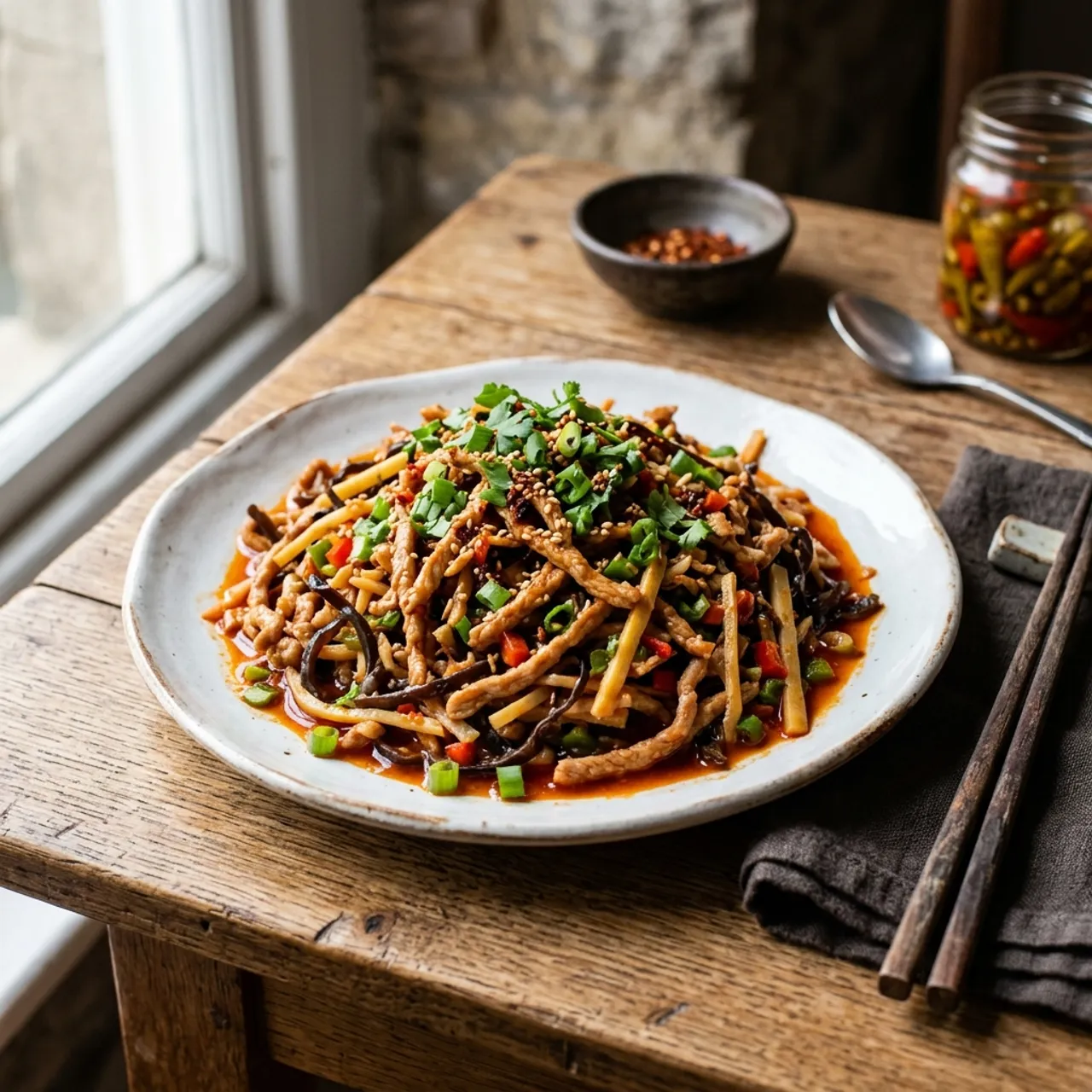
 Chinese Images are for illustrative purposes only, may be inaccurate, and do not guarantee the presence or absence of specific ingredients.
 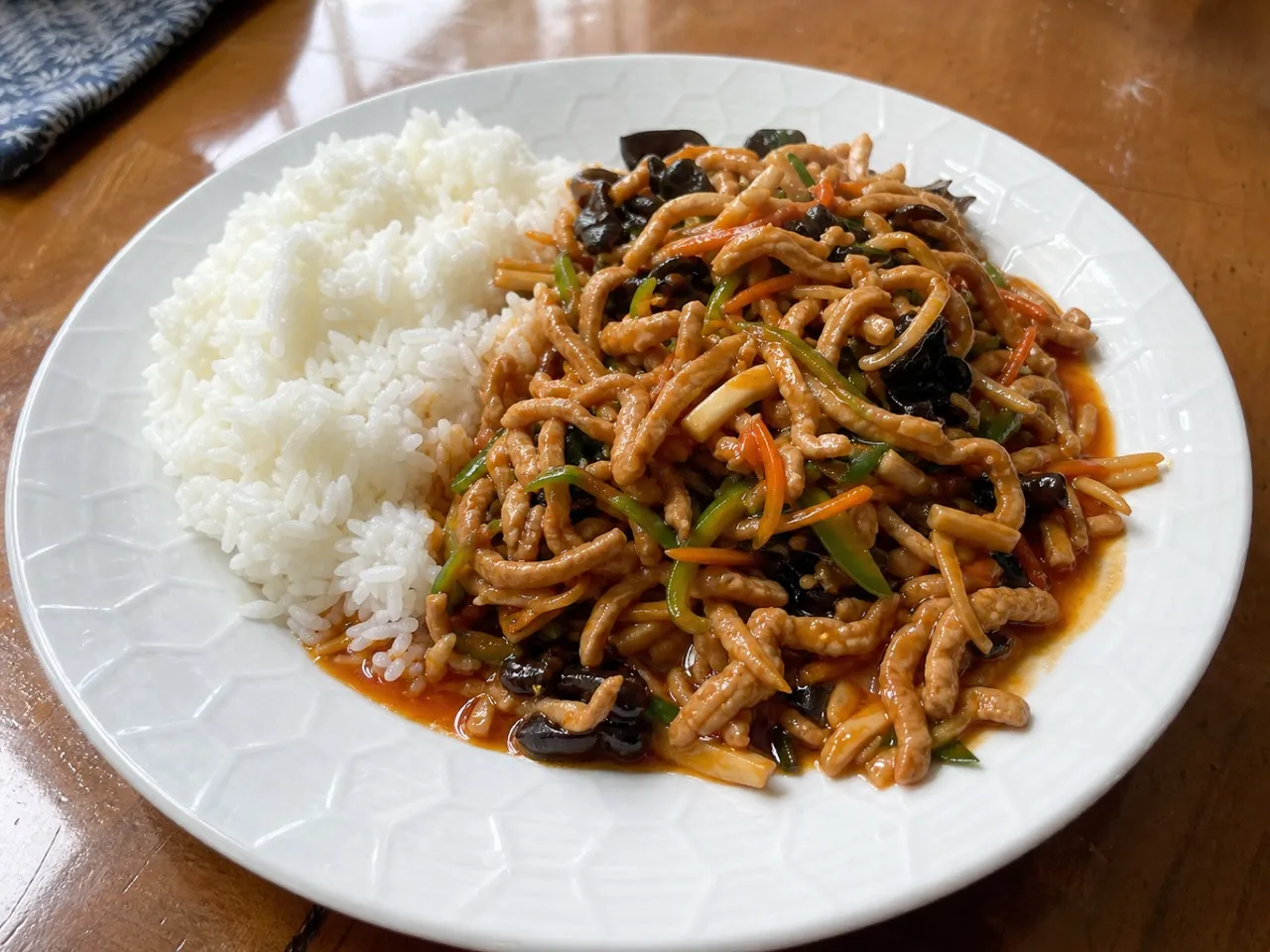 Serving Images are for illustrative purposes only, may be inaccurate, and do not guarantee the presence or absence of specific ingredients.
 Yuxiang Rou Si (Fish-Fragrant Pork Shreds)
A classic Sichuan dish that uses "fish-fragrant" seasoning (sweet, sour, and spicy) on pork shreds, containing no actual fish.
Contains common allergens
In the app, Listahan checks these against your household automatically.
Good to know
- Ready in under 30 minutes
Matched from this dish's own ingredients and timing. Browse more: 30-minute meals
Instructions
6 steps- 1
Marinate the Pork: Toss the pork shreds with 1 tbsp soy sauce, 1 tbsp water, and the cornstarch. Let marinate for 15 minutes.
- 2
Make the Yuxiang Sauce: In a small bowl, whisk together the sugar, black vinegar, and another 1 tbsp of soy sauce. The balance of sweet and sour is the key to the "fish-fragrant" flavor profile.
- 3
Fry the Pork: Heat a wok over high heat with 2 tbsp oil. Add the pork shreds and stir-fry rapidly for 1-2 minutes until they turn white and separate. Remove the pork and set aside.
- 4
Aromatize the Base: Add 1 more tbsp of oil to the wok. Lower heat to medium. Add the pickled chili peppers, garlic, and ginger. Fry for 30 seconds until the oil turns red and smells incredibly fragrant.
- 5
Stir-Fry Vegetables: Turn heat back to high. Toss in the wood ear mushrooms and bamboo shoots. Stir-fry for 2 minutes until tender-crisp.
- 6
Combine and Glaze: Return the pork to the wok. Pour the Yuxiang sauce mixture over everything. Toss vigorously for 1 minute until the sauce thickens into a glossy glaze that coats the meat and vegetables perfectly. Serve hot.
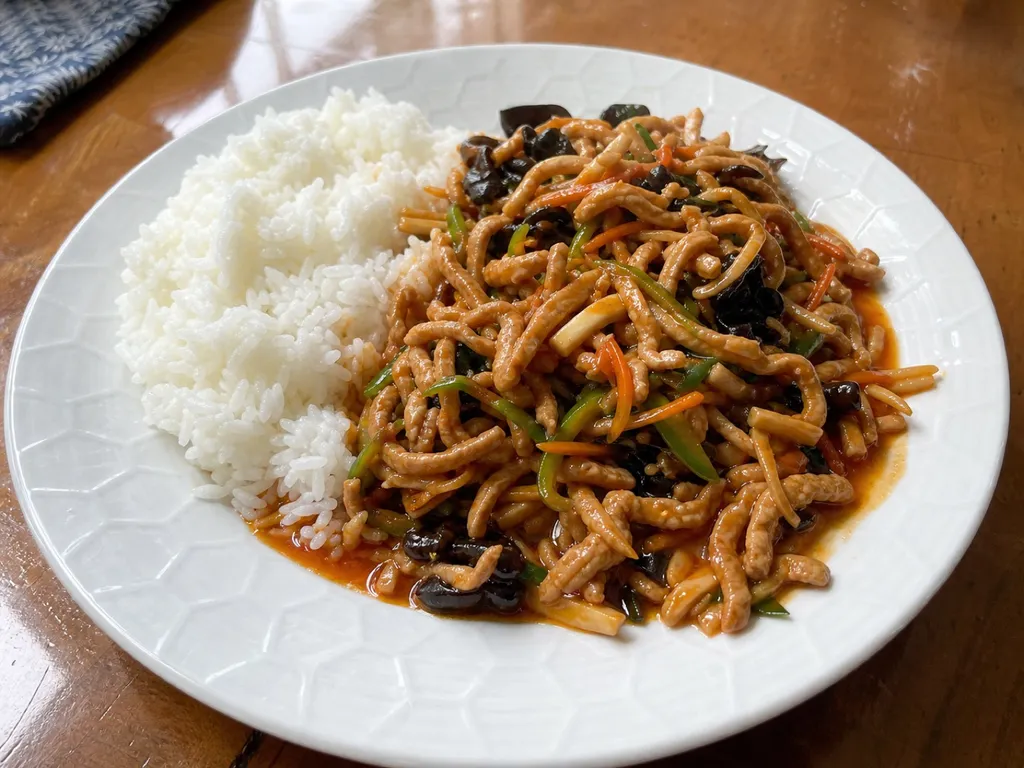 Images are for illustrative purposes only, may be inaccurate, and do not guarantee the presence or absence of specific ingredients.
 Listahan Family Score™
58/100
Works for many families
Score reflects how well this recipe fits a typical busy household. In the app, your Family Score is personalized to your household's allergens, kids, and pantry.
Nutrition
per serving425
Calories
42 g
Protein
14 g
Carbs
21 g
Fat
Estimated per serving. Actual values depend on the brands and portions you use.
Listahan cooking guide
Chef notes & practical guide
Technique notes, ingredient swaps, serve-alongside ideas, storage guidance, and equipment for this recipe.
Cultural context
Despite its name, Yuxiang Rou Si contains no fish whatsoever -- 'yuxiang' refers to a flavor profile from Sichuan province developed by combining ingredients traditionally used to cook fish: pickled chiles, garlic, ginger, and scallions in a precise balance of sweet, sour, spicy, and savory. The sauce was so compelling that cooks began applying it to pork, eggplant, and other proteins, creating an entire category of Sichuanese cooking named after fish that never included one. It remains one of the most taught dishes in Chinese culinary schools as an exercise in flavor balance.
Listahan note
This version builds the yuxiang sauce from scratch with pickled chiles (Pixian doubanjiang) and fresh aromatics to achieve the genuine layered flavor rather than relying on a shortcut stir-fry sauce.
Technique cues
- Slice the pork tenderloin across the grain into thin matchsticks and marinate briefly in a small amount of soy sauce and cornstarch -- this creates a velvety coating that prevents the pork from seizing up in the hot wok.
- Fry the doubanjiang and pickled chiles at the start of cooking until the oil turns red and fragrant before adding anything else; this step extracts the fat-soluble compounds that carry the dish's characteristic heat and aroma.
- Balance the finishing sauce precisely -- the yuxiang profile depends on equal presence of sweet (sugar), sour (vinegar), and savory (soy sauce); taste and adjust before it hits the wok rather than after, when the heat makes fine-tuning harder.
Kitchen flow
- Parallel prep
- Soak the wood ear mushrooms and marinate the pork simultaneously 30 minutes before cooking; mix the yuxiang sauce separately so active wok time is under 10 minutes.
- Make-ahead
- The yuxiang sauce base (vinegar, sugar, soy, cornstarch) can be mixed and refrigerated for up to 1 week; the finished dish is best cooked fresh to order.
- Leftover move
- Leftover Yuxiang Rou Si makes an excellent filling for steamed bao buns or a topping for plain congee the next morning.
- Cleanup rhythm
- Deglaze the hot wok immediately after plating with a splash of water, swirl, and pour out; this prevents the sauce from baking on during the meal.
Ingredient brief
Role, handling, and swap guidance for each key ingredient.
pork tenderloin
main protein
Purpose: Tenderloin's fine grain and low connective tissue make it ideal for cutting into thin, even matchsticks that cook in seconds over high heat without toughening.
Handling: Partially freeze for 20 minutes before slicing -- the firm texture makes it much easier to cut uniform thin shreds.
Adaptation: Chicken breast shreds work equally well and cook in the same time; firm tofu can replace pork for a vegetarian version.
Pixian doubanjiang (spicy fermented bean paste)
flavor foundation
Purpose: Pixian doubanjiang is the non-negotiable core of yuxiang flavor -- its complex fermented heat and red color are what make this sauce distinct from a generic sweet-and-sour preparation.
Handling: Mince finely if the paste contains large chile pieces to ensure it disperses evenly in the oil.
Adaptation: Gochujang mixed with a little miso makes a rough stand-in; sambal oelek lacks the fermented depth but adds usable heat.
wood ear mushrooms
texture contrast
Purpose: Rehydrated wood ear mushrooms add a satisfying crunchy, gelatinous texture against the tender pork that is considered essential to the authentic dish.
Handling: Soak in warm water for 20 to 30 minutes until fully plumped, then trim the tough base and cut into thin strips.
Adaptation: Sliced shiitake mushrooms are softer but add earthy flavor; leave out if unavailable rather than substituting with a watery mushroom.
Chinkiang black rice vinegar
acid in yuxiang sauce
Purpose: Black vinegar provides the essential sour note in the sweet-sour-spicy balance of yuxiang; its mellow depth differs from the sharpness of white rice vinegar.
Handling: Measure and combine with sugar and soy sauce ahead of time so the sauce goes in as one addition.
Adaptation: White rice vinegar works but the flavor is sharper and less complex; reduce the amount by about 20 percent to compensate.
garlic and ginger
aromatic backbone
Purpose: Together these two aromatics form the base of the yuxiang flavor triangle alongside the pickled chiles; their pungency softens and sweetens as they cook in the hot oil.
Handling: Mince or grate finely so they release into the oil quickly during the fast stir-fry.
Adaptation: Garlic powder and ground ginger lose the freshness the dish relies on; use fresh if at all possible.
Technique notes
- Use the highest heat your burner can produce and preheat the wok until smoking before adding oil -- Yuxiang Rou Si requires true wok hei or the sauce will steam the pork rather than sear it.
- Cook the pork shreds in a single batch and do not stir immediately after adding them to the wok; let them sit undisturbed for 30 seconds so the velveting sets and a slight crust forms before you toss.
- Add the cornstarch slurry at the end in two additions, stirring between each, to control sauce thickness -- it thickens very quickly and a single large addition can over-gel the sauce.
Ingredient swaps
- Gluten-free direction
- Use tamari instead of soy sauce and check that your doubanjiang is gluten-free (many contain wheat); all other ingredients are naturally gluten-free.
- Lower-spice direction
- Halve the doubanjiang and replace the remainder with regular miso paste to reduce heat while keeping the fermented savory base intact.
- Vegetarian direction
- Replace pork with firm tofu cut into matchsticks and shallow-fry until golden before adding to the wok; the yuxiang sauce works beautifully with the neutral tofu canvas.
Serve alongside
- Steamed jasmine rice
- Mapo tofu as a second shared dish
- Stir-fried Chinese spinach with garlic
- Cold Tsingtao lager
- Chrysanthemum tea to balance the chili heat
Serving suggestions only — check pairings for your household's allergens.
Storage & reheating
- Store leftovers in an airtight container in the refrigerator for up to 2 days; the sauce thickens considerably overnight.
- Reheat in a hot wok or skillet with a tablespoon of water to loosen the sauce, stirring constantly over high heat until warmed through.
Equipment
- Carbon steel or cast iron wok for high-heat searing with minimal oil pooling
- Sharp knife or mandoline for cutting uniform pork matchsticks
- Small bowls for pre-mixing the yuxiang sauce before cooking starts
Make this household-aware
Listahan Pro checks this recipe against your household's allergens, finds pantry-aware swaps, builds the shopping list, and helps you plan the week around it.
Plan it in Listahan
Add Yuxiang Rou Si (Fish-Fragrant Pork Shreds) to your week, check it against your household's allergens, and build the shopping list automatically.
More Chinese recipes
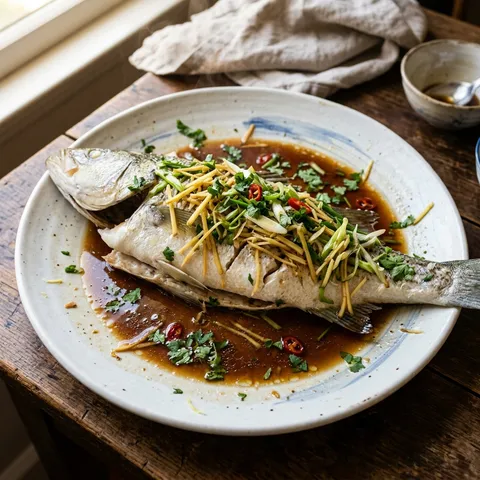 Chinese Lens Verified Images are for illustrative purposes only, may be inaccurate, and do not guarantee the presence or absence of specific ingredients.
 Steamed Fish with Soy and Ginger
A traditional banquet dish featuring delicately steamed whole fish with hot oil poured over aromatics.
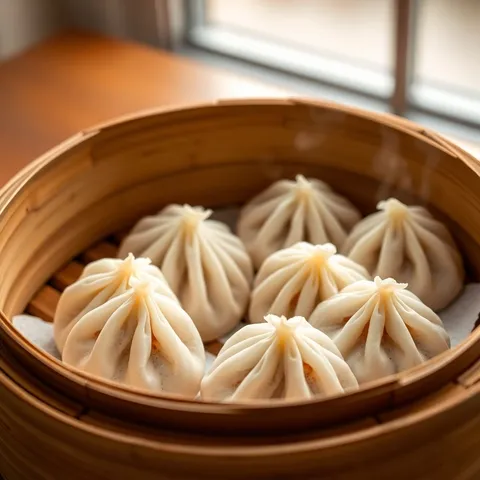 Chinese Lens Verified Images are for illustrative purposes only, may be inaccurate, and do not guarantee the presence or absence of specific ingredients.
 Xiao Long Bao (Soup Dumplings)
Delicate steamed buns filled with pork and a rich, savory soup.
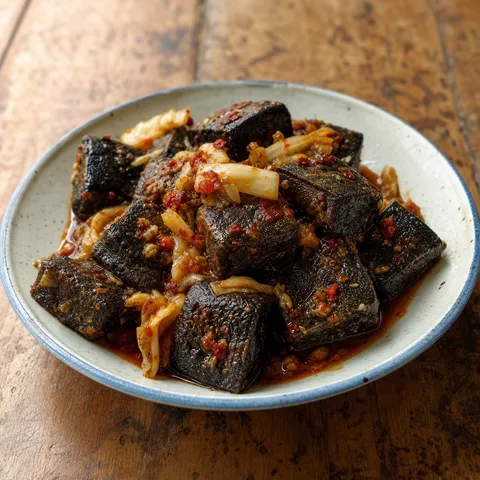 Chinese Lens Verified Images are for illustrative purposes only, may be inaccurate, and do not guarantee the presence or absence of specific ingredients.
 Stinky Tofu
A fermented tofu dish with a strong odor but a mild, savory flavor, usually deep-fried and served with pickled cabbage.