 Chinese Images are for illustrative purposes only, may be inaccurate, and do not guarantee the presence or absence of specific ingredients.
  Serving Images are for illustrative purposes only, may be inaccurate, and do not guarantee the presence or absence of specific ingredients.
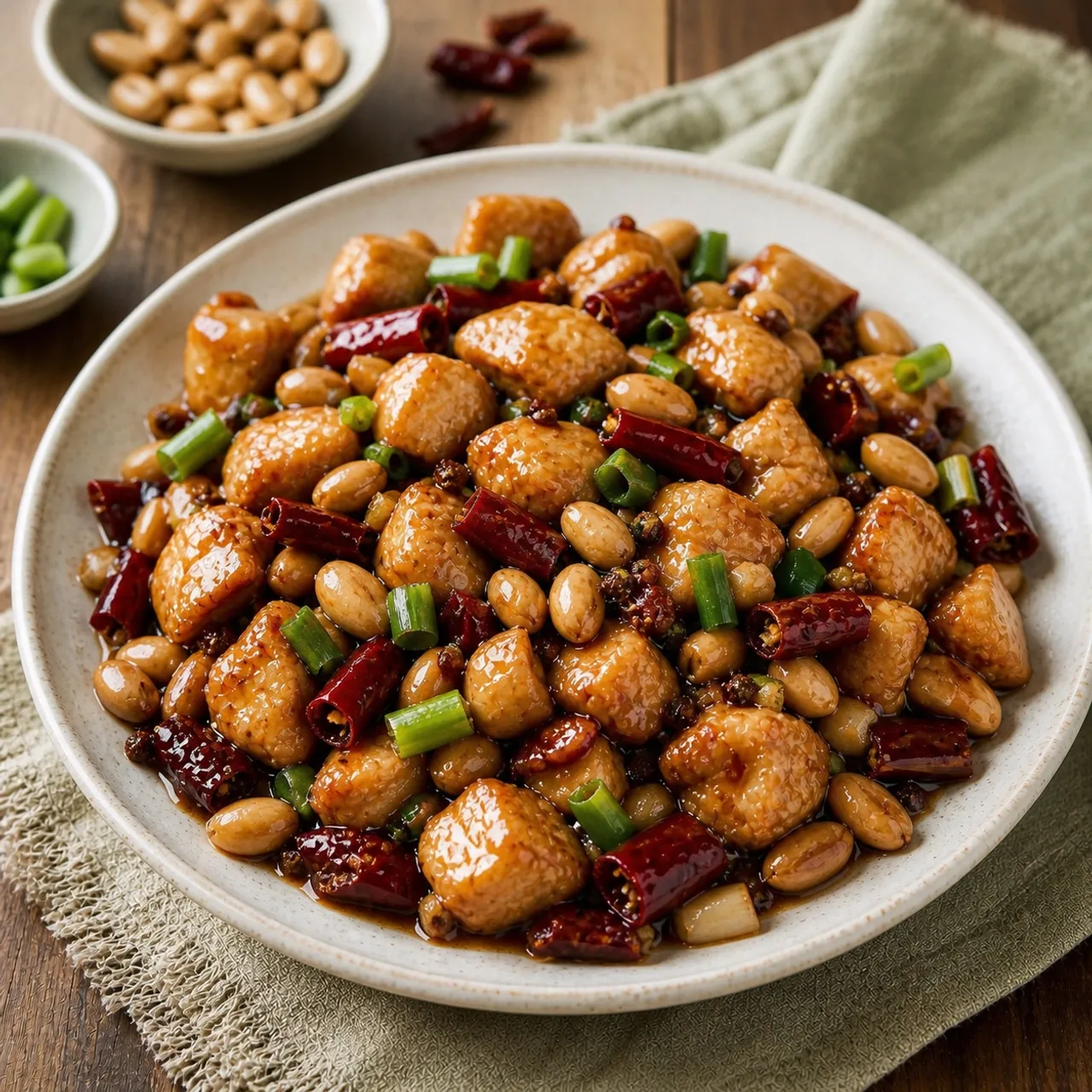
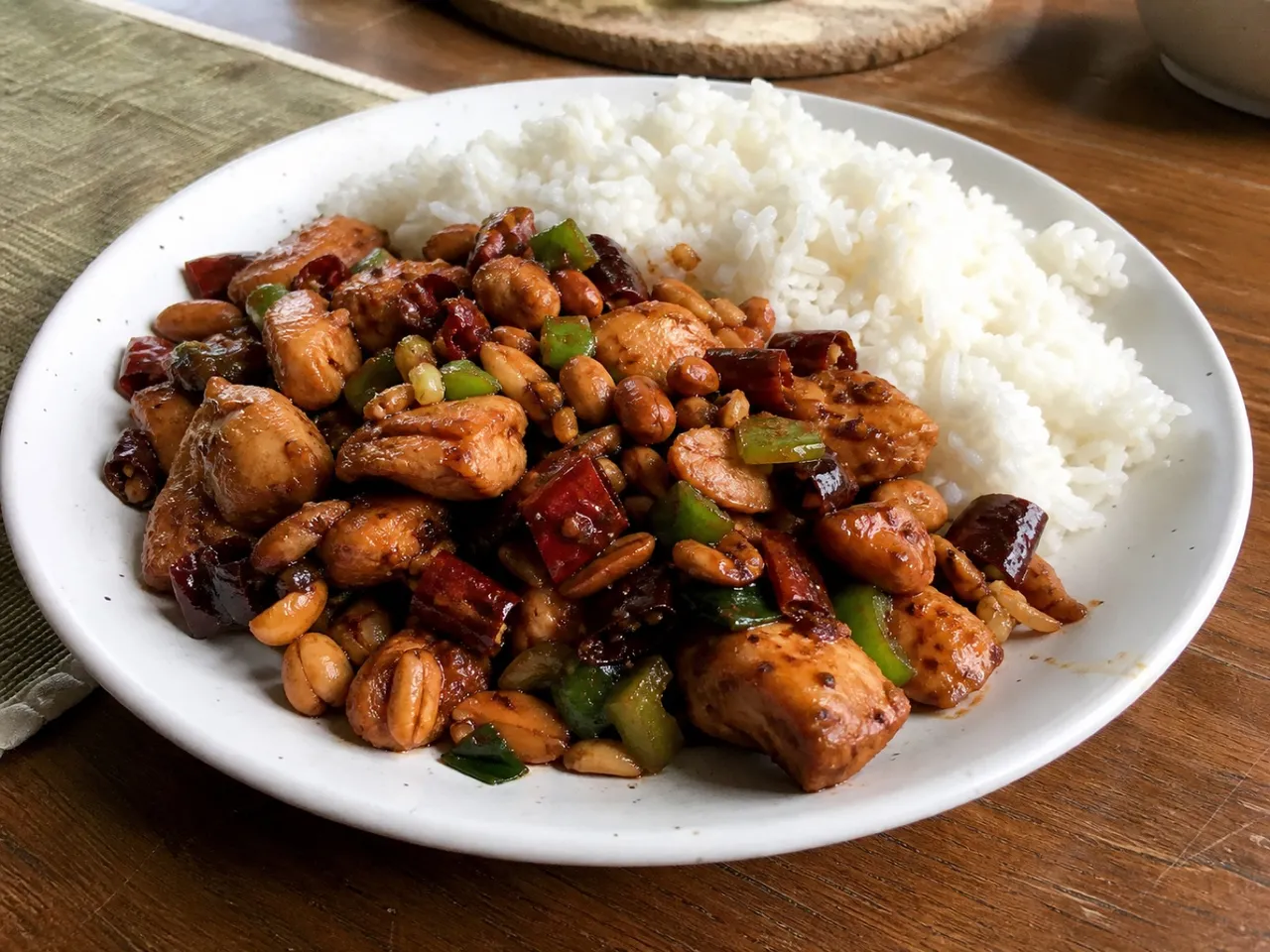
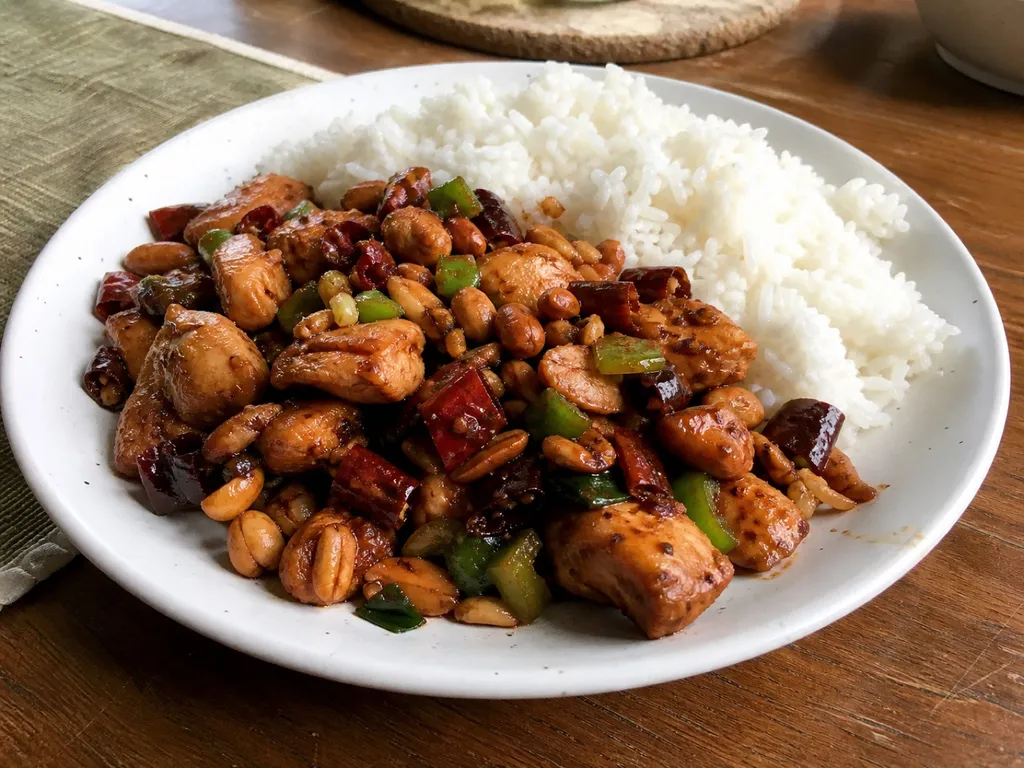
 Kung Pao Chicken
A classic spicy, stir-fried Chinese dish made with cubes of chicken, peanuts, vegetables, and chili peppers.
Contains common allergens
In the app, Listahan checks these against your household automatically.
Good to know
- Ready in under 30 minutes
Matched from this dish's own ingredients and timing. Browse more: 30-minute meals
Instructions
6 steps- 1
Marinate the Chicken: In a medium bowl, toss the cubed chicken breast with 1 tbsp soy sauce and 1 tbsp cornstarch. Let it sit at room temperature for 15 minutes to tenderize.
- 2
Prepare the Sauce: In a small bowl, whisk together 2 tbsp soy sauce, 1 tbsp black vinegar, 1 tsp sugar, and a splash of water until the sugar dissolves. Set aside.
- 3
Aromatize the Oil: Heat a wok over high heat until smoking. Add 2 tbsp of cooking oil, then toss in the dry chilies and Sichuan peppercorns. Stir-fry for 15-20 seconds until the chilies darken and become deeply fragrant.
- 4
Cook the Chicken: Add the marinated chicken to the wok in a single layer. Sear without moving for 1 minute to develop a crust, then stir-fry for 3-4 minutes until golden and mostly cooked through.
- 5
Add Aromatics and Sauce: Lower the heat to medium. Stir in the minced garlic and grated ginger, cooking for 30 seconds until aromatic. Pour the sauce mixture over the chicken.
- 6
Final Toss: Increase heat to high. Once the sauce bubbles and thickens into a glossy glaze (about 1 minute), fold in the roasted peanuts. Serve immediately while hot.
 Images are for illustrative purposes only, may be inaccurate, and do not guarantee the presence or absence of specific ingredients.
 Listahan Family Score™
61/100
Works for many families
Score reflects how well this recipe fits a typical busy household. In the app, your Family Score is personalized to your household's allergens, kids, and pantry.
Nutrition
per serving425
Calories
55 g
Protein
11 g
Carbs
18 g
Fat
Estimated per serving. Actual values depend on the brands and portions you use.
Listahan cooking guide
Chef notes & practical guide
Technique notes, ingredient swaps, serve-alongside ideas, storage guidance, and equipment for this recipe.
Cultural context
Kung Pao Chicken traces its name to Ding Baozhen, a Qing dynasty official whose honorific title was Gong Bao, later romanized as Kung Pao. The dish originated in Sichuan province and pairs the region's signature dried chilies and Sichuan peppercorns with chicken, peanuts, and a vinegar-forward sauce. It was briefly banned in China after the Cultural Revolution because of its association with an imperial official, then rehabilitated and eventually spread worldwide through Chinese diaspora cooking.
Listahan note
This version leans into the classic balance of numbing heat, crunch, and slight sweetness, keeping the sauce tightly coating rather than pooled so every bite of chicken carries equal flavor.
Technique cues
- Velveting the chicken in a cornstarch-and-egg-white slurry before stir-frying locks in moisture, giving you tender cubes instead of rubbery chunks even at high wok heat.
- Add the dried chilies and Sichuan peppercorns to cold oil and bring the heat up together -- this blooms the spices gently and avoids scorching, which turns the sauce bitter.
- Mix the sauce components (soy, vinegar, sugar, cornstarch) in a small bowl before you start cooking, because the wok moves too fast to measure mid-stir.
Kitchen flow
- Parallel prep
- While the chicken velvets, mix your sauce in a bowl, cut scallions, and measure out peanuts so the actual wok time is under 8 minutes.
- Make-ahead
- The sauce mixture can be whisked together and refrigerated up to 3 days ahead; velvet and rest the chicken up to 2 hours ahead, uncovered in the fridge.
- Leftover move
- Chop leftovers coarsely and toss with cold noodles, a little sesame oil, and cucumber matchsticks for a fast next-day noodle salad.
- Cleanup rhythm
- Wipe the wok with a paper towel while still warm, rinse with hot water, and dry over the burner -- no soap needed and the seasoning stays intact.
Ingredient brief
Role, handling, and swap guidance for each key ingredient.
chicken thighs
protein base
Purpose: Thigh meat stays moist at the high heat of wok cooking and has enough fat to carry the bold sauce flavors.
Handling: Cut into 3/4-inch cubes and toss with soy sauce, cornstarch, and egg white; let sit 15 minutes.
Adaptation: Chicken breast works but reduce cooking time by about 30 seconds to avoid dryness.
dried red chilies
heat and color
Purpose: Whole dried chilies impart a distinct smoky, fruity heat that fresh chili cannot replicate in this dish.
Handling: Snip the tips off and shake out seeds for moderate heat, or leave whole for full intensity.
Adaptation: Dried arbol or Tien Tsin chilies are the closest substitutes; skip chili flakes, which dissolve rather than char.
Sichuan peppercorns
numbing agent
Purpose: These provide the defining ma la (numbing-spicy) sensation that sets Sichuan cooking apart from other Chinese regional styles.
Handling: Lightly toast in a dry pan and roughly crack before adding to oil.
Adaptation: If unavailable, use a pinch of black pepper plus a tiny drop of citrus zest; the numbing effect cannot truly be replicated.
roasted peanuts
textural contrast and richness
Purpose: Peanuts add crunch, fat, and a nutty counterpoint to the sharp vinegar notes in the sauce.
Handling: Use pre-roasted unsalted peanuts; add them off the heat at the very end so they stay crisp.
Adaptation: Cashews create a softer texture; sunflower seeds work for a nut-free version.
Shaoxing rice wine
depth and deglazing agent
Purpose: Shaoxing adds fermented grain complexity that balances the vinegar and soy in the sauce.
Handling: Add directly to the wok right after the aromatics to deglaze any sticky bits.
Adaptation: Dry sherry is the best substitute; omit rather than using cooking wine, which is too salty.
black vinegar
brightness and tang
Purpose: Black vinegar provides the signature sweet-sour note that keeps the sauce from feeling heavy.
Handling: Measure into your pre-mixed sauce bowl; it evaporates quickly so do not add early.
Adaptation: Balsamic vinegar diluted with a splash of rice vinegar approximates the depth; plain white vinegar is too sharp.
Technique notes
- A screaming-hot wok is non-negotiable: if the chicken steams rather than sears, the sauce turns watery because released moisture has nowhere to evaporate.
- The final cornstarch in the sauce should thicken it to a glossy coat within 20 seconds of hitting the pan -- if it takes longer, your heat is too low.
- Taste for the four-way balance (salty, sweet, sour, numbing-hot) before plating and adjust with a pinch of sugar or a dash of vinegar; the exact ratio of your soy and vinegar brands will vary.
Ingredient swaps
- Gluten-free direction
- Replace soy sauce and Shaoxing wine with tamari and dry sherry; verify the black vinegar is gluten-free or substitute rice vinegar.
- Lower-sodium direction
- Use low-sodium tamari and reduce the soy marinade by half, compensating with an extra dash of vinegar and a touch more sugar.
- Nut-free direction
- Swap peanuts for roasted sunflower seeds or pumpkin seeds, added off-heat just before serving for the same crunch.
- Weeknight shortcut
- Skip the velveting and slice chicken thin instead of cubing it -- thinner pieces cook fast enough that moisture loss is minimal.
Serve alongside
- steamed jasmine rice
- Chinese cucumber salad with garlic and sesame
- stir-fried bok choy with ginger
- cold Tsingtao lager
- jasmine iced tea with honey
Serving suggestions only — check pairings for your household's allergens.
Storage & reheating
- Refrigerate in an airtight container for up to 3 days; the peanuts will soften overnight, so stir in fresh ones when reheating if texture matters. Reheat in a hot skillet with a splash of water to loosen the sauce rather than microwaving, which makes the chicken rubbery.
- Freeze the cooked chicken and sauce (without peanuts) for up to 1 month; thaw overnight in the fridge before reheating.
Equipment
- carbon steel wok or large cast-iron skillet
- wok spatula or long-handled wooden spoon
- small mixing bowl for pre-mixing the sauce
- splatter screen
Make this household-aware
Listahan Pro checks this recipe against your household's allergens, finds pantry-aware swaps, builds the shopping list, and helps you plan the week around it.
Plan it in Listahan
Add Kung Pao Chicken to your week, check it against your household's allergens, and build the shopping list automatically.
More Chinese recipes
 Chinese Lens Verified Images are for illustrative purposes only, may be inaccurate, and do not guarantee the presence or absence of specific ingredients.
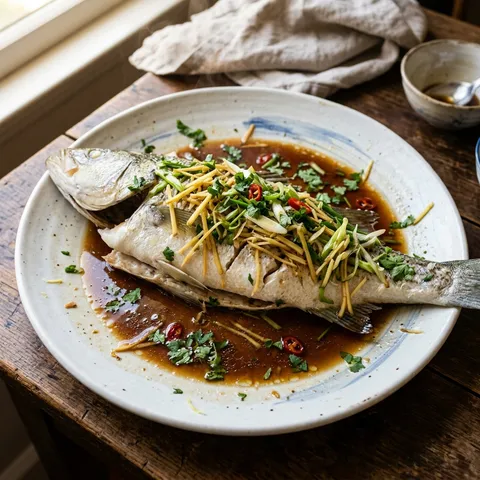
 Steamed Fish with Soy and Ginger
A traditional banquet dish featuring delicately steamed whole fish with hot oil poured over aromatics.
 Chinese Lens Verified Images are for illustrative purposes only, may be inaccurate, and do not guarantee the presence or absence of specific ingredients.
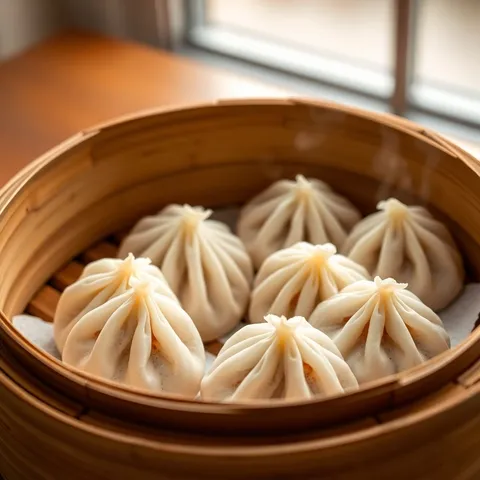
 Xiao Long Bao (Soup Dumplings)
Delicate steamed buns filled with pork and a rich, savory soup.
 Chinese Lens Verified Images are for illustrative purposes only, may be inaccurate, and do not guarantee the presence or absence of specific ingredients.
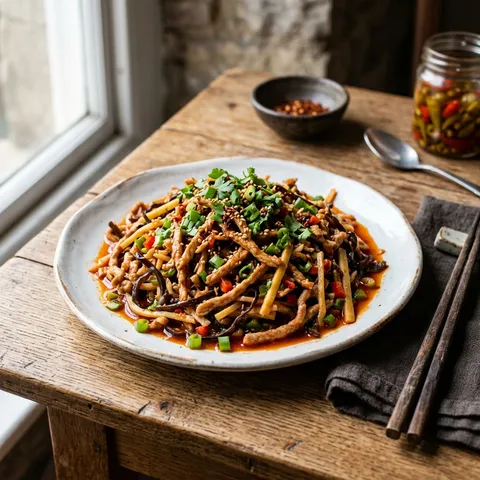
 Yuxiang Rou Si (Fish-Fragrant Pork Shreds)
A classic Sichuan dish that uses "fish-fragrant" seasoning (sweet, sour, and spicy) on pork shreds, containing no actual fish.