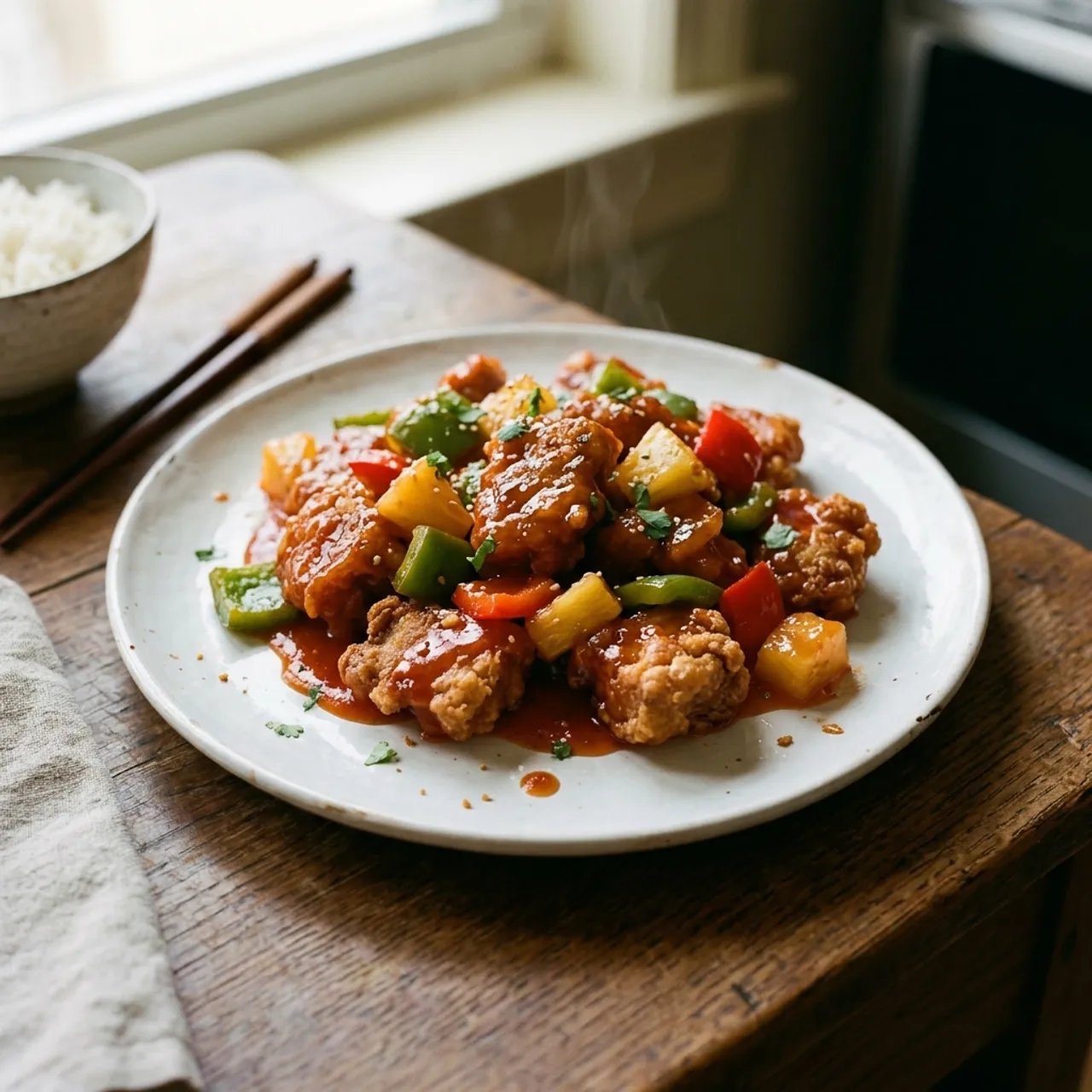
 Chinese Images are for illustrative purposes only, may be inaccurate, and do not guarantee the presence or absence of specific ingredients.
 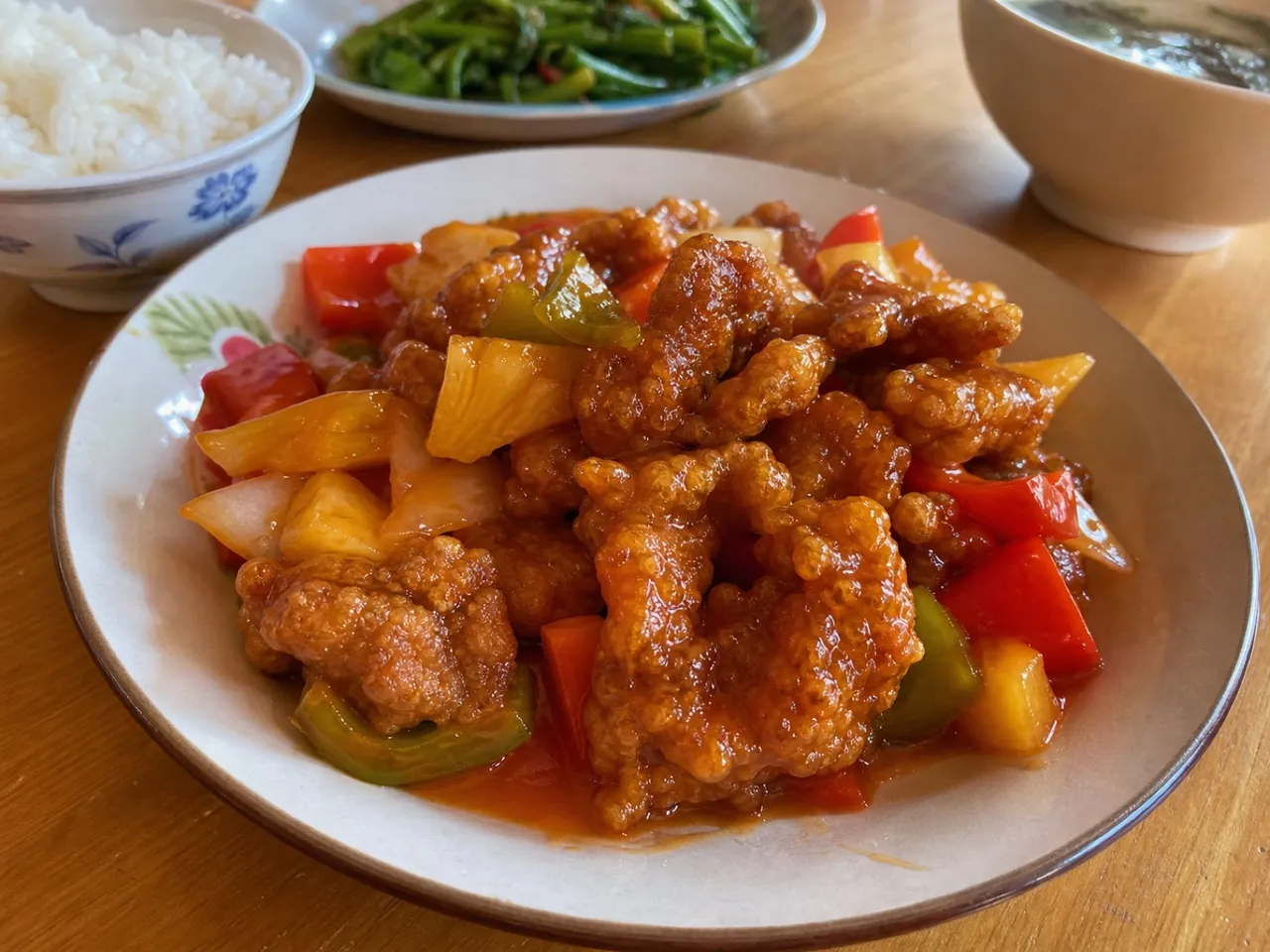 Serving Images are for illustrative purposes only, may be inaccurate, and do not guarantee the presence or absence of specific ingredients.
 Sweet and Sour Pork
Crispy deep-fried pork pieces coated in a bright, sweet, and tangy sauce.
No common allergens detected
Based on this recipe's ingredient list. Always verify with your own brands and labels.
Good to know
- Crispy
Matched from this dish's own ingredients and timing. Browse more: crispy recipes
Instructions
5 steps- 1
Prepare the Pork: Season the pork chunks with salt and white pepper. Toss them thoroughly in 1/2 cup of cornstarch until every piece is evenly and heavily coated. Shake off excess.
- 2
First Fry: Heat 2 inches of oil in a heavy-bottomed pot or wok to 350°F (175°C). Carefully drop the pork pieces in batches, frying for 4-5 minutes until cooked through and pale golden. Remove and drain on a wire rack.
- 3
Second Fry for Crunch: Increase the oil temperature to 400°F (200°C). Return all the pork to the oil for 1-2 minutes until deep golden brown and exceptionally crispy. Drain again.
- 4
Make the Sauce: In a clean wok over medium heat, combine the vinegar, ketchup, and sugar. Stir constantly for 2-3 minutes until the sauce begins to bubble and thicken into a syrupy consistency.
- 5
Toss and Serve: Add the diced bell peppers and pineapple to the sauce, tossing for 1 minute to slightly soften. Immediately fold in the crispy pork, ensuring every piece is coated in the glossy, tangy glaze. Serve immediately to retain the crunch.
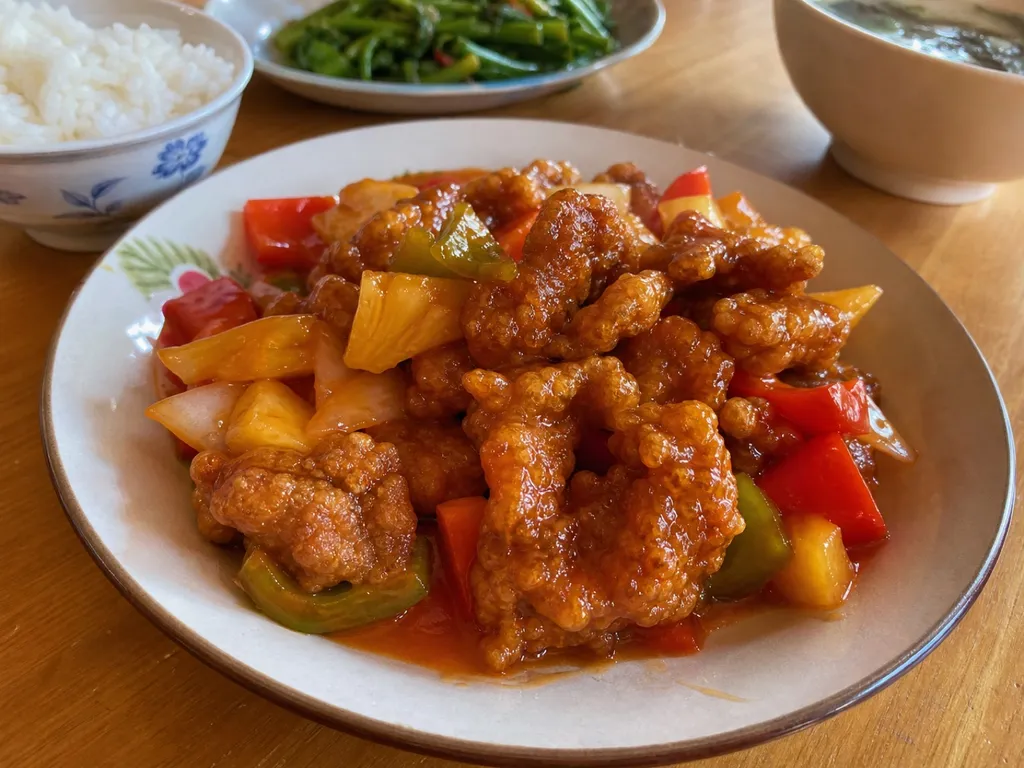 Images are for illustrative purposes only, may be inaccurate, and do not guarantee the presence or absence of specific ingredients.
 Listahan Family Score™
71/100
Good fit for most families
Score reflects how well this recipe fits a typical busy household. In the app, your Family Score is personalized to your household's allergens, kids, and pantry.
Nutrition
per serving535
Calories
42 g
Protein
41 g
Carbs
21 g
Fat
Estimated per serving. Actual values depend on the brands and portions you use.
Listahan cooking guide
Chef notes & practical guide
Technique notes, ingredient swaps, serve-alongside ideas, storage guidance, and equipment for this recipe.
Cultural context
Sweet and sour pork developed in Cantonese cooking and became one of the most widely adapted dishes on Chinese restaurant menus abroad, with the pineapple-and-ketchup version familiar in North America reflecting decades of adaptation to ingredients that were easy to find far from Guangdong.
Listahan note
This version fries the pork in two stages and keeps the sauce and the coated pork separate until the very last moment, so the crackly cornstarch crust survives contact with the sauce instead of turning soft.
Technique cues
- Coating the pork chunks heavily in cornstarch rather than a wet batter produces the light, crackly crust that defines the dish, distinct from a thicker, beer-batter style coating.
- Frying in two stages, a first fry to cook the pork through and a second, hotter fry just before saucing, keeps the coating crisp instead of turning soft the moment it meets the glaze.
- The sauce is built separately, reducing vinegar, ketchup, and sugar together until glossy, then tossed with the fried pork only at the very last moment.
- Bell peppers and pineapple go in raw or barely cooked at the end, kept crisp and bright rather than simmered soft into the sauce.
Kitchen flow
- Parallel prep
- Prep any side dishes while Sweet and Sour Pork finishes with the Green and red bell peppers — the hands-off cook time is the window to use. Everything else is quick — the fry is the one step that takes real time.
- Make-ahead
- Sweet and Sour Pork reheats well, so cooking it a day ahead and finishing it just before serving is a reasonable way to spread out the work. This one leans on the Green and red bell peppers. Plan around the fry; that's the slow part.
- Leftover move
- Leftover Sweet and Sour Pork reheats well covered on the stove or in the oven with a splash of liquid; avoid the microwave, which tends to toughen the Pork tenderloin on a fast reheat. This one leans on the Green and red bell peppers. The fry step is what sets the pace here.
- Cleanup rhythm
- Deglaze the pan used for Sweet and Sour Pork with a splash of water or broth right after cooking — it lifts the browned bits before they dry on and saves scrubbing later. This one leans on the Green and red bell peppers. The fry step is what sets the pace here.
Ingredient brief
Role, handling, and swap guidance for each key ingredient.
1 lb Pork tenderloin
Main protein or body
Purpose: lb Pork tenderloin gives Sweet and Sour Pork its main substance and carries the seasoning.
Handling: Pat dry, cut evenly, and season before cooking so browning or sauce coverage is consistent.
Adaptation: Use the closest fresh equivalent and expect a modest shift in flavor or texture.
1/2 cup Green and red bell peppers
Aromatic base
Purpose: cup Green and red bell peppers creates the savory foundation before stronger ingredients are added.
Handling: Wash, trim, and cut evenly so the pieces cook at the same pace.
Adaptation: Use the closest fresh equivalent and expect a modest shift in flavor or texture.
1/2 cup Fresh pineapple
Flavor support
Purpose: cup Fresh pineapple supports the balance of Sweet and Sour Pork and should taste integrated.
Handling: Prep before heat is high so the cooking step can move without rushing.
Adaptation: Use the closest fresh equivalent and expect a modest shift in flavor or texture.
1/4 cup White vinegar
Acid and brightness
Purpose: cup White vinegar balances richness and keeps the finished dish lively.
Handling: Prep before heat is high so the cooking step can move without rushing.
Adaptation: Use the closest fresh equivalent and expect a modest shift in flavor or texture.
3 tbsp Ketchup
Flavor support
Purpose: tbsp Ketchup supports the balance of Sweet and Sour Pork and should taste integrated.
Handling: Prep before heat is high so the cooking step can move without rushing.
Adaptation: Use the closest fresh equivalent and expect a modest shift in flavor or texture.
Technique notes
- Serve immediately after tossing in the sauce, since the fried coating starts softening within minutes of contact with the wet glaze.
- Plain steamed white rice is the standard base, chosen specifically because it doesn't compete with the sweet-tangy sauce.
- Leftover sauce keeps well on its own in the fridge and can be reheated to freshen a second batch of freshly fried pork.
Ingredient swaps
- Lower-sodium direction
- Use a low-sodium or no-salt-added version of the Salt and a pinch of white pepper, then season to taste with fresh herbs, citrus, or vinegar at the end instead of more salt. This one leans on the Green and red bell peppers.
- Weeknight shortcut
- For a faster version, prep the longest-cooking component a day ahead so the night-of cook is mostly assembly and finishing. This one leans on the Green and red bell peppers.
Serve alongside
- Fresh berries
- Citrus fruit salad
- Mint leaves
- Black coffee
- Hot tea
- Sparkling water with lemon
Serving suggestions only — check pairings for your household's allergens.
Storage & reheating
- Store covered for 3 to 4 days, refrigerated when dairy, eggs, custard, or fresh fruit are involved.
- Reheat gently only when warmth improves the texture.
- Freeze sturdy baked portions up to 2 months; avoid freezing delicate fresh toppings.
Equipment
- Mixing bowls
- Baking dish or pan
- Cooling rack
Make this household-aware
Listahan Pro checks this recipe against your household's allergens, finds pantry-aware swaps, builds the shopping list, and helps you plan the week around it.
Plan it in Listahan
Add Sweet and Sour Pork to your week, check it against your household's allergens, and build the shopping list automatically.
More Chinese recipes
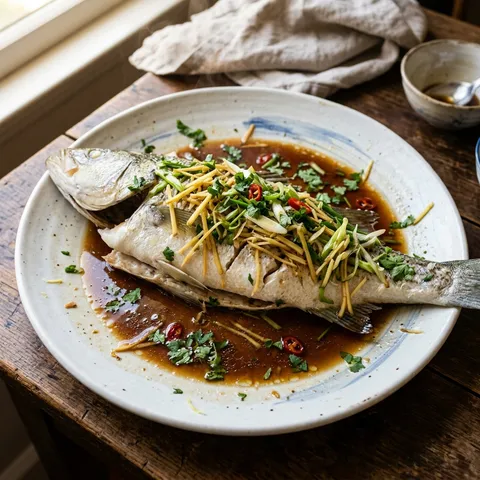 Chinese Lens Verified Images are for illustrative purposes only, may be inaccurate, and do not guarantee the presence or absence of specific ingredients.
 Steamed Fish with Soy and Ginger
A traditional banquet dish featuring delicately steamed whole fish with hot oil poured over aromatics.
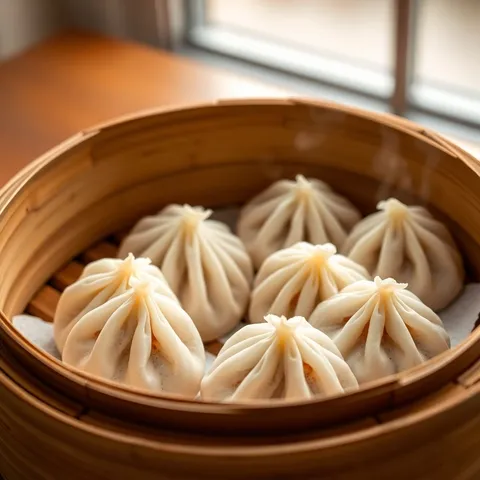 Chinese Lens Verified Images are for illustrative purposes only, may be inaccurate, and do not guarantee the presence or absence of specific ingredients.
 Xiao Long Bao (Soup Dumplings)
Delicate steamed buns filled with pork and a rich, savory soup.
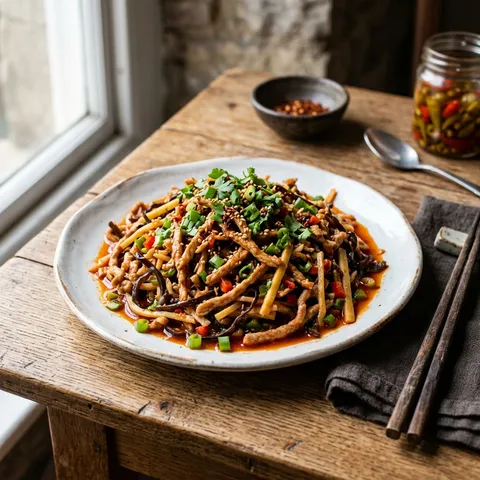 Chinese Lens Verified Images are for illustrative purposes only, may be inaccurate, and do not guarantee the presence or absence of specific ingredients.
 Yuxiang Rou Si (Fish-Fragrant Pork Shreds)
A classic Sichuan dish that uses "fish-fragrant" seasoning (sweet, sour, and spicy) on pork shreds, containing no actual fish.