 Chinese Images are for illustrative purposes only, may be inaccurate, and do not guarantee the presence or absence of specific ingredients.
  Serving Images are for illustrative purposes only, may be inaccurate, and do not guarantee the presence or absence of specific ingredients.
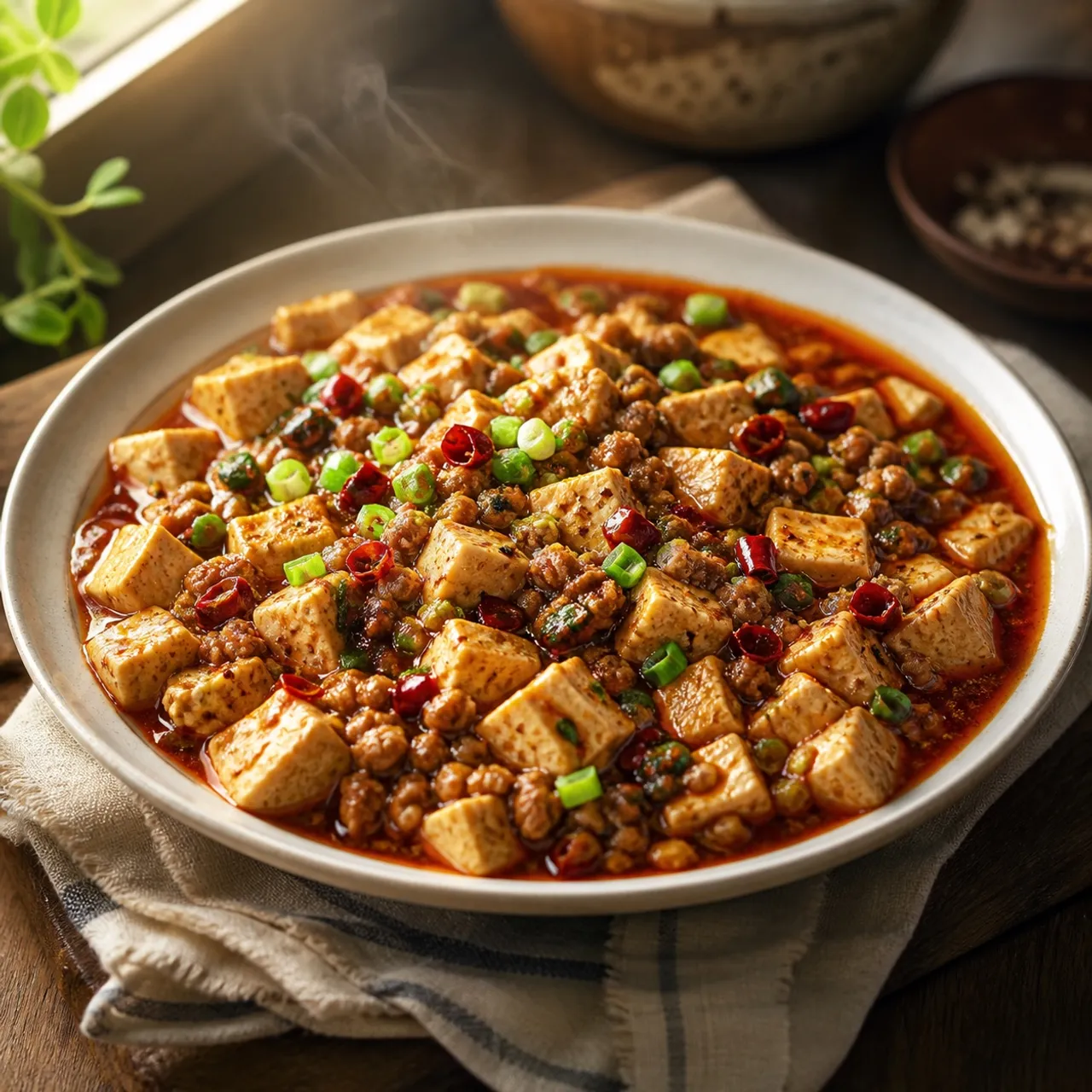
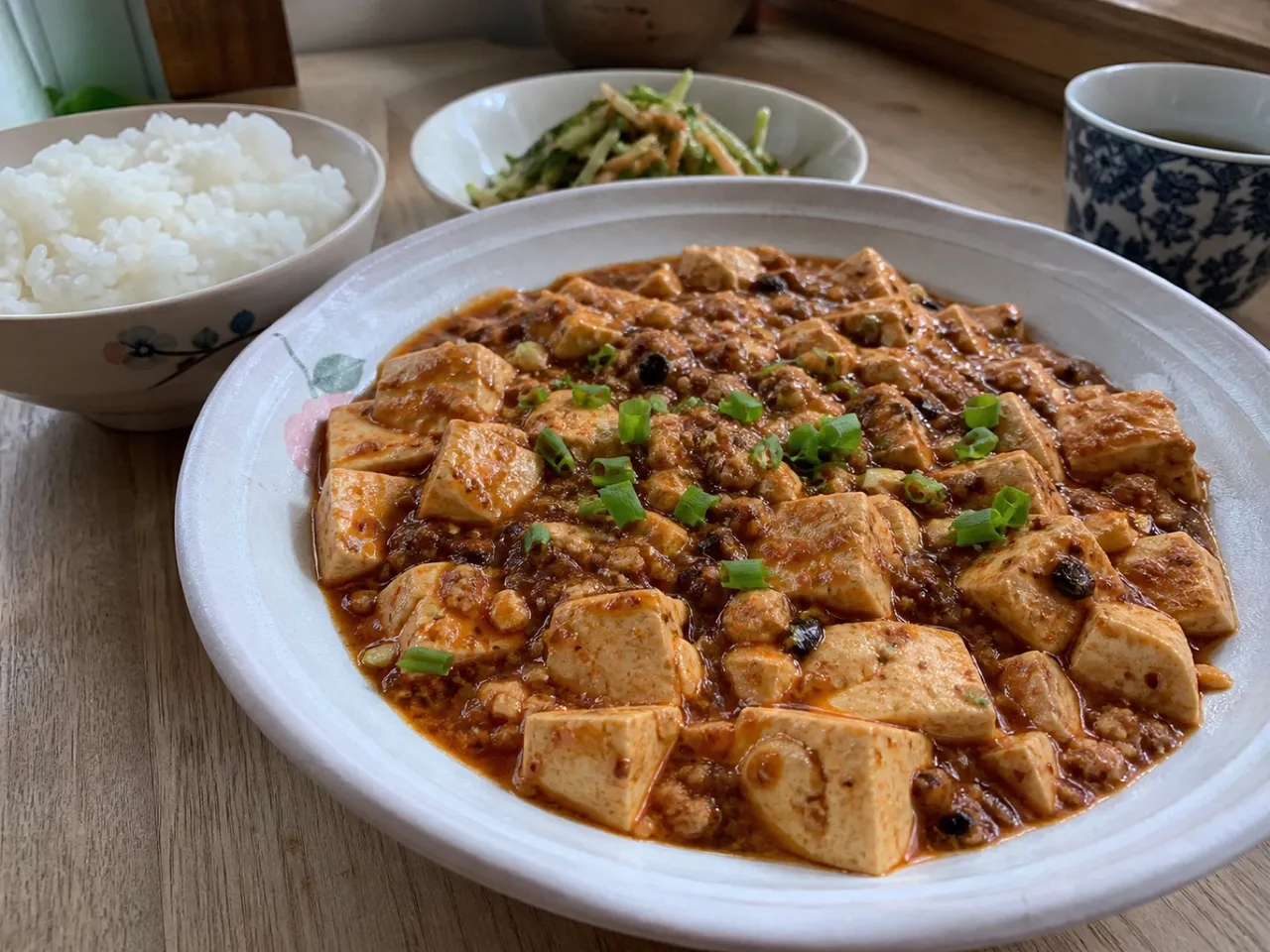
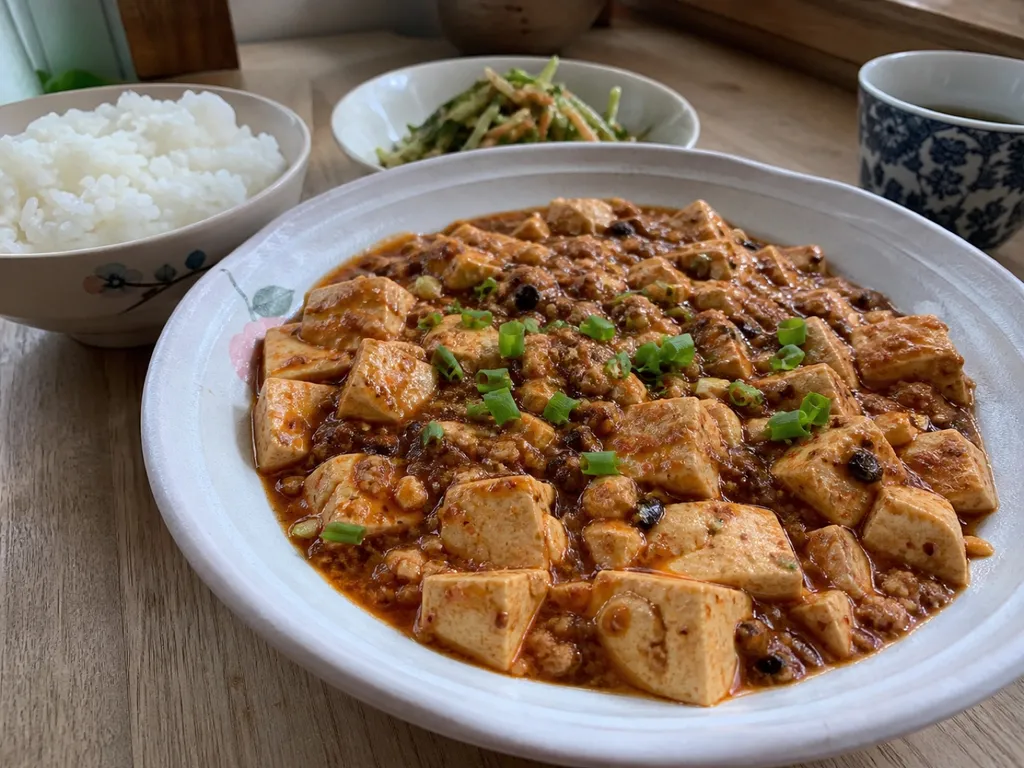
 Mapo Tofu
A popular Chinese dish from Sichuan province featuring tofu set in a spicy, oily, and bright red suspension.
Contains common allergens
In the app, Listahan checks these against your household automatically.
Good to know
- Ready in under 30 minutes
Matched from this dish's own ingredients and timing. Browse more: 30-minute meals
Instructions
5 steps- 1
Blanch the Tofu: Bring a pot of lightly salted water to a gentle simmer. Carefully slide in the tofu cubes and blanch for 2 minutes to warm them through and firm them up slightly. Drain gently and set aside.
- 2
Fry the Meat: Heat a wok over medium-high heat with 1 tbsp of oil. Add the ground pork and stir-fry until browned and crispy, breaking it apart into small crumbles.
- 3
Build the Base: Push the meat to one side of the wok. Add the doubanjiang, minced garlic, and ginger to the oil. Fry for 1-2 minutes until the oil turns bright red and fragrant. Toss to combine with the pork.
- 4
Simmer the Tofu: Pour in the chicken broth and bring to a gentle boil. Carefully slide the blanched tofu into the wok. Gently push the tofu with the back of a spatula to avoid breaking the cubes. Simmer for 3-5 minutes so the tofu absorbs the flavors.
- 5
Thicken and Finish: Stir the cornstarch slurry and drizzle it around the edges of the wok. Simmer for 1 minute until the sauce thickens and clings to the tofu. Turn off the heat, stir in the chili oil, and sprinkle heavily with ground Sichuan peppercorns and sliced scallions.
 Images are for illustrative purposes only, may be inaccurate, and do not guarantee the presence or absence of specific ingredients.
 Listahan Family Score™
67/100
Works for many families
Score reflects how well this recipe fits a typical busy household. In the app, your Family Score is personalized to your household's allergens, kids, and pantry.
Nutrition
per serving620
Calories
36 g
Protein
20 g
Carbs
44 g
Fat
Estimated per serving. Actual values depend on the brands and portions you use.
Listahan cooking guide
Chef notes & practical guide
Technique notes, ingredient swaps, serve-alongside ideas, storage guidance, and equipment for this recipe.
Cultural context
Mapo Tofu was created in late 19th-century Chengdu, reportedly by a pockmarked woman (ma po translates roughly as 'pockmarked old woman') who ran a small restaurant near a bridge frequented by laborers and coolies. The dish fed a crowd cheaply by stretching a small amount of beef or pork with inexpensive silken tofu bound in a fiery, oily Sichuan sauce. Today it is considered one of the defining dishes of Sichuan cuisine and appears in upscale restaurants across China and abroad.
Listahan note
This version uses silken tofu for maximum velvet texture and builds the sauce with a full measure of doubanjiang so the characteristic red oil rises to the surface by the time the dish hits the table.
Technique cues
- Simmer the tofu blocks in salted water for 2 minutes before adding them to the sauce -- this firms the exterior slightly so the cubes hold their shape instead of crumbling when you fold them in.
- Fry the doubanjiang in oil over medium heat until the oil runs deep red before adding any liquid -- this step, called chao hong you, extracts fat-soluble capsaicin and gives the dish its characteristic crimson sheen.
- Finish with a generous pinch of ground Sichuan peppercorns stirred in off the heat rather than cooked in -- the volatile compounds that create numbness dissipate quickly at high temperature.
Kitchen flow
- Parallel prep
- While the tofu blanches in salted water, measure and chop your aromatics and have the cornstarch slurry ready so the sauce comes together in under 5 minutes.
- Make-ahead
- The chili oil base (oil plus doubanjiang plus aromatics) can be made up to a week ahead and refrigerated; finish with tofu and broth just before serving.
- Leftover move
- Reheat leftovers gently and pour over a bowl of fresh ramen or udon noodles, adding a splash of stock if the sauce has thickened too much.
- Cleanup rhythm
- Deglaze the wok immediately with a cup of hot water while still on the burner -- the red oil releases cleanly without scrubbing.
Ingredient brief
Role, handling, and swap guidance for each key ingredient.
silken tofu
main body
Purpose: Silken tofu absorbs the sauce deeply and creates the spoonable, custardy texture that defines the dish.
Handling: Cut into 3/4-inch cubes while still cold, then blanch briefly in salted simmering water before adding to the wok.
Adaptation: Soft tofu works; firm tofu will not absorb sauce as readily but holds its shape better for beginners.
doubanjiang
flavor and heat foundation
Purpose: Doubanjiang (fermented broad-bean chili paste) is the irreplaceable soul of this dish, providing salt, funk, and a layered heat that no single substitute fully matches.
Handling: Use Pixian-brand if available; chop it slightly if the paste is coarse so it disperses evenly.
Adaptation: Gochujang plus a pinch of cayenne approximates the fermented spice profile but lacks the full complexity.
ground pork or beef
savory anchor
Purpose: A small amount of meat adds umami depth and textural contrast without overwhelming the tofu.
Handling: Break into very fine crumbles and brown fully before adding aromatics -- any pink means the raw flavor will muddy the sauce.
Adaptation: Omit entirely and add an extra teaspoon of doubanjiang for a vegetarian version; shiitake mushrooms also work.
fermented black beans
umami depth
Purpose: These add a second layer of salty fermentation that complements the doubanjiang without duplicating it.
Handling: Rinse lightly and rough-chop before adding so they distribute throughout the sauce.
Adaptation: Miso paste (half the quantity) can stand in; skip rather than omitting the doubanjiang too.
Sichuan peppercorns
numbing agent
Purpose: The ma component of the ma la (numbing-spicy) combination is non-negotiable for an authentic result.
Handling: Toast dry, then grind to a coarse powder and add off heat at the very end.
Adaptation: No true substitute; omit if unavailable and accept that the dish will be spicy but not numbing.
Technique notes
- The correct consistency is loose enough to pool around the tofu in the bowl but thick enough to coat the back of a spoon -- add the cornstarch slurry gradually and stop early if in doubt.
- Red oil pooling on the surface of the finished dish is a sign of success, not a problem -- it is part of the traditional presentation and carries most of the Sichuan peppercorn flavor.
- Seasoning the dish with soy sauce comes last; the doubanjiang and fermented beans are already very salty, so taste before adding any extra salt.
Ingredient swaps
- Vegetarian direction
- Replace ground pork with finely diced king oyster mushrooms and use vegetable broth; the fermented bean paste provides enough savoriness to compensate.
- Gluten-free direction
- Check that your doubanjiang and fermented black beans are gluten-free (many contain wheat); substitute tamari for any soy sauce called for.
- Lower-heat direction
- Halve the doubanjiang and replace with a spoonful of regular red miso to keep the fermented depth without the full chili heat.
Serve alongside
- steamed white rice
- blanched Chinese spinach with garlic
- cold cucumber ribbons in rice vinegar
- Shaoxing rice wine served warm
- chrysanthemum tea
Serving suggestions only — check pairings for your household's allergens.
Storage & reheating
- Refrigerate for up to 3 days in an airtight container; the tofu continues to absorb sauce as it sits and the flavor deepens. Reheat gently in a saucepan over low heat, adding a few tablespoons of water or stock to restore consistency.
- This dish does not freeze well -- the tofu texture becomes spongy and grainy after thawing.
Equipment
- carbon steel wok or heavy skillet
- wok spatula for gentle folding
- small ladle for adding broth in stages
- spice grinder for peppercorns
Make this household-aware
Listahan Pro checks this recipe against your household's allergens, finds pantry-aware swaps, builds the shopping list, and helps you plan the week around it.
Plan it in Listahan
Add Mapo Tofu to your week, check it against your household's allergens, and build the shopping list automatically.
More Chinese recipes
 Chinese Lens Verified Images are for illustrative purposes only, may be inaccurate, and do not guarantee the presence or absence of specific ingredients.
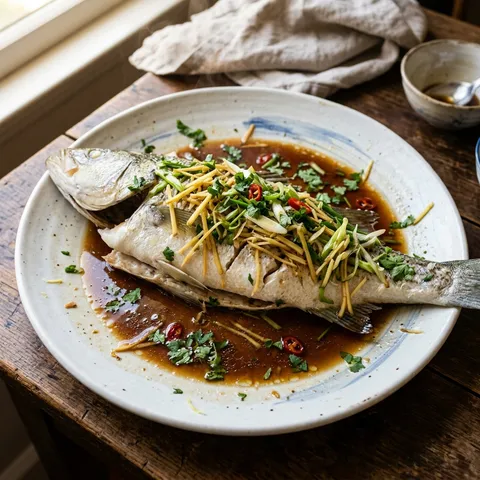
 Steamed Fish with Soy and Ginger
A traditional banquet dish featuring delicately steamed whole fish with hot oil poured over aromatics.
 Chinese Lens Verified Images are for illustrative purposes only, may be inaccurate, and do not guarantee the presence or absence of specific ingredients.
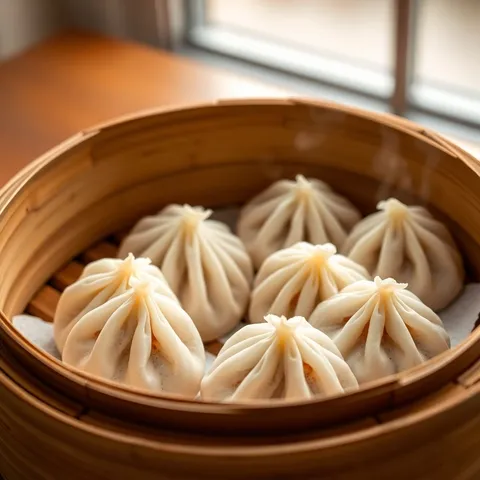
 Xiao Long Bao (Soup Dumplings)
Delicate steamed buns filled with pork and a rich, savory soup.
 Chinese Lens Verified Images are for illustrative purposes only, may be inaccurate, and do not guarantee the presence or absence of specific ingredients.
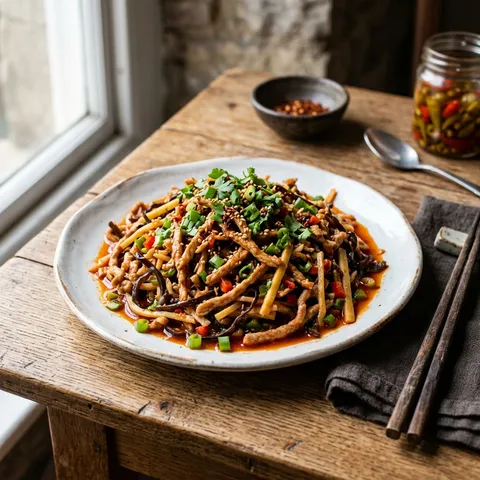
 Yuxiang Rou Si (Fish-Fragrant Pork Shreds)
A classic Sichuan dish that uses "fish-fragrant" seasoning (sweet, sour, and spicy) on pork shreds, containing no actual fish.