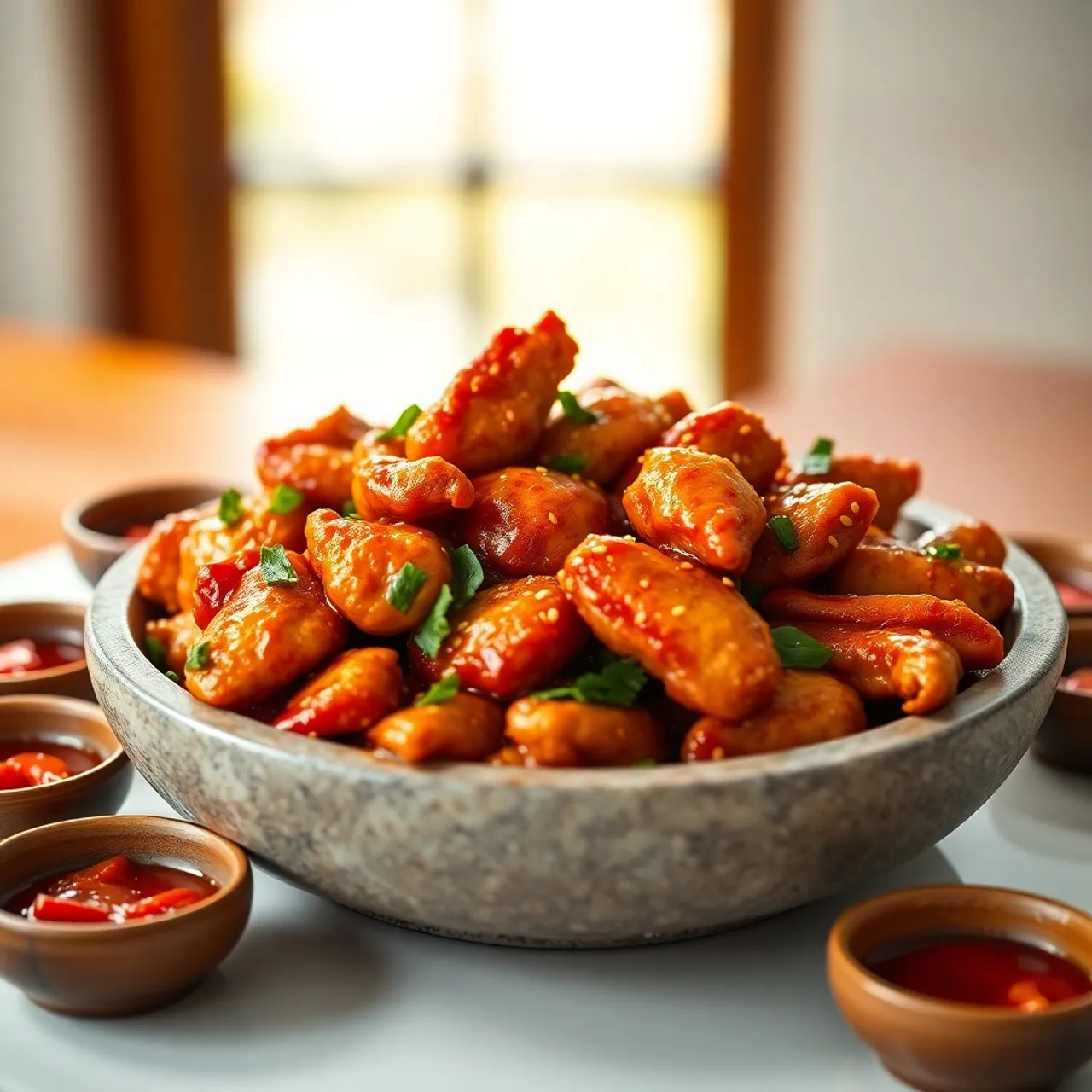
 Korean Images are for illustrative purposes only, may be inaccurate, and do not guarantee the presence or absence of specific ingredients.
 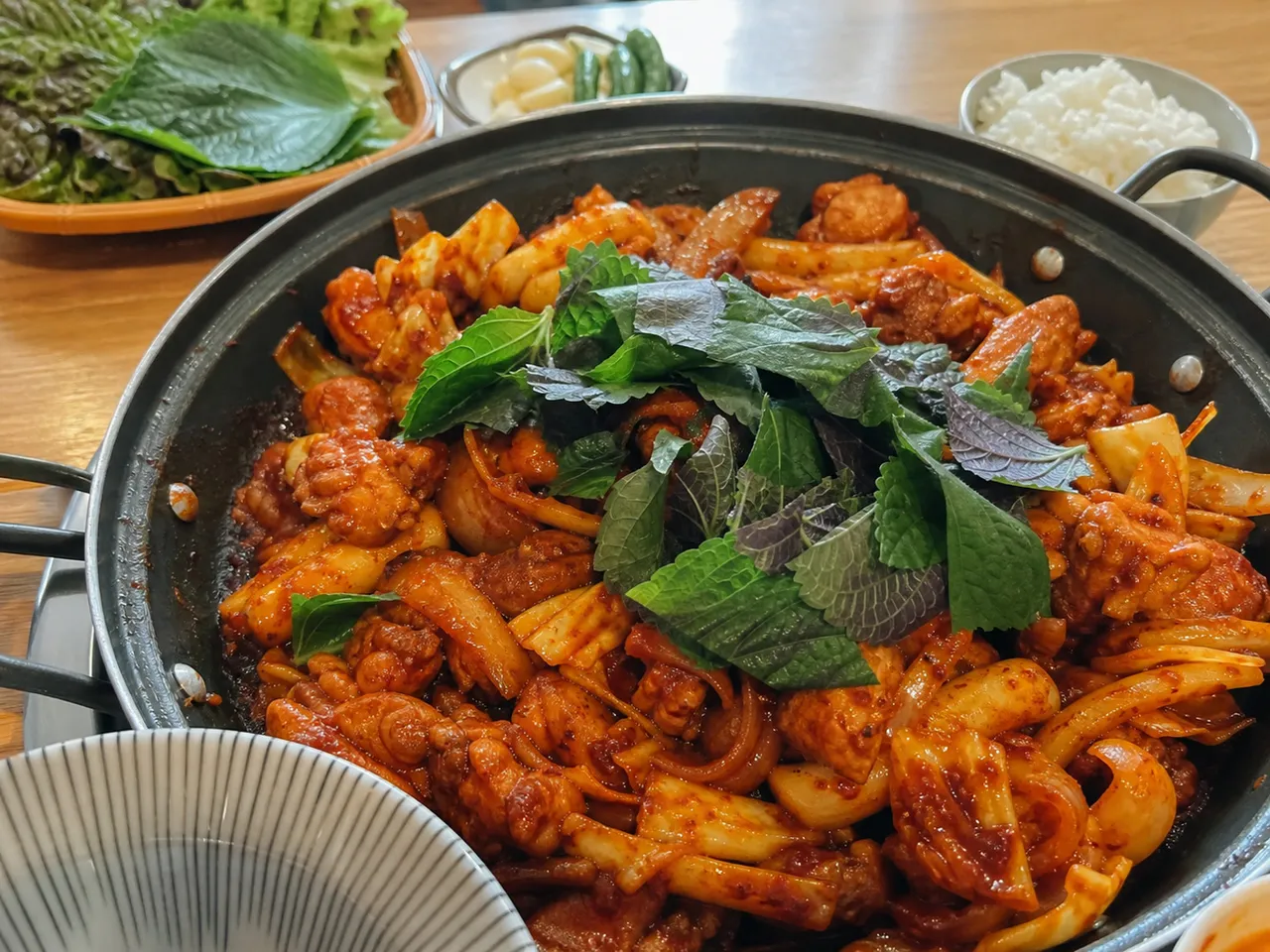 Serving Images are for illustrative purposes only, may be inaccurate, and do not guarantee the presence or absence of specific ingredients.
 Dakgalbi (Spicy Stir-fried Chicken)
Diced chicken marinated in a gochujang-based sauce, stir-fried with sweet potatoes, cabbage, perilla leaves, and tteok.
Contains common allergens
In the app, Listahan checks these against your household automatically.
Instructions
6 steps- 1
Prepare the marinade by mixing gochujang, gochugaru, soy sauce, sugar, curry powder, 1 tbsp minced garlic, and a splash of water to form a thick paste.
- 2
Toss the chicken chunks in the marinade, cover, and let sit for at least 30 minutes in the refrigerator.
- 3
Heat a very large, wide, flat cast-iron pan or skillet over medium-high heat with a drizzle of oil.
- 4
Add the marinated chicken, sweet potato sticks, chopped cabbage, and rice cakes. Stir-fry continuously for 10-15 minutes, allowing the cabbage to release its water to steam the sweet potatoes.
- 5
Once the chicken is cooked through and the sweet potatoes are tender, toss in the torn perilla leaves for the final minute of cooking.
- 6
Optional but recommended: Melt shredded mozzarella cheese over the top before serving, and save a little leftover sauce in the pan to fry rice at the end of the meal.
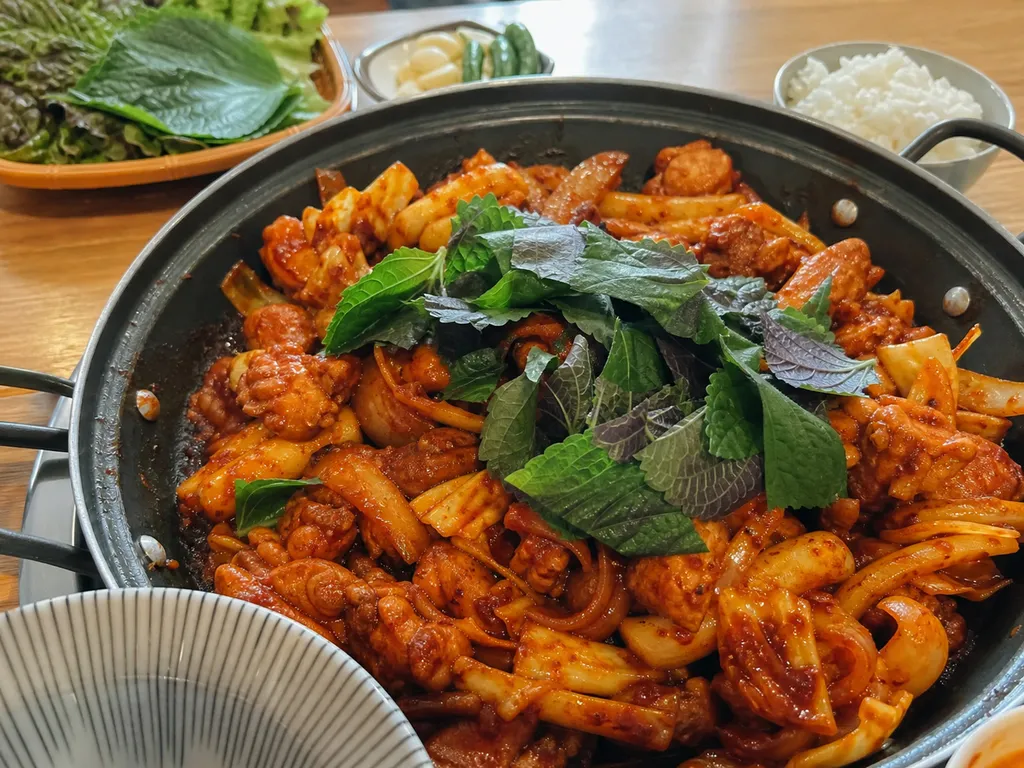 Images are for illustrative purposes only, may be inaccurate, and do not guarantee the presence or absence of specific ingredients.
 Listahan Family Score™
63/100
Works for many families
Score reflects how well this recipe fits a typical busy household. In the app, your Family Score is personalized to your household's allergens, kids, and pantry.
Nutrition
per serving480
Calories
47 g
Protein
29 g
Carbs
19 g
Fat
Estimated per serving. Actual values depend on the brands and portions you use.
Listahan cooking guide
Chef notes & practical guide
Technique notes, ingredient swaps, serve-alongside ideas, storage guidance, and equipment for this recipe.
Cultural context
Dakgalbi is a fiery stir-fry of chicken thighs and vegetables in a gochujang marinade, a specialty of Chuncheon cooked on a big communal griddle. Cabbage, sweet potato, rice cakes, and perilla leaves join the chicken in the spicy-sweet sauce. It is festive, shareable food, often finished by frying rice in the leftover sauce.
Listahan note
This version marinates the chicken in a gochujang base, then stir-fries it with hearty vegetables and rice cakes so everything soaks up the spicy-sweet sauce.
Technique cues
- Marinate the chicken so the gochujang flavor penetrates the meat.
- Add vegetables by cook time; sweet potato early, cabbage and perilla late.
- Save the leftover sauce to fry rice in at the end, the traditional finish.
Kitchen flow
- Parallel prep
- Marinate the chicken and cut the vegetables before heating the pan.
- Make-ahead
- Marinate the chicken a day ahead for deeper flavor.
- Leftover move
- Fry rice in the leftover sauce with seaweed and sesame, the classic ending.
- Cleanup rhythm
- One large pan or griddle; soak it soon, as the sauce sticks.
Ingredient brief
Role, handling, and swap guidance for each key ingredient.
Chicken thighs
Main protein
Purpose: Dark meat stays juicy under the high-heat stir-fry.
Handling: Cut into chunks and marinate in the gochujang mix.
Adaptation: Chicken breast works but dries out faster.
Gochujang and gochugaru
Sauce base
Purpose: Provide the spicy-sweet red sauce that defines the dish.
Handling: Blend into a marinade with soy, sugar, and garlic.
Adaptation: Adjust the gochugaru for heat.
Cabbage and sweet potato
Vegetables
Purpose: Add sweetness and substance that balance the heat.
Handling: Slice the sweet potato thin so it cooks through.
Adaptation: Use any firm, sweet vegetables.
Tteok (rice cakes)
Chewy element
Purpose: Add a satisfying chew and soak up the sauce.
Handling: Soak if firm, then add partway through.
Adaptation: Omit for a lighter, lower-carb stir-fry.
Technique notes
- Use high heat and a wide pan so the chicken sears, not steams.
- Add the perilla leaves at the very end for fragrance.
- Do not skip the leftover-sauce fried rice; it is the best part.
Ingredient swaps
- Gluten-free direction
- Use gluten-free gochujang and tamari.
- Lower-carb direction
- Skip the rice cakes and add more vegetables.
- Milder direction
- Reduce the gochugaru and add a little more sugar.
Serve alongside
- Steamed white rice
- Perilla leaves
- Pickled radish
- Kimchi
- Soju
- Light lager
- Barley tea
Serving suggestions only — check pairings for your household's allergens.
Storage & reheating
- Refrigerate up to 3 days in a sealed container.
- Reheat in a hot pan to keep the sauce glossy.
- Freeze up to 2 months; thaw before reheating.
Equipment
- Large skillet or griddle
- Tongs or spatula
- Cutting board
- Mixing bowl
Make this household-aware
Listahan Pro checks this recipe against your household's allergens, finds pantry-aware swaps, builds the shopping list, and helps you plan the week around it.
Plan it in Listahan
Add Dakgalbi (Spicy Stir-fried Chicken) to your week, check it against your household's allergens, and build the shopping list automatically.
More Korean recipes
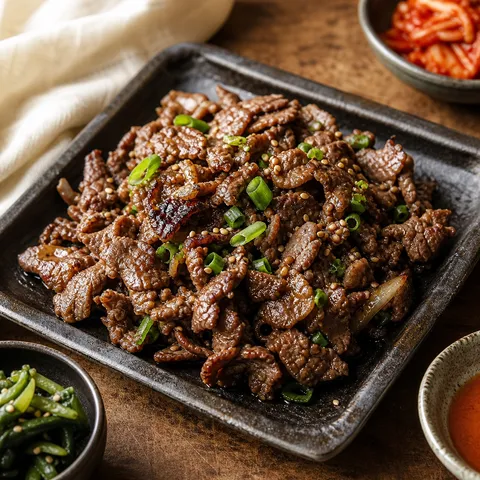 Korean Lens Verified Images are for illustrative purposes only, may be inaccurate, and do not guarantee the presence or absence of specific ingredients.
 Bulgogi (Marinated Beef BBQ)
Thinly sliced, marinated beef ribeye or sirloin grilled or stir-fried. Sweet, savory, and tender.
 Korean Lens Verified Images are for illustrative purposes only, may be inaccurate, and do not guarantee the presence or absence of specific ingredients.
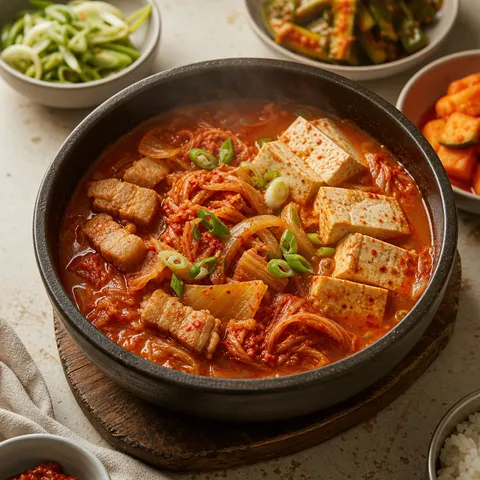
 Kimchi Jjigae (Kimchi Stew)
A classic, comforting stew made with aged kimchi, pork or seafood, scallions, onions, and diced tofu.
 Korean Lens Verified Images are for illustrative purposes only, may be inaccurate, and do not guarantee the presence or absence of specific ingredients.
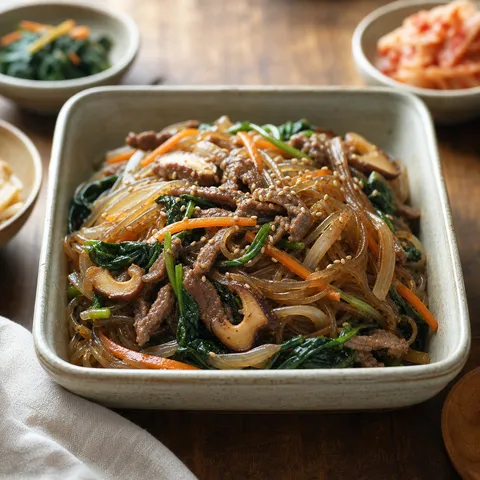
 Japchae (Stir-Fried Glass Noodles)
A sweet and savory dish of stir-fried glass noodles (dangmyeon) and vegetables that is popular in Korean cuisine.