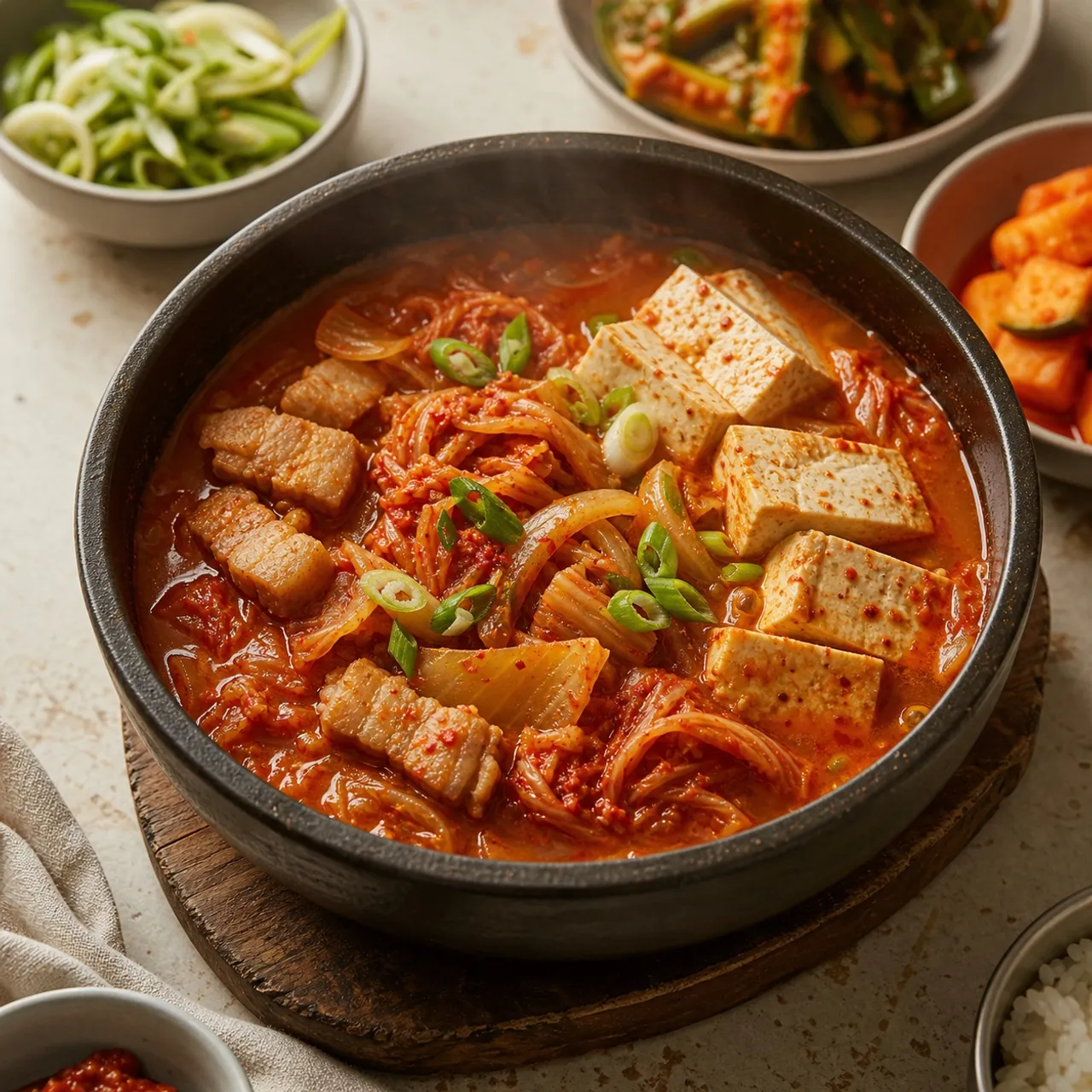
 Korean Images are for illustrative purposes only, may be inaccurate, and do not guarantee the presence or absence of specific ingredients.
 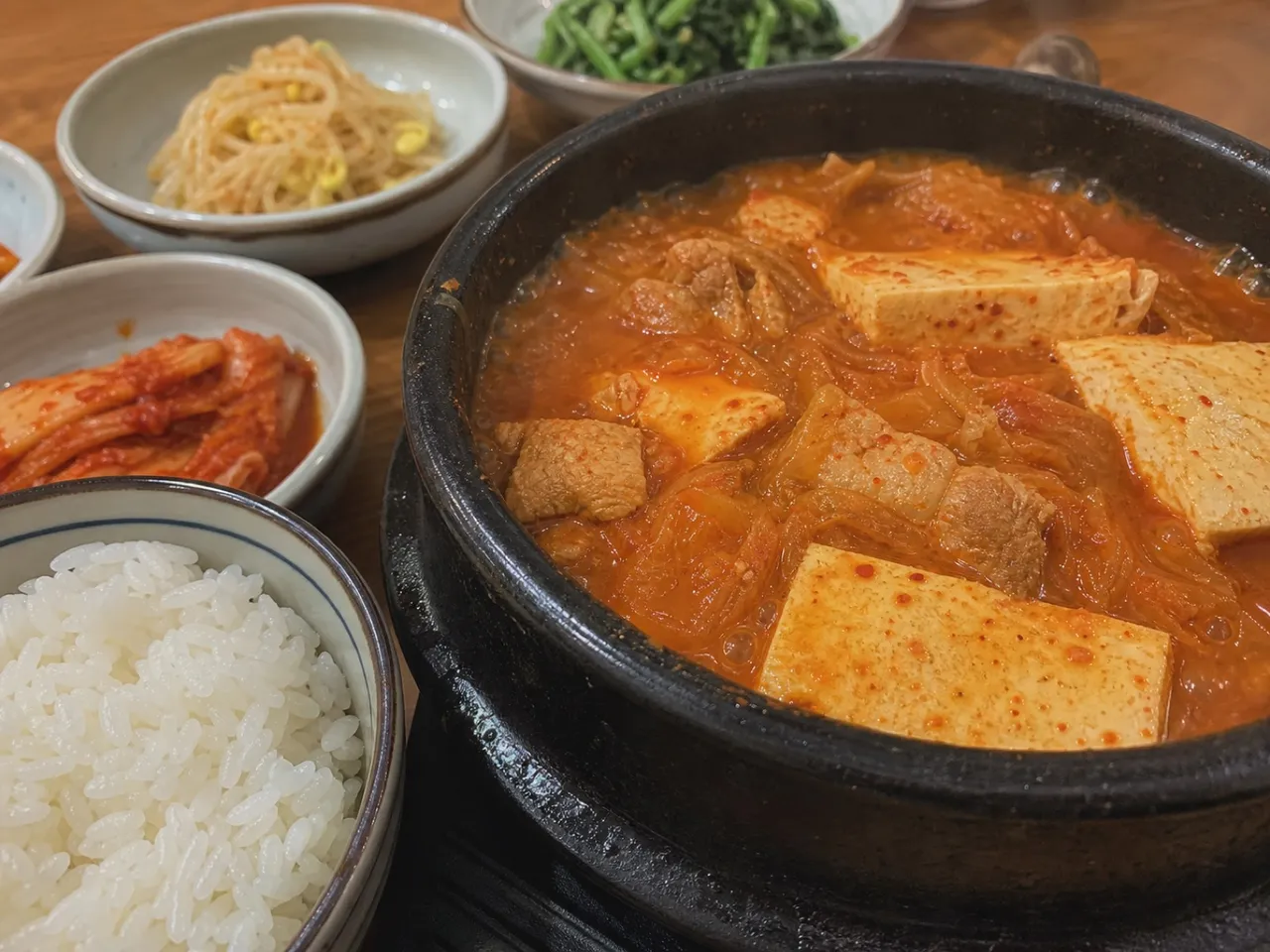 Serving Images are for illustrative purposes only, may be inaccurate, and do not guarantee the presence or absence of specific ingredients.
 Kimchi Jjigae (Kimchi Stew)
A classic, comforting stew made with aged kimchi, pork or seafood, scallions, onions, and diced tofu.
Contains common allergens
In the app, Listahan checks these against your household automatically.
Good to know
- One-pot
- Ready in under 30 minutes
Matched from this dish's own ingredients and timing. Browse more: one-pot dinners30-minute meals
Instructions
6 steps- 1
Heat a heavy-bottomed pot over medium-high heat. Add the pork belly and sauté for 3-4 minutes until some fat renders and the edges turn slightly crispy.
- 2
Add the chopped aged kimchi to the pot and stir-fry for 5 minutes, allowing the kimchi to absorb the pork fat and soften.
- 3
Pour in the 2 cups of broth or water. Add the sliced onion, gochugaru, and minced garlic, stirring well to combine.
- 4
Bring the stew to a rolling boil, then reduce the heat to medium-low, cover, and simmer gently for 15 minutes to deepen the savory, tangy flavors.
- 5
Carefully arrange the tofu slices and green onions on top of the stew. Simmer for an additional 3-5 minutes until the tofu is heated through.
- 6
Serve boiling hot directly from the pot alongside steamed white rice.
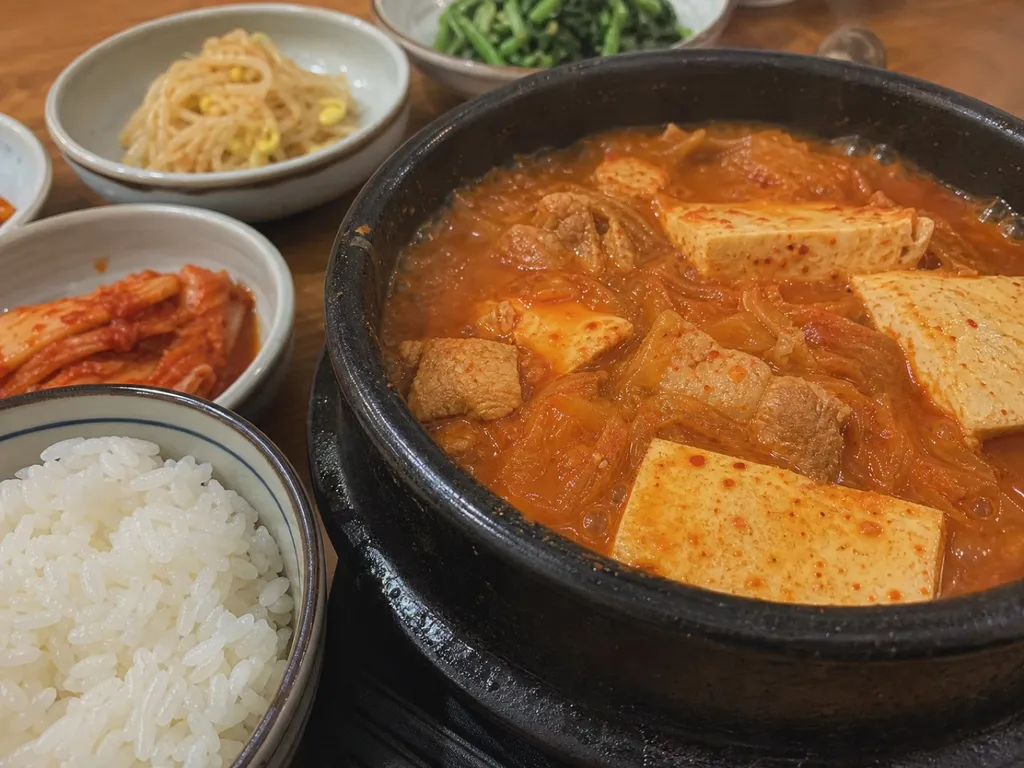 Images are for illustrative purposes only, may be inaccurate, and do not guarantee the presence or absence of specific ingredients.
 Listahan Family Score™
69/100
Works for many families
Score reflects how well this recipe fits a typical busy household. In the app, your Family Score is personalized to your household's allergens, kids, and pantry.
Nutrition
per serving955
Calories
120 g
Protein
12 g
Carbs
44 g
Fat
Estimated per serving. Actual values depend on the brands and portions you use.
Listahan cooking guide
Chef notes & practical guide
Technique notes, ingredient swaps, serve-alongside ideas, storage guidance, and equipment for this recipe.
Cultural context
Kimchi Jjigae is the stew that gives aged kimchi its second life, simmered with pork belly and tofu into a bubbling, sour-spicy pot. It is everyday Korean home cooking, the dish that answers what to do with kimchi grown too sour to eat raw. The longer the kimchi has fermented, the deeper the stew.
Listahan note
This version leans on well-fermented sour kimchi and fatty pork belly, sauteing them together first so the broth turns rich and tangy rather than thin.
Technique cues
- Use kimchi that is good and sour; fresh kimchi makes a flat-tasting stew.
- Saute the kimchi and pork together before adding broth to build depth.
- Add the tofu late so it warms through without breaking apart.
Kitchen flow
- Parallel prep
- Slice the pork and tofu while the kimchi and broth are ready to go.
- Make-ahead
- The stew deepens overnight; reheat gently the next day.
- Leftover move
- Spoon leftover stew over rice or stir in a beaten egg for a quick meal.
- Cleanup rhythm
- One pot; rinse it soon, as the chili oil stains if left to dry.
Ingredient brief
Role, handling, and swap guidance for each key ingredient.
Sour fermented kimchi
Flavor base
Purpose: Its tang and funk are the entire backbone of the stew.
Handling: Chop and saute first; include some of its juice.
Adaptation: Add a splash of vinegar if your kimchi is not sour enough.
Pork belly
Main protein
Purpose: Its fat enriches the broth and balances the sour kimchi.
Handling: Cut into bite-size pieces and render with the kimchi.
Adaptation: Canned tuna makes a quick kimchi-chamchi version.
Firm tofu
Soft protein
Purpose: Adds silky contrast to the spicy broth.
Handling: Slice into thick rectangles and add near the end.
Adaptation: Soft tofu gives an even more delicate texture.
Gochugaru
Heat and color
Purpose: Reinforces the red color and spice beyond the kimchi.
Handling: Stir in with the saute so it blooms in the fat.
Adaptation: Adjust the amount to your heat preference.
Anchovy-kelp broth
Liquid base
Purpose: Adds savory depth that water alone cannot.
Handling: Use as the simmering liquid; water works in a pinch.
Adaptation: Plain water with a little extra seasoning is acceptable.
Technique notes
- Sour kimchi is non-negotiable for a proper jjigae.
- Render the pork fat with the kimchi for a rich, glossy broth.
- Keep the tofu pieces whole and add them last to preserve their shape.
Ingredient swaps
- Pork-free direction
- Use canned tuna or just tofu and bump the broth seasoning.
- Vegan direction
- Use mushroom or kelp broth, vegan kimchi, and tofu only.
- Milder direction
- Cut the gochugaru and use less of the kimchi juice.
Serve alongside
- Steamed white rice
- Gyeran mari (rolled omelet)
- Seasoned spinach
- Pickled radish
- Barley tea
- Soju
- Cold water
Serving suggestions only — check pairings for your household's allergens.
Storage & reheating
- Refrigerate up to 4 days; the flavor improves with time.
- Reheat gently on the stovetop until bubbling.
- Freeze up to 2 months, though the tofu texture softens.
Equipment
- Small heavy pot or earthenware ttukbaegi
- Ladle
- Cutting board
- Rice cooker or pot
Make this household-aware
Listahan Pro checks this recipe against your household's allergens, finds pantry-aware swaps, builds the shopping list, and helps you plan the week around it.
Plan it in Listahan
Add Kimchi Jjigae (Kimchi Stew) to your week, check it against your household's allergens, and build the shopping list automatically.
More Korean recipes
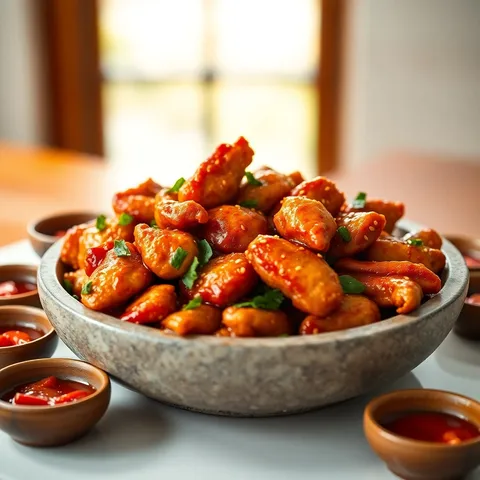 Korean Lens Verified Images are for illustrative purposes only, may be inaccurate, and do not guarantee the presence or absence of specific ingredients.
 Dakgalbi (Spicy Stir-fried Chicken)
Diced chicken marinated in a gochujang-based sauce, stir-fried with sweet potatoes, cabbage, perilla leaves, and tteok.
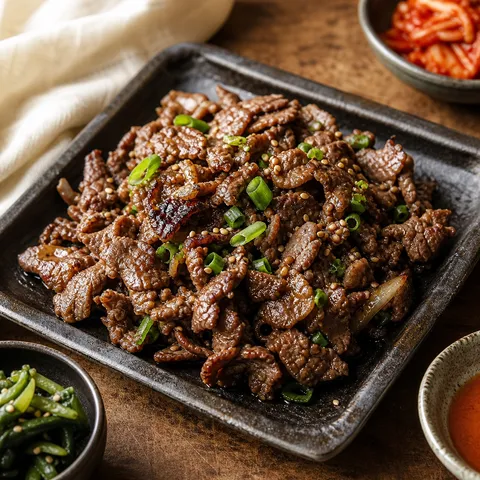 Korean Lens Verified Images are for illustrative purposes only, may be inaccurate, and do not guarantee the presence or absence of specific ingredients.
 Bulgogi (Marinated Beef BBQ)
Thinly sliced, marinated beef ribeye or sirloin grilled or stir-fried. Sweet, savory, and tender.
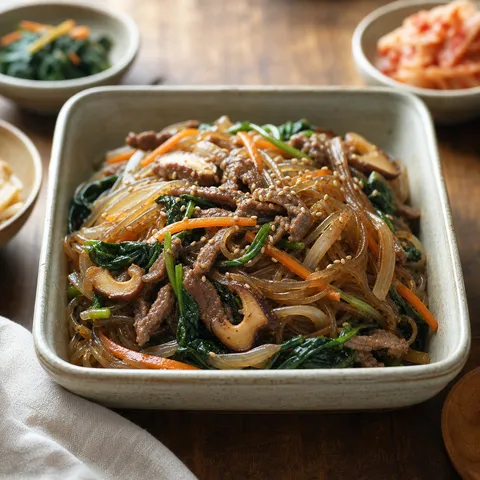 Korean Lens Verified Images are for illustrative purposes only, may be inaccurate, and do not guarantee the presence or absence of specific ingredients.
 Japchae (Stir-Fried Glass Noodles)
A sweet and savory dish of stir-fried glass noodles (dangmyeon) and vegetables that is popular in Korean cuisine.