 Korean Images are for illustrative purposes only, may be inaccurate, and do not guarantee the presence or absence of specific ingredients.
  Serving Images are for illustrative purposes only, may be inaccurate, and do not guarantee the presence or absence of specific ingredients.
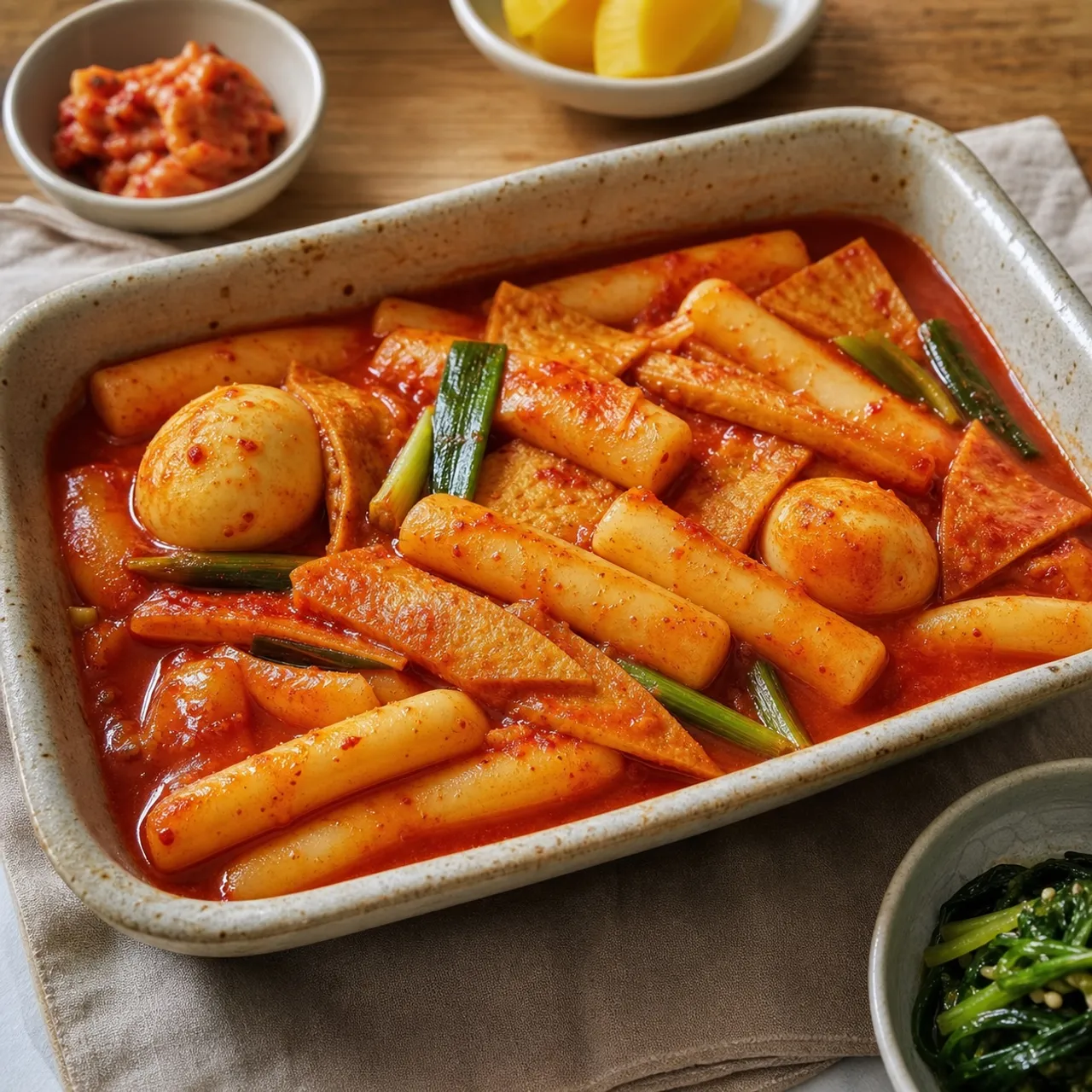
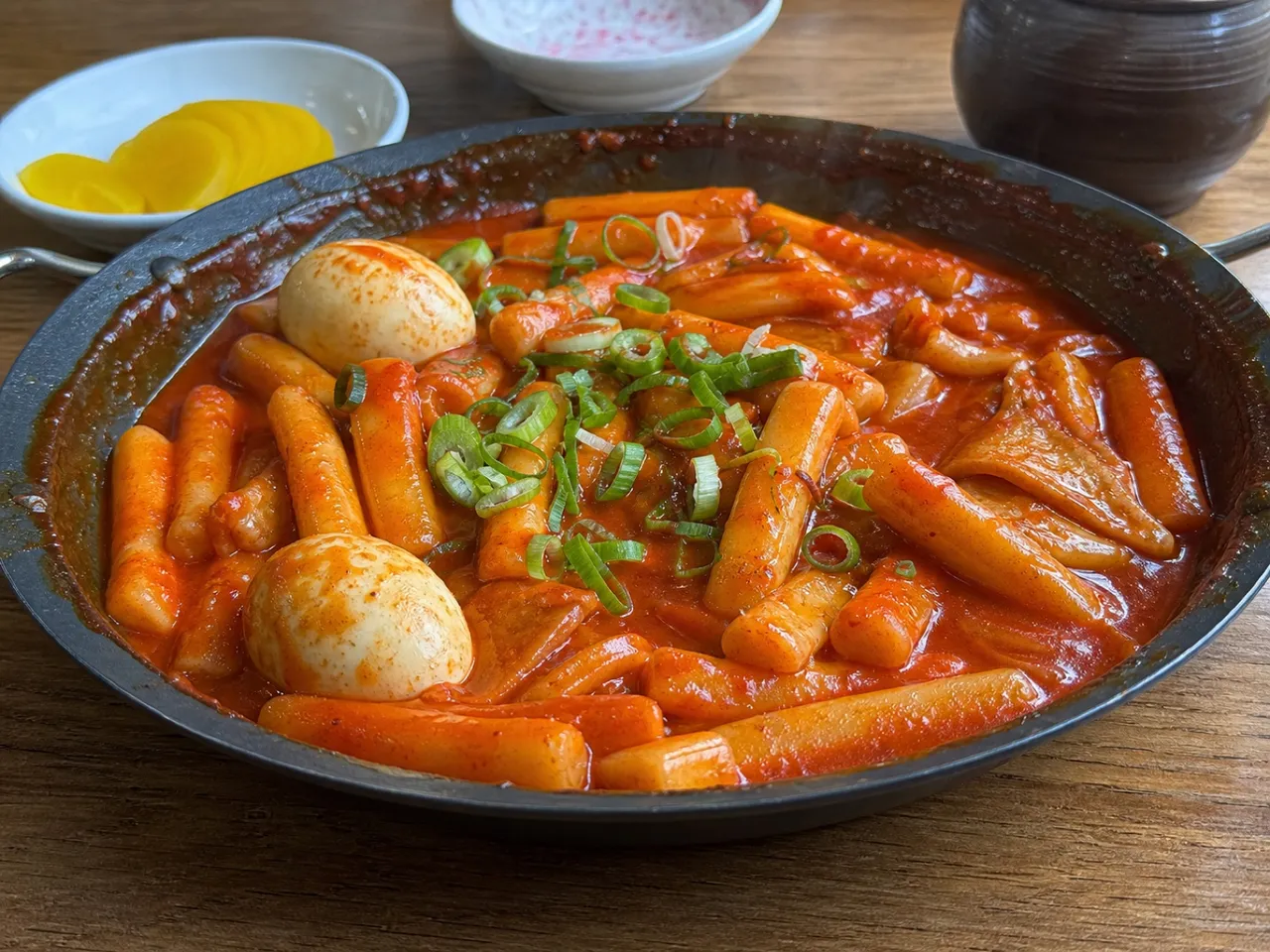
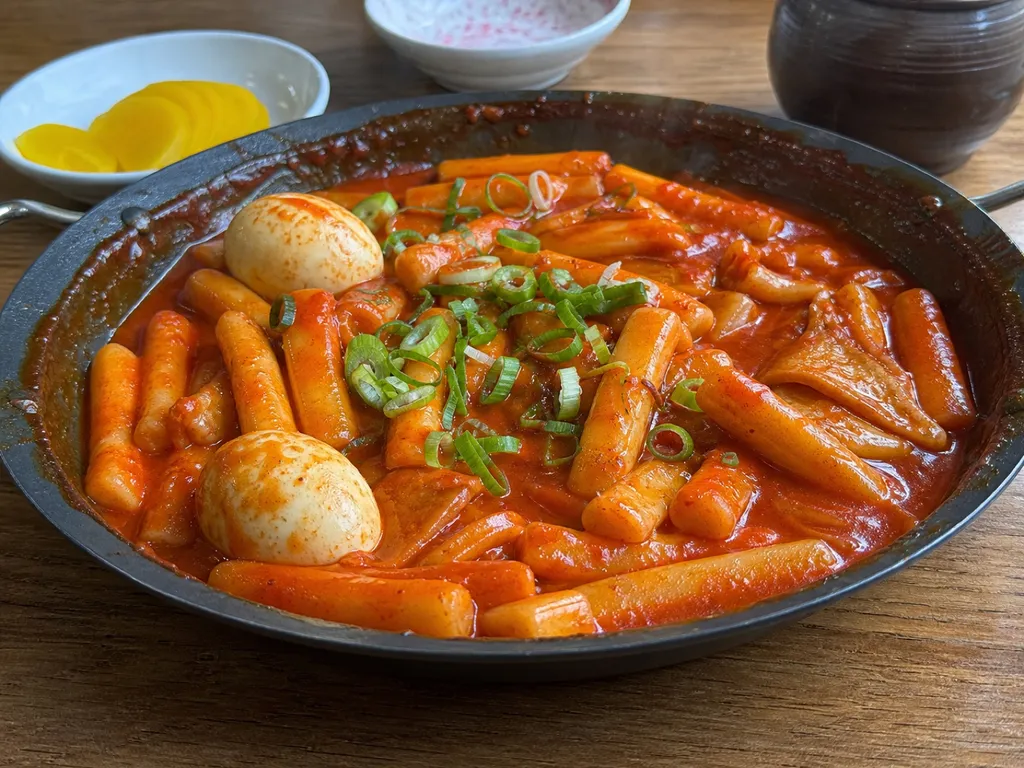
 Tteokbokki (Spicy Rice Cakes)
A highly popular Korean street food made from small-sized garae-tteok (long, white, cylinder-shaped rice cakes) in a spicy, sweet gochujang-based sauce.
Contains common allergens
In the app, Listahan checks these against your household automatically.
Good to know
- Ready in under 30 minutes
Matched from this dish's own ingredients and timing. Browse more: 30-minute meals
Instructions
6 steps- 1
Pour 2 cups of anchovy-kelp stock into a wide, shallow pan and bring it to a rolling boil over medium-high heat.
- 2
Whisk the gochujang, gochugaru, and sugar into the boiling stock until completely dissolved, creating a smooth, deep red broth.
- 3
Drain the soaked rice cakes and add them to the bubbling broth along with the fish cake triangles.
- 4
Reduce the heat to medium and simmer for 10-12 minutes, stirring frequently so the rice cakes don't stick to the bottom.
- 5
Wait until the sauce reduces to a thick, glossy, syrup-like consistency that coats the back of a spoon.
- 6
Toss in the scallion pieces and hard-boiled eggs, stirring for 1 final minute to warm them through before serving.
 Images are for illustrative purposes only, may be inaccurate, and do not guarantee the presence or absence of specific ingredients.
 Listahan Family Score™
59/100
Works for many families
Score reflects how well this recipe fits a typical busy household. In the app, your Family Score is personalized to your household's allergens, kids, and pantry.
Nutrition
per serving610
Calories
35 g
Protein
94 g
Carbs
9 g
Fat
Estimated per serving. Actual values depend on the brands and portions you use.
Listahan cooking guide
Chef notes & practical guide
Technique notes, ingredient swaps, serve-alongside ideas, storage guidance, and equipment for this recipe.
Cultural context
Tteokbokki is Korea's beloved street snack: chewy cylindrical rice cakes simmered in a sweet-and-spicy gochujang sauce with fish cakes and scallions. Once a mild royal-court dish, it was reinvented in the 1950s with gochujang into the fiery comfort food sold from carts nationwide. Its appeal is the chew of the tteok against the sticky red sauce.
Listahan note
This version simmers the rice cakes directly in an anchovy-kelp stock so they soak up flavor while the sauce reduces to a glossy, clinging glaze.
Technique cues
- Soak firm rice cakes in warm water first so they soften evenly.
- Let the sauce reduce until it coats the cakes in a sticky glaze.
- Balance the heat with enough sugar so the sauce is sweet-spicy, not just hot.
Kitchen flow
- Parallel prep
- Soak the rice cakes and make the stock before building the sauce.
- Make-ahead
- Best fresh; the cakes harden when stored, so make it close to serving.
- Leftover move
- Loosen leftovers with a splash of stock and reheat gently.
- Cleanup rhythm
- One wide pan; soak it right away, as the sauce sets sticky.
Ingredient brief
Role, handling, and swap guidance for each key ingredient.
Garae-tteok (rice cakes)
Base
Purpose: Their chewy bite is the whole point of tteokbokki.
Handling: Soak in warm water so they do not stay hard in the center.
Adaptation: Sliced oval tteok or frozen rice cakes work after soaking.
Gochujang and gochugaru
Sauce base
Purpose: Together they give the deep red color and layered heat.
Handling: Dissolve into the stock before adding the cakes.
Adaptation: Adjust the gochugaru up or down for heat.
Fish cakes
Savory protein
Purpose: Add chew and a savory seafood note classic to the dish.
Handling: Cut into triangles and add with the rice cakes.
Adaptation: Omit for a vegetarian version and add more vegetables.
Anchovy-kelp stock
Liquid base
Purpose: Gives the sauce a savory depth beyond plain water.
Handling: Use as the simmering liquid.
Adaptation: Vegetable or kelp-only stock keeps it pescatarian-free.
Sugar
Sweetener
Purpose: Balances the chili into the signature sweet-spicy profile.
Handling: Add to the sauce and adjust to taste.
Adaptation: Corn or rice syrup adds gloss along with sweetness.
Technique notes
- Keep the cakes moving so they do not stick to the pan or each other.
- Reduce the sauce to a glaze, not a soup, for the classic texture.
- Add a boiled egg to soak up the sauce, a popular touch.
Ingredient swaps
- Vegetarian direction
- Use kelp stock, skip the fish cakes, and add cabbage and mushrooms.
- Gluten-free direction
- Use gluten-free gochujang and skip wheat-based fish cakes.
- Milder direction
- Reduce the gochugaru and add a splash of milk or cream for rose tteokbokki.
Serve alongside
- Fried mandu
- Gimbap
- Boiled eggs
- Fish cake skewers (eomuk)
- Barley tea
- Cold soda
- Cold water
Serving suggestions only — check pairings for your household's allergens.
Storage & reheating
- Best fresh; refrigerate up to 2 days.
- Reheat with added stock or water, as the cakes absorb liquid and firm up.
- Freezing is not recommended, as the rice cakes harden.
Equipment
- Wide shallow pan
- Wooden spoon
- Cutting board
- Ladle
Make this household-aware
Listahan Pro checks this recipe against your household's allergens, finds pantry-aware swaps, builds the shopping list, and helps you plan the week around it.
Plan it in Listahan
Add Tteokbokki (Spicy Rice Cakes) to your week, check it against your household's allergens, and build the shopping list automatically.
More Korean recipes
 Korean Lens Verified Images are for illustrative purposes only, may be inaccurate, and do not guarantee the presence or absence of specific ingredients.
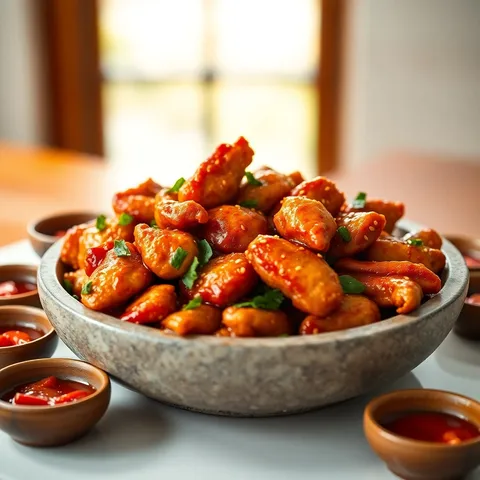
 Dakgalbi (Spicy Stir-fried Chicken)
Diced chicken marinated in a gochujang-based sauce, stir-fried with sweet potatoes, cabbage, perilla leaves, and tteok.
 Korean Lens Verified Images are for illustrative purposes only, may be inaccurate, and do not guarantee the presence or absence of specific ingredients.
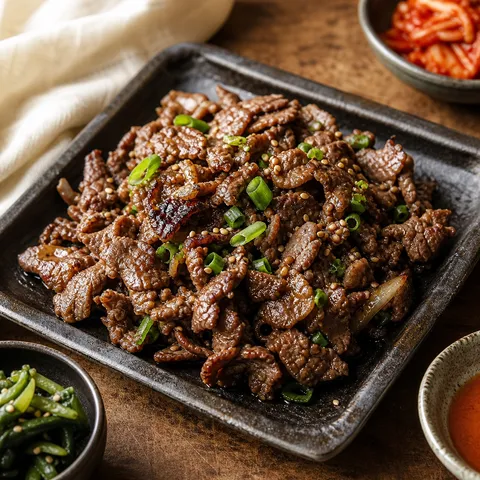
 Bulgogi (Marinated Beef BBQ)
Thinly sliced, marinated beef ribeye or sirloin grilled or stir-fried. Sweet, savory, and tender.
 Korean Lens Verified Images are for illustrative purposes only, may be inaccurate, and do not guarantee the presence or absence of specific ingredients.
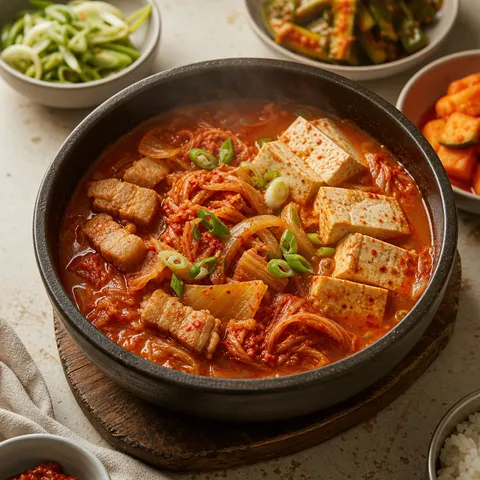
 Kimchi Jjigae (Kimchi Stew)
A classic, comforting stew made with aged kimchi, pork or seafood, scallions, onions, and diced tofu.