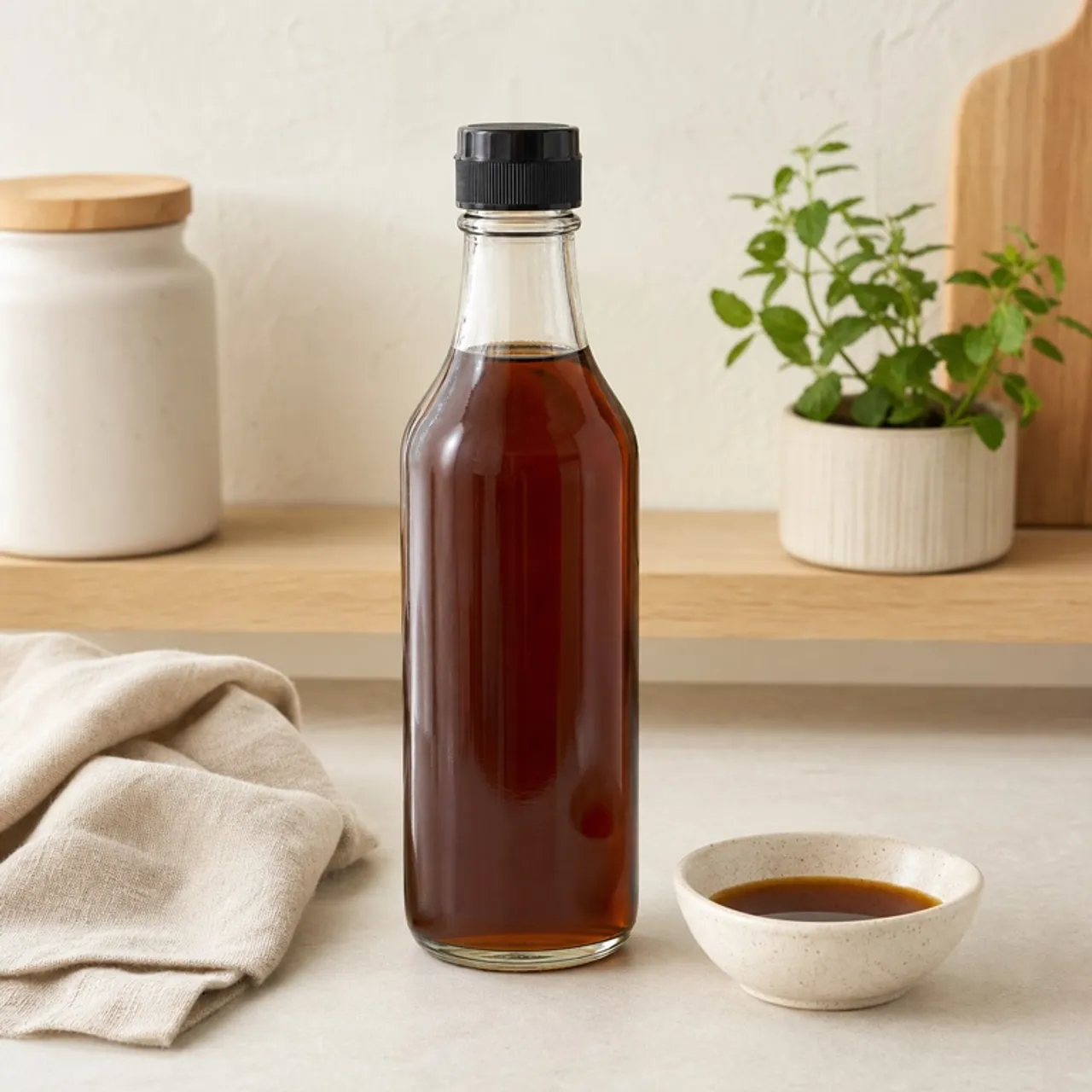
 Food Lens Images are for illustrative purposes only, may be inaccurate, and do not guarantee the presence or absence of specific ingredients.
 Food Lens · Recipe ingredients
Coconut Aminos
Mildly savory with a noticeable natural sweetness and a clean, rounded umami quality. Less salty and less sharp than soy sauce, with faint caramel and fruity undertones from the coconut sap. The finish is gentle and slightly sweet rather than briny.
Lens VerifiedCoconut aminos is a liquid seasoning made from the fermented sap of coconut palm blossoms, blended with sea salt. It is savory, lightly sweet, and deeply umami-forward — a versatile condiment that functions as a seasoning sauce across a wide range of cuisines. Its flavor is milder and slightly sweeter than soy sauce, with a less aggressive saltiness, making it useful for applications where a gentler savory note is desired.
Where it comes from
Coconut aminos emerged from centuries-old coconut palm sap traditions in the Philippines and Southeast Asia, developed into a modern seasoning sauce in the early 21st century for the international specialty food market.
Varieties — Most coconut aminos products are functionally similar, though concentration and saltiness vary between brands. Some producers offer smoked or garlic-infused versions. Philippine-produced coconut aminos (made from coco sap) are the most common; some producers blend coconut sap with coconut sugar and salt for a balanced, slightly caramel profile.
In the Philippines, coconut sap has long been valued as a food source — fresh sap (tuba) is consumed as a beverage, fermented into vinegar, and processed into sugar. The adaptation of sap into a savory seasoning represents an evolution of traditional coconut palm agriculture into a globally traded specialty product. Coconut aminos has found particular traction in American wellness and ancestral eating communities.
In a modern kitchen — Coconut aminos has become a pantry staple in clean-label and whole-food cooking communities. Chefs use it in marinades to build savory depth without overpowering salt, and it caramelizes nicely in high-heat cooking due to its natural sugars. In salad dressings, its gentle sweetness eliminates the need for added sugar. It pairs particularly well with citrus, ginger, garlic, and sesame.
Buying it
Look for coconut aminos with a short ingredient list: coconut sap (or coconut tree sap), sea salt — nothing more. Color should be dark amber-brown. Taste before buying if possible — good coconut aminos is pleasantly savory-sweet with no chemical aftertaste. Avoid products with added caramel color or preservatives beyond salt.
Storing it
Keep coconut aminos sealed in the pantry; refrigerating after opening helps preserve its flavor longest, though it isn't strictly required. An off or unusually sharp smell means it's time to replace it.
Keeps about 1 year in the pantry.
Out of coconut aminos? Good swaps
General cooking guidance — always check the labels on the products you use. Listahan’s allergen checks run automatically when you plan a recipe in the app. Not medical advice.
Recipes that use coconut aminos
Common questions about coconut aminos
Is coconut aminos vegan?
Coconut Aminos is generally plant-based and suitable for a vegan diet, but brands differ — confirm on the label.
What can I use instead of coconut aminos?
Good swaps include , , . Each behaves a little differently — see the swaps above for notes, and always check labels for allergens.
How do I store coconut aminos?
Keep coconut aminos sealed in the pantry; refrigerating after opening helps preserve its flavor longest, though it isn't strictly required. An off or unusually sharp smell means it's time to replace it. It keeps about 1 year in the pantry.
More recipe ingredients
See all


Make coconut aminos about your kitchen — with Listahan Pro
Everything above is free, forever. Pro adds the Household Lens — the same food, seen for your family:
-
Checked for each member
Flags coconut aminos per person against your household's allergies and school rules — not just a generic "contains" tag.
-
Pantry-aware
Knows whether you already have it, what is running low, and the best swap from what is in your kitchen tonight.
-
What it costs near you
A real price from the Presyo community index, so you can plan the budget — not guess.
-
Your household memory
Who likes it, plus your own private notes — brand, where you keep it, who skips it.
Allergen safety is always free — Pro adds the automation, never the safety.
Cook with coconut aminos — safely
Plan a recipe in Listahan and the household allergen check runs automatically — every plan, every swap, every lunchbox. Safety is never paywalled.