 Food Lens Images are for illustrative purposes only, may be inaccurate, and do not guarantee the presence or absence of specific ingredients.
 Food Lens · Condiments
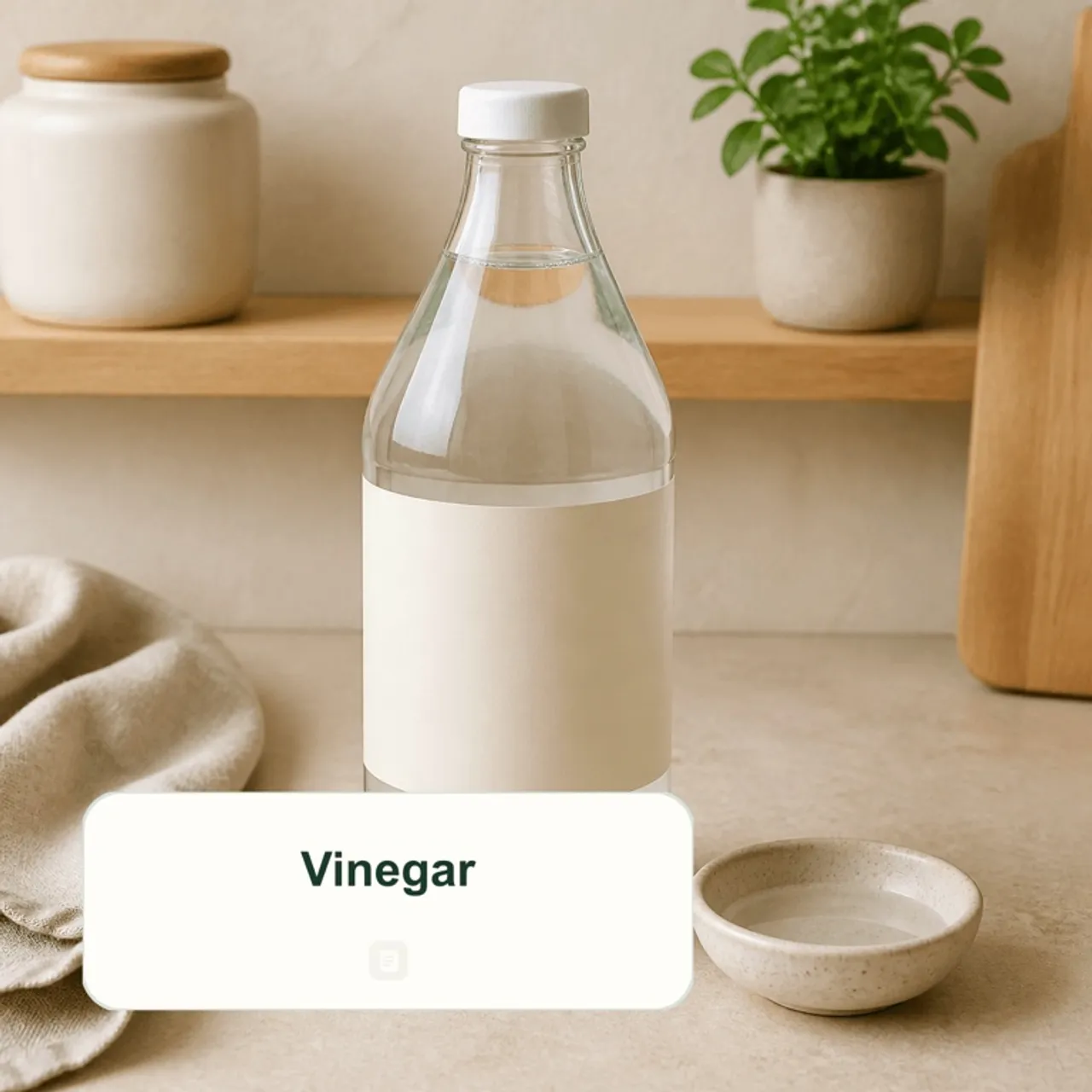
Vinegar
Sharp, tangy, and acidic — the specific flavor ranges from fruity (apple cider) to complex (balsamic) to neutral (white distilled).
Lens VerifiedVinegar is a fermented acid that adds brightness, balance, and sharpness to dressings, sauces, pickles, and marinades. Varieties range from sharp and neutral to mellow and complex.
Where it comes from
Vinegar is one of the oldest fermented foods — the controlled souring of wine or fruit juice that has been refined into dozens of regional styles. Its primary role in cooking is as an acid: to balance richness, brighten flavors, preserve food, and deglaze pans.
Varieties — White distilled is sharp and neutral; apple cider vinegar is milder and fruity; red and white wine vinegars add complexity; balsamic is sweet and syrupy; rice vinegar is gentle.
Vinegar appears in virtually every cooking tradition — British fish and chips, French vinaigrettes, Filipino adobo, Chinese hot and sour soup, and American barbecue sauces.
In a modern kitchen — A few drops of the right vinegar can rescue a dish that tastes flat or overly rich by adding brightness without sweetness.
Buying it
Match the vinegar to the dish: white distilled for pickling, apple cider for dressings and braises, wine vinegar for sauces, balsamic for finishing. Keep at least two styles in the pantry.
Storing it
Keep tightly capped in a cool, dark cupboard — its acidity keeps it stable indefinitely without refrigeration. Cloudiness or sediment is harmless; just shake or strain before use.
Keeps about 3 years in the pantry.
Out of vinegar? Good swaps
- Lemon juice — Citrusy acidity without the fermented flavor; good in dressings and marinades.
- Lime juice — Similar to lemon with a greener, slightly more bitter note.
- Citric acid dissolved in water — Very concentrated; ¼ tsp in 2 tbsp water ≈ 2 tbsp mild vinegar.
General cooking guidance — always check the labels on the products you use. Listahan’s allergen checks run automatically when you plan a recipe in the app. Not medical advice.
Recipes that use vinegar
Common questions about vinegar
Is vinegar vegan?
Vinegar is generally plant-based and suitable for a vegan diet, but brands differ — confirm on the label.
What can I use instead of vinegar?
Good swaps include Lemon juice, Lime juice, Citric acid dissolved in water. Each behaves a little differently — see the swaps above for notes, and always check labels for allergens.
How do I store vinegar?
Keep tightly capped in a cool, dark cupboard — its acidity keeps it stable indefinitely without refrigeration. Cloudiness or sediment is harmless; just shake or strain before use. It keeps about 3 years in the pantry.
More condiments
See all


Make vinegar about your kitchen — with Listahan Pro
Everything above is free, forever. Pro adds the Household Lens — the same food, seen for your family:
-
Checked for each member
Flags vinegar per person against your household's allergies and school rules — not just a generic "contains" tag.
-
Pantry-aware
Knows whether you already have it, what is running low, and the best swap from what is in your kitchen tonight.
-
What it costs near you
A real price from the Presyo community index, so you can plan the budget — not guess.
-
Your household memory
Who likes it, plus your own private notes — brand, where you keep it, who skips it.
Allergen safety is always free — Pro adds the automation, never the safety.
Cook with vinegar — safely
Plan a recipe in Listahan and the household allergen check runs automatically — every plan, every swap, every lunchbox. Safety is never paywalled.