 Desserts Images are for illustrative purposes only, may be inaccurate, and do not guarantee the presence or absence of specific ingredients.
 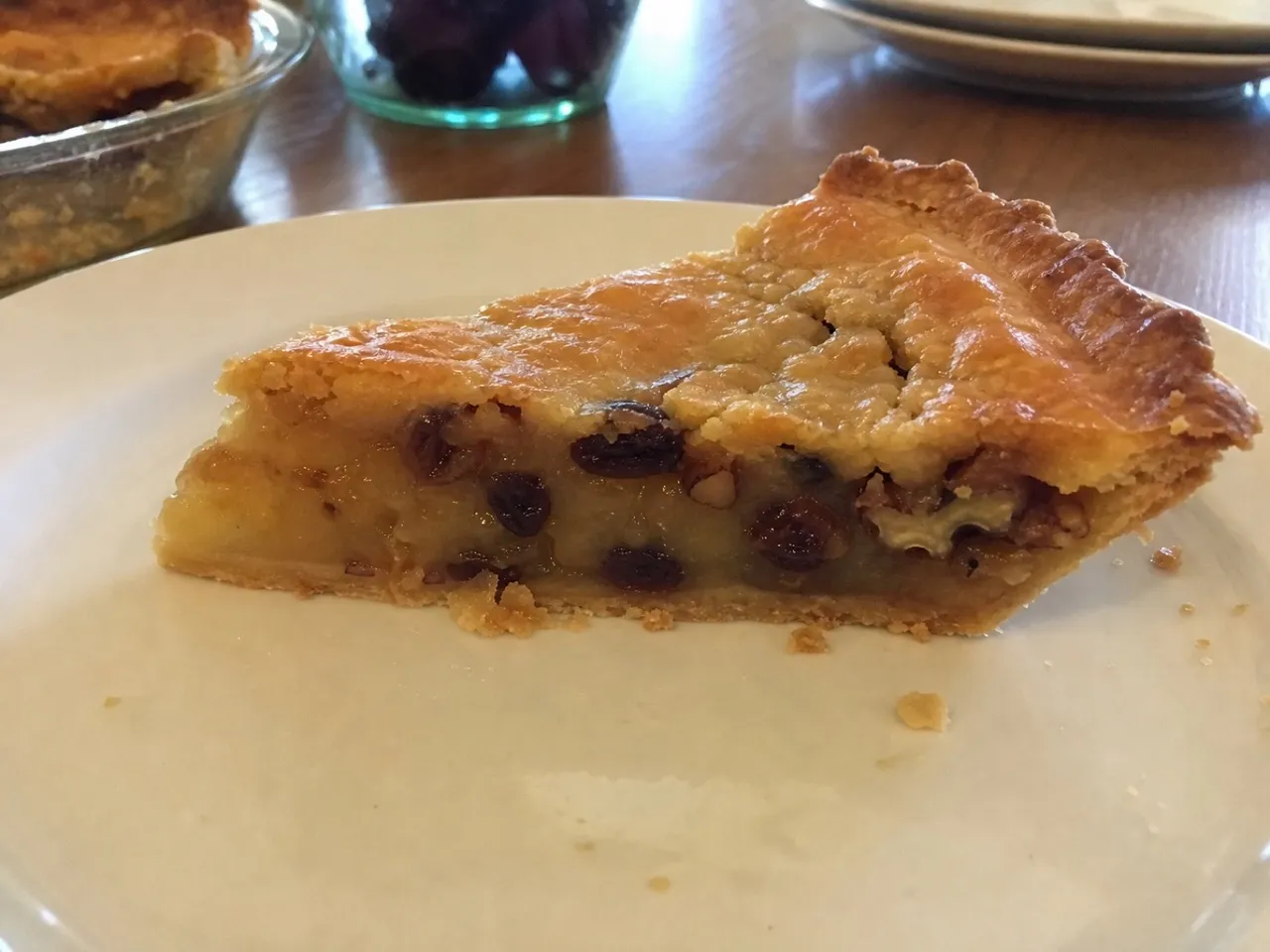 Serving Images are for illustrative purposes only, may be inaccurate, and do not guarantee the presence or absence of specific ingredients.
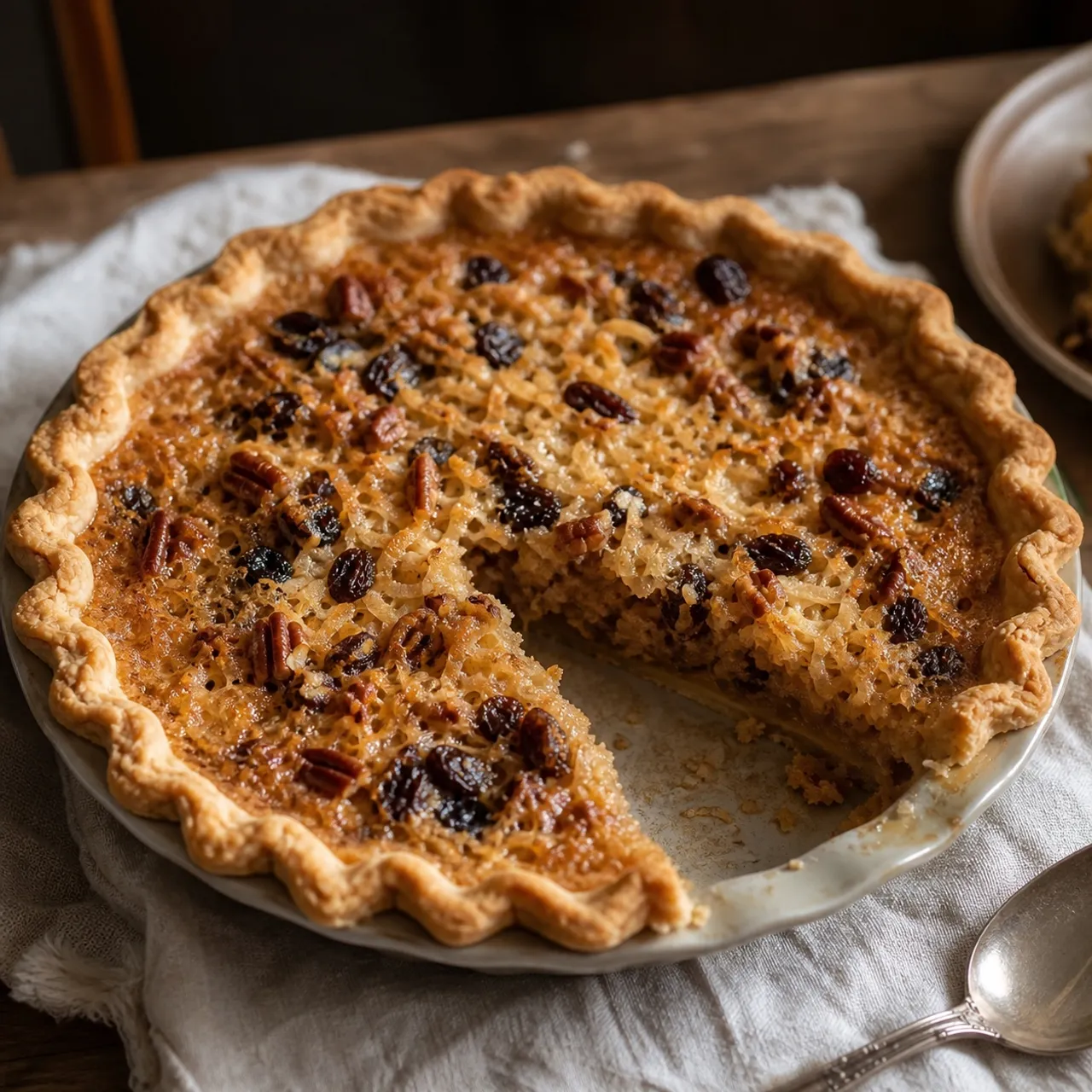
 Japanese Fruit Pie
A rich, chewy Southern custard pie loaded with raisins, pecans, and coconut in a single buttery crust.
Contains common allergens
In the app, Listahan checks these against your household automatically.
Instructions
4 steps- 1
Preheat the oven to 350°F (175°C). In a large bowl, whisk together the melted margarine, eggs, sugar, and cider vinegar until well combined.
- 2
Stir in the raisins, chopped pecans, and shredded coconut until evenly distributed.
- 3
Pour the filling into the unbaked 9-inch pie crust and spread evenly.
- 4
Bake for 30 to 35 minutes, until the filling is set and golden on top. Cool before slicing and serving.
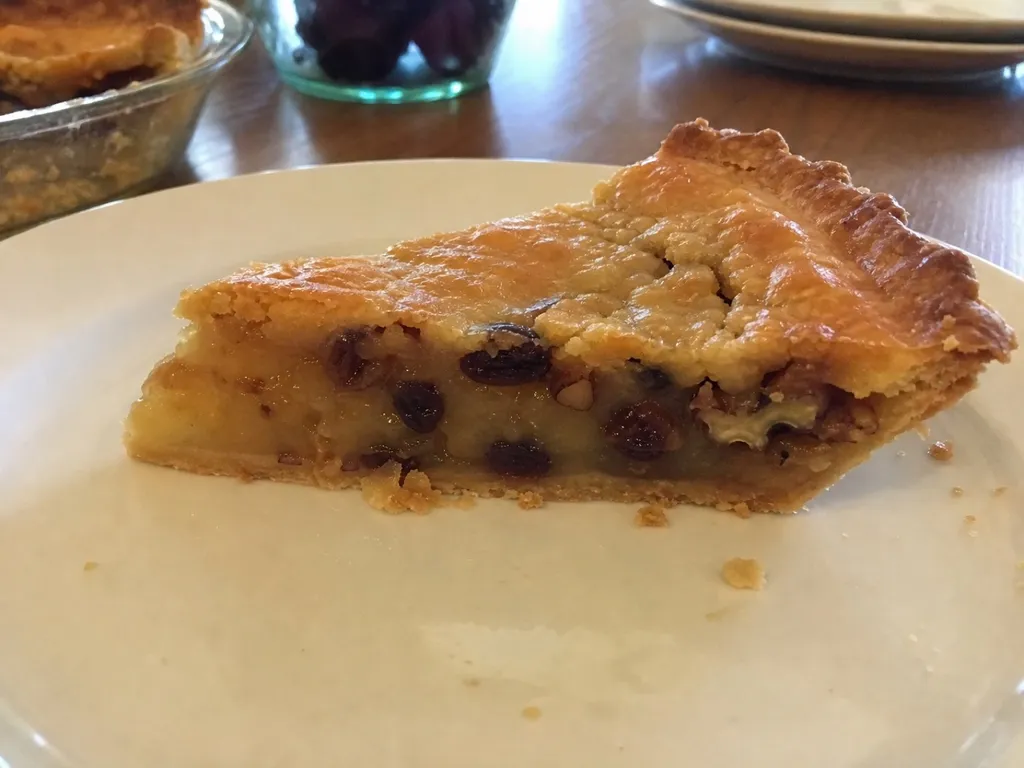 Images are for illustrative purposes only, may be inaccurate, and do not guarantee the presence or absence of specific ingredients.
 Listahan Family Score™
74/100
Good fit for most families
Score reflects how well this recipe fits a typical busy household. In the app, your Family Score is personalized to your household's allergens, kids, and pantry.
Nutrition
per serving285
Calories
3 g
Protein
29 g
Carbs
19 g
Fat
Estimated per serving. Actual values depend on the brands and portions you use.
Listahan cooking guide
Chef notes & practical guide
Technique notes, ingredient swaps, serve-alongside ideas, storage guidance, and equipment for this recipe.
Cultural context
Despite its name, Japanese Fruit Pie is an American Southern dessert with no direct Japanese culinary origin -- it is believed the name came into use in the mid-20th century United States, possibly as a marketing novelty or regional nickname that simply stuck. The dessert belongs to the tradition of Southern chess pies and transparent pies: egg-and-sugar custard fillings baked in a single crust without thickeners, where vinegar or buttermilk serves as the acid that keeps the sweetness from becoming cloying. The coconut, raisins, and pecans inside make it a kissing cousin to pecan pie and Confederate chess pie.
Listahan note
This version uses melted margarine and a splash of cider vinegar to keep the custard-like filling from being overly sweet, with coconut and pecans providing enough texture that every bite feels distinct rather than uniform.
Technique cues
- The cider vinegar is not optional -- in custard-style pies without dairy, acid balances the high sugar content and prevents the filling from tasting flat or one-dimensional; do not reduce it.
- Melted fat (rather than creamed butter) in this style of pie produces a denser, brownie-adjacent filling rather than a light sponge; the result should be set but slightly fudgy at the center when fully baked.
- An unbaked crust is essential here -- the raw pastry and the filling bake together, and the bottom crust absorbs some of the filling's egg custard to become almost shortbread-like rather than flaky.
Kitchen flow
- Parallel prep
- Fit the pie crust into the pan and refrigerate it while you mix the filling so the fat in the crust stays cold and holds its shape.
- Make-ahead
- This pie actually improves after resting -- bake the day before serving and refrigerate overnight so the filling firms fully and flavors meld.
- Leftover move
- Crumble leftover slices over vanilla ice cream or serve cold with a small scoop of whipped cream; the filling texture at room temperature is pleasant on its own.
- Cleanup rhythm
- This is a one-bowl filling -- wash up while the pie bakes since there is minimal equipment beyond the mixing bowl and a whisk.
Ingredient brief
Role, handling, and swap guidance for each key ingredient.
2 large eggs
binder and custard structure
Purpose: Beaten eggs set the filling from a liquid into a sliceable custard-like interior during baking; without them the filling would not solidify.
Handling: Beat the eggs well before adding other ingredients so the filling is uniform and does not have visible egg streaks after baking.
Adaptation: No reliable egg substitute works in this style of filling without fundamentally changing the texture.
3/4 cup granulated sugar
sweetness and body
Purpose: The high sugar-to-fat ratio gives the filling its characteristic dense, glossy interior similar to a chess pie.
Handling: Add after the fat and eggs are combined so the sugar dissolves into the mixture rather than sitting on top.
Adaptation: Light brown sugar adds a mild molasses note and works as a 1:1 replacement; dark brown sugar will make the filling taste closer to pecan pie.
1 Tbsp cider vinegar
acid balance
Purpose: Acid cuts through the sweetness and gives the filling a slight tartness that makes it taste more complex and less one-note.
Handling: Add directly to the egg-sugar-fat mixture; the amount is small enough that it will not be detectable as vinegar in the finished pie.
Adaptation: Fresh lemon juice at the same quantity works; distilled white vinegar is acceptable but add only 2 teaspoons as it is sharper.
1/2 cup sweetened shredded coconut
texture and sweetness
Purpose: Coconut toasts on top during baking to give the pie a lightly caramelized surface and chewy texture contrast against the custard filling.
Handling: Add to the filling mixture without pre-toasting; it will brown naturally in the oven.
Adaptation: Unsweetened desiccated coconut can replace sweetened; add an extra tablespoon of sugar to the filling if using unsweetened.
1/2 cup chopped pecans
crunch and nuttiness
Purpose: Pecans provide the most significant textural contrast to the dense, chewy filling and echo the Southern pantry tradition of this dessert.
Handling: Chop to roughly 1/4-inch pieces; too fine and they disappear into the filling, too coarse and they sink unevenly.
Adaptation: Walnuts or lightly toasted almonds work; omit entirely for a nut-free version and increase coconut by 2 tablespoons.
Technique notes
- Cover the crust edge with a pie shield or foil strips after the first 20 minutes so the crust edge does not over-brown before the filling sets.
- The pie is done when the center no longer jiggles as a liquid -- it will wobble slightly as a unit (like set gelatin) but should not slosh; err on the side of slightly underdone since it firms on cooling.
- Let the pie cool completely at room temperature before slicing -- cutting into a warm chess-style pie causes the filling to collapse and run.
Ingredient swaps
- Nut-free direction
- Omit the pecans and add an extra 2 tablespoons of coconut plus 2 tablespoons of sunflower seeds for texture.
- Vegan direction
- Replace eggs with 2 flax eggs (2 tablespoons ground flaxseed plus 6 tablespoons water, rested 5 minutes) and use vegan butter; the filling will be denser and slightly fudgier.
- Raisin-free option
- Swap raisins for dried cranberries or chopped dried apricots for a more tart, colorful filling.
Serve alongside
- lightly sweetened whipped cream with vanilla
- a scoop of butter pecan ice cream
- fresh orange segments with a pinch of cinnamon
- sweet iced tea with lemon
- hot black coffee
- bourbon-spiked cold brew for adults
Serving suggestions only — check pairings for your household's allergens.
Storage & reheating
- Refrigerate covered for up to 4 days; the filling holds its shape best when cold.
- Bring individual slices to room temperature for 20 minutes before serving for the best texture.
- Freeze whole or sliced, tightly wrapped, for up to 2 months; thaw overnight in the refrigerator.
Equipment
- 9-inch pie dish
- mixing bowl and whisk
- pie shield or aluminum foil strips
- cooling rack
Make this household-aware
Listahan Pro checks this recipe against your household's allergens, finds pantry-aware swaps, builds the shopping list, and helps you plan the week around it.
Plan it in Listahan
Add Japanese Fruit Pie to your week, check it against your household's allergens, and build the shopping list automatically.
More Desserts recipes
 Desserts Lens Verified Images are for illustrative purposes only, may be inaccurate, and do not guarantee the presence or absence of specific ingredients.
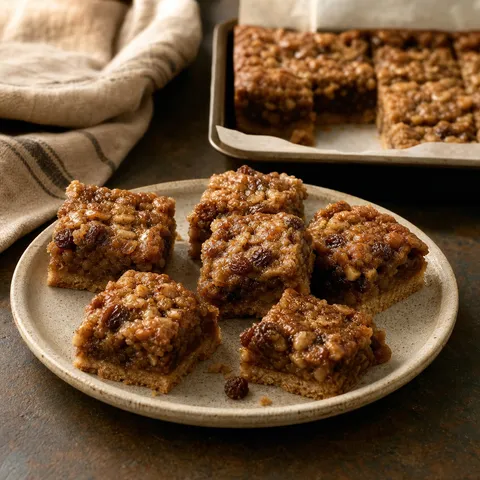
 Buttertart Squares
Chewy butter tart squares with a shortbread base and a gooey brown sugar, raisin, and walnut topping.
 Desserts Lens Verified Images are for illustrative purposes only, may be inaccurate, and do not guarantee the presence or absence of specific ingredients.
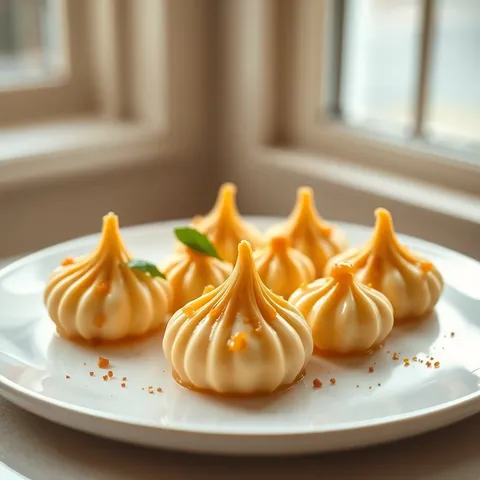
 Amber and Zach's Kisses
Light, crisp meringue kisses that melt in your mouth and make a pretty edible decoration.
 Desserts Lens Verified Images are for illustrative purposes only, may be inaccurate, and do not guarantee the presence or absence of specific ingredients.
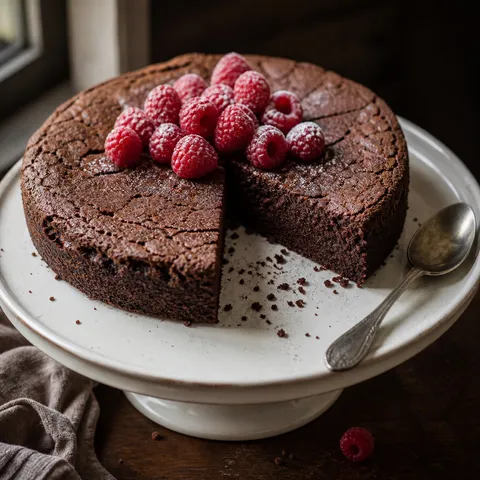
 Passover Flourless Chocolate Cake
A rich, dense flourless chocolate cake with no flour, matzo meal, or leavening — a naturally kosher-for-Passover dessert perfect for the seder table.