 Desserts Images are for illustrative purposes only, may be inaccurate, and do not guarantee the presence or absence of specific ingredients.
  Serving Images are for illustrative purposes only, may be inaccurate, and do not guarantee the presence or absence of specific ingredients.
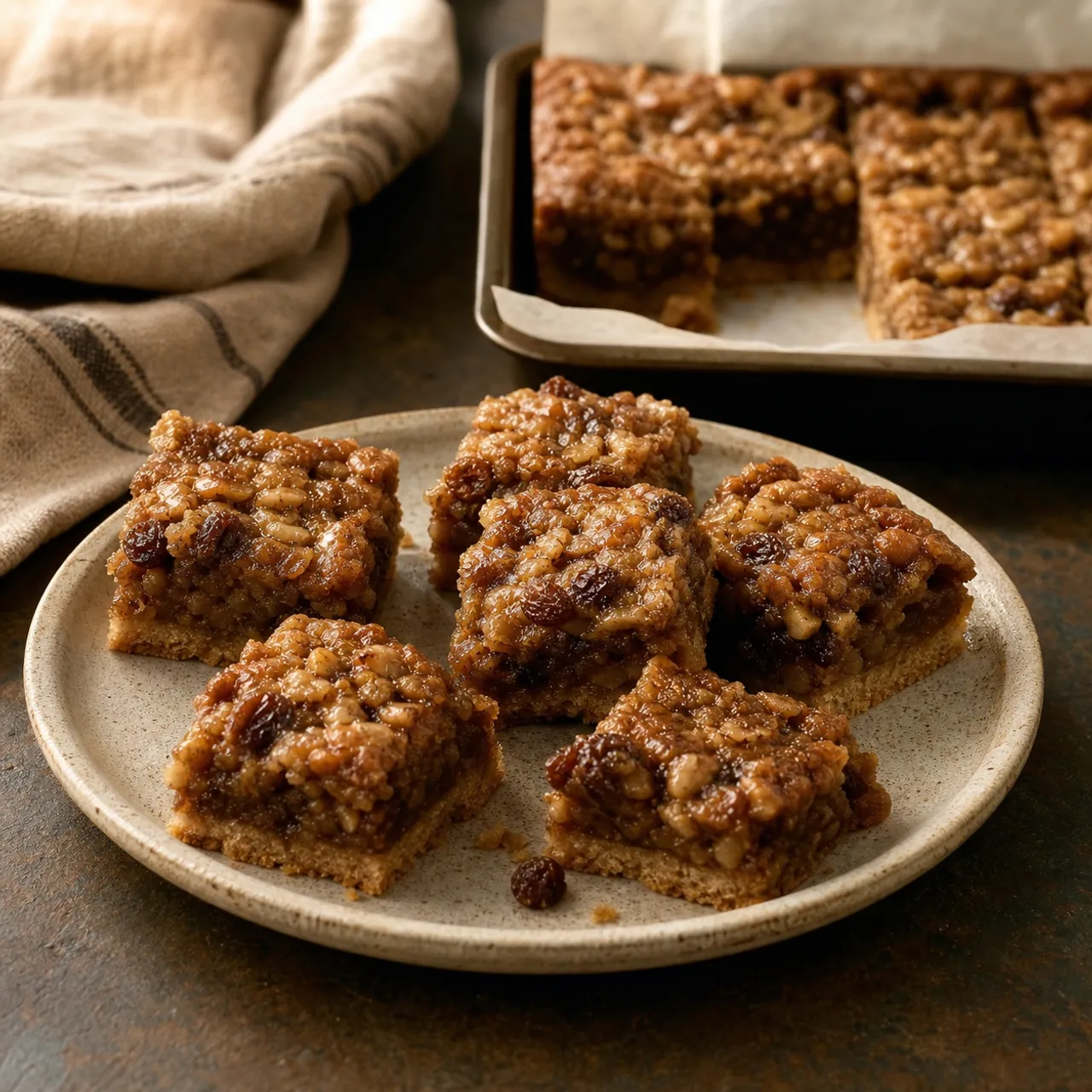
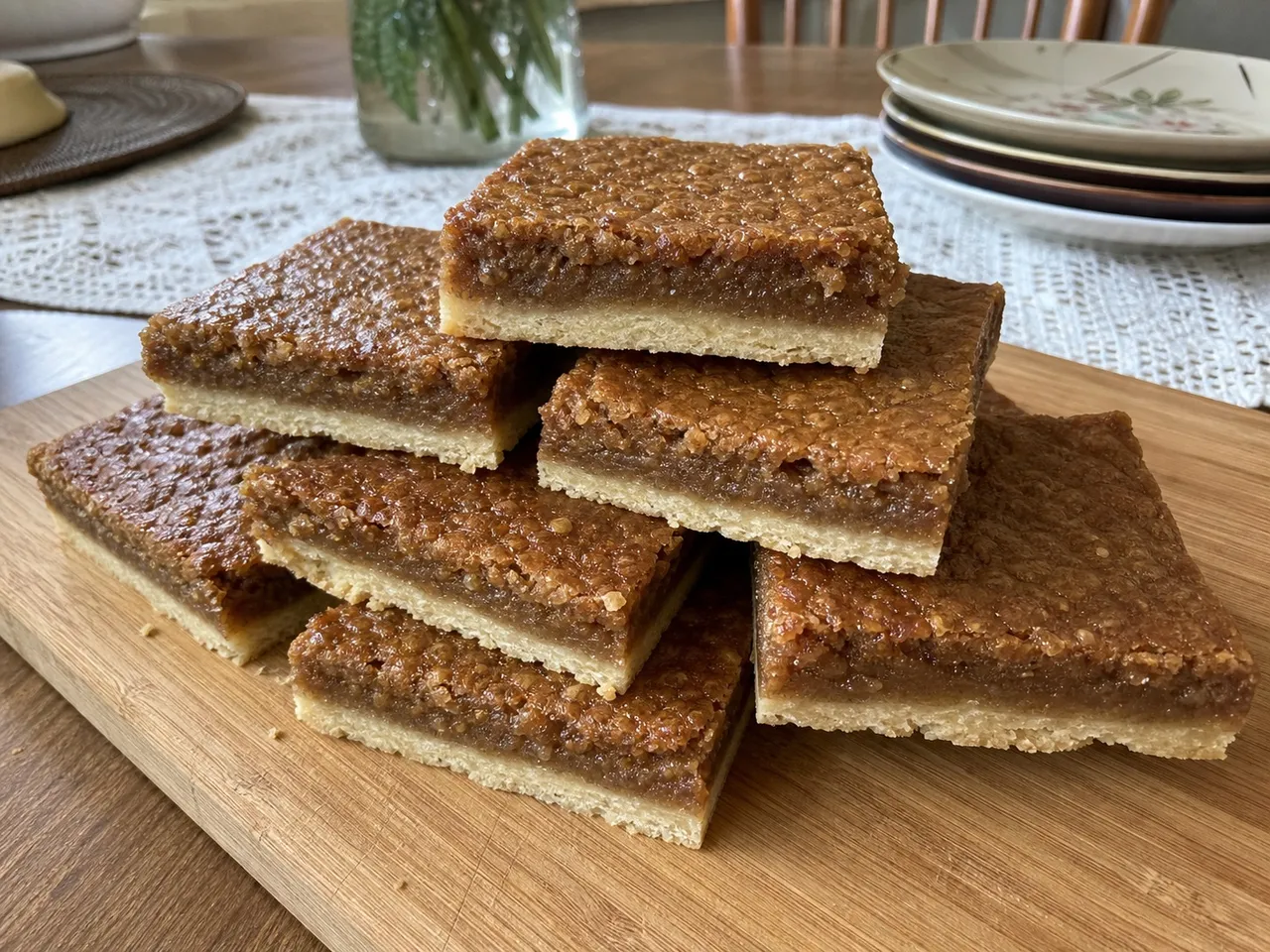
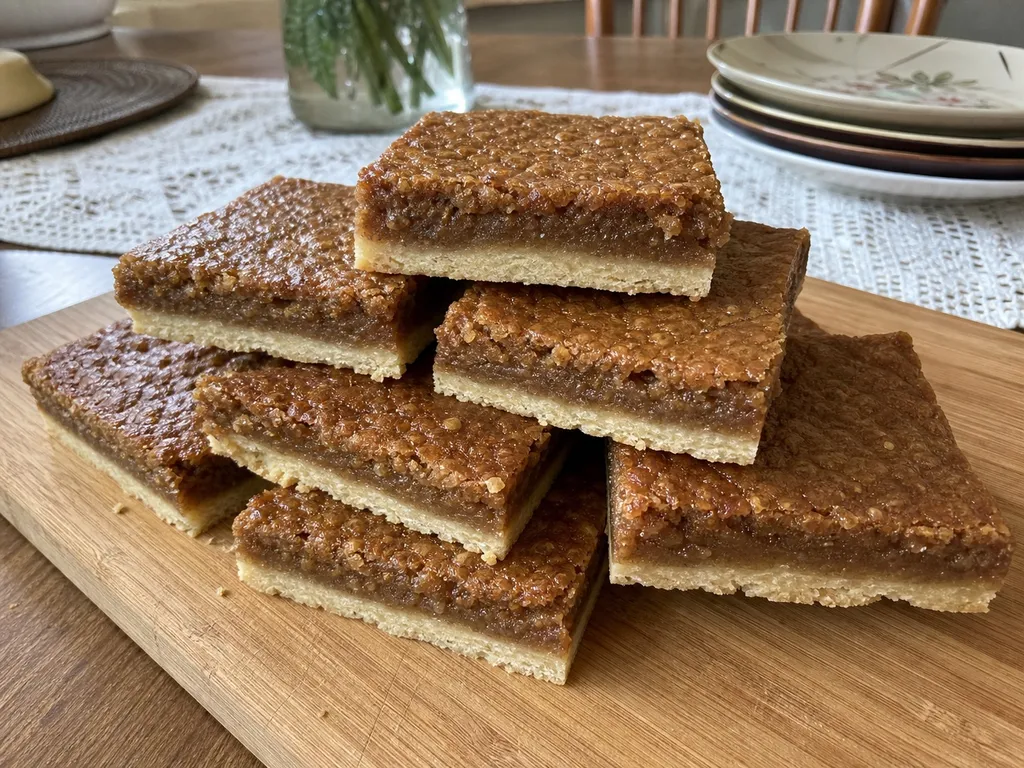
 Buttertart Squares
Chewy butter tart squares with a shortbread base and a gooey brown sugar, raisin, and walnut topping.
Contains common allergens
In the app, Listahan checks these against your household automatically.
Instructions
6 steps- 1
Preheat the oven to 350°F (175°C) and lightly grease a 9x9-inch baking pan.
- 2
For the crust, cut the softened butter into the flour and 2 tablespoons brown sugar until the mixture is crumbly. Press evenly into the bottom of the prepared pan.
- 3
Bake the crust for about 10 minutes, until just set and lightly golden.
- 4
Meanwhile, in a bowl beat the eggs, then stir in the 1 1/2 cups brown sugar, oats, salt, and vanilla until well combined. Fold in the walnuts and raisins.
- 5
Pour the topping over the partially baked crust and spread evenly.
- 6
Return to the oven and bake for 20 to 25 minutes, until the topping is set and golden. Cool completely in the pan before cutting into squares.
 Images are for illustrative purposes only, may be inaccurate, and do not guarantee the presence or absence of specific ingredients.
 Listahan Family Score™
70/100
Good fit for most families
Score reflects how well this recipe fits a typical busy household. In the app, your Family Score is personalized to your household's allergens, kids, and pantry.
Nutrition
per serving225
Calories
3 g
Protein
34 g
Carbs
9 g
Fat
Estimated per serving. Actual values depend on the brands and portions you use.
Listahan cooking guide
Chef notes & practical guide
Technique notes, ingredient swaps, serve-alongside ideas, storage guidance, and equipment for this recipe.
Cultural context
Butter tarts are a distinctly Canadian dessert, believed to have originated in Ontario in the late 19th or early 20th century, with the earliest known published recipe appearing in the 1900 Canadian cookbook 'The Women's Auxiliary of the Royal Victoria Hospital Cookbook.' The classic form is a small pastry shell filled with a runny or firm brown-sugar-and-butter custard, often with raisins or walnuts. Butter tart squares translate the same flavor profile into a bar format with a shortbread-style base, making the dessert far more practical for large-batch baking and serving at potlucks or bake sales.
Listahan note
This version builds on a simple three-ingredient shortbread base and layers a brown sugar filling with oats, walnuts, and raisins on top, so the result lands between a classic butter tart and a chewy oat bar -- easy to cut clean and easier to transport than individual tarts.
Technique cues
- The shortbread base must be partially baked before the filling goes on -- pressing the raw dough into the pan and adding the filling without pre-baking results in a raw, greasy bottom layer that never cooks through properly.
- Beating the eggs into the brown sugar filling until the mixture lightens slightly in color incorporates enough air to give the filling a soft, slightly lifted texture rather than a dense, sticky slab.
- Let the squares cool completely in the pan before cutting -- the filling is essentially a soft caramel that needs to set fully at room temperature; cutting while warm results in a liquid filling that runs out of the base.
Kitchen flow
- Parallel prep
- While the shortbread base pre-bakes for 10 minutes, beat the filling ingredients together so you can pour it in immediately when the base comes out of the oven.
- Make-ahead
- Squares keep at room temperature up to 3 days and improve in texture after the first day as the filling firms; bake the day before for cleanest cutting.
- Leftover move
- Warm individual squares for 10 seconds in the microwave and serve with a scoop of vanilla ice cream for a quick dessert; the soft caramel filling becomes slightly gooey again.
- Cleanup rhythm
- Line the pan with parchment with overhang on the sides before pressing in the base so the entire baked slab lifts out cleanly for cutting on a board.
Ingredient brief
Role, handling, and swap guidance for each key ingredient.
1/2 cup butter, softened
shortbread base fat
Purpose: Softened butter creamed with flour and brown sugar forms a crumbly but cohesive pressed shortbread base that holds together after baking.
Handling: Soften fully so it blends with the flour easily without lumps; the mixture should hold together when pressed between fingers.
Adaptation: Vegan butter (stick format) works in the base; the texture will be slightly less tender but still hold.
1 1/2 cups packed brown sugar
filling base and flavor
Purpose: Brown sugar provides the molasses-forward, caramel-like sweetness that defines a butter tart filling; it cannot be swapped for granulated without losing the characteristic flavor.
Handling: Pack firmly into the measuring cup; sift if it has hardened into lumps before beating with the eggs.
Adaptation: Dark brown sugar adds a deeper, more intense molasses note; coconut sugar works but produces a less glossy filling.
1/2 cup quick oats
filling texture and body
Purpose: Oats add chew and absorb some of the filling's moisture during baking, preventing the topping from being too runny or sticky after cooling.
Handling: Add directly to the filling mixture without cooking; quick oats incorporate more evenly than rolled oats in this application.
Adaptation: Rolled oats can substitute and will give a slightly chewier, more rustic texture; avoid instant oats.
1/2 cup chopped walnuts
crunch and nuttiness
Purpose: Walnuts add a bitter, earthy contrast to the very sweet filling and provide the textural element that makes each square feel substantial.
Handling: Chop to roughly 1/4-inch pieces; very fine chopping makes them disappear into the filling.
Adaptation: Pecans are the classic butter tart alternative; omit for a nut-free version and increase oats by 2 tablespoons.
1/2 cup raisins
sweetness and moisture pockets
Purpose: Raisins are traditional in Ontario-style butter tarts; they plump during baking and provide concentrated sweetness and slight chew throughout the filling.
Handling: Add straight from the box; plumping in warm water first makes them too soft and adds excess moisture to the filling.
Adaptation: Dried cranberries, chopped dates, or currants all work well; omit entirely for a plain version.
Technique notes
- Score the top of the filling very lightly with a knife after 20 minutes of baking to check the set -- it should be just barely set, not liquidy; it will continue to firm as it cools.
- Use a sharp knife wiped with a damp cloth between cuts for cleanest squares; a dull knife drags the sticky filling and tears the shortbread base.
- Press the shortbread base evenly to a uniform thickness, especially into the corners; thin corners overbake and crack when cut while a thick center stays raw.
Ingredient swaps
- Gluten-free direction
- Use a 1:1 gluten-free all-purpose flour blend in the base and certified gluten-free oats in the filling; the texture is nearly identical.
- Nut-free direction
- Omit walnuts and add an extra 3 tablespoons of rolled oats or 1/4 cup of sunflower seeds for a similar textural element.
- Vegan direction
- Replace butter with vegan stick butter and eggs with 2 flax eggs (2 tablespoons ground flaxseed mixed with 6 tablespoons water); the filling will be slightly denser.
Serve alongside
- vanilla ice cream with a drizzle of warm caramel sauce
- sharp cheddar cheese slices (a classic Canadian pairing with sweet pastry)
- sliced fresh pears with a squeeze of lemon
- strong black tea with milk
- hot black coffee
- cold glass of whole milk
Serving suggestions only — check pairings for your household's allergens.
Storage & reheating
- Store in an airtight container at room temperature for up to 3 days; the filling softens slightly in humidity.
- Refrigerate for up to 1 week; bring to room temperature before serving as cold filling can be very firm.
- Freeze individually wrapped squares for up to 2 months; thaw at room temperature for 30 minutes.
Equipment
- 8x8 or 9x9 inch baking pan
- parchment paper with overhang
- mixing bowls and hand mixer or stand mixer
- sharp knife for cutting squares
Make this household-aware
Listahan Pro checks this recipe against your household's allergens, finds pantry-aware swaps, builds the shopping list, and helps you plan the week around it.
Plan it in Listahan
Add Buttertart Squares to your week, check it against your household's allergens, and build the shopping list automatically.
More Desserts recipes
 Desserts Lens Verified Images are for illustrative purposes only, may be inaccurate, and do not guarantee the presence or absence of specific ingredients.
 Amber and Zach's Kisses
Light, crisp meringue kisses that melt in your mouth and make a pretty edible decoration.
 Desserts Lens Verified Images are for illustrative purposes only, may be inaccurate, and do not guarantee the presence or absence of specific ingredients.
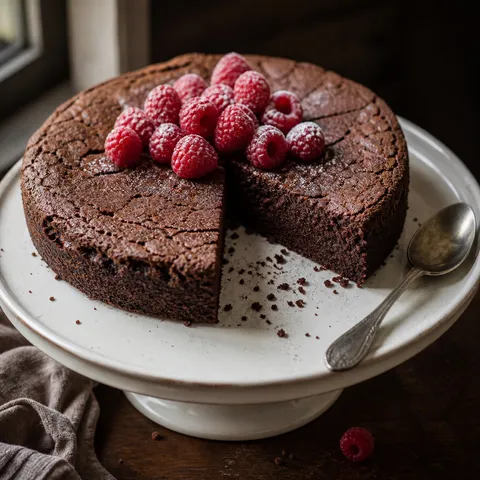
 Passover Flourless Chocolate Cake
A rich, dense flourless chocolate cake with no flour, matzo meal, or leavening — a naturally kosher-for-Passover dessert perfect for the seder table.
 Desserts Lens Verified Images are for illustrative purposes only, may be inaccurate, and do not guarantee the presence or absence of specific ingredients.
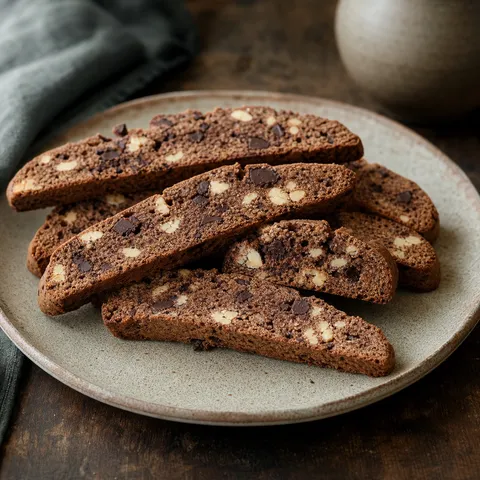
 Chocolate and Vanilla Chip Biscotti
Crisp twice-baked chocolate biscotti studded with sweet vanilla chips.